 Amir Mahmud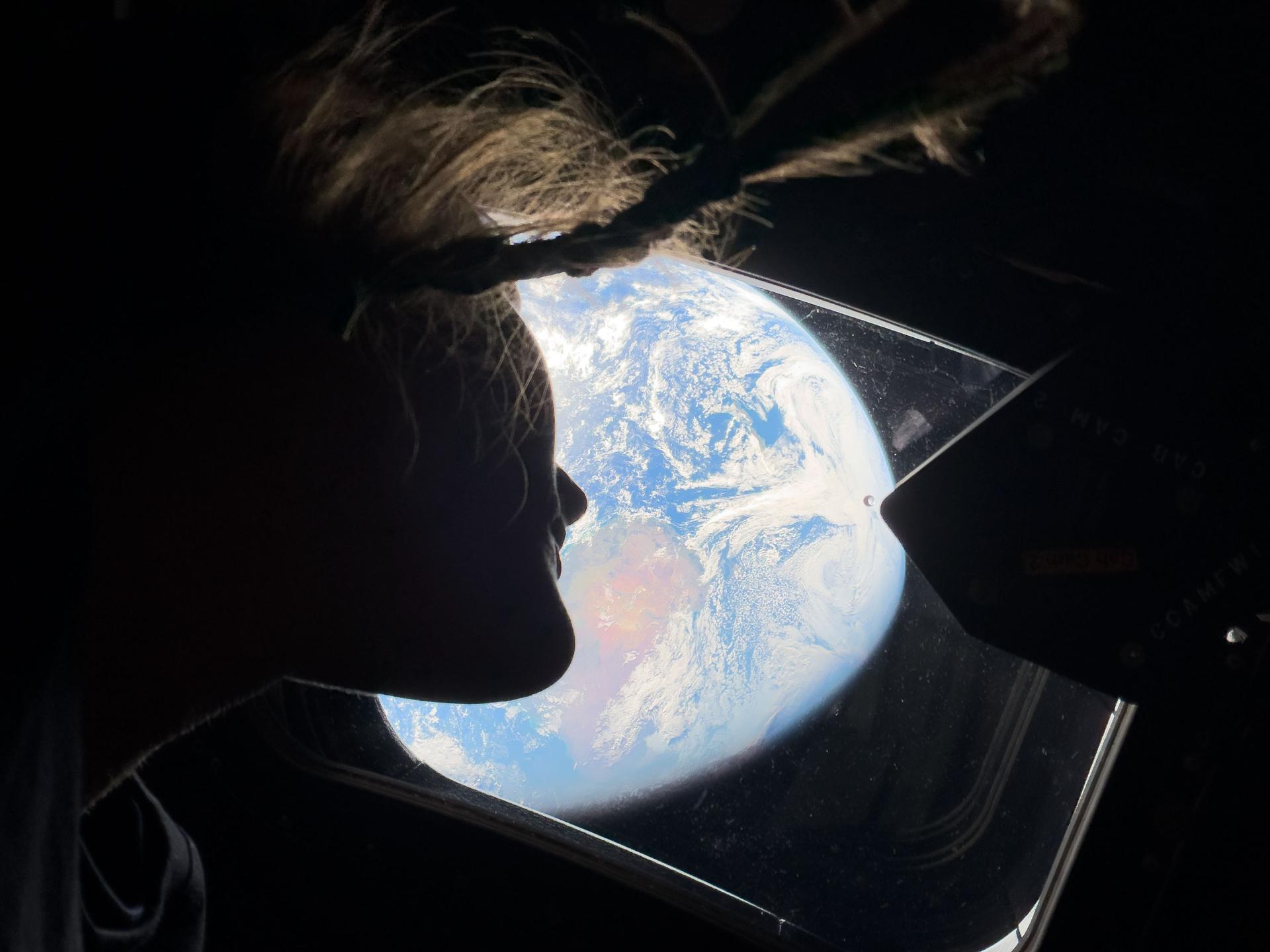
After a momentous 10-day journey that saw humanity venture farther into deep space than in half a century, the four-member crew of NASA’s Artemis II mission is poised for its highly anticipated return to Earth. The Orion spacecraft, carrying American astronauts Reid Wiseman, Victor Glover, and Christina Koch, alongside Canadian astronaut Jeremy Hansen, is scheduled to execute a critical re-entry sequence, culminating in a precision splashdown in the Pacific Ocean later today. This concluding phase marks the culmination of an ambitious test flight, designed to pave the way for future lunar landings and eventually, missions to Mars.
A Historic Homecoming
The crew’s return is a pivotal moment, symbolizing both the success of their extended lunar flyby and the rigorous engineering required for deep-space travel. Their mission saw them orbit the Moon and travel approximately 252,760 miles from Earth, a distance unprecedented for any human spaceflight. This achievement surpassed the previous record set by Apollo 13 in 1970, underscoring the advanced capabilities of the Orion capsule and the Space Launch System (SLS) rocket. For 10 days, the four astronauts lived within Orion’s 330 cubic feet of habitable space—roughly the size of two minivans—conducting vital tests and experiencing the cosmos from a truly unique vantage point.
The descent back through Earth’s atmosphere is one of the most demanding segments of any space mission, characterized by extreme speeds and intense thermal loads. NASA has provided live coverage of the entire process, allowing a global audience to witness the spacecraft’s dramatic re-entry and subsequent splashdown off the coast of San Diego, California. The expected re-entry initiation is slated for 7:33 p.m. ET, with splashdown projected for 8:07 p.m. ET, a precise choreography honed through decades of spaceflight experience.
The Artemis Vision: A New Era of Lunar Exploration
The Artemis program represents NASA’s ambitious endeavor to return humans to the Moon, establish a sustainable lunar presence, and leverage this experience as a stepping stone for future crewed missions to Mars. Unlike the Apollo missions, which were primarily focused on demonstrating capability during the Cold War space race, Artemis aims for a broader, more inclusive, and long-term approach. The program seeks to land the first woman and first person of color on the lunar surface, foster international collaboration, and develop new technologies for prolonged space habitation and resource utilization.
Artemis II is the second critical phase of this multi-stage program. Artemis I, an uncrewed test flight in late 2022, successfully orbited the Moon and returned, validating the SLS rocket and Orion spacecraft’s fundamental performance. While Artemis I proved the hardware, Artemis II’s primary objective was to demonstrate Orion’s life support systems, navigation capabilities, and re-entry procedures with a human crew aboard. This includes evaluating critical communication systems, performing trajectory corrections, and ensuring the capsule can safely transport astronauts through the vacuum of space and back to Earth. The data gathered from Artemis II will be instrumental in informing and refining plans for Artemis III, which aims to put astronauts back on the lunar surface.
Echoes of Apollo and a Half-Century Gap
The significance of Artemis II cannot be fully appreciated without acknowledging the rich history of lunar exploration. The original Apollo program, spanning from 1961 to 1972, culminated in six successful Moon landings, with Apollo 17 in December 1972 being the last time humans walked on the lunar surface. For over 50 years since, human deep-space exploration beyond low Earth orbit largely ceased, primarily due to shifting political priorities, budget constraints, and a focus on developing the Space Shuttle program and the International Space Station (ISS).
The intervening decades saw remarkable advances in robotic planetary exploration, but the human element remained confined to Earth’s immediate vicinity. The development of the Orion spacecraft and the powerful Space Launch System rocket, both integral to Artemis, has been a decades-long effort, fraught with technical challenges, cost overruns, and schedule delays. These systems represent a new generation of deep-space infrastructure, built upon the lessons learned from both Apollo and the Shuttle era, designed for missions of unprecedented duration and complexity. Artemis II, therefore, not only reignites human deep-space travel but also bridges a significant historical gap, bringing a new generation of astronauts to the threshold of lunar exploration.
Navigating Deep Space Challenges
Life aboard Orion during the 10-day mission was a testament to human resilience and adaptability in an extreme environment. While the crew experienced the awe of seeing Earth as a distant blue marble and the Moon’s far side up close, they also contended with the practicalities of living in close quarters. Early in the mission, reports emerged of minor technical glitches, including issues with Microsoft Office software and the spacecraft’s waste management system. These "mundane mishaps," as they were sometimes dubbed, offered a relatable glimpse into the human experience of space travel, highlighting that even in the most technologically advanced environments, everyday challenges can arise.
Despite these minor inconveniences, the mission yielded profound scientific and experiential insights. The astronauts transmitted stunning new photographs of the lunar flyby, offering fresh perspectives on the Moon’s enigmatic dark side. They also engaged in a deeply personal act, naming new lunar craters, including one dedicated to Mission Commander Reid Wiseman’s late wife, Carroll, who passed away in 2020. Perhaps one of the most spectacular moments for the crew was witnessing a total solar eclipse from thousands of miles away from the Moon. Mission specialist Christina Koch eloquently described the scene: "It wasn’t just an eclipse with the Sun hidden behind the Moon. We could also see earthshine, the Sun’s light reflecting off Earth, wrapping the Moon in a soft, borrowed glow." This unique vantage point provided a visual spectacle never before experienced by astronauts, enriching both scientific understanding and the human narrative of exploration.
The Perilous Plunge: Re-entry and Heat Shield Concerns
The journey home, however, carries its own set of significant risks, particularly the high-speed re-entry into Earth’s atmosphere. The Orion spacecraft will hit the atmosphere at speeds approaching 25,000 miles per hour, generating intense friction and temperatures that can reach nearly 5,000 degrees Fahrenheit—hot enough to melt steel. To protect the crew from this inferno, Orion relies on its advanced heat shield, made of a specialized ablative material called AVCOAT, designed to slowly char and dissipate heat as it disintegrates.
This phase of the mission is under intense scrutiny due to an unexpected anomaly during the Artemis I uncrewed flight in 2022. While Artemis I successfully returned, post-flight analysis revealed that its heat shield experienced more charring and cracking than predicted, particularly in areas where the AVCOAT material met the underlying structure. Although NASA engineers concluded that a crew aboard Artemis I would still have returned safely, the incident prompted extensive research, analysis, and modifications to the heat shield design and manufacturing processes for Artemis II. Teams meticulously investigated the cause, which was ultimately attributed to a combination of factors related to manufacturing variations and the extreme environment. Despite these reassurances and corrective actions, the performance of the heat shield remains a top concern for mission control and observers worldwide, underscoring the inherent dangers of spaceflight.
Recovery operations following splashdown are meticulously planned. Naval assets, including specialized recovery ships, divers, and medical personnel, are deployed to the landing zone in the Pacific Ocean. Their role is to secure the capsule, assist the astronauts as they exit, and conduct initial medical assessments. The "splashdown" technique has been a hallmark of American human spaceflight since the Mercury program, chosen for its ability to absorb impact forces and provide a relatively gentle return for the crew.
Beyond the Lunar Horizon: Impact and Future Prospects
The successful conclusion of the Artemis II mission carries profound implications across various sectors. Socially and culturally, it reignites public fascination with space exploration, inspiring a new generation to pursue careers in science, technology, engineering, and mathematics (STEM). The diverse crew, including a Canadian astronaut, highlights a growing trend of international collaboration in space, fostering goodwill and shared scientific endeavor.
Economically, the Artemis program represents a multi-billion dollar investment, creating thousands of jobs across the aerospace industry and driving innovation in materials science, propulsion, life support systems, and robotics. The technologies developed for Artemis, from advanced sensors to closed-loop life support, often find terrestrial applications, contributing to advancements in various industries.
Looking ahead, Artemis II sets the stage for Artemis III, which aims to return humans to the lunar surface in the coming years. This mission will involve not only the Orion spacecraft but also a human landing system (HLS) and potentially components of the Gateway lunar orbital outpost. The experience gained from Artemis II, particularly regarding human endurance in deep space radiation environments and the long-term performance of spacecraft systems, is invaluable for the more ambitious goals of sustained lunar presence and eventually, human expeditions to Mars.
As the Artemis II crew prepares for its dramatic return, the world watches, not just to witness a successful mission conclusion, but to celebrate a renewed chapter in humanity’s quest to explore the cosmos. Their journey is a testament to innovation, courage, and the enduring human spirit of discovery, pushing the boundaries of what is possible and bringing us closer to becoming an interplanetary species.










 Azin Asro
