Amir Mahmud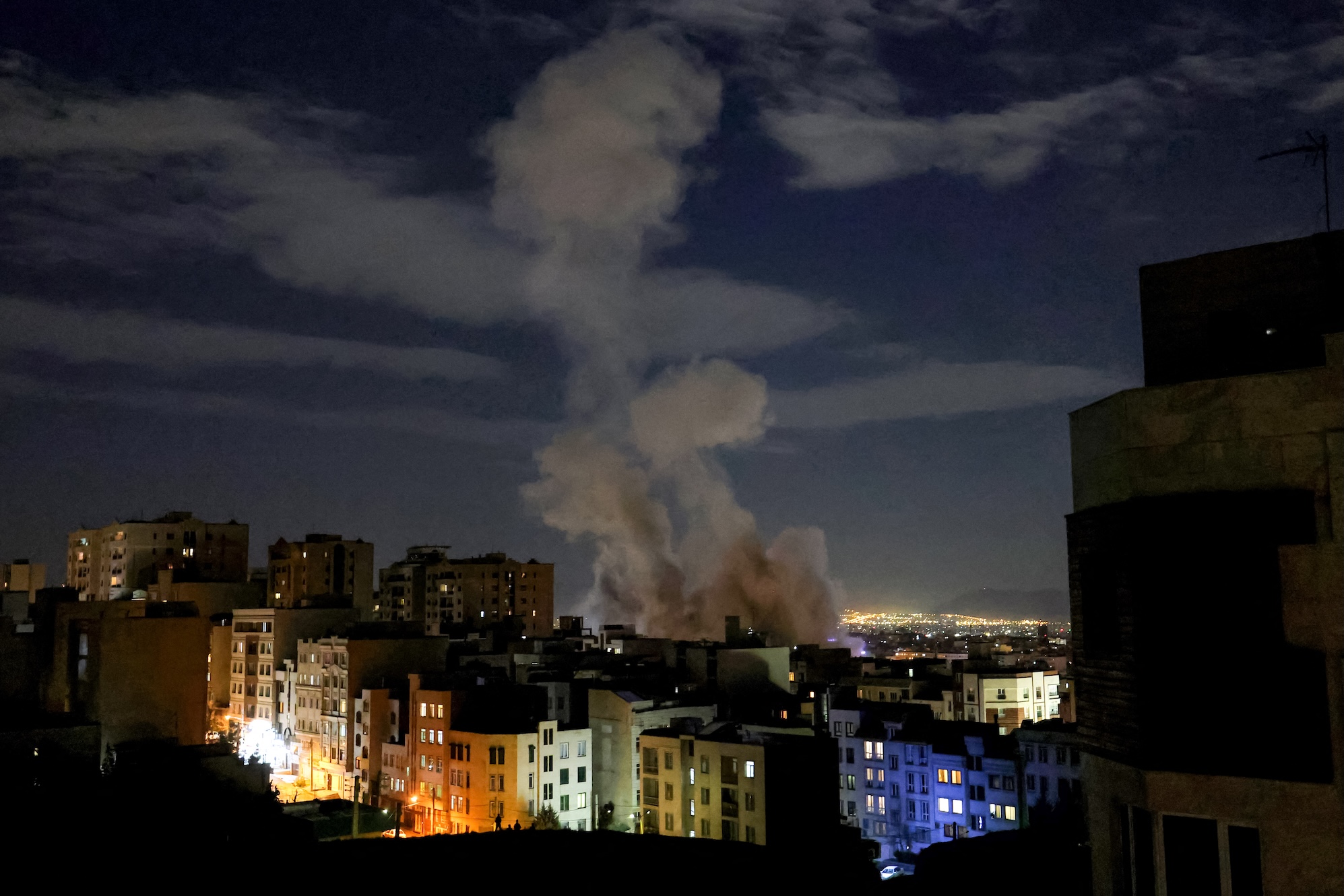
Iran has issued a stark warning regarding potential attacks on sophisticated artificial intelligence data centers across the Middle East, a direct response to perceived ongoing threats and military actions from the United States. This declaration significantly escalates the current geopolitical tensions, pushing critical digital infrastructure to the forefront of a volatile regional standoff.
The Iranian military recently disseminated a video featuring spokesperson Ebrahim Zolfaghari, late last week, which subsequently gained widespread attention over the weekend. In this visual communication, a graphic depiction begins with a global view, then precisely zooms into the location of the "Stargate" data center situated within the United Arab Emirates. Accompanying this imagery was a chilling message: "nothing stays hidden to our sight, though hidden by Google," clearly indicating an intelligence capability and intent to target such facilities. This public threat underscores a broadening of conflict parameters, moving beyond traditional military installations to encompass the burgeoning technological backbone of the global economy.
The Stargate Initiative: A Beacon of AI Ambition
The Stargate project, at the heart of this latest threat, represents a monumental $500 billion joint venture. Announced in January 2025, this ambitious collaboration between leading technology firms OpenAI, SoftBank, and Oracle aims to construct a global network of cutting-edge AI data centers. These facilities are designed to house the immense computational power and data storage necessary to fuel the next generation of artificial intelligence models and applications, positioning them as pivotal hubs for technological advancement.
Initially, the Stargate initiative faced considerable hurdles. Reports from early 2025 indicated difficulties in securing the necessary funding, suggesting the project’s ambitious scale and associated costs posed significant financial challenges. Furthermore, the global economic landscape, particularly concerning international trade relations, introduced complexities related to tariffs, further complicating the project’s initial deployment. Despite these setbacks, the consortium pressed forward, strategically seeking to expand its footprint with new data centers in various international locations, including the Middle East, to ensure redundancy and broaden its operational capabilities. The selection of the United Arab Emirates as a site for one of these crucial facilities highlights the region’s growing importance as a nexus for technological investment and innovation, simultaneously rendering it a potential target in times of conflict.
Escalating Tensions and the Strait of Hormuz Impasse
This latest Iranian warning arrives amidst a period of heightened friction between Washington and Tehran. U.S. President Trump recently issued an ultimatum, threatening to target Iran’s civilian infrastructure, including vital power plants and water desalination facilities. This threat was contingent on Iran’s failure to reopen the Strait of Hormuz by the end of Tuesday. The Strait of Hormuz, a narrow waterway connecting the Persian Gulf with the Arabian Sea, holds immense strategic importance as a critical global shipping channel. Its closure, which has persisted since the outbreak of a broader conflict in February, has severely disrupted global supply chains, leading to significant economic ramifications worldwide.
The ongoing "war in February" refers to a significant escalation in the long-standing animosity between the United States and Iran, the precise triggers and scope of which have evolved but consistently involve proxy conflicts, cyber warfare, and direct military posturing. This latest phase appears to have intensified following the closure of the Strait, an act that directly impacts international commerce and energy markets. The U.S. response, targeting civilian infrastructure, represents a substantial escalation in its own right, moving beyond traditional military targets and into areas that directly affect the Iranian populace and economy. Iran’s counter-threat against advanced data centers, therefore, can be interpreted as a reciprocal move, signaling its willingness to target critical infrastructure of its adversaries, albeit in the digital domain.
A History of Digital Targets in the Region
The current threat is not an isolated incident but rather fits into a pattern of attacks and warnings targeting digital infrastructure in the region. The conflict has already seen kinetic strikes against several data centers. Earlier in the conflict, Iranian missiles successfully impacted Amazon Web Services (AWS) data centers in Bahrain, causing significant disruptions to cloud services reliant on those facilities. Concurrently, an Oracle data center situated in Dubai also sustained missile damage, further illustrating the vulnerability of such installations in a kinetic conflict zone. These previous attacks underscore a strategic shift, where the infrastructure underpinning modern digital economies becomes a legitimate target in geopolitical disputes.
Beyond physical attacks, Iran has also explicitly named major technology companies in its warnings. Just last week, entities like Nvidia and Apple were specifically mentioned, signaling a broader intent to disrupt the global tech ecosystem and exert pressure on nations supporting U.S. policies. This tactic suggests a multi-pronged approach: physical attacks on data centers to cause immediate disruption and economic damage, coupled with public threats against tech giants to instill fear, deter investment, and potentially impact stock markets or consumer confidence. Such actions serve to highlight the increasing intertwining of technological infrastructure with national security and geopolitical power struggles.
The Strategic Significance of Data Centers in Modern Warfare
The targeting of AI data centers, such as the Stargate facility, marks a significant evolution in military strategy. In the 21st century, data centers are no longer merely server farms; they are the literal engines of the global digital economy and the backbone of advanced technological capabilities, including artificial intelligence. AI is rapidly becoming central to various sectors, from defense systems and surveillance to critical infrastructure management, financial services, and scientific research. Disrupting these facilities could have far-reaching consequences that extend well beyond the immediate physical damage.
From a military perspective, AI-powered systems are crucial for intelligence gathering, drone operations, cyber defense, and even autonomous weapon development. Neutralizing or degrading the data centers that host these AI capabilities could cripple an adversary’s advanced military functions. Economically, these centers represent massive investments, both in capital and intellectual property. The Stargate project, with its half-trillion-dollar valuation, exemplifies the immense value concentrated in such facilities. Attacking them is not just about physical destruction; it is about inflicting severe economic damage, disrupting technological progress, and undermining global confidence in the stability of the digital infrastructure.
Moreover, the increasing reliance on cloud computing means that a strike on a major data center can cascade effects across numerous industries and countries, regardless of their direct involvement in the conflict. Businesses, governments, and individuals worldwide depend on these centers for everything from basic internet services to complex enterprise applications. The "Stargate" name itself evokes a gateway to advanced capabilities, making it a symbolic as well as a strategic target.
Broader Economic and Technological Repercussions
The potential for attacks on such critical AI infrastructure carries profound implications for both the global economy and the future of technological development. The immediate impact of a successful strike would be felt across the tech industry. Companies relying on these data centers for their AI operations would face severe outages, data loss, and significant financial setbacks. This could impede ongoing research, delay product launches, and disrupt services for millions of users globally. Investment in AI, a sector already characterized by high stakes and rapid innovation, could see a downturn in regions perceived as unstable, shifting capital to more secure locations and potentially slowing the pace of global AI advancement.
Beyond the tech sector, the economic repercussions stemming from the Strait of Hormuz closure are already palpable. As a vital chokepoint for global oil shipments, its continued obstruction drives up crude oil prices, which in turn elevates transportation costs across all industries. This directly contributes to inflation, impacting consumer purchasing power and the profitability of businesses worldwide. Disruptions to maritime trade routes also create supply chain bottlenecks for a vast array of goods, from electronics components to consumer staples, exacerbating existing vulnerabilities exposed by recent global events.
Socially, the targeting of infrastructure, whether civilian utilities or digital networks, fosters an environment of instability and fear. For populations in the Middle East, the constant threat of kinetic strikes, coupled with the potential disruption of essential services and internet access, severely impacts daily life, economic activity, and overall societal well-being. Culturally, these events underscore the escalating militarization of cyberspace and critical infrastructure, altering the perception of what constitutes a legitimate target in modern conflict.
Geopolitical Landscape and Future Outlook
The current situation highlights a dangerous trajectory in international relations, where technological dominance and vulnerability are increasingly intertwined with geopolitical power. Neutral analytical commentary suggests that Iran’s threat against Stargate is a calculated move designed to achieve multiple objectives. Firstly, it serves as a powerful deterrent, signaling that if the U.S. targets Iran’s vital civilian infrastructure, Iran possesses the capability and willingness to retaliate against economically significant and technologically advanced assets belonging to the U.S. and its allies. Secondly, it aims to create economic pressure and uncertainty for companies operating in the region, potentially forcing a reconsideration of their presence or investment strategies.
This escalation also raises questions about the future of cyber warfare and hybrid conflicts. While the threat is kinetic (missile strikes), the target is fundamentally digital infrastructure. This blurring of lines suggests that future conflicts will increasingly involve both physical and cyber attacks against a wide spectrum of targets, from traditional military assets to critical civilian and technological networks. Experts warn that such a strategy risks a spiraling cycle of retaliation, where each side targets increasingly sensitive and economically impactful infrastructure, making de-escalation more challenging.
The international community watches with growing concern, as the stability of global energy markets, technological development, and regional peace hangs in a precarious balance. The fate of the Strait of Hormuz, the operational continuity of advanced AI data centers, and the broader trajectory of U.S.-Iran relations remain critical determinants of the immediate future, with the digital frontier now unequivocally established as a new and highly volatile battleground.