Amir Mahmud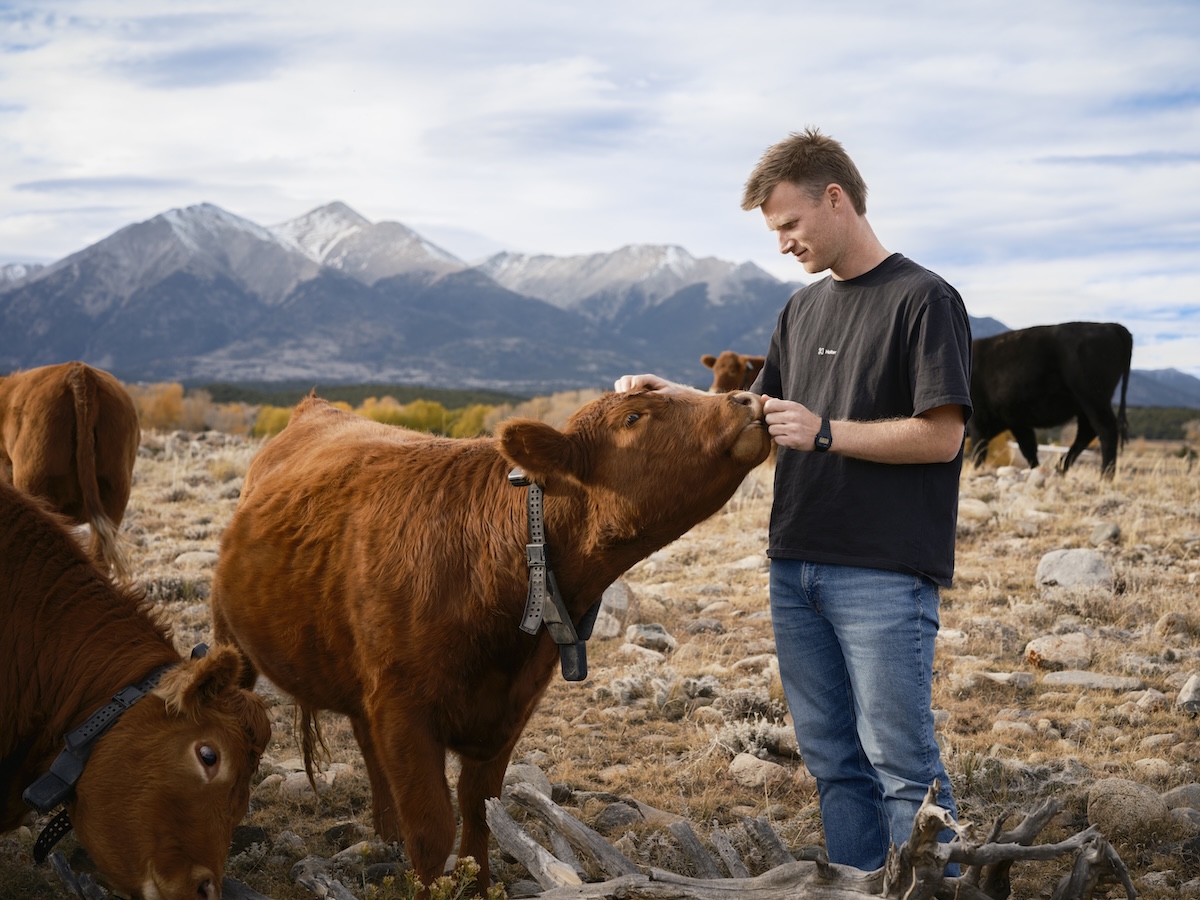
In a significant move that underscores the evolving landscape of agricultural technology, Founders Fund, a venture capital firm renowned for identifying and backing groundbreaking enterprises, has made a substantial investment in Halter, a New Zealand-based startup. This recent Series E funding round, which saw Halter secure $220 million and achieve a $2 billion valuation, highlights a growing investor confidence in solutions that address fundamental, yet often overlooked, challenges within traditional industries. Unlike many of today’s tech darlings focused on artificial intelligence or robotics, Halter’s innovation is refreshingly pragmatic: solar-powered smart collars designed to manage cattle herds with unprecedented efficiency and autonomy across vast, remote terrains.
The "Zero to One" Vision: Founders Fund’s Investment Philosophy
Founders Fund, co-founded by Peter Thiel, Ken Howery, and Luke Nosek, has cultivated a formidable reputation for investing in companies that don’t merely iterate on existing concepts but fundamentally create new markets or redefine industries. This philosophy, often encapsulated by Thiel’s concept of "zero to one" — moving from nothing to something entirely new — has guided their investments in transformative companies such as Facebook, SpaceX, and Palantir. These ventures share a common thread: they tackle complex problems with audacious, often unconventional, technological solutions, disrupting established paradigms. Halter’s entry into this exclusive portfolio signals that the firm perceives its solar-powered cow collars as more than just an incremental improvement; rather, it sees a foundational shift in how livestock can be managed on a global scale. This investment choice underscores a belief that true innovation can emerge from any sector, even those traditionally resistant to rapid technological change, provided the solution offers a genuinely novel and impactful approach to an enduring problem.
Innovating Livestock Management: A Historical Perspective
For centuries, cattle management has relied on a combination of physical barriers, human labor, and animal assistance. The image of a cowboy on horseback, or a farmer with herding dogs, is deeply ingrained in agricultural history. Physical fences, initially labor-intensive and later mechanized, have long been the primary means of controlling grazing patterns and preventing livestock from straying. However, these traditional methods come with inherent limitations. Constructing and maintaining miles of fencing across diverse topographies, from rugged mountains to sprawling plains, is costly, time-consuming, and environmentally impactful. Furthermore, monitoring the health and location of individual animals in large, dispersed herds poses a continuous challenge, often leading to delayed intervention in cases of illness or injury.
The advent of agricultural technology, or "agritech," began to offer alternatives in the late 20th and early 21st centuries. Early innovations included electronic identification tags, basic GPS trackers, and automated feeding systems. While these tools brought incremental efficiencies, they largely failed to address the core issue of dynamic, precise herd control without significant human intervention or infrastructure. The vision of a truly autonomous, intelligent system for livestock management remained largely aspirational until recently. Halter’s solution emerges from this historical context, offering a paradigm shift by virtualizing the physical fence and integrating comprehensive animal monitoring into a single, cohesive system, thus redefining the capabilities of modern ranching.
Halter’s Technological Breakthrough: Virtual Fencing and Beyond
At its core, Halter’s system represents a sophisticated fusion of hardware, software, and animal behavioral science. Each cow wears a lightweight, solar-powered collar, designed to operate continuously by harvesting ambient light. This collar communicates with a network of low-frequency towers strategically placed across the farm, creating a robust, localized connectivity infrastructure. Farmers interact with the system through a user-friendly smartphone application, allowing them to digitally define "virtual fences" on a map. These virtual boundaries replace physical fencing, offering unparalleled flexibility to adjust grazing areas, rest pastures, and implement rotational grazing strategies with precision.
The genius of the system lies in how it guides the animals. When a cow approaches a virtual boundary, the collar emits a sequence of gentle audio cues and subtle vibrations. This haptic and auditory feedback serves as a clear, non-aversive signal, much like the parking sensors in a car that alert a driver to an approaching obstacle. Halter’s founder and CEO, Craig Piggott, emphasizes that most animals learn to respond to these cues within just three interactions, quickly associating the signals with the virtual barrier. This training process enables farmers to "shift" their herds across the land using sound and vibration alone, eliminating the need for traditional herding methods that often involve significant stress for both animals and handlers.
Beyond virtual fencing, the collars are miniature data collection hubs. Operating around the clock, they continuously gather behavioral data, offering deep insights into individual animal health and fertility cycles. This rich dataset, which Halter claims to be the world’s largest repository of cattle behavior, allows the system to identify subtle changes that might indicate illness, lameness, or the optimal time for breeding. Farmers receive real-time alerts on their app, enabling proactive intervention and improving animal welfare outcomes. The company is now on its fifth generation of hardware, continuously refining its technology, with its reproduction monitoring product currently undergoing beta testing with U.S. customers, promising further enhancements to farm productivity and animal care.
From Dairy Farm to Global Vision: Craig Piggott’s Journey
Craig Piggott, the 30-year-old visionary behind Halter, brought a unique blend of practical agricultural experience and cutting-edge technological acumen to his endeavor. Growing up on a dairy farm in New Zealand provided him with an intimate understanding of the challenges and rhythms of livestock management. This firsthand knowledge formed the bedrock of his ambition to innovate within the sector. His subsequent foray into engineering and a brief, but impactful, stint at Rocket Lab, a pioneering aerospace company, proved pivotal. At Rocket Lab, Piggott witnessed the power of ambitious technological undertakings, the agility of startup culture, and the potential of venture capital to fuel transformative missions. This experience ignited his desire to apply similar principles to agriculture.
At the age of 21, Piggott embarked on the ambitious journey of founding Halter. Reflecting on those early days, he acknowledges a degree of youthful naiveté, yet it was precisely this unburdened perspective that allowed him to envision a solution unconstrained by conventional wisdom. His nine-year dedication to solving the complexities of large-scale, autonomous cattle management has culminated in a robust, market-ready system. This journey underscores the long-term commitment often required to develop truly disruptive technologies, especially in sectors with demanding operational environments like agriculture.
Transforming Farm Economics: Productivity and ROI
The financial proposition offered by Halter to farmers is compelling and directly addresses one of the most critical metrics in agriculture: land productivity. By providing ranchers with unprecedented precision and control over where their herds graze, Halter’s system can significantly enhance the efficiency of pasture utilization. Traditional grazing often leads to uneven consumption, with some areas overgrazed and others underutilized. Virtual fencing enables dynamic rotational grazing, ensuring that pastures are grazed optimally and then allowed to recover effectively.
This optimized land management translates into tangible economic benefits. Halter reports that its system can boost land productivity by as much as 20%, and in some cases, customers have seen their land output double. This increase stems not primarily from labor cost savings, though those often occur as a secondary benefit, but from ensuring cattle consume forage more efficiently and leave less behind. For a sector where margins can be tight and land is a finite resource, a 20% or more uplift in productivity represents a profound economic advantage. This strong return on investment (ROI) has been a cornerstone of Halter’s strategy, allowing it to gain traction even in a traditionally cautious industry. The financial benefits extend beyond grazing efficiency, with improved animal health and fertility management further contributing to overall farm profitability by reducing losses and optimizing breeding cycles.
Navigating the Competitive Landscape
While Halter’s innovation is significant, it operates within an increasingly dynamic agritech landscape. The opportunity to modernize livestock management has not gone unnoticed by other players. Pharmaceutical giant Merck, for instance, has developed its own virtual fencing system for cattle called Vence, demonstrating the interest of established corporations in this space. Newer entrants are also emerging, with diverse approaches; for example, a startup named Grazemate recently showcased a concept for herding cattle using autonomous drones, potentially eliminating the need for collars entirely.
Piggott, however, remains pragmatic about the competition. He acknowledges the potential for drones to play a supplementary role in the future but firmly believes that for the core function of virtual fencing and continuous animal monitoring, a collar remains the most appropriate and reliable form factor. He argues that the sheer engineering complexity and the need for "many nines" of reliability – meaning extremely low failure rates – are what truly differentiate Halter. A system managing thousands of animals cannot afford even a small percentage of failures without significant operational disruption. Halter’s nine years of development and extensive real-world testing in New Zealand have been dedicated to achieving this high level of reliability before expanding globally. Piggott suggests that the biggest competition isn’t rival technology at all, but rather the inertia of "doing what you did last year" – the inherent resistance to change within traditional agricultural practices. Overcoming this inertia requires a solution with a demonstrably strong and immediate financial return, which Halter has focused on delivering.
Global Ambitions and Market Potential
Halter’s vision extends far beyond its New Zealand origins. With its collars now deployed on over a million cattle across more than 2,000 farms in New Zealand, Australia, and 22 U.S. states, the company has established a solid foundation for international expansion. Unlike many tech companies that view the United States as the ultimate market, Halter recognizes the global nature of agriculture. Piggott highlights that while the U.S. market is important, it is not the world’s largest, and the company aims to reach agricultural communities worldwide.
Having raised approximately $400 million in total funding, Halter is now prioritizing expansion into key agricultural regions, including the U.S., South America, and Europe. The scale of the remaining opportunity is immense. With approximately one billion cattle globally, Halter’s current penetration, even after years of growth, represents a tiny fraction of the potential market. Even within its home market of New Zealand, penetration remains below 10%. This vast untapped market underscores the long-term growth trajectory for Halter and similar agritech solutions. The company’s strategy involves not just deploying existing technology but also continuously innovating and adapting its product to meet diverse regional needs and challenges.
The Future of Sustainable Agriculture
Halter’s success and the significant investment it has attracted from Founders Fund signal a broader trend: the increasing integration of sophisticated technology into agriculture to address global challenges. As the world’s population grows and demands for food production intensify, sustainable and efficient farming practices become paramount. Virtual fencing and smart animal monitoring systems offer a path toward more environmentally friendly grazing, reduced carbon footprints through optimized land use, and improved animal welfare.
The adoption of such technologies represents a cultural shift for many farmers, moving from traditional, labor-intensive methods to data-driven, precision agriculture. This transition is not always easy, but the compelling financial returns and operational efficiencies offered by solutions like Halter’s are powerful motivators. By providing tools that empower farmers to manage their land and livestock more effectively, Halter is not just selling collars; it is contributing to a more resilient, productive, and sustainable future for global agriculture. The journey from a simple idea on a New Zealand dairy farm to a multi-billion-dollar enterprise backed by one of Silicon Valley’s most discerning investors exemplifies the transformative potential when bold innovation meets an enduring, global need.