Amir Mahmud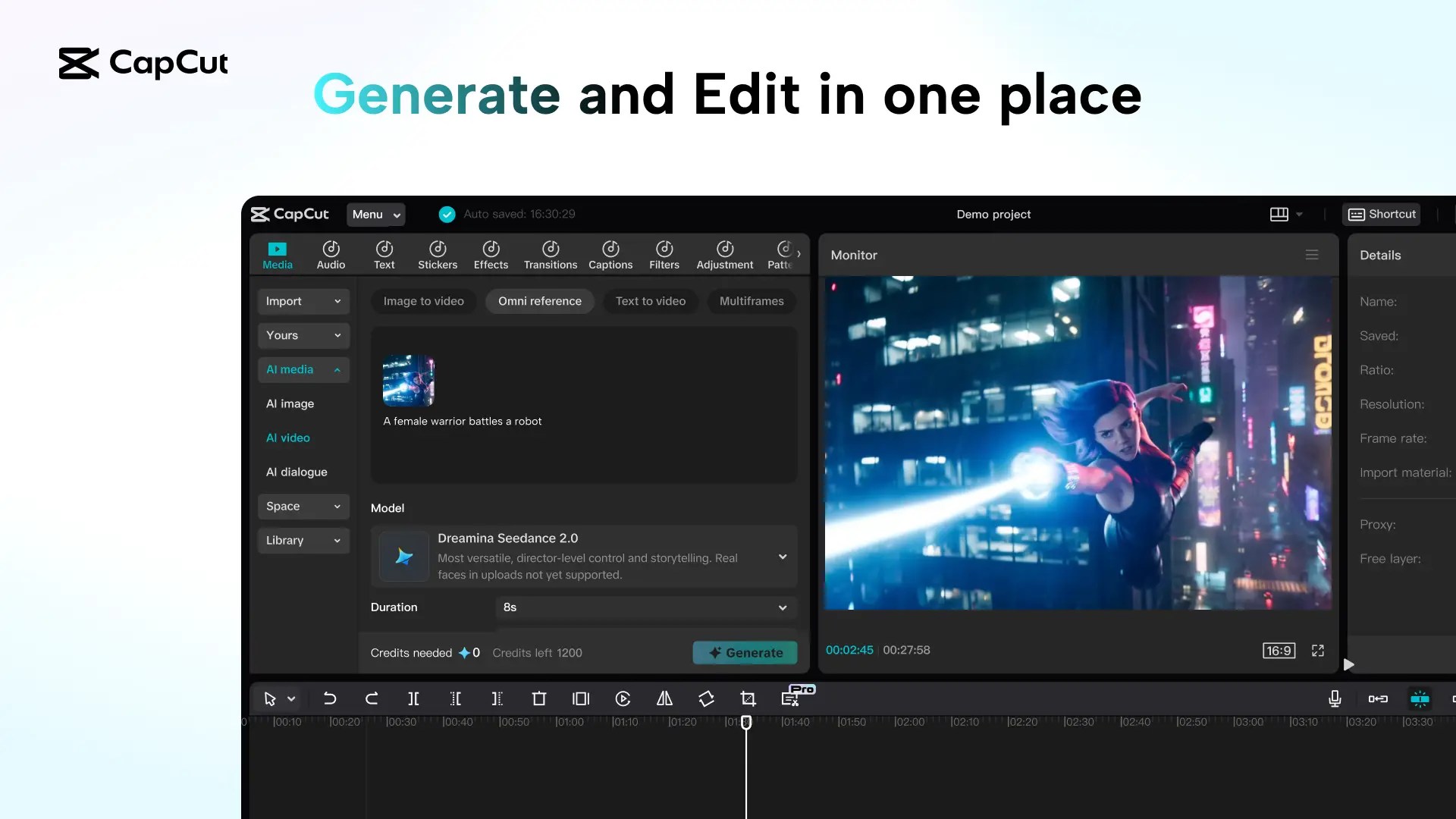
In a significant move poised to reshape the landscape of digital content creation, ByteDance, the Beijing-based technology titan, has confirmed the integration of its sophisticated audio and video generation model, Dreamina Seedance 2.0, into its widely popular editing platform, CapCut. This strategic rollout, which began with a phased launch in select markets, positions ByteDance as a formidable player in the burgeoning field of generative artificial intelligence for video, even as some competitors reportedly reassess their commitments. The introduction of Seedance 2.0 within CapCut marks a pivotal moment, offering millions of creators advanced AI capabilities to draft, edit, and synchronize multimedia content using simple text prompts, images, or reference videos.
The Accelerating Evolution of Generative AI in Video
The journey of artificial intelligence from niche research to mainstream application has been nothing short of revolutionary, particularly within creative domains. Initially, AI made strides in areas like image recognition and natural language processing. The real paradigm shift, however, began with the advent of generative AI models, which demonstrated the capacity to create novel content rather than merely analyzing existing data. Text-to-image generators like DALL-E, Midjourney, and Stable Diffusion captivated the public imagination, showcasing AI’s ability to conjure visuals from descriptive prompts.
The natural progression was towards video. Generating coherent, high-quality video – which involves maintaining temporal consistency, simulating realistic physics, and understanding complex narratives across a sequence of frames – presents a significantly greater technical challenge than static images. Despite these hurdles, numerous companies, from well-funded giants to agile startups, have been racing to master this frontier. OpenAI’s Sora, for instance, generated immense buzz with its stunningly realistic video outputs, hinting at a future where cinematic quality content could be produced with minimal effort. However, the path to commercial viability and widespread adoption is fraught with technical complexities, ethical dilemmas, and substantial computational costs. ByteDance’s foray with Seedance 2.0, following extensive internal development and testing, signifies a mature step in this rapidly evolving timeline, aiming to democratize access to advanced video generation capabilities directly within an existing, widely used platform.
Dreamina Seedance 2.0: Unleashing Creative Potential
Dreamina Seedance 2.0 represents a significant leap forward in AI-powered video creation, designed to empower both amateur enthusiasts and professional content creators. The model’s core strength lies in its intuitive interface, allowing users to generate video and audio content through various inputs. Creators can simply type a descriptive prompt, upload an image, or provide a reference video, and the AI will interpret these inputs to produce desired multimedia. This versatility means that a creator can, for example, describe a "cat chasing a laser pointer in a futuristic city" and Seedance 2.0 will endeavor to bring that vision to life.
Beyond simple generation, the model boasts sophisticated capabilities in rendering realistic textures, simulating fluid movement, and accurately depicting lighting conditions across diverse visual perspectives and angles. These features are not merely for generating new content from scratch; they also serve to enhance, correct, or refine existing footage. Imagine a creator needing to adjust the lighting in a scene or add a subtle motion effect to a static object; Seedance 2.0 offers tools to achieve this with unprecedented ease.
The utility of Dreamina Seedance 2.0 extends across a broad spectrum of content types. From practical applications like cooking recipes and fitness tutorials to more dynamic business or product overviews, the model is engineered to handle varied demands. Notably, ByteDance emphasizes its proficiency in generating motion or action-focused content, an area where previous AI video models have often struggled with coherence and realism. For instance, creating a realistic sequence of a complex physical activity or a fast-paced action scene has historically been challenging for AI, but Seedance 2.0 aims to overcome these limitations. At its initial launch, the model supports video clips of up to 15 seconds in length, available across six different aspect ratios, providing flexibility for various platforms and viewing experiences.
Another compelling use case involves ideation and pre-visualization. Creators can quickly test potential concepts or elaborate on early sketches before committing to actual filming or production. This iterative process, accelerated by AI, could significantly reduce production costs and time, allowing for more experimentation and refinement in the creative workflow.
CapCut’s Strategic Integration and Market Impact
The decision to integrate Dreamina Seedance 2.0 directly into CapCut is a masterstroke in ByteDance’s overarching strategy. CapCut, a free-to-use video editing application, has amassed hundreds of millions of users globally, becoming a staple for social media creators, particularly those on TikTok, also owned by ByteDance. Its user-friendly interface, robust editing tools, and seamless integration with short-form video platforms have cemented its position as a go-to choice for digital content production.
By embedding advanced AI video generation within CapCut, ByteDance is not just offering a new feature; it is fundamentally altering the entry barrier for high-quality video creation. Users, many of whom are already familiar with CapCut’s ecosystem, can now access cutting-edge AI without needing to navigate complex standalone platforms or possess specialized technical knowledge. This move significantly enhances CapCut’s competitive edge against other editing software and AI-focused tools, potentially attracting an even broader user base.
The integration strategy extends beyond CapCut itself. Seedance 2.0 will also roll out across different functionalities within CapCut, including dedicated AI Video editing features and specialized generation tools like Video Studio. Furthermore, the model is set to be available on ByteDance’s dedicated AI generation platform, Dreamina, and its marketing platform, Pippit. This multi-platform deployment underscores ByteDance’s ambition to create a cohesive AI-powered creative ecosystem, leveraging its vast network of applications to cater to diverse user needs, from casual social media creators to professional marketers. This integrated approach aims to lock users into ByteDance’s suite of products, creating a powerful feedback loop that drives further innovation and user engagement.
Navigating the Complexities: Intellectual Property and Ethical Safeguards
The rollout of Dreamina Seedance 2.0 has not been without its challenges, particularly concerning intellectual property (IP) rights. Earlier reports indicated a temporary pause in the model’s global launch, stemming from significant criticism from Hollywood and other creative industries. Organizations like the Motion Picture Association voiced concerns over alleged copyright infringement, raising questions about the data used to train such powerful generative AI models and the potential for these models to produce content that infringes on existing copyrighted works.
This issue is a central dilemma for the entire generative AI industry. The effectiveness of these models often relies on being trained on vast datasets, which frequently include copyrighted material from the internet. The legal frameworks surrounding "fair use" and the originality of AI-generated content are still evolving, leading to considerable legal and ethical uncertainty. Hollywood, in particular, has a vested interest in protecting its content, and the prospect of AI models generating derivative works without proper licensing or attribution presents a significant threat to their business models and creators’ livelihoods.
ByteDance has acknowledged these concerns and has implemented several safety restrictions. Crucially, the model is designed not to create videos from images or videos that contain real faces, a measure aimed at preventing the unauthorized creation of deepfakes or exploiting individuals’ likenesses. CapCut will also reportedly block the use of unauthorized generation of intellectual property. Furthermore, all content produced by Dreamina Seedance 2.0 will incorporate an invisible watermark. This digital signature is intended to help identify AI-generated content when shared off-platform, potentially aiding rights holders in issuing takedown requests if copyright infringement is detected.
The limited initial rollout to specific markets—Brazil, Indonesia, Malaysia, Mexico, the Philippines, Thailand, and Vietnam—can be directly attributed to these ongoing IP and ethical considerations. By focusing on regions where regulatory environments or immediate legal challenges may be less stringent, ByteDance can gather data, refine its safeguards, and iterate on the model’s capabilities while continuing to address global IP concerns. The company has stated its commitment to partnering with experts and creative communities to continuously improve the model and its safety protocols as it expands its reach.
The Global AI Video Landscape: Competition and Innovation
ByteDance’s aggressive push into AI video generation through CapCut underscores the intensely competitive nature of this nascent market. While OpenAI’s Sora garnered significant attention for its impressive realism, its public availability and long-term strategy remain somewhat opaque, with recent reports even suggesting a potential scaling back of its consumer-facing efforts. This leaves a vacuum that ByteDance, along with other major tech players and specialized AI startups, is eager to fill.
Companies like Google, with its Lumiere model, and Meta, which has also invested heavily in generative AI research, are actively developing their own video generation capabilities. Startups like RunwayML and Stability AI are also prominent, offering cutting-edge tools to creators, often through subscription models or API access. The competition is not just about who can produce the most realistic video; it’s also about who can offer the most accessible, integrated, and ethically responsible tools to a mass audience.
ByteDance’s strategy of embedding advanced AI directly into a widely used consumer application like CapCut positions it uniquely. While others might focus on high-end professional tools or API services, ByteDance is democratizing access, potentially bringing AI video generation to hundreds of millions of casual creators. This approach could significantly accelerate the adoption of AI-generated content across social media and other digital platforms, shaping new norms for digital storytelling and content consumption. The "race" for AI dominance is not merely technological; it is also a race for market share, user adoption, and the establishment of industry standards, particularly in addressing the complex ethical and legal dimensions of this transformative technology.
Future Outlook and Societal Implications
The widespread availability of advanced AI video generation tools through platforms like CapCut heralds a new era for digital content. On one hand, it promises unprecedented creative freedom, allowing individuals and small teams to produce high-quality video content that was once the exclusive domain of large studios with substantial budgets. This could lead to an explosion of novel creative forms, diverse narratives, and a more vibrant digital media landscape.
On the other hand, the societal implications are profound and require careful consideration. The ease with which realistic, albeit short, video content can be generated raises concerns about misinformation, propaganda, and the proliferation of "deepfakes." Distinguishing between AI-generated and real footage will become increasingly challenging, demanding enhanced digital literacy and robust authentication mechanisms. The invisible watermarking employed by ByteDance is a step in this direction, but the effectiveness of such measures in combating malicious use will be under constant scrutiny.
Ultimately, the integration of Dreamina Seedance 2.0 into CapCut is more than just a product launch; it is a declaration of intent from ByteDance to lead the charge in democratizing generative AI for video. As the technology continues to evolve, the ongoing dialogue between tech developers, creators, legal experts, and policymakers will be crucial in shaping a future where the power of AI can be harnessed for creative good while mitigating its inherent risks. The next few years will undoubtedly witness rapid advancements and unforeseen challenges as these powerful tools become increasingly integrated into our daily digital lives.