Azin Asro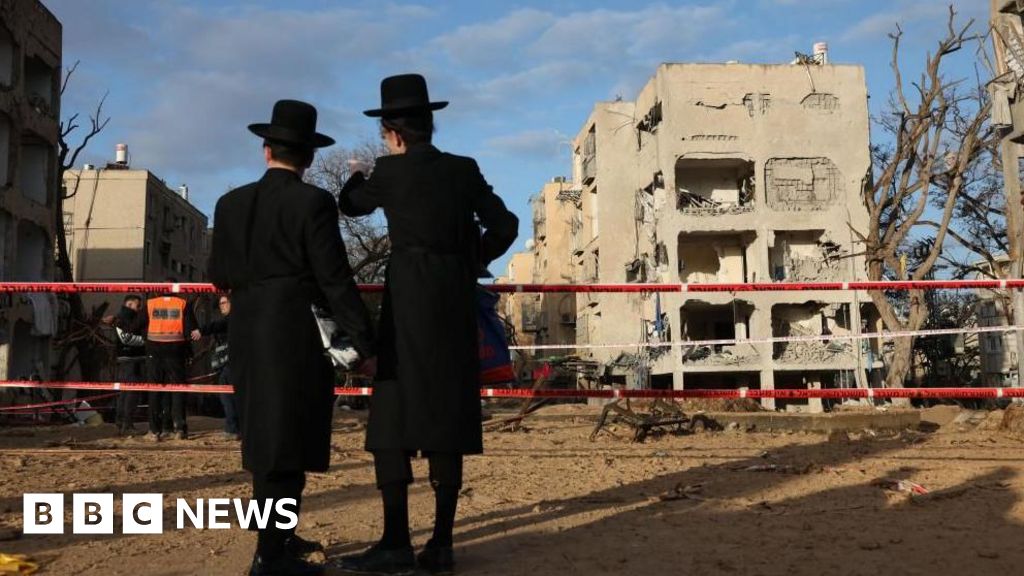
More than 160 individuals sustained injuries, with some critically wounded, following a barrage of Iranian missile strikes that impacted two southern Israeli municipalities. Emergency response teams in Israel confirmed the extensive casualties. The attacks, which occurred late Saturday evening, targeted the towns of Arad and Dimona, both situated in close proximity to a sensitive nuclear research facility. This dramatic escalation has ignited fresh concerns regarding regional stability and the efficacy of advanced air defense systems.
The Saturday Night Strikes: A Detailed Account
The late-night assault saw ballistic missiles bypass Israel’s vaunted air defense network, directly striking residential areas within Arad and Dimona. Israeli emergency officials reported that 84 people received medical attention in Arad, while another 78 were treated in Dimona. The devastating impact left a profound mark on the communities. In Arad, local residents recounted the sheer terror of the blasts, which resulted in significant structural damage to multiple buildings, leaving behind a deep crater at one impact site.
Naram Zaid, a paramedic working in Arad, provided a harrowing account to reporters, describing a scene filled with "a lot of children with head and chest injuries" after being crushed by debris inside a compromised structure. She recalled attempting to comfort a 10-year-old girl whose face was streaked with blood from broken glass, refusing to enter an ambulance until her parents were also safely evacuated from their demolished apartment. The external walls of two multi-story residential buildings were visibly gouged by the force of the explosions, a stark testament to the missiles’ destructive power. Crowds of men, many dressed in the traditional attire of the Ultra-Orthodox Jewish community, gathered in the Negev desert town, silently surveying the extensive damage.
A similar missile strike unfolded in the nearby town of Dimona, adding to the evening’s grim tally of casualties. Among those injured there was another 10-year-old boy, whose condition was described as serious by medical personnel. Israeli firefighting services confirmed the defensive failures, stating, "In both Dimona and Arad, interceptors were launched that failed to hit the threats, resulting in two direct hits by ballistic missiles with warheads weighing hundreds of kilograms." This admission has prompted urgent investigations into the operational capabilities and vulnerabilities of Israel’s sophisticated air defense architecture.
Strategic Significance: Proximity to Dimona
The selection of Arad and Dimona as targets carries profound strategic implications, primarily due to their close proximity to the Shimon Peres Negev Nuclear Research Center. This facility, often colloquially referred to as the "Dimona reactor," is located approximately 13 kilometers (eight miles) outside Dimona. For over six decades, it has been widely, albeit unofficially, acknowledged as the cornerstone of Israel’s undeclared nuclear weapons program. Israel has consistently maintained a policy of "nuclear ambiguity," neither confirming nor denying the existence of its atomic arsenal. This stance has positioned Israel as the only presumed nuclear power in the Middle East.
The historical context of the Dimona facility dates back to the late 1950s, with construction initiated with significant French assistance. Its existence became public knowledge through various leaks and intelligence reports over the decades, notably through the revelations of former technician Mordechai Vanunu in the late 1980s. Consequently, any military action, particularly a direct missile strike, in the vicinity of this site is viewed with the utmost gravity by Israeli authorities and the international community alike. Beyond the immediate human cost, such an attack represents a symbolic challenge to Israel’s strategic deterrence and raises questions about the targeting priorities of its adversaries. It underscores a dangerous new phase in regional hostilities, where critical infrastructure and potentially strategic assets become direct or indirect targets.
The Retaliatory Cycle: Iran’s Perspective and Natanz
Iran’s state television promptly claimed responsibility for the missile strikes, asserting they were a direct response to a prior attack on its Natanz nuclear facility. This tit-for-tat dynamic highlights the escalating nature of the broader conflict between the two regional powers. The Natanz facility is a crucial component of Iran’s nuclear program, primarily serving as its principal uranium enrichment site.
The attack on Natanz is not an isolated incident within the ongoing geopolitical tensions. The facility has been a recurring target, notably experiencing strikes during the initial days of the conflict that commenced on February 28th, as well as during a 12-day period of heightened hostilities last June. Historically, Iran has attributed previous attacks on Natanz to a combination of Israeli and American covert operations, indicating a long-standing shadow war aimed at disrupting its nuclear advancements. Following the latest incident, the International Atomic Energy Agency (IAEA) confirmed that it was "not aware of any damage to the nuclear research facility" near Dimona, nor had "any increase in off-site radiation levels" been reported at Iran’s Natanz facility.
Despite the IAEA’s assessment regarding Natanz, Iran’s Atomic Energy Organization characterized the attack as a violation of the Treaty on the Non-Proliferation of Nuclear Weapons (NPT). While acknowledging that "no leakage of radioactive materials" occurred and there was "no danger to residents of the surrounding areas," Iran’s strong condemnation underscores its strategic framing of such incidents within the context of international nuclear accords. This diplomatic maneuvering attempts to garner international sympathy and condemn actions against its nuclear infrastructure, even as concerns persist globally about the transparency and peaceful nature of its enrichment activities.
Israel’s Air Defense Challenge and Public Resolve
The breach of Israel’s sophisticated air defense systems by Iranian ballistic missiles has prompted serious introspection and urgent inquiries within the country’s military establishment. Israel possesses one of the world’s most advanced multi-layered missile defense networks, including systems like Iron Dome for short-range rockets, David’s Sling for medium-range threats, and the Arrow system designed for long-range ballistic missiles. The fact that incoming Iranian missiles managed to penetrate these defenses, resulting in direct hits and significant casualties, is a rare occurrence and underscores the evolving nature of missile warfare.
This incident serves as a potent reminder that even the most advanced defense systems are not infallible, a lesson drawn by many Israelis from previous conflicts, including the "12-day war last summer." The unexpected success of these Iranian strikes will undoubtedly lead to comprehensive reviews and potential adjustments to Israel’s defensive posture and interception protocols.
From a social and cultural perspective, such direct attacks on civilian areas often have a complex impact on public sentiment. While the immediate aftermath is characterized by shock, fear, and a focus on recovery, historical patterns suggest that these incidents tend to solidify public resolve rather than diminish it. Instead of weakening the population’s will, such aggression often unifies the public behind national leadership and military responses, fostering a sense of resilience and determination to confront the perceived threat. This phenomenon was observed during previous periods of conflict, where civilian resilience often became a key factor in national morale, even amidst the psychological toll of living under the constant threat of attack.
Broader Regional Implications and Geopolitical Tensions
The missile strikes represent a significant escalation in the ongoing, multifaceted conflict between Iran and Israel, a rivalry deeply rooted in ideological differences, regional power struggles, and fundamental security concerns. Both Israel and its primary ally, the United States, have consistently articulated the elimination of any potential Iranian capacity to develop a nuclear weapon as a paramount strategic objective. Iran, conversely, maintains that its nuclear program is solely for peaceful purposes, despite international skepticism fueled by its past activities and current enrichment levels.
This direct exchange of fire, particularly involving attacks on facilities linked to nuclear programs, significantly heightens the risk of a wider regional conflagration. The Middle East remains a volatile region, and any miscalculation or unchecked escalation could draw in other regional and international actors, potentially destabilizing global energy markets and international diplomacy. The prospect of two powers, one with an undeclared nuclear arsenal and the other actively enriching uranium, directly targeting each other’s nuclear-related sites introduces an unprecedented and dangerous dimension to their long-standing animosity.
International diplomatic efforts, already strained by the complexities of the broader conflict and the lingering questions surrounding the Iran nuclear deal, face renewed challenges. These events could further complicate negotiations, embolden hardliners on both sides, and make de-escalation efforts more arduous. The world watches anxiously as the cycle of retaliation deepens, with the human cost rising and the specter of a broader, more devastating conflict looming larger over the region.







 Amir Mahmud