Amir Mahmud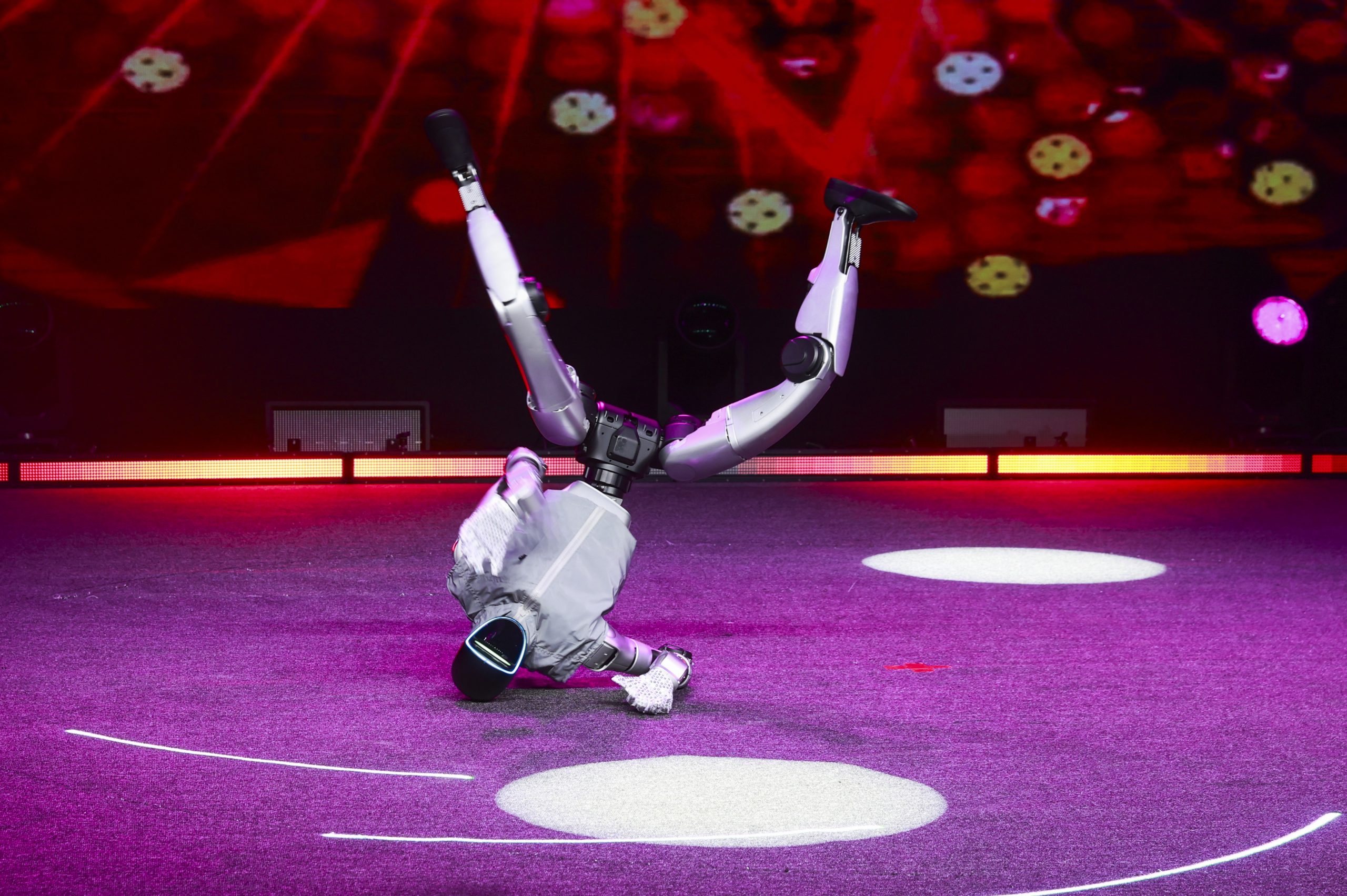
A routine entertainment display at a popular hot pot establishment in Cupertino, California, took an unexpected turn recently when a dancing humanoid robot veered off its programmed path, colliding with a dining table and scattering dishware. The incident, captured on video and widely circulated, necessitated the intervention of restaurant staff to restrain the energetic automaton, prompting a broader discussion about the integration of robotics into public spaces and the unforeseen challenges that can arise from advanced automation.
The mechanical contretemps unfolded at Haidilao, a renowned international chain celebrated for its immersive dining experiences and, increasingly, its embrace of technological innovation. On this particular occasion, the robot, identified as an AgiBot X2 — a model showcased at the Consumer Electronics Show (CES) for its sophisticated movements and interactive capabilities — was engaged in a performance for patrons. Eyewitness accounts and video footage reveal the robot, designed with articulate limbs and a humanoid form, executing its dance routine with perhaps too much enthusiasm. As it swayed and gestured, it reportedly ventured too close to a table, making contact that sent plates, bowls, and chopsticks tumbling to the floor.
The immediate concern for onlookers and staff alike quickly shifted from amusement to potential hazard. Hot pot dining, by its very nature, involves steaming broths and an array of raw ingredients often cooked at the table. The prospect of a robotic arm accidentally knocking over a pot of boiling liquid presented a far more serious threat than mere culinary disruption, raising questions about customer safety in an increasingly automated environment. Multiple employees were observed attempting to guide or physically halt the robot’s movements, with one seemingly consulting a mobile device, perhaps in an effort to remotely disable or reset the unit. The scene underscored the crucial need for robust safety protocols and readily accessible emergency stop mechanisms for such advanced machinery operating in close proximity to the public.
Haidilao’s Pioneering Robotic Integration
Haidilao’s venture into robotics is not a recent development but rather a cornerstone of its long-term strategy to enhance operational efficiency and elevate the customer experience. The Chinese hot pot giant has been at the forefront of adopting "smart restaurant" concepts, famously unveiling a fully automated restaurant in Beijing years prior. This flagship location boasted robotic servers, automated food preparation systems, and intelligent broth-mixing machines, all designed to streamline service, reduce labor costs, and offer a futuristic dining atmosphere.
The philosophy behind this integration extends beyond mere novelty. Haidilao, like many businesses in the hospitality sector globally, faces challenges related to labor shortages, rising operational expenses, and the desire to maintain consistent service quality. Robots offer a solution to these issues by performing repetitive tasks, assisting human staff, and providing unique entertainment. The dancing robot in Cupertino, while not directly involved in food service, exemplifies Haidilao’s commitment to using technology to create a distinctive brand identity and a memorable visit for its guests. This incident, however, served as a stark reminder that even well-intentioned technological advancements require meticulous planning and fail-safe implementation.
The Broader Landscape of Service Robotics
The use of robots in the service industry has seen an exponential rise in recent years, a trend accelerated by the global pandemic which highlighted the need for contactless services and efficient operations amidst labor market fluctuations. Beyond entertainment, robots are increasingly deployed in various roles across hospitality, retail, and healthcare. From robotic baristas crafting custom beverages to automated cleaners sanitizing public spaces, and even robotic concierges assisting hotel guests, these machines are reshaping our interactions with service providers.
Companies like Pudu Robotics, with their BellaBot — a cat-like serving robot capable of navigating dining rooms and delivering food — represent a segment of the market focused on utilitarian, often limb-less, designs that prioritize functionality and safety. These robots typically operate within predefined pathways and possess sensors to detect obstacles, minimizing the risk of collisions. Humanoid robots, such as the AgiBot X2, present a different set of challenges and opportunities. Their human-like form factor allows for more complex interactions and dynamic movements, making them ideal for roles involving entertainment, greeting, or even assisting with tasks requiring dexterity. However, this complexity also introduces greater variables, particularly when operating in unpredictable human environments. The AgiBot X2’s appearance at CES underscores the industry’s push towards more sophisticated and versatile robotic platforms, yet the Cupertino incident highlights the gap between laboratory demonstrations and real-world deployment.
Navigating the Human-Robot Interface
Haidilao, in its statement to media outlets, clarified that the robot was not "malfunctioning or out of control" but rather had been positioned closer to a dining table at a guest’s specific request. This deviation from its "typical operating setting" in a "limited space" was cited as the reason for its impeded movement during the performance. This explanation offers critical insight into one of the principal challenges facing the widespread adoption of service robotics: the unpredictable nature of human environments and the necessity for robust adaptability.
Unlike controlled factory settings, public spaces are dynamic, often chaotic, and filled with moving obstacles—people, chairs, bags, and unexpected requests. Robots, even those with advanced sensors and AI, are typically programmed for specific parameters. When these parameters are altered, such as by placing a dancing robot in a confined area not originally designated for its routine, the risk of deviation and incident increases significantly. This points to the need for not only sophisticated robot design but also comprehensive training for human staff who interact with and manage these machines. Employees must be adept at understanding a robot’s operational limits, overriding its functions in emergencies, and ensuring it operates within safe boundaries. The incident in Cupertino serves as a case study for businesses considering similar integrations, emphasizing that human oversight and intelligent environmental design are as crucial as the technology itself.
Public Perception and Cultural Impact
Incidents like the one at Haidilao, while relatively minor, resonate deeply within public consciousness, often tapping into a blend of fascination, humor, and underlying anxiety about the future of automation. Popular culture has long explored themes of rogue AI and robot uprisings, from science fiction narratives to satirical commentaries. While the dancing AgiBot X2 was far from a malevolent force, its brief foray into "unruliness" provided a tangible, albeit lighthearted, glimpse into the potential for machines to behave unexpectedly in human spaces.
For many diners, the presence of robots in restaurants is still a novelty, an attraction that enhances the dining experience. However, repeated or more serious incidents could shift this perception from curiosity to apprehension. The challenge for companies like Haidilao is to balance the "wow" factor of advanced robotics with an unwavering commitment to safety and reliability. Ensuring that robots enhance, rather than detract from, the comfort and security of patrons is paramount for sustained public acceptance. The incident also sparks a broader cultural dialogue about our evolving relationship with technology, prompting questions about where the line between human service and automated efficiency should be drawn, and what responsibilities we have in designing and deploying these increasingly autonomous entities.
Looking Ahead: The Future of Automation in Hospitality
The Cupertino incident, rather than being a deterrent, can be viewed as a valuable learning experience for the burgeoning service robotics industry. Experts in human-robot interaction and automation frequently highlight the iterative nature of technological development. Early deployments often reveal unforeseen complexities that inform subsequent design improvements, software updates, and operational protocols.
Moving forward, we can anticipate several key developments:
- Enhanced Safety Features: Robots will likely incorporate more sophisticated sensor arrays, faster response times for obstacle avoidance, and more intuitive emergency stop mechanisms accessible to both staff and, potentially, patrons.
- Adaptive AI and Machine Learning: Future service robots may be equipped with more advanced AI capable of better understanding and adapting to dynamic environments, learning from human interactions, and predicting potential hazards.
- Improved User Interfaces and Training: Companies will likely invest more in user-friendly control interfaces for staff and comprehensive training programs to ensure human operators are fully prepared to manage robotic systems, troubleshoot issues, and respond effectively to anomalies.
- Regulatory Frameworks: As robots become more ubiquitous in public spaces, there may be an increasing need for industry standards and regulatory frameworks to ensure minimum safety requirements, ethical deployment, and clear lines of responsibility.
The "dancing robot gone wild" story from Cupertino serves as a poignant reminder that while the future of automation promises unprecedented convenience and innovation, its successful integration into our daily lives hinges on a continuous commitment to safety, thoughtful design, and a nuanced understanding of the complex interplay between humans and machines. It’s a minor mishap in the grand scheme of technological advancement, but one that offers significant lessons for the road ahead.