Amir Mahmud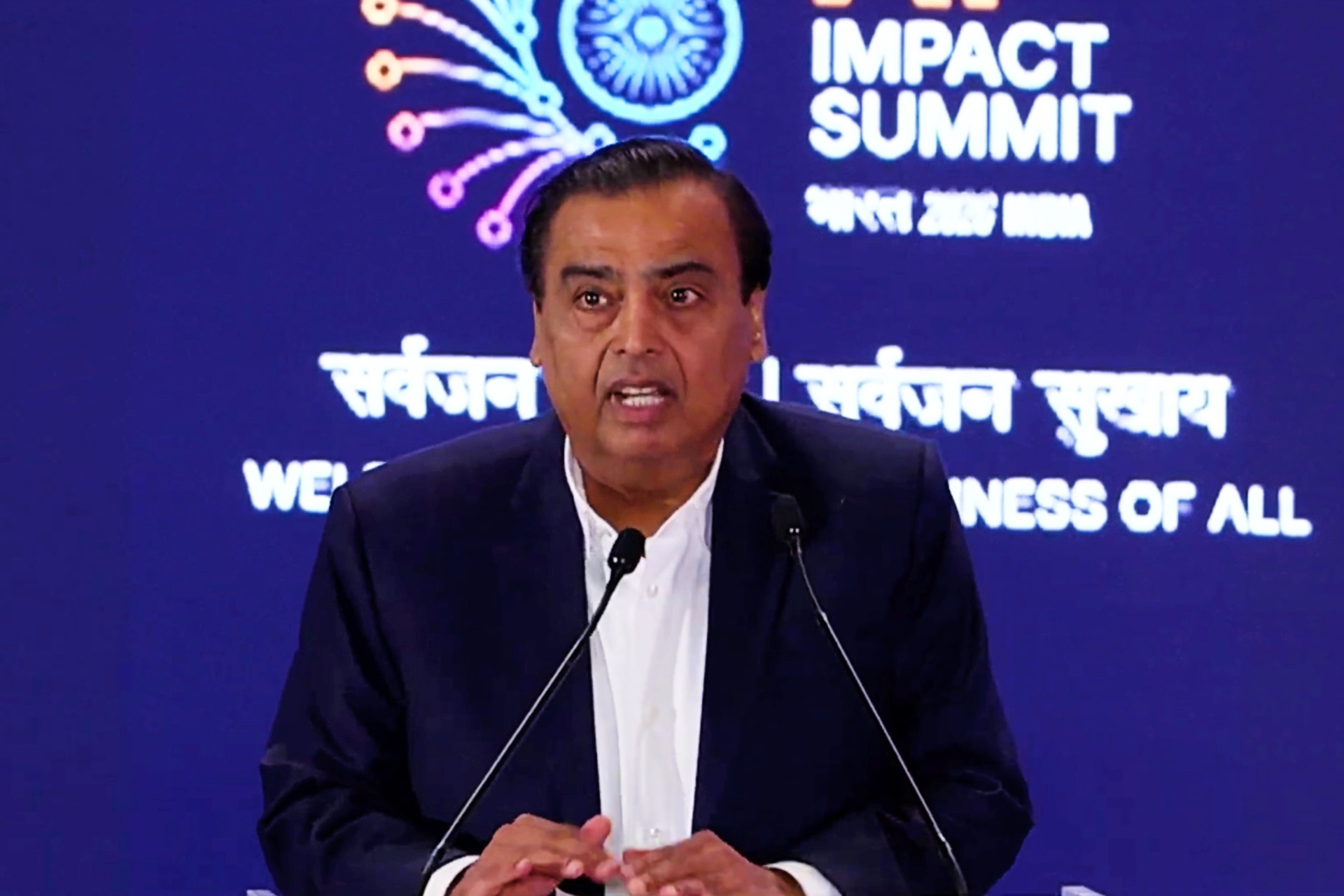
India is poised for a significant leap in its technological landscape, as Mukesh Ambani, the chairperson of the sprawling Indian conglomerate Reliance, unveiled an ambitious plan to invest ₹10 trillion, approximately $110 billion, over the next seven years. This monumental commitment is earmarked for establishing a robust artificial intelligence computing infrastructure across the nation, signaling a decisive move towards digital self-reliance and global tech leadership. The announcement, made at the India AI Impact Summit in New Delhi, underscored a national imperative to cultivate indigenous AI capabilities, reducing reliance on external computational resources.
A Grand Vision for Digital Sovereignty
The comprehensive investment strategy encompasses the development of gigawatt-scale data centers, the rollout of a nationwide edge computing network, and the integration of advanced AI services directly into Reliance’s expansive Jio telecom platform. This multi-pronged approach aims to democratize access to sophisticated AI tools and compute power, making it available across various sectors and to a vast user base. Construction for several multi-gigawatt data centers has already commenced in Jamnagar, Gujarat, with an initial capacity of over 120 megawatts projected to become operational in the latter half of 2026. This early start demonstrates the urgency and scale of Reliance’s vision, aiming to lay the foundational hardware necessary for India’s AI future.
Reliance’s initiative arrives amid a broader surge in AI investment within India, reflecting a concerted national effort to carve out a substantial role in the global artificial intelligence arena. Just prior to Reliance’s announcement, the Adani Group, another prominent Indian conglomerate, disclosed its intentions to invest around $100 billion in AI data centers across the country. Furthermore, the Indian government anticipates attracting more than $200 billion in AI infrastructure spending over the coming two years, underscoring a collective push from both public and private sectors. Global technology giants are also recognizing India’s burgeoning potential, with OpenAI, a leading AI research and deployment company, partnering with the Tata Group to establish approximately 100 megawatts of AI capacity, with aspirations to scale up to 1 gigawatt. This confluence of domestic and international investment paints a vivid picture of India’s rapid ascent in the AI domain.
The Foundation of Future Innovation: Compute Power
At the heart of this massive investment lies the critical understanding that advanced AI models demand immense computational power. Mukesh Ambani articulated this precisely, stating that the primary bottleneck in AI development today is not a deficit of talent or imagination, but rather the scarcity and prohibitive cost of compute resources. This perspective highlights a strategic shift from merely consuming AI services to actively producing and controlling the underlying infrastructure that powers them. By building out gigawatt-scale data centers, Reliance aims to provide the raw processing muscle required for complex AI tasks, from training large language models to enabling real-time analytics for a multitude of applications.
The concept of "edge computing" is also central to Reliance’s strategy. By distributing compute capabilities closer to the data sources – such as smartphones, IoT devices, and local networks – edge computing reduces latency, enhances data privacy, and optimizes bandwidth usage. For a country as geographically diverse and populous as India, a nationwide edge computing network is crucial for delivering responsive and efficient AI services, particularly in remote areas or sectors where immediate data processing is vital, like agriculture or emergency services. This distributed infrastructure will allow for more localized AI applications, tailored to specific regional needs and available even in areas with limited central connectivity.
A National Imperative: Driving Self-Reliance in AI
Ambani emphasized that for India, the pursuit of AI self-reliance is not merely an economic ambition but a national imperative. He declared that India "cannot afford to rent intelligence," a powerful statement that resonates with the nation’s broader "Atmanirbhar Bharat" (self-reliant India) initiative. This philosophy advocates for domestic production and innovation across key sectors, reducing dependency on foreign technologies and fostering indigenous capabilities. In the context of AI, this means owning the entire stack, from hardware and data centers to algorithms and applications, ensuring data sovereignty and technological independence.
This strategic move draws parallels to Reliance Jio’s disruptive entry into the Indian telecom market in 2016. By offering highly affordable mobile data, Jio triggered a digital revolution, democratizing internet access for millions and significantly driving down costs. Ambani explicitly stated that Reliance aims to replicate this success in the AI sector, drastically reducing the cost of AI services to make them accessible and affordable for a vast population and diverse industries. This democratization of AI could unlock unprecedented opportunities for innovation and economic growth, particularly for small and medium-sized enterprises (SMEs) and startups that might otherwise be priced out of advanced AI tools.
Broader Horizons: Sectoral Integration and Language Diversity
Reliance’s AI strategy extends beyond mere infrastructure, envisioning a future where AI is deeply embedded across India’s economy and society. The company plans to forge partnerships with a wide array of Indian enterprises, startups, and academic institutions to integrate AI solutions into critical sectors. This includes transforming manufacturing processes with predictive analytics, optimizing logistics and supply chains, enhancing agricultural productivity through AI-driven insights, improving healthcare delivery with diagnostic tools and personalized treatments, and revolutionizing financial services with fraud detection and algorithmic trading. Such broad-based integration promises to boost efficiency, foster innovation, and create new economic avenues.
A crucial aspect of Reliance’s plan is the development of AI capabilities in multiple Indian languages. India is a land of rich linguistic diversity, with hundreds of languages and dialects spoken across its regions. For AI to truly permeate society and be utilized by everyone, it must be accessible in local languages. This focus on linguistic inclusivity is vital for ensuring that AI’s benefits are not limited to English speakers, thereby bridging the digital divide and enabling a more equitable adoption of technology. By developing AI models that understand and generate content in various Indian languages, Reliance aims to unlock a massive user base and foster a uniquely Indian flavor of AI innovation, tailored to the cultural and linguistic nuances of the subcontinent. Jio has already laid groundwork in this area, having partnered with Google last year to offer free access to Gemini AI Pro to millions of its users in India, providing a taste of advanced AI capabilities.
The Green Energy Backbone: Powering Sustainable AI
The immense energy requirements of large-scale data centers and AI computing pose significant environmental challenges. Reliance, however, plans to mitigate this by leveraging its substantial green energy capacity. The company boasts an impressive 10 gigawatts of surplus power generated from its solar projects in Gujarat and Andhra Pradesh. This commitment to powering its AI infrastructure with renewable energy sources is a critical component of its strategy, aligning with global efforts towards sustainable technology development. By utilizing clean energy, Reliance not only reduces its carbon footprint but also contributes to India’s broader renewable energy goals, showcasing a model for environmentally responsible technological advancement. This integration of green energy into the AI build-out is a testament to a holistic approach, recognizing the intertwined nature of technological progress and environmental stewardship.
A Competitive Landscape: India’s AI Race
The aggressive push by Reliance and other Indian conglomerates underscores a burgeoning race to secure a dominant foothold in what is anticipated to be one of India’s most significant technological opportunities. This competitive environment is likely to spur rapid innovation, attract further investment, and accelerate the pace of AI adoption across the country. The scale of investment from domestic players, coupled with the interest from international giants like OpenAI, highlights a collective recognition of India’s immense potential – driven by its vast talent pool, burgeoning digital economy, and supportive government policies.
However, challenges remain. The sheer capital expenditure required is immense, and while $110 billion is a colossal sum, the continuous evolution of AI technology will demand ongoing investment. The need for a highly skilled workforce, particularly in advanced AI research and engineering, will intensify. India’s education system will need to keep pace, producing a steady stream of talent capable of designing, deploying, and maintaining this complex infrastructure and developing cutting-edge AI applications. Furthermore, establishing clear regulatory frameworks for AI, addressing ethical concerns, and ensuring data privacy will be crucial for fostering trust and responsible innovation.
Challenges and Opportunities Ahead
The vision articulated by Reliance and other key players sets India on a trajectory to become a global powerhouse in artificial intelligence. By focusing on indigenous compute infrastructure, democratizing access, integrating AI across sectors, prioritizing linguistic inclusivity, and committing to sustainable energy, India is not just "renting intelligence" but building its own. This comprehensive approach, while ambitious, holds the promise of transforming India into a hub for AI innovation, driving economic growth, and enhancing the quality of life for its citizens. The coming years will be critical in realizing this potential, as India navigates the complexities and harnesses the opportunities presented by the rapidly evolving world of artificial intelligence.