Amir Mahmud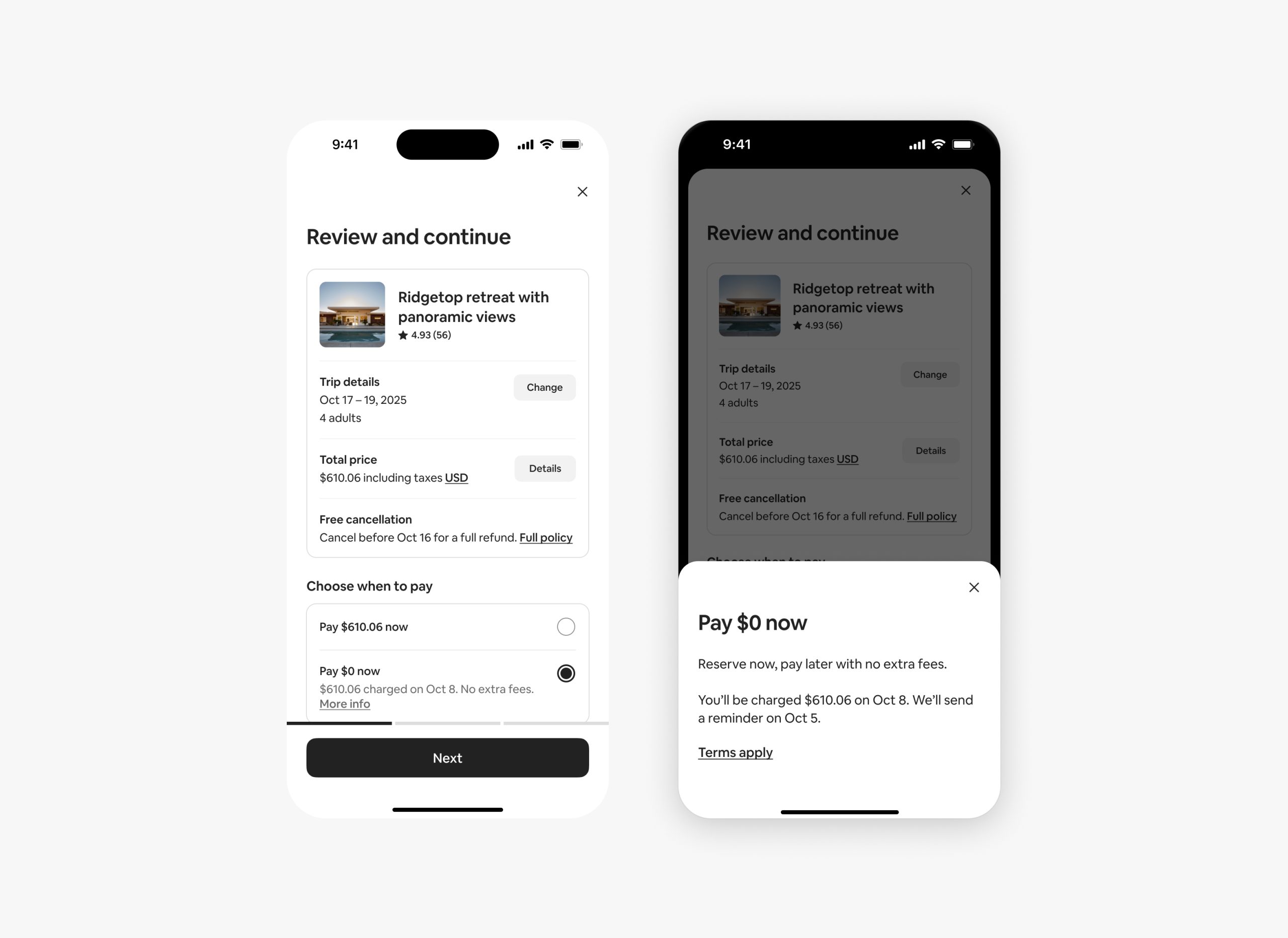
Airbnb has officially expanded its innovative "Reserve Now, Pay Later" (RNPL) feature to a global audience, a strategic move poised to redefine how millions plan and secure their accommodations worldwide. This initiative empowers users to lock in their desired bookings without the immediate financial outlay, offering a critical layer of flexibility that allows for plan adjustments without the upfront monetary commitment. The expansion follows a successful pilot phase in the United States, where the option garnered significant user adoption and demonstrated a measurable impact on booking trends.
A New Era for Travel Bookings
The core principle behind the RNPL offering is straightforward: travelers can reserve their stay well in advance, with the full payment not becoming due until closer to their check-in date. This mechanism is specifically available for properties that adhere to "flexible" or "moderate" cancellation policies, ensuring a balance between host security and guest autonomy. By deferring the payment, Airbnb aims to alleviate one of the most common friction points in travel planning: the necessity of tying up a substantial sum of money months before a trip commences. This approach mirrors the broader "buy now, pay later" (BNPL) trend that has permeated the e-commerce landscape, making a wide array of goods and services more accessible by distributing or postponing costs. However, it’s crucial to distinguish RNPL from traditional BNPL; rather than breaking a payment into installments, RNPL delays the entire payment until a later, specified date, typically closer to the actual travel date, without involving interest or credit checks.
The global rollout underscores Airbnb’s responsiveness to evolving consumer expectations, particularly in a post-pandemic world where uncertainty and the desire for financial agility have become paramount. For many, the ability to secure desirable lodging, often months in advance to leverage better rates or ensure availability for popular destinations, is now coupled with the comfort of knowing their funds remain liquid until closer to departure. This enhancement not only simplifies the booking process but also potentially encourages travelers to consider longer stays or more premium accommodations they might otherwise deem too financially burdensome upfront.
Tracing the Path to Payment Flexibility
Airbnb’s journey toward offering enhanced payment flexibility is not a recent development but rather an evolution of strategies refined over several years. The company first began experimenting with deferred payment solutions as far back as 2018. At that time, it introduced a feature that permitted guests to book a property by paying either 20% or 50% of the total charges upfront, with the remaining balance due at a later stage. This initial foray into staggered payments was an acknowledgment of the financial barrier that large upfront costs could present for travelers.
Building on this foundation, in 2023, Airbnb further diversified its payment options by forging a partnership with the prominent fintech firm Klarna. This collaboration enabled users to pay for their accommodations in four distinct installments spread out over a six-week period. The Klarna integration brought a true BNPL model to the platform, complete with its own set of terms and conditions, offering a credit-based solution for those seeking to spread their travel expenses over a shorter term.
The current "Reserve Now, Pay Later" feature represents the most comprehensive and globally integrated iteration of Airbnb’s commitment to payment flexibility. Unlike the Klarna partnership which involved a third-party credit provider, RNPL is an in-house solution that primarily focuses on delaying the payment rather than segmenting it into multiple installments. This distinction is vital; it means users are not entering into a credit agreement but simply postponing a single payment, simplifying the transaction and avoiding potential credit implications. This progression illustrates a clear trajectory for Airbnb: consistently identifying and addressing financial hurdles to make travel more accessible and stress-free for its vast user base.
The U.S. Pilot: A Resounding Success
Before its global deployment, the RNPL feature underwent a crucial testing phase within the United States. The results from this domestic pilot were overwhelmingly positive, providing robust data that justified the worldwide expansion. Airbnb reported an impressive 70% adoption rate for eligible bookings among U.S. users, a figure that strongly indicates the significant demand for such a flexible payment mechanism. This high uptake rate suggests that a substantial portion of the traveling public values the ability to secure their bookings without immediate financial commitment.
The success of the U.S. pilot was not just limited to high adoption. During its fourth-quarter 2025 earnings call, Airbnb’s Chief Financial Officer, Ellie Mertz, highlighted several key benefits derived from the feature. Mertz noted that RNPL played a significant role in increasing the number of nights booked during the quarter. Furthermore, she observed that the feature contributed to longer booking lead times, meaning guests were reserving their stays further in advance. This is a considerable advantage for hosts and for Airbnb, as it provides greater predictability and allows for more efficient inventory management.
Perhaps most interestingly, Mertz pointed out a "mix shift" towards larger, entire homes, particularly those with four or more bedrooms, among users opting for RNPL. This suggests that the financial flexibility offered by the feature encouraged guests to book more spacious and potentially more expensive accommodations, leading to an increase in the average daily rate (ADR) for eligible properties. This shift indicates that RNPL is not just making existing travel easier, but it’s actively influencing consumer choices towards higher-value bookings.
Driving Bookings and Boosting Value
The strategic implications of RNPL for Airbnb are multi-faceted. By reducing the initial financial barrier, the company effectively expands its addressable market, allowing more individuals and groups to consider bookings they might otherwise defer or forgo. The ability to reserve without paying upfront is particularly appealing for family vacations, group trips, or longer stays, where the total cost can be substantial. This also enables travelers to capitalize on early bird discounts or secure highly sought-after properties well in advance, without immediate cash flow constraints.
The slight increase in the overall cancellation rate, which moved from 16% to 17% for the quarter and was observed to be higher among RNPL users, was acknowledged by Mertz. However, she downplayed its significance, stating it was "not hugely material relative to the broader cancellations on the platform." This suggests that the benefits of increased bookings, longer lead times, and higher average daily rates comfortably outweigh the marginal rise in cancellations. For hosts, while a higher cancellation rate could introduce some uncertainty, the increased booking volume and the potential for attracting guests who opt for larger, more lucrative properties could offset these concerns. Airbnb’s strict cancellation policies for hosts (flexible, moderate, strict) also offer a framework for managing these risks.
Further supporting the strategic value of RNPL, a survey conducted last year among U.S. travelers by Airbnb in collaboration with Focaldata, a London-based market research firm, revealed compelling insights. A significant 60% of participants emphasized the importance of a flexible payment option when planning a holiday. Moreover, 55% of those surveyed indicated they would actively use such a payment method if available. These statistics underscore a clear and widespread consumer demand that Airbnb is now directly addressing on a global scale.
Broader Market Implications and Competitive Landscape
The global expansion of Airbnb’s "Reserve Now, Pay Later" feature is not merely an internal enhancement; it sends ripples across the broader travel and hospitality industry. For direct competitors, including traditional hotel chains and other online travel agencies (OTAs), this move could create pressure to introduce similar flexible payment options to remain competitive. Many hotels already offer flexible cancellation policies, but few provide a true "reserve now, pay later" model without some form of deposit or credit card hold. This could force a re-evaluation of payment structures across the sector.
From a social and cultural perspective, RNPL democratizes access to travel. It empowers individuals and families who might operate on tighter budgets or prefer to manage their finances strategically to participate in experiences that were previously financially out of reach or required significant upfront planning and saving. This aligns with a growing consumer trend towards experiential spending, where memories and experiences are valued highly, but often tempered by practical financial considerations. The option allows for aspirational travel to become more attainable, fostering a culture where travel planning is less about immediate financial burden and more about future enjoyment.
The economic impact is also noteworthy. By encouraging earlier bookings and potentially higher-value stays, RNPL could contribute to greater stability and growth within the travel ecosystem. It helps distribute demand more evenly and allows businesses in destination areas to plan better for incoming tourism. In an economic climate often characterized by fluctuating consumer confidence, providing financial leeway for discretionary spending like travel can stimulate demand.
Navigating the Nuances: Benefits and Considerations
The advantages of RNPL for travelers are clear: enhanced financial flexibility, reduced upfront commitment, greater peace of mind, and the ability to secure preferred accommodations earlier. For Airbnb, the benefits include increased booking volume, higher average daily rates, extended booking lead times, and a stronger competitive position in the global travel market. It also deepens customer loyalty by offering a service that directly addresses a key consumer need.
However, like any significant product feature, there are nuances to consider. While the CFO deemed the slight increase in cancellations "not hugely material," it still represents a metric that Airbnb and its hosts will monitor closely. For hosts, a higher cancellation rate, even if minor, necessitates efficient re-listing and potentially impacts their occupancy rates. Airbnb’s algorithms and host support systems will need to ensure that the impact on individual hosts remains minimal and manageable. The clear communication of cancellation policies linked to RNPL eligibility is crucial to manage expectations for both guests and hosts.
Furthermore, the operational implications for Airbnb in managing deferred payments on a global scale are substantial. This involves robust payment processing systems, adherence to diverse regional financial regulations, and effective communication with both guests and hosts regarding payment schedules and cancellation windows. The company’s experience with its previous payment flexibility initiatives and its established global infrastructure likely position it well to handle these complexities.
Looking Ahead: The Future of Flexible Travel
The global launch of "Reserve Now, Pay Later" marks a significant milestone in Airbnb’s strategy to innovate and adapt within the dynamic travel industry. It reflects a deep understanding of modern consumer behavior, where flexibility, financial prudence, and ease of planning are highly prized. By making travel more accessible and less financially intimidating upfront, Airbnb is not just enhancing its own platform but is also setting a new benchmark for the entire hospitality sector.
As the travel landscape continues to evolve, driven by technological advancements, shifting economic conditions, and changing consumer priorities, features like RNPL are likely to become standard rather than exceptional. Airbnb’s proactive stance in democratizing the booking process reinforces its position as a leader in innovative travel solutions, ensuring that more people can turn their travel aspirations into reality, one flexible booking at a time. The future of travel planning appears to be increasingly centered around empowering the traveler with control over their finances and their itinerary, and Airbnb’s latest global expansion is a powerful step in that direction.