Amir Mahmud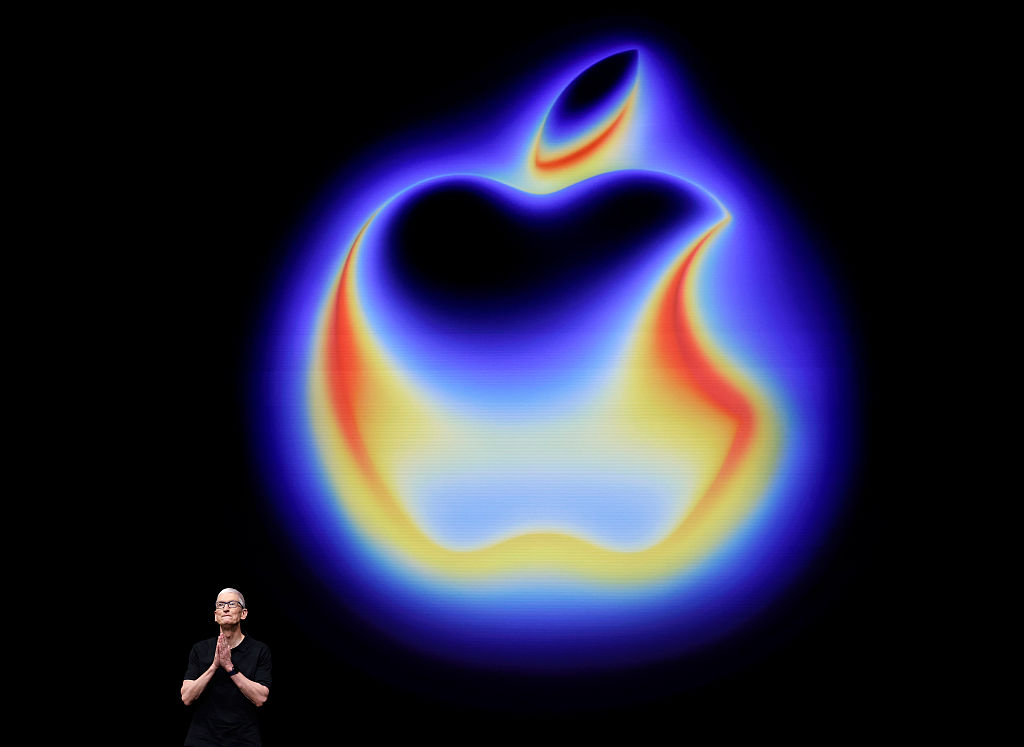
The highly anticipated overhaul of Apple’s venerable voice assistant, Siri, powered by the company’s new Apple Intelligence generative AI framework, is reportedly facing additional delays, pushing back its full deployment further into 2025 and beyond. What was initially unveiled in 2024 as a groundbreaking stride in artificial intelligence integration for Apple devices has seen its release timeline consistently shift, leaving users and industry observers to ponder the complexities of bringing such advanced capabilities to market. The latest insights, primarily from a Bloomberg report by Mark Gurman, suggest that the ambitious transformation of Siri will now unfold more gradually, with some features potentially not arriving until the iOS 27 release in September 2025 or even later.
This ongoing saga underscores the immense technical and logistical challenges inherent in embedding sophisticated large language model (LLM) technology into a vast, global ecosystem while upholding Apple’s stringent standards for performance, privacy, and user experience. The initial expectation was for a significant rollout with the iOS 26.4 update in March, but internal testing has reportedly encountered snags, necessitating a more phased approach. This means some elements of the revamped Siri may appear with a May iOS update (26.5), while others, representing the more profound changes, could be deferred until the next major annual operating system iteration.
The Vision Behind Apple Intelligence and a Smarter Siri
Apple Intelligence, introduced with considerable fanfare, represents Apple’s comprehensive foray into generative AI, designed to imbue its devices with unprecedented levels of personalization, productivity, and contextual understanding. At its core, the initiative aims to transform how users interact with their iPhones, iPads, and Macs, moving beyond rote commands to truly intelligent, conversational, and proactive assistance. The revamped Siri is positioned as the primary interface for this new era, envisioned to be far more intuitive, capable of understanding natural language nuances, maintaining context across conversations, and executing complex, multi-application tasks with ease.
The current iteration of Siri, while functional for basic commands and information retrieval, has often been criticized for lacking the conversational depth and contextual awareness of modern AI chatbots like OpenAI’s ChatGPT or Google’s Gemini. Apple’s objective is to bridge this gap, allowing users to simply "talk" to Siri as they would to a sophisticated AI, enabling tasks such as summarizing emails, drafting messages, generating images, and navigating intricate device settings through natural language. A crucial element in this transformation is the reported partnership with Google, leveraging Google Gemini to power some of Apple’s generative AI features, including aspects of Siri. This strategic alliance highlights the immense computational and data requirements of cutting-edge AI, even for a company with Apple’s vast resources, and signals a pragmatic approach to quickly integrate advanced LLM capabilities.
A Decade-Plus Journey: Siri’s Evolution and Challenges
The journey of digital voice assistants began long before Siri became a household name, with early research and development dating back to the 1960s and projects like DARPA’s Speech Understanding Research program in the 1970s. However, it was Apple’s acquisition of Siri Inc. in 2010 and the subsequent launch of Siri on the iPhone 4S in 2011 that truly brought sophisticated voice interaction into the mainstream consumer consciousness. At the time, Siri was revolutionary, offering a glimpse into a future where human-computer interaction was more natural and intuitive.
Initially, Siri captivated users with its ability to understand spoken queries, set reminders, send messages, and search the web. Yet, as the technology matured and competitors emerged, Siri’s limitations became increasingly apparent. Rivals like Amazon’s Alexa and Google Assistant, launched in 2014 and 2016 respectively, quickly gained ground, often perceived as more versatile, context-aware, and deeply integrated with third-party services. While Apple steadily improved Siri over the years, integrating it into the HomePod, Apple Watch, and macOS, and expanding its capabilities with Shortcuts and more robust on-device processing, it struggled to shed its reputation for being less intelligent or adaptable than its peers. This historical context underscores the immense pressure on Apple to deliver a truly transformative Siri experience with Apple Intelligence, one that not only catches up but potentially leapfrogs the competition, redefining user expectations for AI assistants.
The Technical Labyrinth of AI Integration
The reported delays in Siri’s revamp are a stark reminder of the extraordinary technical hurdles involved in deploying generative AI at scale within a user-centric, privacy-focused ecosystem. Integrating large language models (LLMs) is not merely a software update; it’s a fundamental re-architecture of how a digital assistant functions.
One of Apple’s core tenets is privacy, which significantly complicates AI development. While many AI models rely heavily on cloud-based processing of user data, Apple aims for a hybrid approach, emphasizing "on-device intelligence" where feasible. This means performing as many AI computations directly on the user’s device as possible, minimizing data sent to the cloud. For tasks requiring more extensive computational power, Apple introduced "Private Cloud Compute," a system designed to process user data in a secure, encrypted, and ephemeral cloud environment, ensuring that data is never stored or accessible to Apple. Developing and rigorously testing this privacy-preserving architecture to ensure both robust performance and uncompromised security is an incredibly complex undertaking.
Furthermore, ensuring the accuracy, reliability, and safety of an LLM-powered assistant is paramount. Generative AI models are known to occasionally "hallucinate," providing incorrect or nonsensical information. For a product like Siri, which millions rely on for critical information and task execution, such errors are unacceptable. Extensive testing is required to minimize these instances, refine responses, and ensure the AI behaves responsibly across a vast array of user queries and contexts. The seamless integration of these new AI capabilities into the existing, intricate iOS framework, ensuring compatibility across diverse hardware generations and maintaining optimal system performance, adds another layer of complexity. These challenges collectively contribute to the iterative development cycle and the necessity for extended internal testing, leading to the reported postponements.
Market Dynamics and Competitive Pressures
The artificial intelligence landscape is currently one of the most dynamic and fiercely competitive sectors in technology. Companies like Google, Microsoft, and Meta have been aggressively investing in and deploying generative AI across their product portfolios, setting high expectations for what AI can achieve. Google has integrated Gemini into its search, Workspace, and Android ecosystem, while Microsoft has heavily invested in OpenAI and brought Copilot to Windows and Office. This "AI arms race" means that Apple faces immense pressure not just to deliver an AI solution, but one that is demonstrably superior or at least uniquely Apple-esque in its integration and user experience.
Delays, even if ultimately leading to a more polished product, can carry market implications. They can fuel narratives that Apple is "behind" in AI, potentially impacting investor confidence or giving competitors more time to solidify their market positions. For Apple, maintaining its premium brand image and ecosystem stickiness is crucial, and a cutting-edge AI experience is increasingly becoming a non-negotiable component of that perception. Analysts closely watch these developments, as a powerful Siri could further entrench users within the Apple ecosystem, making it even harder for them to switch to competing platforms. Conversely, a lackluster or perpetually delayed rollout could chip away at its perceived innovation leadership.
Beyond direct competition, the revamped Siri also has implications for Apple’s vast ecosystem of third-party developers. A more intelligent and capable Siri, with enhanced understanding of user intent and the ability to interact with apps more deeply, could unlock new avenues for app integration and functionality. This could lead to a new wave of innovative applications that leverage Siri’s enhanced intelligence, but it also means developers will need to adapt to new APIs and paradigms, adding another layer of complexity to the ecosystem’s evolution.
Societal Shifts and Ethical Considerations
The introduction of highly advanced AI assistants like the envisioned Siri also carries broader cultural and social implications. As AI becomes more deeply embedded in our daily lives, it fundamentally alters human-computer interaction, making technology feel more like a conversational partner than a mere tool. This shift promises increased productivity, improved accessibility for individuals with disabilities, and a more seamless digital experience.
However, the proliferation of powerful AI also raises significant ethical questions. Concerns about data privacy, even with Apple’s robust safeguards, will remain a constant talking point. The potential for AI bias, where algorithms reflect and amplify societal prejudices present in their training data, is another critical area requiring continuous vigilance and refinement. Furthermore, the increasing reliance on "always-on" AI assistants raises questions about human agency, critical thinking, and the potential for over-dependency on automated solutions. Apple, as a global technology leader, bears a significant responsibility in navigating these ethical considerations, not just in its technology’s design but also in its communication with users about its capabilities and limitations.
The Path Forward: A Phased and Deliberate Rollout
Despite the repeated delays, Apple’s strategy appears to be a deliberate, phased rollout rather than a rushed launch. This approach, while testing the patience of eager users, is often favored for highly complex software projects, especially those involving nascent technologies like generative AI. It allows for continuous refinement, bug fixing, and performance optimization based on real-world usage and feedback, ensuring a more stable and polished product upon wider release.
The expectation is that initial, less resource-intensive AI features might arrive with iOS 26.5, providing a taste of the new Siri’s capabilities. The more profound, transformative changes, likely involving deeper LLM integration and more complex multi-app interactions, are then anticipated with iOS 27 in September. This allows Apple to iterate, learn, and scale its Private Cloud Compute infrastructure as needed. The long-term vision extends beyond the iPhone, with Apple Intelligence expected to permeate the entire Apple ecosystem, enhancing experiences across iPads, Macs, and potentially even the Apple Watch and Vision Pro. For the product managers and engineers at Apple, the task is immense: to deliver on a decade-long promise of a truly intelligent personal assistant that redefines the standard for AI in consumer technology, all while upholding the company’s unwavering commitment to privacy and user experience. The wait may be longer, but the stakes, and the potential rewards, are incredibly high.