Amir Mahmud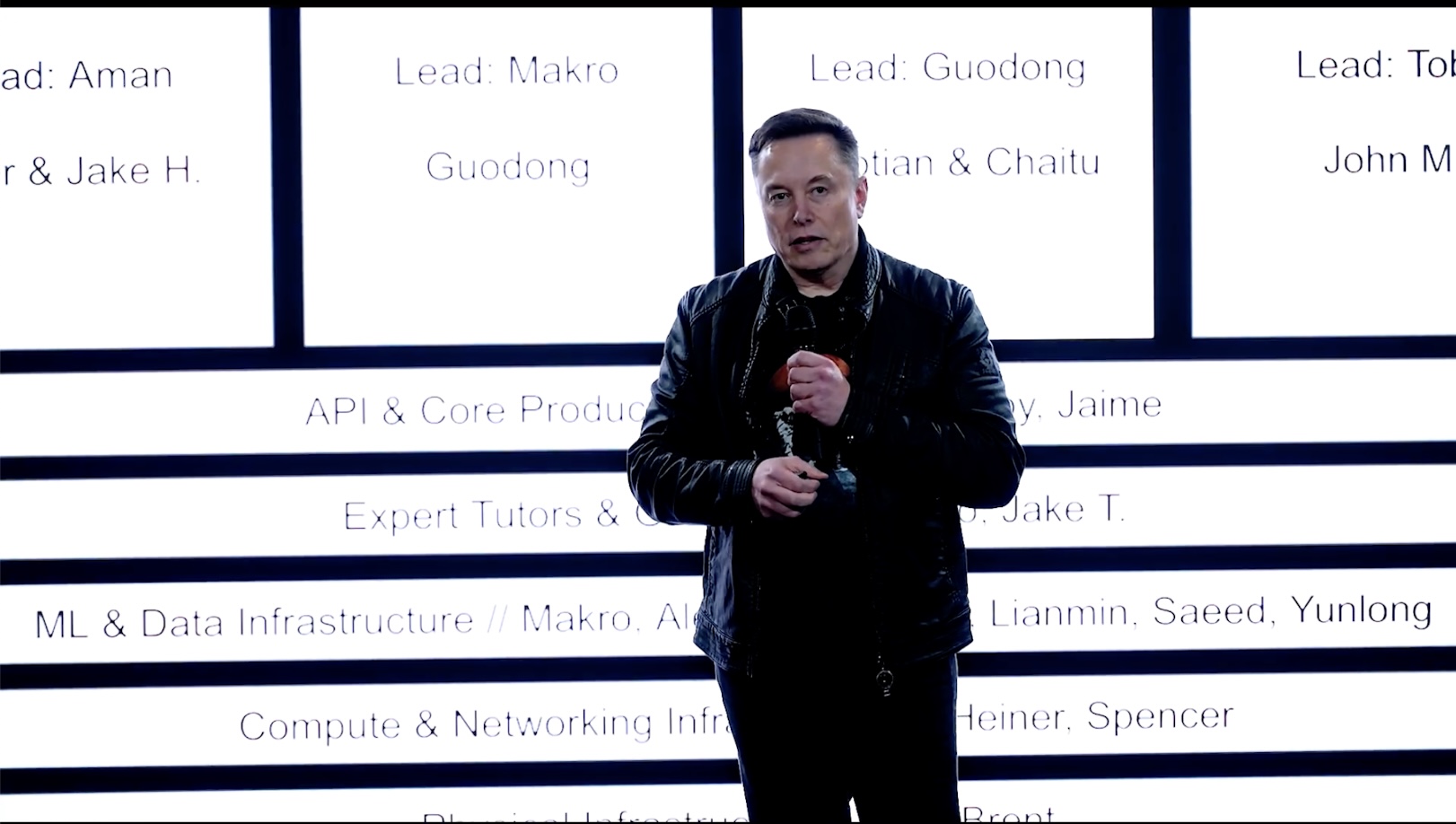
In a rare move that offered an unvarnished look into its operations, xAI, Elon Musk’s artificial intelligence venture, recently made public a full 45-minute all-hands meeting video. This unusual step, published on the X platform (formerly Twitter), provided unprecedented insight into the company’s strategic direction, product roadmap, and its intricate relationship with X, following earlier reports detailing the internal discussions. The decision to release the footage publicly is speculated to have been influenced by prior media coverage, signaling a new level of transparency—or perhaps a proactive narrative control—from the typically guarded organization.
Unprecedented Transparency and Internal Shifts
The public release of an internal company meeting of this magnitude is highly uncommon in the tech industry, particularly for a startup operating in a competitive and rapidly evolving field like artificial intelligence. It immediately pulled back the curtain on the immediate operational realities confronting xAI, revealing a significant wave of employee departures. Elon Musk, addressing the situation, characterized these exits as "layoffs" necessitated by a strategic restructuring of the company. While organizational shifts are a regular occurrence in fast-growing tech firms, the extent of these departures, notably affecting a substantial portion of xAI’s founding team, sparked considerable internal and external confusion regarding the company’s stability and future trajectory.
Musk publicly articulated his rationale on X, stating, "As a company grows, especially as quickly as xAI, the structure must evolve. This unfortunately required parting ways with some people. We wish them well in future endeavors." This statement underscores the inherent challenges of scaling an ambitious startup from its nascent stages. Founded in July 2023 with the stated goal of understanding the true nature of the universe, xAI rapidly assembled a team of top AI researchers. The rapid growth and subsequent reorganization can be viewed through the lens of other high-profile tech companies that have undergone similar growing pains, often struggling to maintain initial cohesion while expanding operations and product lines. This period of transition is critical for any young company, as it seeks to solidify its operational foundation while simultaneously pursuing groundbreaking technological advancements.
The New Organizational Blueprint
Under the newly implemented organizational framework, xAI has been segmented into four distinct and focused primary teams, each tasked with a crucial aspect of the company’s burgeoning AI ecosystem. This restructuring aims to streamline development efforts and enhance efficiency across its diverse projects.
The first team is dedicated to the Grok chatbot, a generative AI conversational agent designed to provide real-time information with a "rebellious streak" and a willingness to answer questions that other AI systems might avoid. This team’s mandate includes not only enhancing Grok’s textual capabilities but also integrating sophisticated voice functionalities, aiming for a more natural and intuitive user interaction. Grok’s integration with X provides it with a unique data stream, allowing it to process information rapidly from trending topics and news, differentiating it from competitors like OpenAI’s ChatGPT or Google’s Gemini.
The second team focuses on developing the app’s coding system. This suggests a strategic emphasis on internal tooling and infrastructure, enabling xAI to build, deploy, and manage its AI models and applications more effectively. A robust coding system is fundamental for rapid iteration and scalability, especially as xAI seeks to expand its product offerings and integrate AI capabilities across various platforms. This team’s work is crucial for the underlying stability and performance of all xAI’s outward-facing products.
The third specialized group is responsible for the Imagine video generator. This project positions xAI squarely in the competitive and rapidly evolving field of generative media, an area where companies like RunwayML and Google’s DeepMind have also made significant strides. The Imagine tool’s focus on video generation highlights the increasing demand for AI-powered content creation tools, from entertainment to marketing. The ability to generate high-quality video content efficiently has profound implications for creative industries, potentially democratizing video production and opening new avenues for digital storytelling.
Perhaps the most ambitious and forward-looking initiative is the Macrohard project. This team’s scope is extraordinarily broad, spanning from the simulation of simple computer usage to the complex modeling of entire corporate entities. Toby Pohlen, who will lead the Macrohard project under the new structure, articulated its expansive vision to colleagues: "[Macrohard] is able to do anything on a computer that a computer is able to do." This statement hints at the development of a highly generalized AI agent capable of autonomous operation within digital environments, a step towards what some might call artificial general intelligence (AGI) or an advanced form of automation. Pohlen further emphasized the project’s ultimate ambition, stating, "There should be rocket engines fully designed by AI." This vision ties directly into Musk’s other ventures, particularly SpaceX, suggesting a future where AI plays a pivotal role in engineering and design processes for advanced aerospace technologies. The social and economic implications of such a system are vast, potentially transforming industries, workforce dynamics, and the very nature of human-computer interaction.
Monetization and Content Conundrums
The all-hands meeting also touched upon xAI and X’s financial performance, with executives providing updates on usage and revenue figures. Nikita Bier, X’s head of product, announced that the platform had "just crossed" $1 billion in annual recurring revenue from subscriptions. He attributed this milestone to a focused marketing push during the holiday season. This figure, if sustained, represents a significant step towards X’s financial stability following its tumultuous acquisition and subsequent rebranding.
Meanwhile, xAI’s Imagine tool was reported to be generating an astonishing 50 million videos daily and over 6 billion images in the preceding 30 days, according to internal metrics. These numbers underscore the immense scale of content being produced by xAI’s generative AI capabilities and highlight the burgeoning demand for such tools.
However, these impressive metrics are not without significant controversy. It is exceptionally difficult to disassociate these figures from the substantial proliferation of deepfake pornography that inundated the X platform during the same period. Reports indicated that X experienced a dramatic surge in engagement coinciding with the widespread dissemination of AI-generated explicit images. With an estimated 1.8 million sexualized images reportedly generated over just nine days, it is highly probable that a considerable portion of xAI’s stated image-generation figures includes this deeply problematic content. This situation spotlights a critical ethical dilemma at the intersection of AI innovation and platform responsibility. While generative AI offers powerful creative tools, its misuse for creating non-consensual deepfake content poses severe social and cultural challenges, raising questions about content moderation, algorithmic safeguards, and the accountability of platforms and AI developers. The challenge for xAI and X lies in demonstrating that their growth and technological prowess are not inadvertently fueling harmful activities, but rather are being developed and deployed with robust ethical considerations and safety measures in place.
The Vision Beyond Earth: Lunar Factories and Galactic AI
The most captivating and characteristic segment of the presentation arrived at its conclusion, where Elon Musk reiterated and expanded upon his extraordinary vision for space-based data centers. Despite the acknowledged formidable technical and economic challenges inherent in such endeavors, Musk pressed forward with an even grander concept: a moon-based factory dedicated to the production of AI satellites. This lunar facility would not only manufacture these advanced orbital units but would also feature a "lunar mass driver," essentially an electromagnetic catapult designed to launch these satellites into space with unprecedented efficiency.
This infrastructure, Musk posited, could eventually enable the deployment of an AI cluster capable of harnessing a significant portion of the sun’s total energy output. Such a colossal energy acquisition would power AI systems of unimaginable scale and complexity, potentially leading to intelligence that transcends current human comprehension. His ultimate vision stretched even further, envisioning the expansion of this AI network to other galaxies, transforming it into an interstellar or even intergalactic intelligence.
Musk articulated the profound philosophical implications of such an advanced entity, stating, "It’s difficult to imagine what an intelligence of that scale would think about, but it’s going to be incredibly exciting to see it happen." This declaration encapsulates Musk’s characteristic blend of audacious technological ambition and a fascination with the potential for superintelligence. This vision connects directly with Musk’s long-standing concerns about existential risks from AI and his belief that humanity must become a multi-planetary species to ensure its long-term survival. The idea of space-based data centers addresses challenges like cooling and energy supply for massive AI computations, while also offering a potential pathway to circumvent earthly regulatory or resource limitations. However, the engineering hurdles, financial costs, and geopolitical implications of establishing lunar industrial bases and deploying vast AI networks across the solar system are staggering, placing this aspect of xAI’s roadmap firmly in the realm of long-term speculative futurism.
Navigating the Future of Artificial Intelligence
The public unveiling of xAI’s all-hands meeting paints a vivid picture of a company at a pivotal juncture. It simultaneously grapples with the immediate realities of internal restructuring and workforce adjustments—common growing pains for any rapidly expanding tech firm—while steadfastly charting an audacious course toward a multi-planetary, perhaps even galactic, future for artificial intelligence. The tension between these earthly challenges and cosmic ambitions defines xAI’s current trajectory.
On one hand, the company is refining its operational structure and focusing on core product development, including the Grok chatbot, advanced coding systems, and the Imagine video generator. The financial performance of X, with its reported $1 billion in recurring subscription revenue, offers a glimmer of stability, yet it remains inextricably linked to the ethical quagmire surrounding AI-generated content and deepfakes on the platform. The ability of xAI and X to effectively address these societal challenges will be crucial for their long-term reputation and public trust.
On the other hand, Elon Musk’s grand vision for lunar factories, space-based AI infrastructure, and the potential for an AI system capable of harnessing solar energy and expanding across galaxies, underscores the deeply speculative and transformative nature of xAI’s ultimate goals. While these aspirations push the boundaries of current technological feasibility, they align with Musk’s established pattern of pursuing "impossible" ventures that redefine industries. The coming years will reveal whether xAI can effectively bridge the chasm between its immediate operational hurdles and its truly interplanetary ambitions, solidifying its place not just as another AI competitor, but as a potential pioneer in the next frontier of artificial intelligence and space exploration.