Amir Mahmud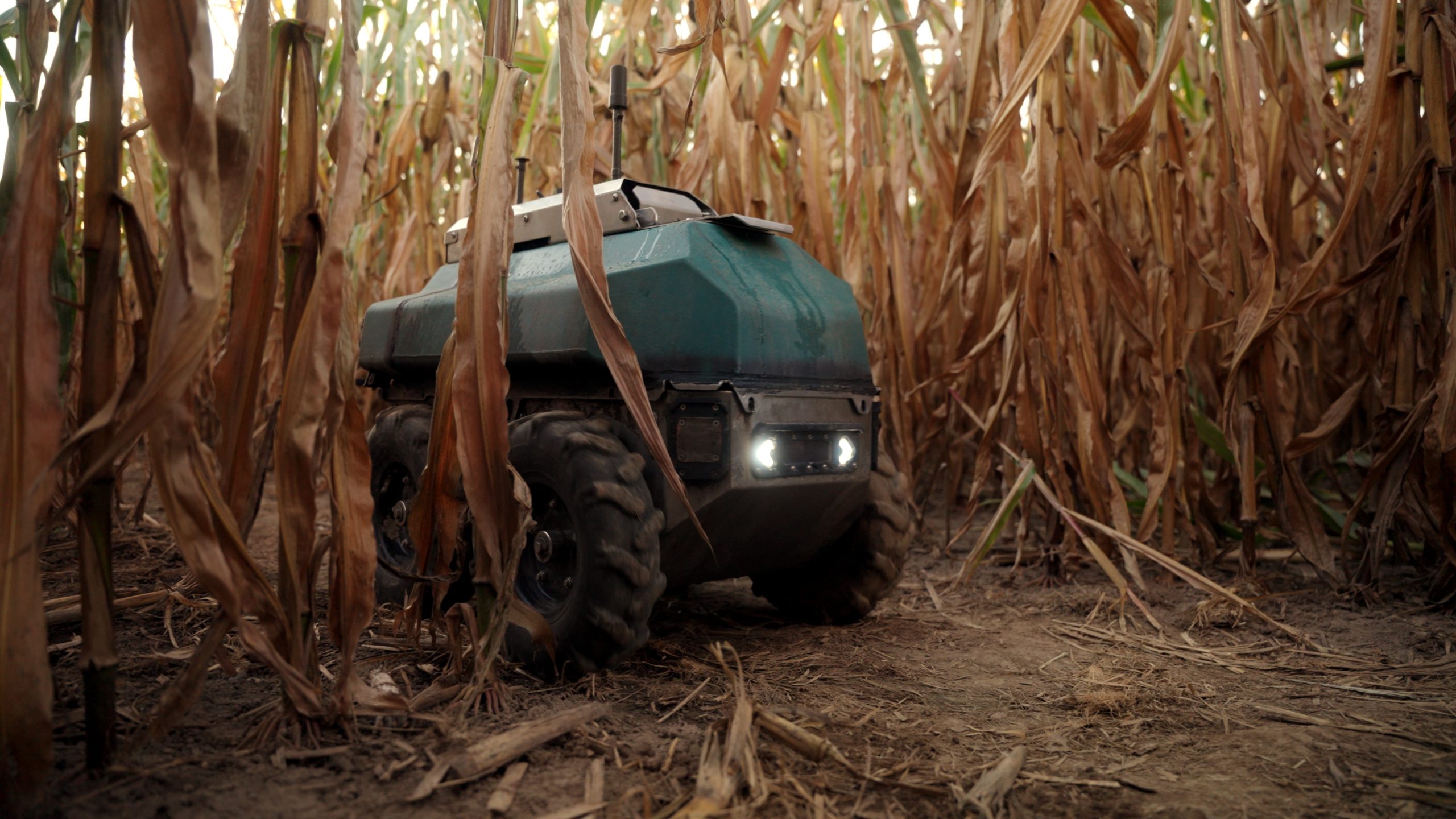
In a significant stride towards sustainable agriculture, Upside Robotics, a Waterloo, Ontario-based startup, is deploying advanced autonomous robots to fundamentally alter how corn crops receive vital nutrients. This innovative approach promises to drastically reduce the environmental footprint and economic burden associated with conventional fertilizer application, signaling a new era of precision farming driven by intelligent automation.
The Agricultural Imperative: Addressing Fertilizer Waste
Modern agriculture faces a critical balancing act: meeting the escalating global demand for food while minimizing its environmental impact. Crop fertilization, though essential for maximizing yields, has long been a source of inefficiency and ecological concern. Traditional methods often involve broadcasting large quantities of synthetic fertilizers across fields, a practice that, while effective in providing nutrients, is inherently wasteful. It is estimated that a substantial portion, sometimes as much as 70%, of applied fertilizer is never absorbed by the target crops. This excess material can have far-reaching negative consequences.
Historically, agricultural practices evolved from subsistence farming to large-scale industrial operations, particularly in the post-World War II era with the advent of the Green Revolution. This period saw a massive increase in the use of synthetic nitrogen fertilizers, alongside improved crop varieties and irrigation techniques, leading to unprecedented gains in food production. However, this progress came at a cost. The environmental toll of nitrogen-based fertilizers, in particular, has become a pressing issue. When not absorbed by plants, nitrates can leach into groundwater and surface waters, leading to eutrophication – the excessive growth of algae and aquatic plants that depletes oxygen and harms aquatic life. Furthermore, agricultural soils are a significant source of nitrous oxide (N2O), a potent greenhouse gas with a global warming potential nearly 300 times that of carbon dioxide over a 100-year period. The economic burden on farmers is also considerable, as fertilizers represent a major input cost, and any wasted product directly impacts their bottom line.
Corn, being one of the world’s most widely cultivated and fertilizer-intensive crops, serves as a prime example of where these challenges are concentrated. Its cultivation dominates vast swathes of agricultural land, especially in North America, making any improvements in its resource efficiency particularly impactful. The founders of Upside Robotics identified this precise pain point as an opportunity for transformative change.
Pioneering Precision with Robotic Intelligence
Upside Robotics emerged from a shared vision between its co-founders, Jana Tian, CEO, and Sam Dugan, CTO. Their paths converged in 2023 at the Entrepreneur First accelerator, united by a desire to build a company with significant climate and agricultural impact. Tian brought a robust background as a chemical engineer with years of experience in the food division at Unilever, offering insights into food systems and large-scale operations. Dugan, a lifelong robotics enthusiast who began building robots at the age of ten, provided the engineering prowess and innovative spirit necessary to translate complex ideas into tangible hardware. This complementary skill set formed a strong foundation for a venture at the intersection of advanced robotics and sustainable agriculture.
Their solution centers on a fleet of lightweight, solar-powered autonomous robots designed to patrol cornfields. These machines are not merely dispensers; they are intelligent applicators. Guided by proprietary algorithms, Upside Robotics’ software analyzes a rich tapestry of data, including real-time weather conditions, soil composition, and plant-specific nutrient requirements, to determine the exact quantity and precise timing for fertilizer delivery. This "right-sized" approach moves away from blanket applications, instead providing micro-doses of nutrients directly to the plants when and where they are most needed.
The core problem they are tackling is the seasonal nature of traditional fertilizer application. Farmers typically apply a large volume of fertilizer once or twice early in the growing season, a practice known as "front-loading." However, a crop’s nutrient needs fluctuate throughout its growth cycle. By delivering nutrients dynamically and precisely, the robots ensure that plants receive optimal support at critical developmental stages, minimizing runoff and maximizing absorption. This method significantly enhances nutrient use efficiency, leading to healthier crops, reduced waste, and a more sustainable farming system.
From Concept to Commercial Scale: A Rapid Ascent
The journey for Upside Robotics from an initial concept to a commercially viable solution was characterized by an immersive, hands-on approach. After formally establishing the company in 2024, Tian and Dugan embarked on an unconventional field research mission. They purchased a camper trailer, transforming it into a mobile base of operations, and moved from field to field, living alongside the very crops they aimed to serve. This period involved relentless dedication, often working around the clock in cornfields, gaining an intimate understanding of agricultural realities.
Dugan quickly engineered a rudimentary remote-controlled prototype within two weeks of their initial discussions. This early device, manually operated, allowed them to immediately begin testing their core hypothesis and collecting invaluable data. This rapid prototyping and iteration process was crucial, not only for refining the hardware but also for deeply engaging with farmers. By demonstrating their system and observing its effects firsthand, they could gather direct feedback and understand the practical challenges and needs of their potential customers. Their dedication resonated with farmers, some of whom noted that the founders spent more time in their fields than they themselves had in a lifetime, underscoring the depth of their commitment to understanding the agricultural landscape.
The 2024 growing season served as a crucial proving ground for Upside Robotics, with their technology deployed across 70 acres. The success of this initial phase fueled an intensive off-season development cycle, culminating in the fourth generation of their robotic system. This refined technology was then rolled out for the 2025 season, leading to a significant expansion to 1,200 acres. The positive reception and tangible benefits observed by farmers resulted in an impressive 100% customer retention rate, a strong indicator of the value proposition Upside Robotics brings to the market. For the upcoming 2026 season, the company is preparing to scale its operations further, targeting over 3,000 acres, a testament to the escalating demand for their innovative solution.
Environmental and Economic Dividends
The impact of Upside Robotics’ technology is multifaceted, offering compelling environmental and economic benefits. On the environmental front, the precision application system has demonstrated a remarkable ability to cut fertilizer use by an average of 70%. This reduction has profound implications: it means significantly less nitrogen and phosphorus leaching into waterways, thereby mitigating the risk of eutrophication and preserving aquatic ecosystems. Furthermore, the decreased reliance on synthetic fertilizers contributes to a reduction in agricultural greenhouse gas emissions, particularly nitrous oxide, aligning with broader global efforts to combat climate change.
From an economic perspective, the savings for farmers are substantial. By reducing fertilizer input by 70%, Upside Robotics reports that its customers are saving approximately $150 per acre per season. In an industry where profit margins can be tight and input costs are continually rising, such a significant saving directly enhances farm profitability and financial resilience. This clear return on investment (ROI) has been a primary driver of farmer adoption, proving that sustainable practices can also be economically advantageous. The company’s experience shows that farmers, often perceived as resistant to change, are eager to embrace new technologies that offer demonstrable benefits and address their most pressing concerns. This proactive demand from the farming community highlights a strong market pull for solutions that optimize resource use and improve efficiency.
Recognizing the immense potential and proven efficacy of their technology, Upside Robotics recently secured $7.5 million in a seed funding round. The investment was led by Plural, with notable participation from Garage Capital and the founders of Clearpath Robotics, a Canadian leader in autonomous systems. This capital injection is crucial for fueling the company’s ambitious growth plans.
The Future of Farming: Scaling Innovation
The newly acquired funding will be strategically deployed to advance research and development efforts, ensuring that Upside Robotics continues to innovate and refine its robotic systems and software. A significant portion will also be allocated to scaling operations to meet the burgeoning demand. The company currently boasts a waitlist of over 200 farms eager to integrate this technology into their operations, underscoring the urgent need for such solutions in the agricultural sector.
Looking ahead, Upside Robotics has its sights set beyond Canadian borders. A key strategic objective is to expand into the vast and critical U.S. corn belt, a region that represents an enormous market opportunity and where the environmental and economic benefits of precision fertilization could have an even greater impact. Scaling production of their lightweight, solar-powered robots, developing robust service and support networks, and navigating diverse regulatory landscapes will be key challenges in this expansion.
The success of Upside Robotics also provides valuable commentary on the broader trend of technology adoption in agriculture. While the industry has historically been slow to embrace radical changes, the current landscape of rising input costs, environmental pressures, and increasingly sophisticated data analytics is creating fertile ground for innovation. Startups like Upside Robotics demonstrate that when technology offers a clear, measurable return on investment and addresses genuine pain points, farmers are not only willing but eager to adopt it. This shift signifies a cultural evolution within farming, moving towards data-driven decisions and automated processes that promise greater efficiency, sustainability, and profitability.
The journey of Upside Robotics reflects a growing global movement towards intelligent, sustainable agricultural practices. By leveraging robotics and artificial intelligence, companies are redefining what is possible in food production, promising a future where productivity and environmental stewardship are not mutually exclusive but deeply interconnected. As the world grapples with climate change and the imperative of feeding a growing population, the role of precision agriculture, spearheaded by innovators like Upside Robotics, will only continue to grow in importance, cultivating a more efficient and environmentally responsible food system for generations to come.