Amir Mahmud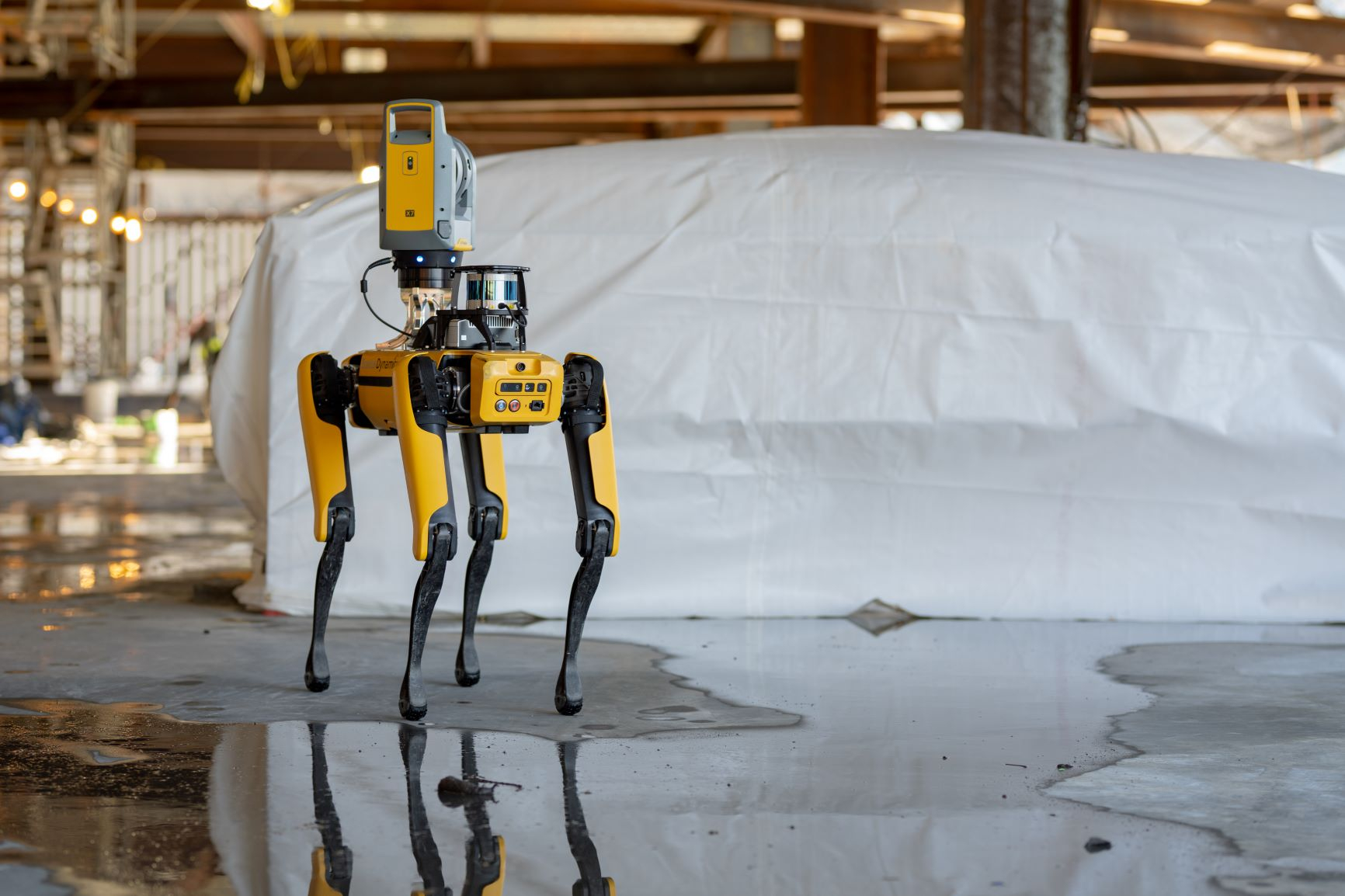
A significant leadership transition is underway at Boston Dynamics, the Massachusetts-based robotics firm celebrated for its dynamic quadrupedal and humanoid machines. Robert Playter, a veteran who dedicated three decades to the company, has announced his departure as Chief Executive Officer. The change, revealed in an internal communication this past Tuesday, marks the end of an era defined by profound technological advancement and a strategic shift from pure research to commercial enterprise. Amanda McMaster, currently the company’s Chief Financial Officer, will assume the interim leadership role while a comprehensive search for a permanent successor is conducted.
A Legacy Forged in Innovation
Robert Playter’s tenure at Boston Dynamics spans nearly the entirety of its existence, making him an integral figure in its evolution from a niche research laboratory to a globally recognized leader in mobile robotics. He ascended to the CEO position in 2020, taking the reins from founder Marc Raibert, but his influence permeated the company long before that. Over his 30 years, Playter held crucial roles including Vice President of Engineering and Chief Operating Officer, positions that placed him at the heart of the technical development and operational execution of Boston Dynamics’ ambitious projects.
The company’s statement acknowledged Playter as an "icon of the global robotics industry," crediting him with transforming the organization from its foundational research days into a successful business. This transformation involved navigating the complex journey from developing prototype "hopping robots" and the "world’s first quadrupeds" to spearheading the burgeoning humanoid robotics sector. His leadership was pivotal in transitioning breakthrough research into practical, market-ready solutions, a notoriously challenging feat in the high-stakes world of advanced robotics. The appreciation conveyed by Boston Dynamics underscores the profound impact Playter had on shaping both the company and the broader landscape of robotics innovation.
From Academic Roots to Industrial Prowess
Boston Dynamics’ story began in 1992, a spin-off from the Massachusetts Institute of Technology, founded by Professor Marc Raibert. The company’s early years were deeply rooted in academic research and funded primarily by defense contracts, notably from the Defense Advanced Research Projects Agency (DARPA). This period saw the development of groundbreaking machines that pushed the boundaries of legged locomotion. Robots like BigDog, a robust, all-terrain quadruped designed for military logistics, and its successor, LS3 (Legged Squad Support System), captured public imagination and demonstrated unprecedented mobility in complex environments. These early creations, characterized by their remarkable stability and ability to traverse challenging terrains, laid the groundwork for the more sophisticated robots that would follow.
The transition from a pure research and development outfit to a commercial entity was not straightforward. The initial designs, while technologically impressive, were often too complex or costly for widespread civilian applications. However, the foundational research in dynamic balance, control systems, and robust mechanical design proved invaluable. It was this deep-seated expertise that Playter, in his various leadership roles, helped to mature and eventually guide towards commercial viability. The company’s journey reflects a common trajectory in advanced technology sectors: significant government investment in fundamental research eventually yielding innovations that find broader societal and economic applications.
A Tumultuous Ownership Journey
The path of Boston Dynamics has also been marked by a series of high-profile acquisitions, each reflecting different strategic visions for the future of robotics. In 2013, Google’s parent company, Alphabet, acquired Boston Dynamics. This move was part of a larger initiative by Google to invest heavily in robotics and artificial intelligence, signaling a belief that advanced mobile robots would play a crucial role in future technological ecosystems. Under Google, Boston Dynamics continued its research, refining its designs and control algorithms, leading to more agile and capable machines.
However, Google’s long-term strategy for integrating these robotics ventures proved complex, and in 2017, SoftBank, the Japanese investing conglomerate known for its aggressive bets on future technologies, purchased Boston Dynamics. SoftBank’s vision centered on creating a comprehensive robotics ecosystem, viewing Boston Dynamics as a critical player in developing robots for logistics, elder care, and various service industries. This period saw increased emphasis on commercialization and the development of robots that could operate more autonomously and interact with human environments.
The latest chapter in its ownership history began in 2021 when Hyundai Motor Group acquired the company. For Hyundai, the acquisition was a strategic imperative to diversify beyond traditional automotive manufacturing and position itself as a leader in future mobility solutions. Integrating Boston Dynamics’ expertise in mobile robotics with Hyundai’s manufacturing prowess and logistics infrastructure presented opportunities for synergy in areas like smart factories, autonomous vehicles, and last-mile delivery. Each change in ownership brought new pressures and opportunities, challenging the company to adapt its long-term research goals to evolving commercial demands and strategic corporate objectives.
The Rise of Commercial Robotics: Spot and Atlas
Under Robert Playter’s leadership as CEO, Boston Dynamics made a decisive pivot towards commercialization. The most prominent example of this shift is Spot, the agile quadrupedal robot. Commercialized in 2020, shortly after Playter assumed the top executive role, Spot quickly became a recognizable figure globally. Unlike its military predecessors, Spot was designed with versatility and accessibility in mind, finding applications in diverse sectors. It has been deployed for industrial inspection in hazardous environments, construction site monitoring, public safety patrols, and even artistic performances. Its modular design allows for custom payloads, expanding its utility across numerous industries and establishing a viable market for legged robots.
Beyond Spot, Boston Dynamics has continued to push the boundaries of humanoid robotics with Atlas. While still primarily a research platform, Atlas represents the pinnacle of dynamic balance and dexterous manipulation. Videos showcasing Atlas performing parkour, dancing, and executing complex tasks have consistently gone viral, captivating audiences worldwide and demonstrating the extraordinary potential of humanoid robots. The "spearheading the entire humanoid industry" claim in the company’s statement refers to the aspirational goal of developing general-purpose humanoid robots capable of operating in human-centric environments. This ambition places Boston Dynamics at the forefront of a highly competitive field, with other companies like Tesla (Optimus), Figure AI, and Agility Robotics (Digit) also making significant strides.
Navigating the Broader Robotics Ecosystem
The departure of a long-serving leader like Robert Playter occurs at a critical juncture for the robotics industry. The market for industrial robots continues to expand, driven by automation needs in manufacturing and logistics. Simultaneously, the service robotics sector, encompassing everything from autonomous cleaning machines to humanoid assistants, is experiencing rapid growth. Boston Dynamics, with its advanced mobile platforms, occupies a unique and influential position within this ecosystem.
The social and cultural impact of robots like Spot and Atlas is profound. While they offer immense potential for enhancing productivity, improving safety in dangerous jobs, and assisting in various tasks, they also raise important societal questions. Concerns about job displacement, the ethical implications of autonomous systems, and the responsible deployment of advanced robotics are frequently discussed among policymakers, ethicists, and the public. Boston Dynamics has actively engaged with these discussions, implementing ethical guidelines for its products and striving for transparency in their development and application. The public perception of robots, often shaped by science fiction, is gradually being recalibrated by the real-world capabilities and limitations of machines like those from Boston Dynamics.
The Road Ahead: Challenges and Opportunities
As Boston Dynamics prepares for its next chapter, the incoming CEO will face a unique set of challenges and opportunities. The company must continue to balance its heritage of cutting-edge research with the imperative of scalable commercialization. While Spot has demonstrated market viability, expanding the portfolio of commercially successful products, particularly in the competitive humanoid space, will be a key focus. The synergy with Hyundai, its current owner, offers avenues for deeper integration into manufacturing processes and broader mobility solutions, potentially accelerating the development and deployment of new robotic applications.
The new leadership will also need to navigate an increasingly complex global landscape for robotics, characterized by rapid technological advancements, evolving regulatory frameworks, and intense competition. Maintaining Boston Dynamics’ reputation as a pioneer of innovation while simultaneously scaling its business operations will require a strategic vision that honors its past while boldly embracing the future. Robert Playter’s departure marks the end of an extraordinary tenure, but the foundation he helped build positions Boston Dynamics to continue its influential role in shaping the future of robotics for decades to come.