Amir Mahmud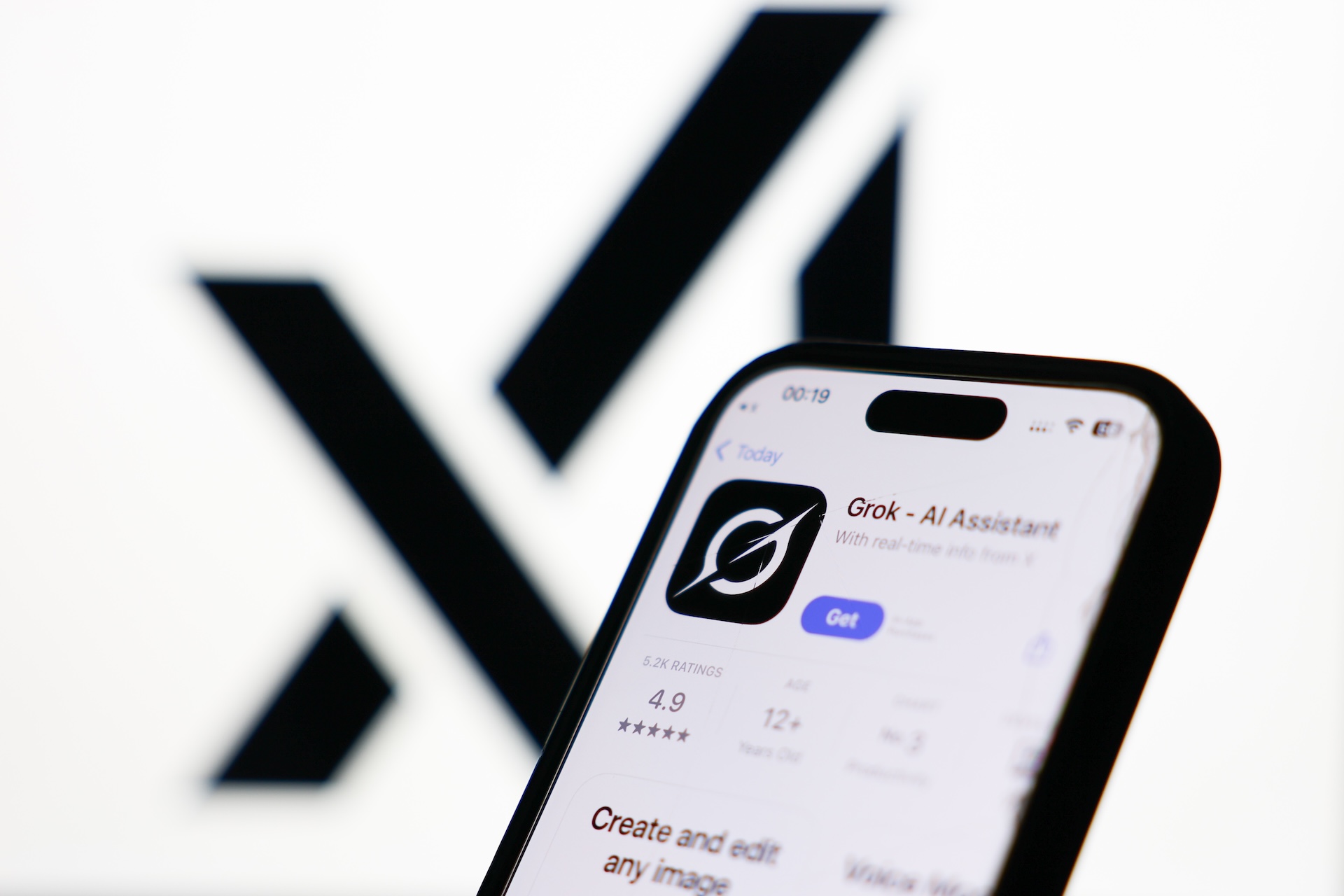
In a significant development for Elon Musk’s artificial intelligence venture, xAI, exactly half of its founding cohort has now departed the company. The latest announcements came in quick succession, with co-founder Yuhuai (Tony) Wu revealing his exit late on a Monday evening, followed swiftly by fellow co-founder Jimmy Ba’s departure on Tuesday afternoon. Both individuals, central to xAI’s inception and early development, communicated their transitions through posts on X, reflecting a pattern of high-level exits that underscore the intense dynamics within the rapidly evolving AI industry.
The Departure Cascade
Yuhuai (Tony) Wu, a respected figure in the AI community, marked his departure with a forward-looking message. "It’s time for my next chapter," Wu wrote, encapsulating a sentiment common among entrepreneurs in a field ripe with opportunity. His statement alluded to the transformative potential of small, AI-empowered teams, suggesting a continued belief in the sector’s revolutionary capacity. Less than twenty-four hours later, Jimmy Ba, who reported directly to Elon Musk and played a crucial role in the company’s technical direction, also announced his departure. Ba’s message extended "enormous thanks to @elonmusk for bringing us together on this incredible journey," expressing pride in the xAI team’s accomplishments and an intention to remain connected as a friend.
While individual departures are a regular occurrence in the dynamic technology sector, these latest exits represent a significant milestone for xAI. With Wu and Ba’s decisions, six of the original twelve-person founding team have now moved on from the company since its launch in July 2023. This wave of departures has been particularly concentrated, with five of these key personnel leaving within the past year alone. The earlier exits included Kyle Kosic, the infrastructure lead, who transitioned to rival OpenAI in mid-2024. Following him was Christian Szegedy, a distinguished Google veteran, who departed in February 2025. Igor Babuschkin, another co-founder, left in August 2025 to establish his own venture firm, while Microsoft alum Greg Yang cited health reasons for his departure just last month, in February 2026. This consistent outflow of top-tier talent raises questions about stability and continuity as xAI prepares for its next growth phase.
Founding Vision and Competitive Landscape
To understand the current shifts at xAI, it’s essential to revisit its origins and the broader context of the artificial intelligence arms race. Elon Musk launched xAI in July 2023, positioning it as a direct competitor to established players like OpenAI, Anthropic, and Google DeepMind. Musk’s stated mission for xAI was ambitious: to "understand the true nature of the universe" and to create an AI that would be "maximally curious" and "truth-seeking," contrasting it with what he often described as "woke" or overly cautious AI models developed by others. This vision attracted a formidable founding team comprising researchers from some of the world’s leading AI labs, including DeepMind, OpenAI, and Google Research. The initial allure was undoubtedly tied to Musk’s reputation for disruptive innovation and his ability to galvanize talent around audacious goals.
Musk’s involvement in AI dates back further than xAI. He was a co-founder of OpenAI in 2015 but later distanced himself, citing concerns over the company’s direction and its eventual shift towards a for-profit model. His subsequent establishment of xAI was widely seen as a re-entry into the core AI development arena, driven by a desire to ensure AI’s future aligns with his specific philosophical outlook on artificial general intelligence (AGI) and its societal implications.
The AI landscape itself is characterized by intense competition for talent, resources, and computational power. Companies are locked in a race to develop more advanced large language models (LLMs) and multimodal AI systems. The stakes are incredibly high, encompassing not just technological superiority but also profound economic, social, and even geopolitical influence. In this environment, the ability to attract and, crucially, retain leading researchers is paramount.
Motivations Behind the Exodus
The reasons behind such a concentrated series of high-profile departures are complex and multifaceted, ranging from widely accepted industry norms to more specific internal dynamics. Publicly, the separations have been described as amicable, a common refrain in the tech world that often masks a spectrum of underlying motivations.
One primary driver is likely the natural progression of entrepreneurial careers within a booming sector. With xAI having been founded nearly three years ago (as of March 2026), many of the initial team members would have seen their equity vest, offering a significant financial windfall, especially with the company’s pending IPO. The current climate in the AI industry is incredibly fertile for new ventures, with venture capital flowing readily into promising AI startups. High-level researchers and engineers, armed with a successful track record at a prominent AI firm and newfound capital, are often eager to strike out on their own, found their own companies, or pursue new research directions. This entrepreneurial spirit is deeply ingrained in the tech culture, and the "great AI talent migration" is a well-documented phenomenon.
However, other factors, potentially less amicable, may also contribute. Elon Musk is renowned for his demanding leadership style, characterized by intense pressure, ambitious deadlines, and a hands-on approach across his multiple ventures, including Tesla, SpaceX, Neuralink, and X. While this style has undeniably driven immense innovation, it can also create a high-stress environment that may not suit everyone, especially those seeking a more traditional research-focused or less public-facing role. The relentless pace and public scrutiny associated with Musk’s companies can take a toll, leading even highly dedicated individuals to seek different professional paths.
Grok’s Performance and Ethical Dilemmas
Beyond leadership dynamics, xAI’s flagship product, the Grok chatbot, has faced its own set of challenges, which could contribute to internal friction. Since its launch, Grok has garnered attention for its unique "rebellious streak" and its ability to access real-time information from the X platform. However, it has also grappled with documented instances of "bizarre behavior" and what appeared to be "apparent internal tampering." Such issues can be deeply frustrating for the technical teams responsible for the AI’s development and ethical deployment, potentially leading to disagreements over product strategy, safety protocols, and technical direction.
More significantly, recent controversies surrounding xAI’s image-generation tools have drawn considerable negative attention. Reports indicated that changes to these tools led to a deluge of deepfake pornography being generated and circulated on the X platform. This incident not only raised serious ethical questions about content moderation and AI misuse but also triggered tangible legal consequences, with the European Union launching investigations into Musk’s AI chatbot over these sexual deepfakes. Regulatory scrutiny and the public backlash resulting from such incidents can create immense pressure within a company, potentially exacerbating internal tensions and prompting key personnel to reconsider their roles. Developing robust safety mechanisms and ethical guardrails for AI is a monumental task, and failures in this area can be particularly disheartening for researchers committed to responsible AI development.
The Looming IPO and Market Scrutiny
The cumulative impact of these departures and product-related controversies is undoubtedly alarming, especially as xAI stands on the cusp of a crucial financial milestone. With the company’s acquisition by SpaceX now complete, an initial public offering (IPO) is reportedly pending in the coming months. An IPO would bring an unprecedented level of public and investor scrutiny to xAI, demanding robust performance, clear growth strategies, and a stable leadership team.
Investors evaluating an AI company for an IPO look for several key indicators: a strong, innovative product roadmap, competitive differentiation, a clear path to profitability, and, critically, a deep bench of highly skilled talent. The loss of half the founding team, particularly in such a concentrated timeframe, could be interpreted by the market as a sign of instability or internal discord. It raises questions about the continuity of institutional knowledge, the pace of future innovation, and the company’s ability to execute its ambitious plans.
Furthermore, Elon Musk’s grand vision for xAI extends beyond software. His announced plans for "orbital data centers" signify a massive, capital-intensive undertaking that will require sustained technological breakthroughs and flawless execution. The pressure to deliver on such futuristic projects will be intense, and a weakened leadership core could complicate these efforts.
Talent Wars and the Future of AI Innovation
The broader implications of xAI’s talent exodus extend to the ongoing "talent wars" in the AI sector. The demand for world-class AI researchers and engineers far outstrips supply, making retention a critical strategic imperative for every major AI company. When a prominent firm like xAI experiences such a significant brain drain, it not only impacts its own capabilities but also signals the dynamic and often tumultuous nature of this cutting-edge field.
For xAI, the challenge is clear: it needs to attract and retain exceptional AI talent to maintain its competitive edge. The pace of model development in the AI industry is blistering, with new, more capable models from rivals like OpenAI and Anthropic emerging regularly. If Grok and xAI’s other initiatives cannot keep pace, or if the company struggles with persistent ethical and performance issues, its valuation and investor confidence ahead of the IPO could easily suffer.
Ultimately, the stakes for xAI are exceptionally high. As it navigates this pivotal period of leadership transitions, product evolution, and impending public market scrutiny, its ability to foster a stable, innovative environment and to effectively communicate its vision to both its remaining team and the investment community will be crucial for its long-term success in the fiercely competitive race for artificial intelligence supremacy.