Amir Mahmud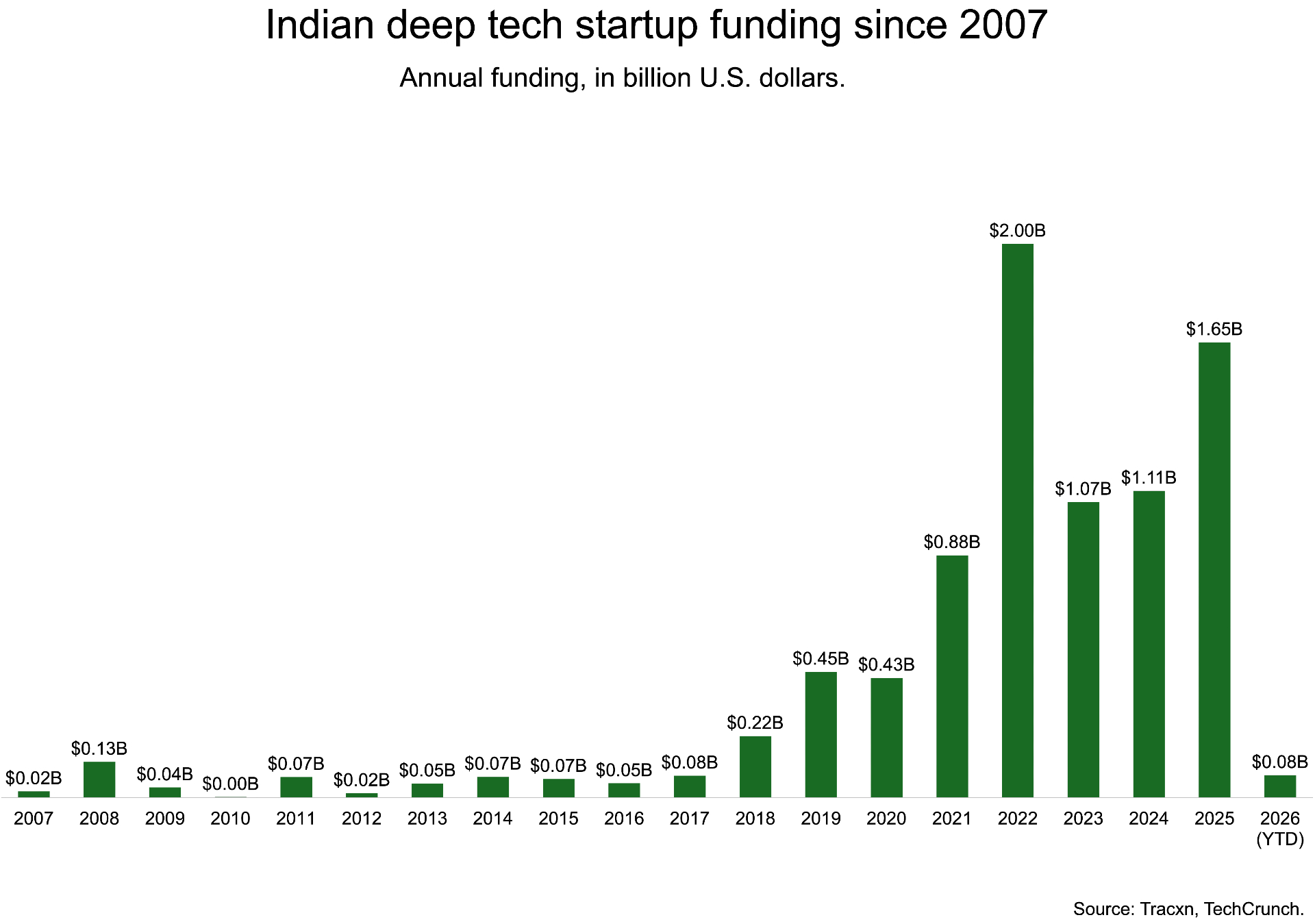
India has significantly revised its regulatory framework for deep technology startups, signaling a strategic commitment to fostering long-term innovation in critical sectors. This pivotal adjustment, announced recently by the Indian government, aims to recalibrate support mechanisms for ventures operating in complex fields such as space exploration, advanced semiconductors, and biotechnology, recognizing their inherently extended development cycles. The policy changes are designed to align governmental support with the unique timelines and capital requirements characteristic of science- and engineering-led businesses, ultimately aspiring to propel India onto the global stage as a hub for cutting-edge technological advancement.
Defining Deep Tech and its Unique Challenges
Deep tech refers to technologies rooted in tangible scientific discoveries or engineering innovations, often requiring extensive research and development (R&D) before reaching commercial viability. Unlike conventional software or service-based startups, which can scale rapidly with relatively lower capital, deep tech ventures typically involve substantial upfront capital expenditure, lengthy validation processes, and a high degree of technical risk. These sectors include, but are not limited to, artificial intelligence, advanced materials, quantum computing, robotics, advanced manufacturing, sustainable energy solutions, and biopharmaceuticals.
The protracted gestation periods for deep tech companies pose a unique set of challenges. Developing a new drug, designing a proprietary semiconductor, or launching a space-tech solution can take anywhere from five to fifteen years, or even longer, before generating substantial revenue or achieving profitability. Traditional startup policies, often designed with shorter-cycle ventures in mind, have historically created an artificial pressure point for these companies. Founders frequently risked losing their "startup" status and associated benefits while still in pre-commercial phases, leading to what some experts describe as a "false failure signal" that misjudged scientific progress based on unsuitable policy timelines. This misalignment not only created friction in fundraising and follow-on capital acquisition but also constrained the ability of these ventures to engage effectively with state-backed support mechanisms.
India’s Evolving Innovation Landscape: A Historical Perspective
India’s journey in fostering an innovation ecosystem has been marked by several significant milestones. The "Startup India" initiative, launched in 2016, was a landmark program aimed at building a robust ecosystem for nurturing innovation and startups in the country. It introduced various incentives, including tax exemptions, intellectual property benefits, and simplified regulatory compliance, to encourage entrepreneurship. Initially, the focus was broad, encompassing a wide array of tech and non-tech startups.
However, as the Indian startup ecosystem matured, policymakers recognized the distinct needs of deep tech. While India boasts a vast pool of engineering talent and a strong foundation in scientific research, converting this potential into commercially viable deep tech products required a more tailored approach. The government’s broader vision, encapsulated in initiatives like "Make in India" and "Atmanirbhar Bharat" (Self-Reliant India), has increasingly emphasized the importance of indigenous R&D and manufacturing capabilities. Deep tech is seen as a critical enabler for achieving self-reliance in strategic sectors, reducing dependence on foreign technologies, and creating high-value jobs.
The recognition that deep tech operates on a fundamentally different timeline has been a gradual but crucial evolution in policy thinking. Previous frameworks, while supportive, often struggled to accommodate the prolonged R&D cycles and significant capital outlays required by these frontier technologies. This led to a situation where promising ventures, still years away from market entry, would "graduate" out of startup status prematurely, losing access to vital support just when they needed it most.
Key Policy Amendments and Strategic Vision
The recent policy amendments directly address these long-standing issues. The Indian government has doubled the period for which deep tech companies are treated as startups, extending it from 10 years to a more realistic 20 years. This significant extension provides deep tech ventures with an unprecedented runway to develop, test, and commercialize their innovations without the looming threat of losing critical benefits.
Concurrently, the revenue threshold for accessing startup-specific tax, grant, and regulatory benefits has been substantially raised. Previously set at ₹1 billion (approximately $11.04 million), this limit has now been increased to ₹3 billion (approximately $33.12 million). This adjustment acknowledges that deep tech companies, even when making significant technological strides, may not achieve substantial revenue figures as quickly as their conventional counterparts. The higher threshold ensures that these firms can continue to avail themselves of essential governmental support throughout their capital-intensive development phases, allowing them to focus on scientific breakthroughs rather than immediate revenue generation.
Vishesh Rajaram, founding partner at Speciale Invest, an Indian deep tech venture capital firm, highlighted the practical impact of these changes for founders. He noted that the previous framework often imposed an "artificial pressure point," where companies risked losing their startup status prematurely. "By formally recognizing deep tech as different, the policy reduces friction in fundraising, follow-on capital, and engagement with the state, which absolutely shows up in a founder’s operating reality over time," Rajaram commented. This policy shift is thus more than a mere bureaucratic adjustment; it represents a fundamental philosophical reorientation towards fostering innovation that requires patience and long-term vision.
Mobilizing Capital: Public-Private Synergy
The policy reforms are part of a broader, concerted effort by New Delhi to cultivate a robust, long-horizon deep tech ecosystem by strategically combining regulatory reform with significant public capital infusion. A cornerstone of this strategy is the ₹1 trillion (around $11 billion) Research, Development and Innovation Fund (RDI), announced last year. This fund is specifically designed to provide "patient financing" for science-led and R&D-driven companies, addressing a critical gap in the Indian funding landscape.
The RDI fund is not merely a government grant program; it is structured to play a complementary role to private capital, particularly beyond the early stages where funding depth has historically been a binding constraint. Arun Kumar, managing partner at Celesta Capital, explained that by routing public capital through venture funds with tenors similar to private capital, the RDI fund aims to bridge chronic gaps in follow-on funding without distorting the commercial criteria that govern private investment decisions. Siddarth Pai, founding partner at 3one4 Capital and co-chair of regulatory affairs at the Indian Venture and Alternate Capital Association, noted that this framework avoids a "graduation cliff" that has historically cut companies off from support just as they scale.
In parallel with public initiatives, the private sector is also stepping up. U.S. and Indian venture firms have come together to launch the India Deep Tech Alliance, a $1 billion-plus private investor coalition. This alliance includes prominent names such as Accel, Blume Ventures, Celesta Capital, Premji Invest, Ideaspring Capital, Qualcomm Ventures, and Kalaari Capital, with chipmaker Nvidia acting as an adviser. This convergence of public and private capital underscores a growing recognition of India’s deep tech potential and the necessity of collaborative funding models. The RDI fund, according to Pai, is intended to act as a nucleus around which greater capital formation can occur, taking direct positions and providing credit and grants in addition to functioning as a fund-of-funds.
The Economic and Societal Ripple Effect
The implications of these policy changes extend far beyond the startup ecosystem itself, promising significant economic and societal ripple effects across India. Economically, a thriving deep tech sector can drive high-value job creation, foster intellectual property development, and enhance India’s position in global supply chains, particularly in strategic areas like semiconductors and advanced manufacturing. By nurturing indigenous capabilities, India aims to reduce its reliance on imports, bolstering its economic sovereignty and resilience.
Socially, deep tech innovations have the potential to address some of India’s most pressing challenges. Biotech advancements can revolutionize healthcare delivery, making diagnostics and treatments more accessible and affordable. Climate technologies are crucial for sustainable development, offering solutions for renewable energy, waste management, and environmental conservation. Space tech and advanced materials can contribute to improved infrastructure and disaster management. These innovations can lead to tangible improvements in the quality of life for millions, aligning with India’s inclusive growth agenda.
Culturally, these policies foster an environment that encourages scientific temper, risk-taking, and entrepreneurship in complex, research-intensive fields. This could inspire a new generation of scientists and engineers to pursue careers in cutting-edge research and innovation, moving beyond traditional IT services roles. It also signals a shift towards valuing fundamental research and its long-term commercialization potential.
Navigating the Global Deep Tech Arena
While India’s deep tech funding has shown renewed momentum, it remains an emerging market on the global stage. Indian deep tech startups have collectively raised $8.54 billion to date. Recent data from Tracxn indicates a rebound in funding, with $1.65 billion raised in 2025, up from $1.1 billion in each of the previous two years, though still below the $2 billion peak in 2022. This recovery, particularly in sectors aligned with national priorities like advanced manufacturing, defense, climate technologies, and semiconductors, suggests increasing investor confidence and a gradual move toward longer-horizon investing, as noted by Neha Singh, co-founder of Tracxn.
However, the disparity with global leaders remains stark. In 2025, U.S. deep tech startups raised approximately $147 billion, while China accounted for roughly $81 billion. This highlights the substantial challenge India faces in building capital-intensive technologies, even with its abundant engineering talent. The hope is that these governmental initiatives will catalyze greater domestic and international investor participation over the medium term.
For global investors, New Delhi’s framework change is being interpreted as a strong signal of longer-term policy intent. Pratik Agarwal, a partner at Accel, emphasized that "deep tech companies operate on seven- to twelve-year horizons, so regulatory recognition that stretches the lifecycle gives investors greater confidence that the policy environment will not change mid-journey." He added that while the change would not alter allocation models overnight, it significantly increases investor comfort that India is adopting a long-term perspective on deep tech, learning from patient frameworks seen in the U.S. and Europe.
Path Forward and Remaining Hurdles
One critical question these policy changes aim to address is whether they will reduce the tendency of Indian startups to shift their headquarters overseas as they scale, a phenomenon often referred to as "flipping." Agarwal believes that the extended runway strengthens the case for building and staying in India, especially given the growing appetite for venture-backed tech companies in India’s public markets, making domestic listings a more credible option. However, access to late-stage capital, specialized talent, and global customer bases will continue to shape where companies ultimately choose to scale.
Despite the positive momentum, several hurdles persist. India must continue to strengthen its intellectual property protection mechanisms to safeguard innovations. Ensuring a consistent supply of highly specialized talent, including researchers, engineers, and deep tech entrepreneurs, remains paramount. Furthermore, access to advanced manufacturing facilities and a robust supply chain infrastructure are crucial for converting deep tech prototypes into scalable commercial products.
The ultimate measure of success for these policy reforms will be the emergence of globally competitive deep tech companies from India. Arun Kumar of Celesta Capital articulated this benchmark, stating, "It would be great to see ten globally competitive deep tech companies from India achieve sustained success over the next decade." Such an outcome would not only validate the government’s strategic vision but also firmly establish India as a formidable player in the global deep tech landscape, capable of driving innovation that impacts the world.