Amir Mahmud
Recently disclosed Department of Justice documents have illuminated a previously underreported dimension of Jeffrey Epstein’s financial network, revealing how a close advisor to Prince Andrew actively sought to channel the convicted sex offender’s funds into burgeoning electric vehicle (EV) startups. These revelations, stemming from a trove of millions of documents, detail David Stern’s persistent efforts in 2017 to connect Epstein with companies like Lucid Motors, Faraday Future, and Canoo, all struggling for capital in the nascent, highly competitive EV market. While Epstein ultimately did not invest in these specific ventures, the extensive correspondence between Stern and Epstein over nearly a decade provides a stark glimpse into the financier’s deep, often shadowy, connections within the global business elite and the lengths to which individuals would go to secure his involvement.
David Stern: A "Ghost" in the Global Deal-Making Landscape
David Stern, often described as a "digital ghost" due to his minimal public footprint prior to these disclosures, emerges as a pivotal figure in this narrative. Known primarily for his role as director of Prince Andrew’s Pitch@Palace initiative, a startup contest, Stern’s association with the British royal family provided him with a veneer of legitimacy and access. Prince Andrew himself reportedly referred to Stern as a "ghost" in a 2010 email, a descriptor that aptly captures his elusive nature in the public sphere, despite his deep engagement in high-stakes international finance.
The newly released emails reveal a long-standing and intricate relationship between Stern and Epstein, dating back to 2008. Stern, a German national with a background in finance and business in China, saw Epstein not merely as a potential investor but as a mentor, once stating, "my mentor, and I do what he tells me." Conversely, Epstein referred to Stern as "my China contact," underscoring Stern’s purported influence and network in the rapidly expanding Chinese market. This symbiotic relationship positioned Stern as a crucial conduit, leveraging his global connections to present Epstein with a diverse array of potential deals, from tech startups to distressed banks, even as Epstein’s own legal troubles began to escalate.
The Mid-2010s EV Boom: A Race for Capital and Innovation
The period between 2015 and 2018 marked a feverish era in the automotive industry, characterized by an unprecedented rush into electric and autonomous vehicle technology. Tesla’s disruptive success had proven the viability and market appeal of premium EVs, while advancements in autonomous driving by tech giants like Google fueled further speculation. Legacy automakers, initially slow to respond, were now pouring billions into electrification programs, and a wave of new startups emerged, each promising to be the "next Tesla." This environment created a voracious appetite for capital, as these companies faced immense research and development costs, manufacturing challenges, and intense competition.
For ambitious dealmakers like Stern, this burgeoning sector presented a fertile ground for investment opportunities. The promise of revolutionary technology, coupled with the potential for exponential growth, attracted a wide spectrum of investors, from venture capitalists and sovereign wealth funds to private equity and high-net-worth individuals. The allure was simple: identify the next big player, secure an early stake, and reap massive returns. It was into this highly speculative and capital-intensive landscape that David Stern sought to introduce Jeffrey Epstein.
Lucid Motors: A Desperate Search for Funding
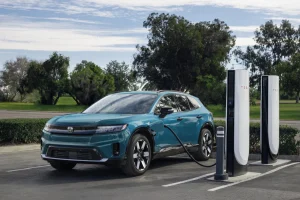
In 2017, Lucid Motors, an aspiring luxury EV manufacturer, found itself in a precarious financial position. The company was desperately attempting to close its Series D funding round, crucial for moving its ambitious production plans forward. Lucid had reportedly courted Ford as a potential lead investor, but its efforts were complicated by Jia Yueting, the founder of rival EV startup Faraday Future. Jia had quietly amassed approximately a 30% stake in Lucid, effectively creating a logjam and blocking new investors from entering.
It was in this critical moment that Stern identified an opportunity for Epstein. In emails released as part of the DOJ’s disclosure, Stern explicitly informed Epstein about the situation: "Ford will likely be lead in $400m Series D in Lucid. Big strategic move." He further elaborated on Jia Yueting’s predicament, noting that Jia "has massive cash issues" at Faraday Future and "needs to sell now to make payroll for his other business." Stern’s proposal was clear: Epstein, or a fund associated with him, could acquire Jia’s significant stake, thereby clearing the path for new investment and potentially positioning Epstein for a lucrative exit when Ford eventually came in. A pitch deck from a fund called Monstera, created by Stern, outlined the acquisition of Jia’s 32% shareholding, referring to it as a "fire sale."
Despite Stern’s persistent efforts, Epstein did not ultimately invest in Lucid Motors. The company eventually secured its much-needed Series D funding in late 2018, raising over $1 billion from Saudi Arabia’s Public Investment Fund (PIF). SEC filings later showed that the Saudi sovereign wealth fund repurchased Jia Yueting’s shares over several years, resolving the original deadlock through different means.
Broader EV Pitches: Faraday Future and Canoo
Lucid Motors was not an isolated case. The documents reveal that Stern also pitched Epstein on investments in other struggling EV startups, including Faraday Future itself and Canoo. Faraday Future, plagued by financial mismanagement and Jia Yueting’s broader business woes with LeEco, was also in dire straits. Stefan Krause, a former BMW and Deutsche Bank CFO brought in to rescue Faraday Future, made a direct appeal to Epstein in April 2017. Krause, described as a "friend" and business partner of Stern’s, wrote to Epstein, "Faraday Future (FF) is a great story in itself, regretfully surrounded by a lot of noise around Jia Yueting… These businesses are not working, so he run out of cash. FF is starving." Krause pitched the opportunity as a chance to "build a better Tesla."
These discussions with Epstein ultimately led nowhere for Faraday Future, which eventually secured a major investment from Chinese real estate conglomerate Evergrande in late 2017.
Later, when Krause departed Faraday Future to co-found a new EV company, initially named Evelozcity and later Canoo, Stern became one of its original backers, contributing a modest $1 million. Notably, another early investor was Li Botan, a Chinese businessman connected to powerful political figures, whose involvement later triggered a national security review when Canoo went public in 2020. While Epstein expressed mild interest, describing a document about Canoo as "fun," he explicitly stated in a 2018 message that he had no "direct" or "indirect" interest in the company.
However, Epstein’s non-investment did not deter him from actively promoting Stern’s ventures to his extensive network. In 2018, he emailed self-help guru Deepak Chopra, suggesting a meeting with Stern about his "new electric car co in los angeles," hinting at the integration of "next gen health sensors into the car." A year later, just weeks before his arrest, Epstein urged Eduardo Teodorani, a senior vice president at agricultural machinery giant CNH, to "explore" Stern’s electric car company "before he sells it to another co." He also connected Stern with Sheikh Jabor al Thani, a member of the Qatari royal family, for a similar pitch. These instances highlight Epstein’s willingness to use his influence and connections to facilitate deals for Stern, even if he wasn’t personally investing.
A Decade of Ambitious, Diverse Ventures
The pursuit of EV investments represents just a fraction of the expansive and diverse business relationship between Stern and Epstein that spanned over a decade. Their collaboration began in 2008, shortly before Epstein pleaded guilty to soliciting a minor for prostitution. Stern initially sought Epstein’s investment in AGC Capital, a fund he was creating to capitalize on China’s economic boom.
The dynamic between them was not always smooth. An early email from Epstein excoriated Stern for a lack of precision in a potential business deal, declaring, "if you want to do real deals you have to be precise and careful… every error is a fortune. [Y]our first grade is an F." Despite this, their relationship deepened, to the point where Stern, in 2016, felt comfortable asking Epstein to become a godfather to one of his children, a request Epstein politely declined.
Over the years, Stern brought a remarkable array of proposals to Epstein’s attention. Early on, they discussed creating a "secret" fund, referred to as JEDS (combining their initials) or "Serpentine Group," to jointly invest in Chinese businesses. Their ambitions were far-reaching and eclectic: pitches included buying farmland in Russia, acquiring and taking public the news organization Al Jazeera, purchasing troubled music publisher EMI, and even acquiring an unnamed distressed undersea cable company.
Their gaze also frequently turned to the financial sector. The emails show that Stern and Epstein attempted to buy Sal. Oppenheim, a private bank headquartered in Luxembourg, in 2009. By 2016, they were even discussing a potential buyout of Deutsche Bank, an institution that had notably transacted with Epstein for years.
Stern consistently leveraged and flaunted his connections to high-profile figures in his communications with Epstein and others. He suggested Epstein introduce Jes Staley, then head of J.P. Morgan’s investment bank, to Malaysian politician Anwar Ibrahim, boasting, "I know Anwar well. If he becomes prime minister of malayisa [Staley] will clean up and it could be a gold mine for JPM." Ibrahim, who eventually became prime minister in 2022, lost a contested election in 2013, but the anecdote illustrates Stern’s confidence in his global network. He also claimed dinner with Jack Ma, a planned "alone" meeting with UAE president Mohamed bin Zayed Al Nahyan, and friendship with the grandson of former Chinese president Jiang Zemin, painting a picture of a businessman deeply embedded in the upper echelons of global power.
Enduring Questions and Broader Implications
The extensive documentation of David Stern’s business dealings with Jeffrey Epstein offers more than just a chronological account of failed investments. It provides a chilling insight into the ecosystem surrounding Epstein, revealing how individuals with access and ambition sought to leverage his wealth and connections, regardless of his known criminal past. The fact that a "ghost" of a businessman, closely associated with British royalty, could act as such a consistent conduit for a convicted sex offender highlights the pervasive nature of Epstein’s influence and the porous boundaries between legitimate finance and illicit networks.
These revelations compel a closer examination of the due diligence practices within the venture capital and private investment spheres. The eagerness to secure capital, especially in highly competitive and speculative markets like early-stage EVs, can sometimes overshadow ethical considerations or thorough background checks on potential investors and their intermediaries. While Epstein ultimately did not invest in these specific EV companies, his active consideration and subsequent promotion of them raise uncomfortable questions about the potential for reputational contamination and the moral compromises made in the relentless pursuit of funding.
The documents further underscore Epstein’s strategic positioning within a global elite that spanned finance, politics, and technology. His network was not confined to New York or Palm Beach; it reached into Silicon Valley, European banking circles, and Asian power structures, facilitated by individuals like Stern. The constant flow of ambitious, high-value proposals directed at Epstein demonstrates the perceived potency of his capital and his ability to open doors, even after his initial conviction.
The final known communication between Stern and Epstein, just months before Epstein’s 2019 arrest, encapsulates this relentless pursuit. Stern forwarded a news story titled, "Warren Buffet: Electric Cars Are Very Much in America’s Future," with a simple, telling question: "How do we get him ??" It was a testament to the ongoing ambition of their partnership, one that was abruptly severed by Epstein’s final arrest and subsequent death in prison a month later, leaving behind a legacy of unanswered questions and a newly illuminated web of connections.