Amir Mahmud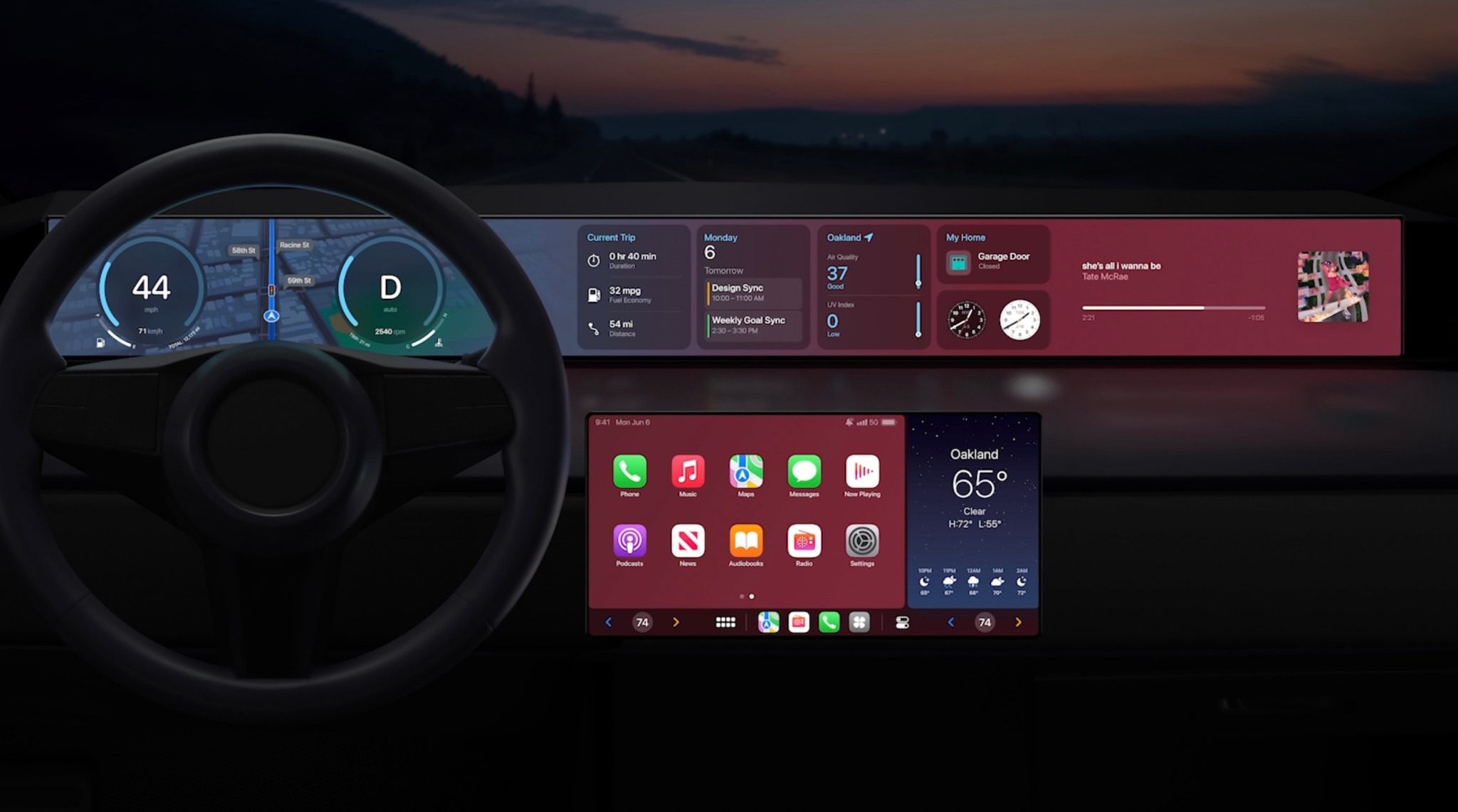
A significant shift in the automotive technology landscape appears to be on the horizon as Apple reportedly explores integrating advanced artificial intelligence chatbots, such as OpenAI’s ChatGPT and Google’s Gemini, directly into its CarPlay system. This strategic move, initially reported by Bloomberg based on insights from anonymous sources, signals a potential redefinition of the in-car digital experience and a notable pivot in Apple’s long-standing approach to its proprietary voice assistant, Siri.
A New Era for In-Car Intelligence
The integration of sophisticated large language models (LLMs) into CarPlay promises to transform how drivers and passengers interact with their vehicles and the digital world while on the road. Instead of relying solely on Siri for basic commands and information retrieval, users could soon tap into the expansive knowledge and conversational capabilities of leading AI chatbots. Imagine asking your car for a detailed explanation of a complex topic, having it summarize a lengthy article, generate creative ideas for a road trip, or even debug a coding snippet, all through natural language commands. This capability moves beyond simple navigation or music selection, venturing into truly intelligent, context-aware assistance.
For years, Apple has positioned Siri as the primary voice interface across its ecosystem, including CarPlay. However, the rapid advancements in generative AI, particularly over the last two years, have highlighted the limitations of traditional, rule-based voice assistants like Siri when compared to the nuanced, creative, and contextually rich interactions offered by modern LLMs. By potentially opening its platform to competitors, Apple could be acknowledging the evolving demands of users for more powerful AI, while simultaneously ensuring CarPlay remains at the forefront of in-car technology.
CarPlay’s Journey: From Screen Mirroring to Vehicle Control
To fully appreciate the significance of this potential integration, it’s crucial to understand the evolution of Apple CarPlay. Launched in 2014, CarPlay was initially conceived as a relatively straightforward solution to bring a familiar iPhone interface into the car. It essentially mirrored a curated selection of iOS apps—like Maps, Phone, and Music—onto the vehicle’s infotainment screen, allowing drivers to interact with them safely using the car’s built-in controls, touchscreens, and Siri voice commands. This early iteration was a response to the growing desire for seamless smartphone integration in an era where proprietary car infotainment systems often lagged in user-friendliness and functionality.
Over the past decade, CarPlay has steadily expanded its reach and capabilities. What began as a wired connection soon evolved into wireless CarPlay, offering greater convenience. The list of supported apps grew to include third-party navigation (like Waze and Google Maps), messaging services, and a wide array of audio apps. This continuous development cemented CarPlay’s position as a dominant force in the automotive tech sector, with a vast ecosystem of compatible vehicles from nearly every major automaker.
A pivotal moment arrived in 2022 when Apple unveiled its "next-generation CarPlay," often referred to as CarPlay Ultra or a deeper vehicle integration. This ambitious update goes far beyond mirroring the central touchscreen. It aims to take over every display in a vehicle, including the instrument cluster directly in front of the driver, providing custom layouts and deeper control over vehicle functions like climate, radio, and even potentially displaying real-time vehicle data like speed, fuel levels, and RPMs. This initiative signaled Apple’s intent to become an even more integral part of the driving experience, moving from an overlay to a foundational layer of the car’s digital infrastructure. This deeper integration sets the stage for a more profound application of AI, where a sophisticated chatbot could not only answer general questions but also potentially assist with vehicle-specific queries or controls.
The Rise of Generative AI: A Brief Overview
The backdrop against which this CarPlay development unfolds is the explosive growth of generative artificial intelligence. While AI has been a field of study for decades, the advent of large language models (LLMs) like those powering ChatGPT, Google Gemini, and Anthropic’s Claude, particularly since late 2022, has democratized access to incredibly powerful conversational AI. These models are trained on vast datasets of text and code, enabling them to understand complex prompts, generate human-like text, answer questions, summarize information, translate languages, and even create content in various styles.
OpenAI’s ChatGPT rapidly captured public imagination with its ability to engage in coherent, extended conversations. Google’s Gemini, developed by a tech giant with immense data and research capabilities, offers multimodal understanding, processing text, images, audio, and video. Anthropic’s Claude focuses on safety and helpfulness, often excelling in longer context windows and ethical considerations. The intense competition among these players has spurred rapid innovation, pushing the boundaries of what AI can achieve and leading to a global race for AI dominance. Companies are scrambling to integrate these powerful tools into every facet of digital life, from productivity software to search engines, and now, potentially, into our vehicles.
Siri’s Crossroads: Apple’s Shifting AI Strategy
The prospect of inviting competing AI chatbots into CarPlay raises significant questions about the future of Apple’s own voice assistant, Siri. Launched in 2011, Siri was a pioneer in mainstream voice AI, but it has often been criticized for lacking the conversational depth, contextual understanding, and broad knowledge base of its newer LLM counterparts. While Siri excels at executing specific commands within the Apple ecosystem—like setting timers, making calls, or controlling HomeKit devices—it often struggles with open-ended questions, complex reasoning, or creative tasks.
By potentially allowing users to choose their preferred AI chatbot within CarPlay, Apple could be making a pragmatic decision rather than an admission of defeat. It might be a strategic move to ensure CarPlay remains a cutting-edge platform by offering users access to the best available AI technology, regardless of its origin. This approach aligns with Apple’s historical tendency to open its platforms to third-party developers where it serves user needs and strengthens the ecosystem (e.g., the App Store, third-party browsers, and keyboards).
However, this decision could also be viewed as a tacit acknowledgment of Siri’s current limitations in the face of advanced generative AI. It forces Apple to either significantly upgrade Siri’s capabilities to compete directly or strategically position it as a specialized assistant for device and vehicle controls, while allowing other LLMs to handle broader knowledge-based tasks. This pivot could redefine Apple’s overall AI strategy, emphasizing platform openness and user choice over strict proprietary control in certain domains.
Driving Experience Transformed: User and Market Implications
The integration of advanced AI into CarPlay holds profound implications for both users and the broader automotive and tech markets.
For Users: The driving experience could become significantly more intelligent and personalized. Drivers could receive proactive, context-aware information, engage in more meaningful conversations, and delegate complex tasks to their in-car AI. For instance, an AI could help plan a multi-stop road trip with real-time traffic adjustments, suggest points of interest based on passenger preferences, or even assist with learning a new language during a long commute. The potential for enhanced productivity and entertainment is vast. However, safety remains paramount. The design and implementation of these AI interfaces must prioritize minimizing driver distraction, ensuring that complex interactions are either hands-free, glance-free, or reserved for non-driving contexts.
For the Automotive Industry: Car manufacturers, many of whom are already grappling with developing their own advanced infotainment systems, might find themselves further compelled to integrate with platforms like CarPlay that offer superior AI capabilities. This could intensify the competition between tech giants and traditional automakers for control over the digital "brain" of the vehicle. Automakers might need to decide whether to invest heavily in their own LLMs or lean into partnerships with leading AI providers through platforms like CarPlay.
For the Tech Market: This move would further solidify the "AI Everywhere" trend. The car becomes another critical battleground for AI providers, offering a massive user base and a unique set of challenges and opportunities for AI application. It could spur further innovation in edge AI processing within vehicles, data privacy solutions, and seamless handoffs between different AI models.
Navigating the Technical and Ethical Landscape
Implementing third-party AI chatbots within CarPlay presents several technical and ethical challenges. Technically, Apple would need to develop robust APIs (Application Programming Interfaces) to allow these chatbots to securely access CarPlay’s interface and the vehicle’s underlying systems (for the next-gen CarPlay). This includes managing voice input, displaying AI outputs, and ensuring seamless switching between Siri (for vehicle controls) and a chosen third-party AI (for general queries).
Data privacy and security will be paramount. How will user data, conversations, and vehicle information be handled by third-party AI providers? Clear guidelines, transparent data policies, and robust encryption will be essential to build user trust. Ethical considerations around AI bias, misinformation, and the potential for misuse also need to be addressed, particularly in a driving environment where safety is critical. Apple, as the platform gatekeeper, will likely need to establish strict guidelines and vetting processes for any AI chatbot seeking integration.
The Road Ahead for Automotive AI
While details remain speculative, the reported efforts to integrate third-party AI chatbots into CarPlay mark a pivotal moment. It signifies Apple’s acknowledgment of the transformative power of advanced generative AI and its willingness to adapt its platform strategy to remain competitive and user-centric. This move could redefine the future of in-car technology, pushing beyond traditional infotainment to offer truly intelligent, personalized, and proactive assistance on the road.
As the lines between personal devices, digital assistants, and vehicle systems continue to blur, the car is poised to become an increasingly sophisticated and connected extension of our digital lives. The potential for a "co-pilot" powered by the world’s most advanced AI, seamlessly integrated into the driving experience, is a compelling vision that could soon become a reality through Apple’s CarPlay. The coming years will reveal how this strategic evolution shapes not only the automotive industry but also our daily interactions with artificial intelligence.