Azin Asro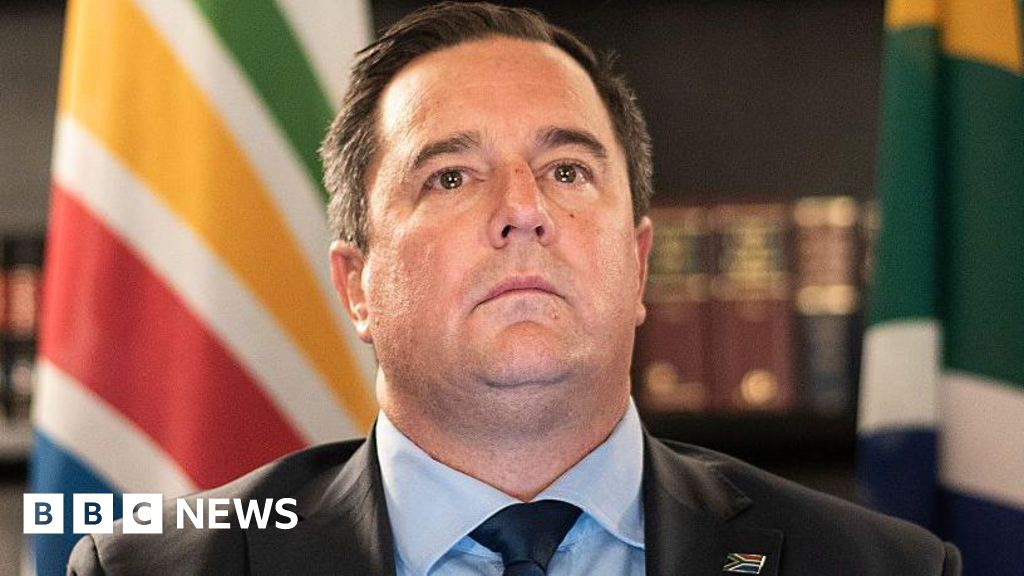
The political landscape of South Africa is poised for a significant reshuffle following the announcement by John Steenhuisen, the current leader of the Democratic Alliance (DA), that he will not seek re-election for the party’s top post in April. This decision introduces an element of uncertainty into the nascent Government of National Unity (GNU), a historic power-sharing arrangement forged after the African National Congress (ANC) lost its parliamentary majority for the first time in three decades in the 2024 general elections. Steenhuisen, who assumed leadership of the pro-business DA in 2019, now serves as the Minister of Agriculture in President Cyril Ramaphosa’s cabinet, and his unexpected withdrawal from the party leadership race has ignited widespread speculation regarding the DA’s future direction and the stability of the fragile coalition.
A Shift in Leadership: The Announcement
Steenhuisen, aged 49, had been broadly anticipated to contend for another term at the helm of the Democratic Alliance. However, reports suggest that his decision to step aside was influenced by various internal and external pressures, including several controversies that reportedly made a re-election bid untenable. Addressing the media, Steenhuisen explicitly stated his immediate priorities: "For the rest of this term of office, I will focus all of my time and energy as minister of agriculture on defeating the most devastating foot and mouth disease outbreak our country has ever seen." This statement underscored a commitment to his ministerial duties while simultaneously signaling an end to his tenure as party leader, at least for the upcoming internal elections. The declaration has set the stage for a competitive internal contest within the DA, a party that has traditionally prided itself on its structured leadership transitions, but now finds itself at a critical juncture in national governance.
The Democratic Alliance: A Historical Perspective
To fully appreciate the gravity of this leadership transition, it is essential to contextualize the Democratic Alliance within South Africa’s intricate political history. The DA, as it exists today, is the successor to a lineage of liberal and centrist parties that have played a crucial role in opposing apartheid and advocating for a non-racial, democratic South Africa. Its roots can be traced back to the Progressive Party, founded in 1959, which courageously championed universal suffrage during the height of apartheid. Over the decades, through mergers and transformations, including the formation of the Progressive Federal Party and later the Democratic Party, the party consistently maintained an opposition stance, often being the lone voice against the National Party’s segregationist policies.
In 2000, the Democratic Party merged with the New National Party (the successor to the apartheid-era National Party) and the Federal Alliance to form the Democratic Alliance. This consolidation aimed to create a stronger, more unified opposition force in the post-apartheid era dominated by the African National Congress. The DA has historically positioned itself as the main opposition, advocating for market-friendly economic policies, good governance, and a non-racial society where meritocracy prevails. Its voter base has traditionally been diverse, encompassing a significant portion of white, colored, and Indian South Africans, alongside a growing number of black South Africans who are disillusioned with the ANC’s performance.
Under leaders like Tony Leon and Helen Zille, the DA steadily grew its electoral support, particularly in the Western Cape province, which it has governed since 2009. Zille, known for her sharp intellect and formidable campaigning skills, transformed the DA into a more formidable political machine. Her successor, Mmusi Maimane, became the party’s first black leader, a move that was widely seen as an attempt to broaden the party’s appeal and shed its image as a predominantly white-led organization. However, Maimane’s tenure was marked by internal strife and a slight dip in electoral performance in the 2019 elections, ultimately leading to his resignation and the ascension of John Steenhuisen.
Steenhuisen’s Tenure and the 2024 Political Earthquake
John Steenhuisen took the reins of the Democratic Alliance in November 2019, initially as interim leader before being formally elected in 2020. His leadership coincided with a turbulent period for South Africa, characterized by economic stagnation, high unemployment, persistent corruption allegations against the ruling ANC, and the global COVID-19 pandemic. Steenhuisen, known for his robust debating style and parliamentary experience, positioned the DA as a strong critic of the ANC’s governance failures, advocating for structural economic reforms, improved public services, and a crackdown on corruption.
The 2024 general election proved to be a watershed moment in South African politics. For the first time since 1994, the African National Congress failed to secure an outright majority, garnering only 40.18% of the vote. This historic outcome necessitated the formation of a coalition government, marking a departure from three decades of single-party dominance. The Democratic Alliance, securing the second-largest share of votes at 21.8%, found itself in an unprecedented position of power-brokerage. After intense negotiations, the DA entered into a Government of National Unity with the ANC, along with several smaller parties like the Inkatha Freedom Party (IFP) and the Patriotic Alliance (PA). This grand coalition, bringing together historical rivals, was lauded by some as a mature political compromise necessary for stability, while others viewed it with skepticism, questioning the ideological coherence and long-term viability of such an arrangement.
As part of the GNU agreement, Steenhuisen was appointed Minister of Agriculture, Land Reform and Rural Development, a significant portfolio within the cabinet. This appointment underscored the DA’s influence within the new government structure, despite being the junior partner. His party’s entry into the GNU, however, was not without internal dissent and debate, reflecting the ideological complexities of aligning with a party that the DA had spent decades opposing.
Navigating the Government of National Unity
The formation of the Government of National Unity represented a fundamental shift in South Africa’s political dynamics. For the DA, it meant transitioning from a role of pure opposition to one of co-governance, requiring a delicate balance between asserting its policy positions and maintaining coalition unity. This shift inherently presents challenges for any political party, as it must navigate compromises, share credit, and potentially absorb blame for governmental actions.
The GNU itself is a grand experiment in a country grappling with profound socio-economic inequalities, high crime rates, and failing infrastructure. Its success hinges on the ability of its constituent parties to work collaboratively despite their historical antagonisms and ideological differences. Steenhuisen’s role as Agriculture Minister, for instance, places him at the forefront of tackling critical issues like food security, land reform, and livestock disease outbreaks – complex areas that often intersect with highly sensitive social and economic policies. His declared focus on the foot and mouth disease outbreak highlights the practical demands of his ministerial portfolio, yet it also serves as a public demonstration of commitment to governance over party politics.
The reported "controversies" that contributed to Steenhuisen’s decision to not seek re-election, while unspecified in the original report, could encompass a range of issues common to political leaders: internal party disagreements, public scrutiny over policy stances, personal conduct allegations, or even simply the strain of leading a party through a period of profound change and compromise. In a coalition environment, the actions and decisions of individual leaders are often magnified, as they directly impact the perceived stability and efficacy of the broader government.
Implications for South African Politics and Stability
Steenhuisen’s departure from the DA leadership has several far-reaching implications. Firstly, it opens up a contest for leadership within the second-largest party in the GNU, potentially diverting internal energy towards campaigning rather than unified governance. A contentious leadership battle could expose fissures within the DA, which might then ripple through the coalition, impacting its cohesion and decision-making capacity.
Secondly, the identity of Steenhuisen’s successor will be crucial for the DA’s strategic direction. Will the party choose a leader who emphasizes a more assertive, independent stance within the GNU, or one who prioritizes collaboration and stability? The choice could influence the DA’s relationship with the ANC and other coalition partners, potentially altering the balance of power and the policy trajectory of the government. A shift in DA leadership could also affect investor confidence, which often thrives on political stability. Any perception of instability within key coalition partners might lead to market jitters, impacting South Africa’s economic recovery efforts.
From a social and cultural perspective, the DA’s leadership transition could influence how the party is perceived by different demographic groups. The DA has long struggled to significantly expand its support among black African voters, despite its non-racial ideals. The new leader will face the ongoing challenge of broadening the party’s appeal and effectively communicating its vision to a diverse electorate that remains deeply scarred by historical injustices and contemporary inequalities.
The Path Forward for the DA
The Democratic Alliance now faces a pivotal moment of self-definition. Its upcoming leadership election will be more than just an internal party affair; it will be a significant indicator of the party’s strategic priorities in a post-ANC-majority South Africa. Potential candidates will need to articulate a clear vision for the DA’s role within the GNU, addressing the complexities of co-governance while maintaining the party’s distinct identity and policy platform.
The new leader will inherit a party that has made a historic leap into national governance but also carries the weight of managing the expectations of its diverse voter base and navigating the political compromises inherent in a coalition. They will need to demonstrate strong leadership, strategic acumen, and the ability to unite disparate factions within the party. Furthermore, the DA’s future success will depend on its capacity to effectively communicate the benefits of the GNU to its constituents, ensuring that the party is seen as a constructive force in addressing South Africa’s formidable challenges, rather than merely a junior partner in a compromise government.
In conclusion, John Steenhuisen’s decision not to seek re-election marks the end of an era for the Democratic Alliance and ushers in a period of introspection and realignment. While his focus remains on his ministerial duties, the vacuum at the top of the DA leadership creates a dynamic scenario for South African politics. The choices made by the DA in the coming months will not only determine its own trajectory but also significantly impact the stability and direction of the Government of National Unity, and by extension, the future of the nation itself.






 Amir Mahmud