Amir Mahmud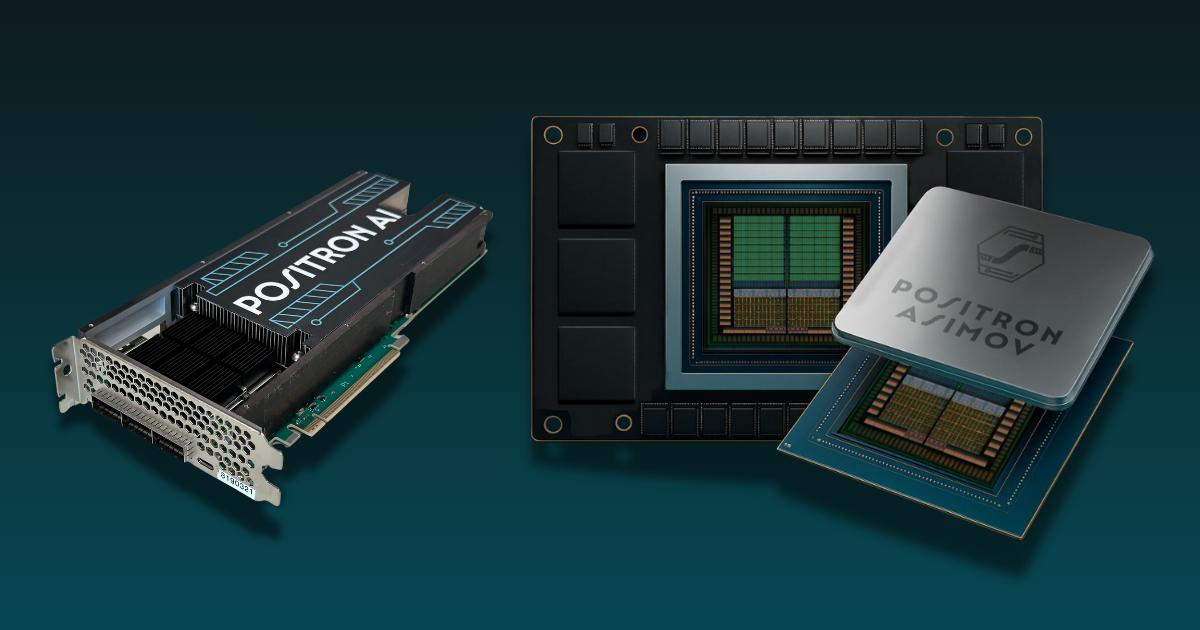
A significant shift in the competitive landscape for artificial intelligence hardware is underway, as semiconductor startup Positron recently announced securing $230 million in Series B funding. This substantial capital injection, exclusively reported by TechCrunch, positions the three-year-old Reno-based company to rapidly deploy its advanced high-speed memory chips, components deemed crucial for the intensive demands of modern AI workloads. The investment arrives at a pivotal moment, as the burgeoning AI industry grapples with the escalating costs and supply chain constraints associated with the dominant market leader, fueling a fervent search for viable alternatives.
A Strategic Investment in the Future of AI Compute
The Series B funding round underscores a broader trend of strategic investments aimed at diversifying the global AI infrastructure. Among the key investors in Positron’s latest round is the Qatar Investment Authority (QIA), the sovereign wealth fund of Qatar. QIA’s participation highlights a deliberate and aggressive strategy by the Gulf nation to establish itself as a formidable player in the global AI ecosystem. Sources close to the matter indicate that Qatar views robust compute capacity as an indispensable element for maintaining global economic competitiveness, actively positioning itself as a leading AI services hub within the Middle East. This strategic imperative was a recurring theme at recent industry gatherings, including Web Summit Qatar in Doha, where the nation’s commitment to building "sovereign" AI infrastructure was repeatedly emphasized.
This commitment extends beyond direct startup investments. In a notable move last September, QIA unveiled a formidable $20 billion AI infrastructure joint venture with Brookfield Asset Management, signaling a long-term vision for fostering significant technological capabilities. For Positron, this latest funding round elevates its total capital raised to just over $300 million, building on a previous $75 million raise last year. That earlier round saw participation from a diverse group of investors, including Valor Equity Partners, Atreides Management, DFJ Growth, Flume Ventures, and Resilience Reserve, reflecting growing investor confidence in the startup’s potential to carve out a significant niche in the highly competitive AI hardware market.
The Quest for Alternatives: Challenging Nvidia’s Dominance
The substantial investment in Positron is symptomatic of a wider industry movement driven by hyperscalers and leading AI firms seeking to reduce their reliance on Nvidia, the longstanding and currently dominant leader in AI chip technology. Nvidia’s graphics processing units (GPUs), particularly its A100 and H100 series, have become the de facto standard for AI training and inference, largely due to their parallel processing capabilities and the robust CUDA software ecosystem. This ecosystem, developed over decades, has created a powerful moat, making it challenging for competitors to offer a truly seamless alternative for developers.
However, Nvidia’s near-monopoly has created certain market dynamics that are increasingly problematic for large-scale AI developers. The immense demand for these specialized chips, particularly the H100, has led to soaring prices, extended lead times, and significant procurement challenges. For companies operating at the cutting edge of AI, these factors translate into substantial operational costs and potential bottlenecks in innovation and deployment. Even OpenAI, one of Nvidia’s most prominent and important customers, has reportedly expressed dissatisfaction with some of the firm’s latest AI chips and has been actively exploring alternatives since the previous year. This signals a critical turning point where even the largest players are actively seeking diversification and competitive solutions.
Historically, the evolution of computing power has often seen shifts from monolithic, general-purpose solutions to more specialized architectures. While Nvidia effectively transitioned its gaming GPU prowess to a general-purpose parallel computing platform suitable for AI, the current phase of AI development—characterized by massive models and widespread deployment—is highlighting the need for even greater efficiency and specialization. The sheer energy consumption and heat generation of current high-end AI chips also pose significant challenges for data centers, pushing the industry to seek more power-efficient solutions not just for cost savings, but also for environmental sustainability and operational scalability. The market is ripe for innovation that can deliver comparable performance with reduced power footprints and potentially more accessible supply chains.
Positron’s Strategic Niche: Powering AI Inference
Positron’s technological strategy centers on a crucial distinction within the AI lifecycle: inference versus training. While much of the public attention on AI chips focuses on the colossal computational demands of "training" large language models (LLMs) and complex neural networks – a domain where Nvidia currently reigns supreme – Positron has strategically chosen to concentrate on "inference." Inference refers to the process of running an already trained AI model to make predictions or decisions in real-world applications. This includes everything from real-time language translation and image recognition to recommendation engines and autonomous driving systems.
The company’s first-generation chip, named Atlas, is designed with this inference-centric approach. Manufactured in Arizona, the Atlas chip claims a compelling advantage: it can match the performance of Nvidia’s H100 GPUs for inference workloads while consuming less than a third of the power. This efficiency claim, if widely validated, could be a game-changer. Lower power consumption directly translates into reduced operational costs for data centers, fewer cooling requirements, and a smaller carbon footprint, making it an attractive proposition for businesses looking to deploy AI at scale. As businesses increasingly shift their focus from the resource-intensive task of building large models to the widespread deployment and operationalization of these models, the demand for highly efficient inference hardware is surging.
Beyond its core memory capabilities, Positron’s chips are also reported to perform strongly in high-frequency and video-processing workloads. This versatility suggests potential applications in diverse fields such as real-time analytics, surveillance, media processing, and edge computing, where rapid data processing and energy efficiency are paramount. By focusing on inference, Positron avoids a direct, head-on confrontation with Nvidia in the most demanding and established training segment, instead targeting a rapidly expanding market segment where efficiency and cost-effectiveness are becoming paramount. This strategic positioning could allow Positron to capture significant market share as the AI industry matures and deployment becomes as critical as development.
Broader Implications for the AI Hardware Ecosystem
The emergence and substantial funding of companies like Positron signal a crucial evolution in the artificial intelligence hardware ecosystem. For years, the market has been heavily concentrated, posing risks related to supply chain stability, innovation velocity, and competitive pricing. The push for alternatives is not merely about finding another supplier; it is about fostering a more resilient, diverse, and competitive market that can better serve the escalating and varied demands of AI development and deployment globally.
The concept of "sovereign AI infrastructure," championed by entities like the Qatar Investment Authority, reflects a growing geopolitical awareness of AI’s strategic importance. Nations are increasingly recognizing that control over AI compute resources can translate into economic power, national security advantages, and technological self-reliance. By investing in promising startups and building robust domestic or regionally controlled data centers, countries aim to reduce dependence on external suppliers and ensure their long-term capacity to innovate and compete in the AI era. This trend could lead to a decentralization of AI hardware manufacturing and development, potentially fostering regional tech hubs.
Furthermore, the focus on power efficiency and specialized inference hardware addresses a critical environmental and economic challenge. As AI models grow larger and more pervasive, their energy footprint becomes a significant concern. Solutions that can deliver comparable or superior performance with substantially reduced power consumption are not just economically attractive but also vital for sustainable technological growth. This could accelerate the adoption of AI across industries, making advanced capabilities more accessible to a wider range of businesses, from small enterprises to large corporations.
In conclusion, Positron’s $230 million Series B funding represents more than just a financial milestone for a promising startup. It is a clear indicator of the intensifying race to develop powerful, efficient, and cost-effective AI hardware alternatives to the market’s current giants. As the AI industry continues its rapid expansion, the ability to process data efficiently and at scale will remain a defining factor. Investments like QIA’s in Positron are not just betting on a company; they are betting on a future where a diversified, competitive, and highly efficient AI hardware ecosystem drives the next wave of innovation across the globe. The coming years will undoubtedly witness a dynamic struggle for supremacy in the foundational technology that underpins the artificial intelligence revolution.