Amir Mahmud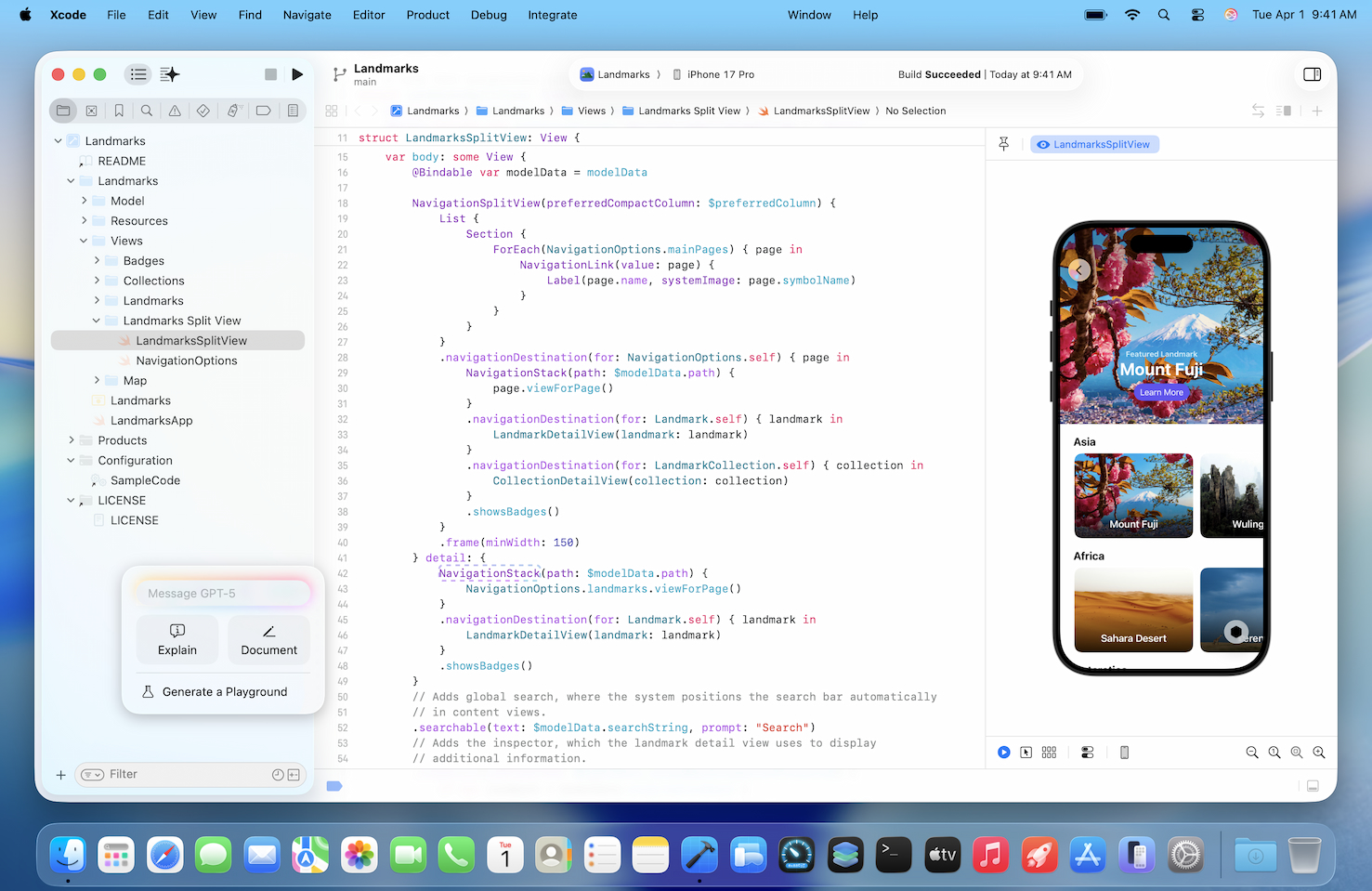
Apple is poised to redefine the landscape of app development with the release of Xcode 26.3, ushering in a new era of "agentic coding" directly within its premier integrated development environment (IDE). This significant update, announced on Tuesday, empowers developers to harness sophisticated artificial intelligence tools, including Anthropic’s Claude Agent and OpenAI’s Codex, for unprecedented levels of automation and assistance. The Xcode 26.3 Release Candidate is immediately accessible to registered Apple Developers through the dedicated developer website, with a broader rollout to the App Store anticipated shortly.
This strategic enhancement builds upon Apple’s earlier foray into AI-assisted development, which saw the introduction of initial support for large language models like ChatGPT and Claude within Xcode 26 last year. However, the current iteration represents a profound leap, transitioning from mere AI "copilots" to fully "agentic" systems capable of executing complex, multi-step tasks autonomously. Developers crafting applications for the diverse Apple ecosystem—spanning iPhone, iPad, Mac, Apple Watch, and other hardware platforms—stand to benefit from this advanced integration.
Understanding Agentic AI in Software Development
To fully appreciate the significance of Xcode 26.3, it’s crucial to understand the concept of "agentic coding." Unlike earlier forms of AI assistance that primarily offered code suggestions, autocomplete, or simple generation based on explicit prompts, agentic AI systems possess a higher degree of autonomy and intelligence. An AI agent is designed to observe its environment, formulate plans, execute actions, and iterate on its performance to achieve a defined goal. In the context of software development, this translates to an AI model that can not only generate code but also understand a project’s context, navigate its structure, perform tests, identify errors, and even implement fixes—all with minimal human intervention.
This marks a substantial evolution from the initial integration of LLMs in Xcode 26. While those models could provide conversational assistance and generate snippets of code, their interaction was largely reactive and confined to single-turn requests. Agentic tools, by contrast, can tap into a broader spectrum of Xcode’s features, enabling them to tackle more intricate problems and orchestrate sequences of operations. This shift promises to dramatically alter developer workflows, moving beyond mere augmentation to a more collaborative and autonomous partnership between human and machine.
The Power of Integration: How it Works
The core strength of Xcode 26.3’s agentic integration lies in its ability to grant AI models deeper access to the IDE’s functionalities. At launch, these agents are equipped with a suite of capabilities designed to streamline various stages of the development lifecycle. They can comprehensively explore an existing project, decipher its intricate structure and associated metadata, and subsequently initiate the build process. Crucially, these agents are also capable of running tests to identify potential errors and, perhaps most impressively, autonomously apply corrective measures.
A critical aspect of this integration is the agents’ access to Apple’s comprehensive and up-to-date developer documentation. This ensures that any code generated or modifications proposed by the AI adhere to the latest Application Programming Interfaces (APIs) and conform to Apple’s established best practices for software development. This access is vital for maintaining code quality, security, and compatibility across the ever-evolving Apple platform.
Apple’s meticulous preparation for this launch involved close collaboration with both Anthropic and OpenAI. This partnership focused on optimizing the efficiency of the AI agents, specifically targeting token usage and tool calling mechanisms. Such optimizations are paramount for ensuring that the agents operate smoothly and cost-effectively within the Xcode environment, preventing excessive computational overheads or delays.
The technical backbone enabling this sophisticated interaction is Apple’s Model Context Protocol (MCP). This protocol serves as a universal interface, exposing Xcode’s capabilities to external AI agents. Through MCP, Xcode can seamlessly connect with any compatible agent, facilitating a wide array of actions including project discovery, code changes, file management, generation of previews and snippets, and, as mentioned, access to the most current documentation. This open protocol approach suggests a future where a diverse ecosystem of third-party agentic tools could potentially integrate with Xcode, further expanding developers’ options.
Developer Workflow and User Experience
Adopting the new agentic coding features in Xcode 26.3 is designed to be straightforward for developers. The initial step involves downloading the desired AI agents directly from Xcode’s settings menu. Developers then connect their accounts with the respective AI providers—Anthropic or OpenAI—either by signing in or inputting their unique API keys. A user-friendly drop-down menu within the application allows for precise control, enabling developers to select specific model versions, such as GPT-5.2 or GPT-5.1-mini, based on their project requirements or preference for performance versus efficiency.
Interaction with the agents is intuitive, relying on natural language commands. A dedicated prompt box situated on the left side of the screen allows developers to articulate their intentions, whether it’s initiating an entirely new project or requesting specific modifications to existing code. For instance, a developer could instruct Xcode, "Add a new photo filtering feature to my app that uses Apple’s Core Image framework, ensuring it has a user interface element for adjusting filter intensity and displays a real-time preview."
As an agent commences its work, it transparently breaks down complex tasks into smaller, manageable steps. This granular view allows developers to monitor the agent’s progress, understand its decision-making process, and observe how the codebase is evolving in real time. Before generating any code, the agent intelligently searches for and consults relevant documentation, ensuring accuracy and adherence to guidelines. Visual highlighting within the code editor clearly delineates the changes made by the agent, while a project transcript on the side of the screen provides a detailed log of the agent’s actions and reasoning, offering valuable insights into its "thought process."
Apple believes this emphasis on transparency will be particularly beneficial for new developers, transforming the learning curve into a more guided and interactive experience. To foster adoption and education, the company is actively hosting a "code-along" workshop on its developer site. This interactive event allows users to follow along in real-time with their own Xcode copies, learning practical applications of agentic coding tools from Apple’s experts.
Upon completion of its task, the AI agent performs self-verification, running tests to confirm that the generated or modified code functions as expected. Equipped with these test results, the agent can autonomously iterate on the project, refining its output to fix identified errors or address other issues. Apple has also offered a helpful tip: prompting the agent to "think through its plans" before writing code can often lead to improved outcomes, as it encourages a more deliberate and structured problem-solving approach.
Furthermore, developers retain complete control and flexibility. Xcode automatically creates "milestones" every time an agent introduces a change, providing a robust version control system. This allows developers to easily revert their code to any previous state if they are not satisfied with the agent’s output, ensuring a safety net and fostering confidence in experimentation.
Historical Context and Evolution of AI in Development
The integration of agentic AI in Xcode is not an isolated event but rather the latest milestone in a long trajectory of AI’s increasing involvement in software engineering. Early forms of AI in development date back to the 1980s with expert systems designed for tasks like debugging or code analysis. The turn of the millennium saw the rise of more sophisticated IDE features like intelligent autocompletion, static code analysis tools, and refactoring assistants, all leveraging rule-based AI or machine learning algorithms to improve developer productivity.
The past decade, however, has witnessed an exponential acceleration, largely driven by advancements in deep learning and the emergence of large language models (LLMs). Tools like GitHub Copilot, first introduced in 2021, popularized the "AI pair programmer" concept, offering real-time code suggestions and generating functions based on comments or existing code. Other platforms like Tabnine and Amazon CodeWhisperer followed suit, demonstrating the immense potential of generative AI in streamlining coding tasks.
Apple’s journey into this space began with Xcode 26, which provided initial hooks for developers to integrate conversational AI models like ChatGPT and Claude. This allowed for text-based interactions, generating explanations, or simple code snippets. Xcode 26.3’s agentic capabilities represent a qualitative leap from these earlier "copilot" functionalities. While copilots primarily assist, agents are designed to act, taking initiative and orchestrating multiple steps to achieve a defined objective within the development environment. This transition signifies a move from reactive assistance to proactive automation, fundamentally changing the nature of human-computer collaboration in coding.
Market and Industry Impact
The introduction of agentic coding in Xcode 26.3 is poised to have a multifaceted impact on the software development industry and the broader tech landscape.
Efficiency and Productivity: The most immediate benefit is a significant boost in developer productivity. By automating repetitive tasks, boilerplate code generation, testing, and even initial debugging, agents can free up human developers to focus on higher-level design, complex problem-solving, and innovative features. This could drastically reduce development cycles and accelerate the time-to-market for new applications.
Accessibility and Learning: Apple’s emphasis on transparency and its "code-along" workshops underscores a commitment to making development more accessible. Agentic tools can serve as powerful educational aids, guiding new developers through complex codebases, demonstrating best practices, and explaining concepts in a practical, hands-on manner. This could lower the barrier to entry for aspiring app creators, potentially expanding the pool of talent within the Apple ecosystem.
Code Quality and Consistency: With access to Apple’s latest documentation and the ability to run automated tests, AI agents can help ensure that code adheres to the highest standards of quality, security, and performance. This could lead to more robust applications and a reduction in technical debt over time.
Shifting Skillsets: While agents automate certain tasks, they don’t eliminate the need for human developers. Instead, they shift the required skillsets. Developers will increasingly become "prompt engineers," adept at articulating complex requirements to AI agents, and "AI supervisors," responsible for reviewing, refining, and overseeing the agent’s output. Debugging AI-generated code, understanding its rationale, and integrating it effectively into larger systems will become crucial competencies.
Competitive Landscape: This move intensifies competition in the AI-assisted development space. Microsoft, with GitHub Copilot and its integration of Copilot into Visual Studio Code, and Google, with its Gemini models being integrated into various development tools, are key players. Apple’s entry with deep Xcode integration, leveraging its proprietary ecosystem, positions it as a formidable force, potentially attracting and retaining developers within its sphere.
Ethical and Security Considerations: While the benefits are clear, the rise of agentic AI also presents challenges. Developers must be mindful of potential biases in AI-generated code, the risk of introducing subtle bugs that are harder to trace, and the security implications of external AI models having access to proprietary project code. Apple’s focus on transparency and the ability to revert changes are crucial safeguards, but ongoing vigilance will be necessary. Data privacy and intellectual property concerns also arise when interacting with external AI services, though Apple’s careful partnership structure likely addresses these with specific protocols and agreements.
Future Outlook
The integration of agentic AI in Xcode 26.3 is merely the beginning of a transformative journey. Future iterations could see agents capable of even more sophisticated tasks, such as designing user interfaces from natural language descriptions, optimizing application performance, or even proactively suggesting architectural improvements. The deeper integration with other Apple services and frameworks could unlock entirely new paradigms for app creation.
Ultimately, the long-term vision for human-AI collaboration in software engineering points towards a symbiotic relationship where AI handles the routine and complex plumbing, allowing human ingenuity to flourish in creativity, strategic thinking, and user experience design. Apple’s commitment, evidenced by its ongoing developer workshops, signals its intent to lead this evolution, equipping its vast developer community with the tools to build the next generation of groundbreaking applications. Xcode 26.3 is not just an update; it’s a statement of intent, positioning Apple at the forefront of AI-powered software development.