Amir Mahmud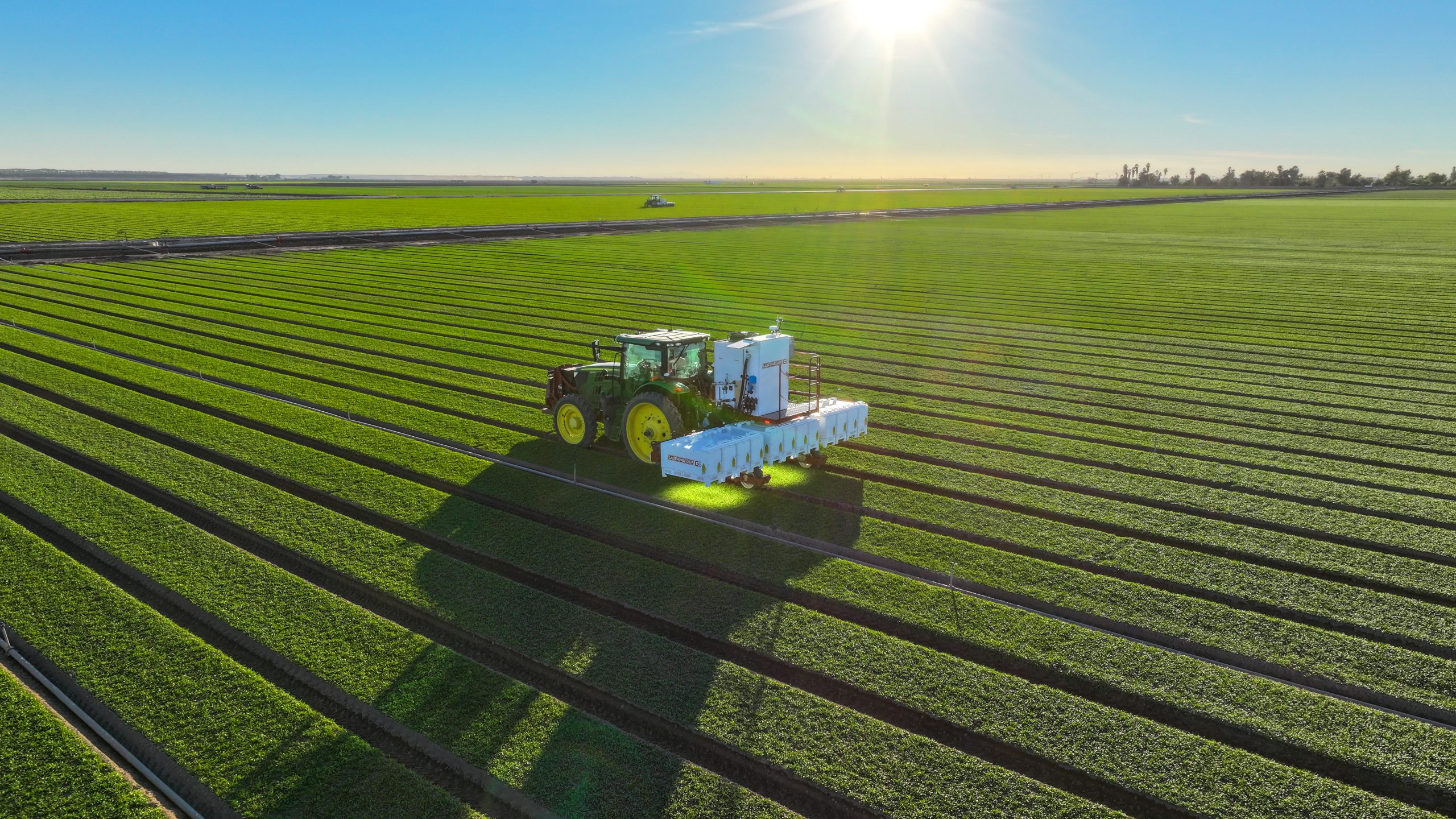
In a significant stride for agricultural technology, Seattle-based Carbon Robotics has unveiled its Large Plant Model (LPM), an advanced artificial intelligence system designed to revolutionize weed management. This innovative AI empowers the company’s LaserWeeder robots with unprecedented capabilities for real-time plant identification, marking a pivotal shift from traditional, labor-intensive, or chemical-reliant methods. The LPM’s introduction heralds a new era where farm machinery can autonomously discern between crops and unwanted vegetation with remarkable speed and accuracy, adapting instantly to novel plant species without extensive retraining.
The Enduring Challenge of Weed Management
For millennia, the relentless battle against weeds has been a defining characteristic of agriculture. These opportunistic plants compete with cultivated crops for essential resources such like sunlight, water, and nutrients, severely impacting yields and profitability. Historically, farmers relied on manual labor, painstakingly pulling weeds by hand—a practice that, while effective, is incredibly time-consuming, physically demanding, and increasingly unsustainable given global labor shortages and rising operational costs.
The mid-20th century brought the advent of chemical herbicides, offering a seemingly miraculous solution to the weed problem. These compounds provided farmers with an efficient means to control vast fields, contributing significantly to the Green Revolution’s capacity to feed a burgeoning global population. However, the widespread and often indiscriminate use of herbicides has led to a cascade of unintended consequences. Environmental concerns, including soil degradation, water contamination, and harm to non-target species, have grown. More critically, weeds have demonstrated an alarming capacity to evolve resistance to even the most potent chemicals, rendering many once-effective herbicides increasingly obsolete. This escalating herbicide resistance crisis presents a formidable threat to global food security, compelling the agricultural sector to seek alternative, more sustainable solutions.
Carbon Robotics: Pioneering Laser Weeding
Founded in 2018, Carbon Robotics emerged as a key player in this search for innovation, specifically targeting the challenge of sustainable weed control. The company’s flagship product, the LaserWeeder, represents a radical departure from conventional methods. Rather than relying on chemicals or manual labor, these autonomous robots navigate farm fields, employing high-powered lasers to precisely identify and eradicate weeds. The system leverages sophisticated computer vision and artificial intelligence to distinguish between crops and weeds, directing focused thermal energy to destroy unwanted plants at their root systems, thereby minimizing soil disturbance and eliminating the need for herbicides.
The LaserWeeder fleet has rapidly expanded its footprint, operating on more than 100 farms across 15 countries. These machines have been diligently collecting vast amounts of data—over 150 million photos and data points—which have been instrumental in training the company’s AI systems. This extensive real-world data collection laid the groundwork for the development of the LPM.
The Large Plant Model: A Leap in Botanical Intelligence
The introduction of the Large Plant Model (LPM) signifies a monumental leap in the capabilities of these autonomous weeders. Prior to the LPM, Carbon Robotics’ systems, while advanced, required a degree of manual intervention when encountering new or unfamiliar weed species. If a farmer encountered a weed type not previously cataloged or if environmental factors altered the appearance of a known weed, the company’s engineers would need to create new data labels and retrain the machine’s AI model. This process, according to Carbon Robotics founder and CEO Paul Mikesell, typically took around 24 hours. While an improvement over traditional methods, it still introduced a delay in the system’s adaptability.
The LPM fundamentally transforms this dynamic. Built on a foundation of extensive neural network experience—Mikesell himself having contributed to similar large-scale AI projects at Uber and Meta’s Oculus—the model is designed for deep understanding rather than mere pattern matching. By training on a colossal dataset encompassing diverse plant structures, growth stages, and environmental conditions, the LPM can now learn new weed species instantaneously, even if it has never encountered them before. This "zero-shot learning" capability is critical for agricultural environments, which are inherently dynamic and unpredictable.
Farmers can now interact with the system in real-time through the robot’s user interface, selecting images of a new weed species identified by the machine and instructing it to eliminate them. This immediate adaptability means that farming operations can maintain peak efficiency without pauses for retraining, significantly enhancing the practical utility and scalability of the LaserWeeder technology. The LPM functions as the core intelligence within Carbon AI, the overarching AI system powering the autonomous robots, continuously learning and refining its botanical knowledge as it processes new visual information from fields worldwide.
Broader Implications: Market, Social, and Environmental Impact
The emergence of technologies like the LPM carries profound implications across the agricultural landscape. From a market perspective, it signals a significant disruption in the agricultural input sector. The precision weeding market, driven by advancements in robotics and AI, is projected to grow substantially, offering an alternative to the multi-billion-dollar global herbicide market. Investment in agricultural technology, or "AgTech," has seen a sharp increase, with companies like Carbon Robotics attracting substantial venture capital—over $185 million from backers including Nvidia NVentures, Bond, and Anthos Capital. This influx of capital underscores investor confidence in the long-term viability and transformative potential of smart farming solutions.
Socially, the impact on farming communities could be multifaceted. Reducing reliance on herbicides can lead to healthier working conditions for farmers and farmworkers, minimizing exposure to potentially harmful chemicals. Enhanced efficiency and reduced labor costs associated with weeding can improve farm profitability, particularly for smaller and medium-sized operations struggling with economic pressures. However, the shift towards highly automated systems may also necessitate new skill sets within the agricultural workforce, requiring training in robotics operation and data analytics, potentially altering traditional labor demands.
Environmentally, the benefits are substantial. Eliminating or drastically reducing herbicide use protects biodiversity, prevents chemical runoff into waterways, and contributes to healthier soil ecosystems. Precision weeding also supports organic farming practices and a broader move towards regenerative agriculture, which prioritizes ecological health and long-term sustainability. As consumer demand for sustainably produced, chemical-free food continues to grow, technologies like the LaserWeeder, powered by LPM, offer a compelling solution for producers to meet these evolving preferences.
The Historical Arc of Agricultural Innovation
The development of the LPM fits squarely within the long and storied history of agricultural innovation. From the invention of the plow to the selective breeding of crops, each era has seen technological advancements redefine farming practices. The 20th century witnessed mechanical farming and the Green Revolution, characterized by high-yield crop varieties, synthetic fertilizers, and pesticides, dramatically increasing food production. The late 20th and early 21st centuries introduced genetically modified organisms (GMOs) and the dawn of precision agriculture, using GPS, sensors, and variable-rate applications to optimize inputs.
Now, the agricultural sector is undergoing another fundamental transformation, driven by artificial intelligence, robotics, and big data. This "Agriculture 4.0" paradigm aims to create highly efficient, resilient, and environmentally sound food production systems. Large AI models, akin to the Large Language Models (LLMs) that have captured public attention in other sectors, are now making their way into specialized domains like agriculture. The LPM represents a "Large Vision Model" tailored specifically for botanical identification, demonstrating how foundational AI research can be adapted to solve complex, real-world problems in niche industries.
Challenges and the Road Ahead
While the LPM represents a significant technological triumph, the path to widespread adoption is not without its challenges. The initial capital investment for advanced robotic systems like the LaserWeeder can be substantial, posing a barrier for some farmers. Ensuring seamless integration with existing farm management systems, providing adequate technical support, and addressing potential issues related to connectivity and data security will also be crucial for broad acceptance. The ongoing refinement of the model will depend on the continuous influx of diverse data from various agricultural environments, requiring robust data collection and processing infrastructure.
Looking forward, the capabilities of the LPM are expected to grow even further. As Mikesell notes, with over 150 million labeled plants in its training set, the model possesses an unprecedented depth of botanical knowledge. This vast dataset allows the AI to infer plant characteristics, species, and structural relationships even for plants it has never directly encountered. This continuous learning process, powered by the collective experience of LaserWeeder robots operating globally, will further enhance the model’s accuracy and adaptability, making it an increasingly indispensable tool for modern agriculture.
The journey from manual weeding to chemical herbicides, and now to precision laser weeding guided by intelligent AI, illustrates agriculture’s enduring quest for efficiency and sustainability. Carbon Robotics’ Large Plant Model stands as a testament to this ongoing evolution, promising a future where farming is not only more productive but also more environmentally responsible, ensuring that the critical task of feeding the world can be accomplished with greater care for the planet.