Amir Mahmud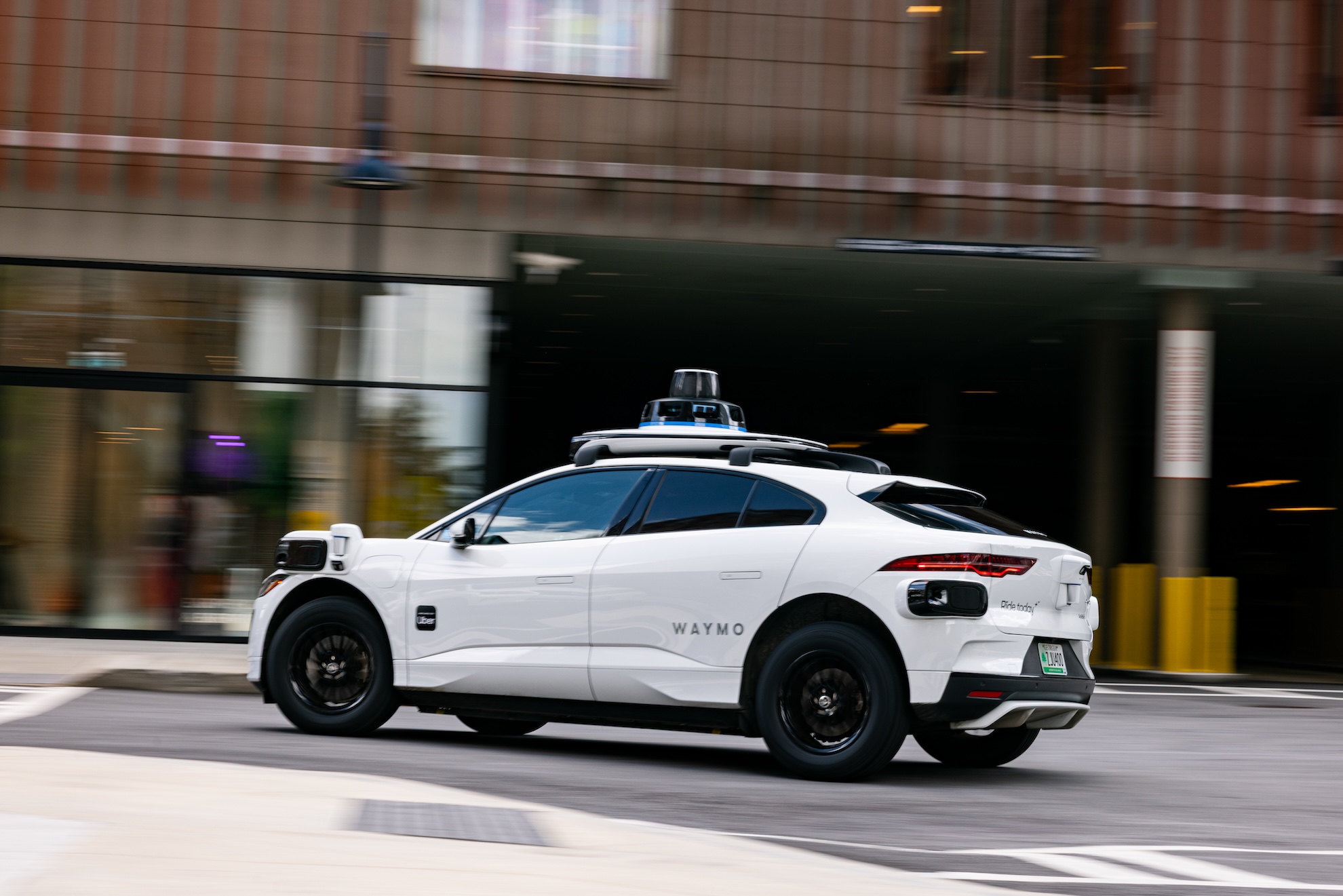
The recent announcement of Waabi’s monumental $1 billion funding round transcends a mere financial transaction for a self-driving truck innovator; it represents a pivotal expansion into the fiercely competitive robotaxi market, significantly propelled by a strategic investment from ride-sharing behemoth Uber. This substantial capital infusion, comprising an initial $750 million with an additional $250 million contingent on deployment milestones from Uber, underscores the accelerating ambition within the autonomous vehicle (AV) sector and highlights Uber’s evolving, multi-faceted approach to integrating self-driving technology into its global transportation network. Waabi, founded by Raquel Urtasun, a former Uber AI chief, is now positioned to leverage this backing to realize its goal of deploying over 25,000 robotaxis, a move that places the spotlight firmly on the efficacy of Uber’s distributed partnership strategy in the high-stakes race for autonomous mobility.
Uber’s Shifting Autonomous Strategy: A Historical Perspective
Uber’s journey into autonomous vehicles has been a complex and often turbulent one, marked by ambitious internal development, significant setbacks, and ultimately, a strategic pivot towards external partnerships. The company initially embarked on its own in-house AV program, establishing the Advanced Technologies Group (ATG) in 2015. This initiative was fueled by the vision of a future where autonomous fleets could drastically reduce operational costs and enhance service efficiency, thereby transforming Uber’s business model. Early on, Uber even acquired Otto, a self-driving truck startup, in a bid to accelerate its capabilities.
However, the path was fraught with challenges. The development of Level 4 and Level 5 autonomous systems proved far more complex and capital-intensive than many initially anticipated. Technical hurdles, such as navigating unpredictable urban environments, perceiving objects in diverse weather conditions, and making nuanced real-time decisions, demanded immense engineering resources and extensive real-world testing. A tragic incident in 2018, where an Uber self-driving test vehicle was involved in a fatal collision with a pedestrian in Tempe, Arizona, cast a long shadow over the program, leading to a temporary suspension of testing and a re-evaluation of its safety protocols.
By 2020, facing mounting losses from its AV division and recognizing the prolonged timeline to commercial viability, Uber made a significant strategic shift. It divested ATG to Aurora, another prominent AV developer, taking a stake in the combined entity. This move signaled Uber’s pragmatic acknowledgment that direct, full-stack AV development was a drain on resources that could be better allocated to its core ride-hailing and delivery services. The divestment allowed Uber to shed the immense R&D costs and regulatory burdens associated with building autonomous technology from the ground up, while still retaining a pathway to integrate AVs into its platform through partnerships. This historical context is crucial for understanding why Uber now champions a "bet-on-everything" strategy, fostering collaborations with numerous independent AV companies rather than solely relying on proprietary solutions.
Waabi’s Distinctive Edge: The "Simulation-First" Paradigm
At the heart of Waabi’s appeal, and a key factor in attracting Uber’s significant investment, is its innovative "simulation-first" approach to autonomous driving development. Founded by Raquel Urtasun, a renowned expert in artificial intelligence and computer vision from the University of Toronto, Waabi aims to accelerate the development and deployment of AVs by heavily relying on synthetic data and a sophisticated AI-driven simulation platform called Waabi Driver.
Traditional AV development often involves extensive and costly real-world testing, accumulating millions of miles on physical roads to gather data for training and validating AI models. This process is time-consuming, geographically limited, and exposes vehicles to a finite set of scenarios. Waabi’s methodology seeks to circumvent many of these limitations by generating vast quantities of diverse, high-fidelity synthetic data in a virtual environment. This allows for the rapid creation and testing of scenarios that are rare or dangerous to replicate in the real world, such as extreme weather conditions, complex traffic incidents, or edge cases that might otherwise take years to encounter.
The "simulation-first" paradigm suggests that a highly advanced AI system can learn and adapt more efficiently within a controlled, data-rich virtual environment before extensive physical deployment. Proponents argue this approach can significantly reduce development timelines, enhance safety by pre-emptively addressing potential failures, and lower overall costs by minimizing the need for large fleets of test vehicles and human safety drivers. For Uber, this methodology potentially offers a faster route to scalable, reliable robotaxi services, which aligns perfectly with its strategic goal of integrating diverse AV solutions. Waabi’s ambition to transition from autonomous trucking, a field with distinct but related challenges, into the urban robotaxi landscape further demonstrates the versatility and perceived robustness of its simulation-driven technology.
The Multi-Partner Approach: Uber’s Hedged Bets
Uber’s strategy is not to build autonomous vehicles itself, but to become the ultimate platform for autonomous mobility, irrespective of the underlying technology provider. This involves cultivating a broad ecosystem of partnerships with various AV developers, including industry giants and promising startups alike. With a portfolio reportedly boasting over two dozen autonomous vehicle collaborators globally, Uber is effectively hedging its bets across different technological approaches, geographical focuses, and use cases.
This diversified strategy offers several analytical advantages. Firstly, it mitigates the substantial financial risks and R&D burdens that plagued its own ATG unit. By outsourcing the capital-intensive development of AV hardware and software, Uber can focus on its core strengths: network optimization, customer acquisition, and service integration. Secondly, it provides access to a wider array of innovative technologies and specialized expertise. Different partners may excel in specific areas, such as long-haul trucking (like Aurora, post-ATG acquisition), last-mile delivery (like Nuro), or urban robotaxi services (like Waymo, Motional, and now Waabi). This allows Uber to cherry-pick the most suitable solutions for various segments of its business.
Furthermore, a multi-partner strategy fosters competition among its AV providers, potentially driving down costs and accelerating innovation as each partner strives to offer the most compelling solution for integration into the Uber platform. It also allows Uber to maintain flexibility, adapting to shifts in technological leadership or market dynamics without being locked into a single, proprietary system. The goal is to create a future where consumers using the Uber app might seamlessly select between a human-driven vehicle, an autonomous robotaxi from Waabi, or an AV from Waymo, depending on availability, cost, and preference, all managed by Uber’s robust dispatch and logistics infrastructure. This approach transforms Uber from an AV developer into an AV orchestrator, leveraging its vast network effect.
Market Dynamics and the Road to Autonomous Adoption
The autonomous vehicle market is projected to be a multi-trillion-dollar industry, promising to revolutionize transportation, logistics, and urban planning. However, its path to widespread adoption is fraught with significant hurdles, making Uber’s cautious yet diversified approach understandable. The market is characterized by intense competition, with established automakers, tech giants, and nimble startups all vying for a slice of the future. Companies like Waymo (Google’s self-driving unit) and Cruise (majority-owned by GM) have made significant strides in deploying limited robotaxi services in select cities, demonstrating the technical feasibility but also the operational complexities.
Regulatory frameworks remain fragmented and evolving, posing challenges for scalable deployment across different jurisdictions. Public perception and trust are also critical factors; incidents, even minor ones, can erode confidence and slow down adoption. The sheer cost of developing and deploying AV technology, from advanced sensors and computing power to high-definition mapping and robust AI algorithms, requires sustained, massive investment, leading to a landscape where only the most well-capitalized or strategically partnered entities can hope to succeed.
For Uber, the successful integration of AVs promises to significantly alter its economic model. Currently, a substantial portion of its revenue is paid out to human drivers. With autonomous vehicles, operating costs related to wages, insurance, and maintenance could potentially decrease over time, leading to higher profit margins and more competitive pricing for consumers. This economic incentive is a powerful driver behind Uber’s persistent investment in the AV space, despite the long runway to profitability.
Societal Implications and Future Horizons
The advent of widespread autonomous mobility carries profound societal and cultural implications. On one hand, it promises enhanced safety by eliminating human error, reduced traffic congestion through optimized routing, and increased accessibility for individuals unable to drive. Cities could be reimagined with less need for parking, and public transit could be seamlessly integrated with on-demand AV services. The logistics industry stands to benefit immensely from autonomous trucking, potentially lowering shipping costs and improving supply chain efficiency.
However, the transition also presents significant challenges. The potential displacement of millions of professional drivers, including those currently working for Uber and similar platforms, raises serious questions about future employment and economic retraining. Ethical dilemmas surrounding accident responsibility and algorithmic decision-making in critical situations continue to be debated. The impact on urban infrastructure, data privacy, and the digital divide also requires careful consideration and proactive policy development.
Uber’s current strategy appears designed to navigate these complexities by focusing on integration rather than singular invention. By allowing its partners to tackle the intricate engineering and regulatory challenges of autonomous development, Uber aims to position itself as the universal interface for a future mobility ecosystem. The Waabi partnership, with its ambitious robotaxi deployment targets and innovative simulation-first approach, serves as a crucial test case for this strategy. If Waabi can successfully scale its technology and integrate it seamlessly into Uber’s platform, it could validate Uber’s vision of a future where its network is powered by a diverse array of autonomous vehicles, unlocking new levels of efficiency and service for its global user base.
Conclusion: Navigating the Complexities of Autonomous Mobility
Uber’s multi-billion-dollar investment in Waabi and its continued commitment to a diversified autonomous vehicle strategy underscore a deep-seated conviction that self-driving technology is not just an ancillary service but a fundamental component of its future growth. Having learned from the formidable challenges of in-house AV development, Uber has strategically positioned itself as a facilitator and integrator, rather than a sole creator. The success of this approach hinges on the ability of its numerous partners, like Waabi, to overcome the remaining technological hurdles and achieve commercial scale.
The path to fully autonomous, widely deployed robotaxis and self-driving trucks remains a marathon, not a sprint. Technical perfection, robust regulatory frameworks, and widespread public acceptance are still years away. Yet, by making calculated bets on innovative players and diverse technologies, Uber aims to maintain its central role in the evolving landscape of mobility, ensuring that no matter which AV technology ultimately prevails, its platform remains the preferred conduit for accessing the future of transportation. The question is no longer if autonomous vehicles will arrive, but how quickly they will integrate into daily life, and whether Uber’s expansive partnership model will prove to be the most effective route to capturing that transformative market.