Amir Mahmud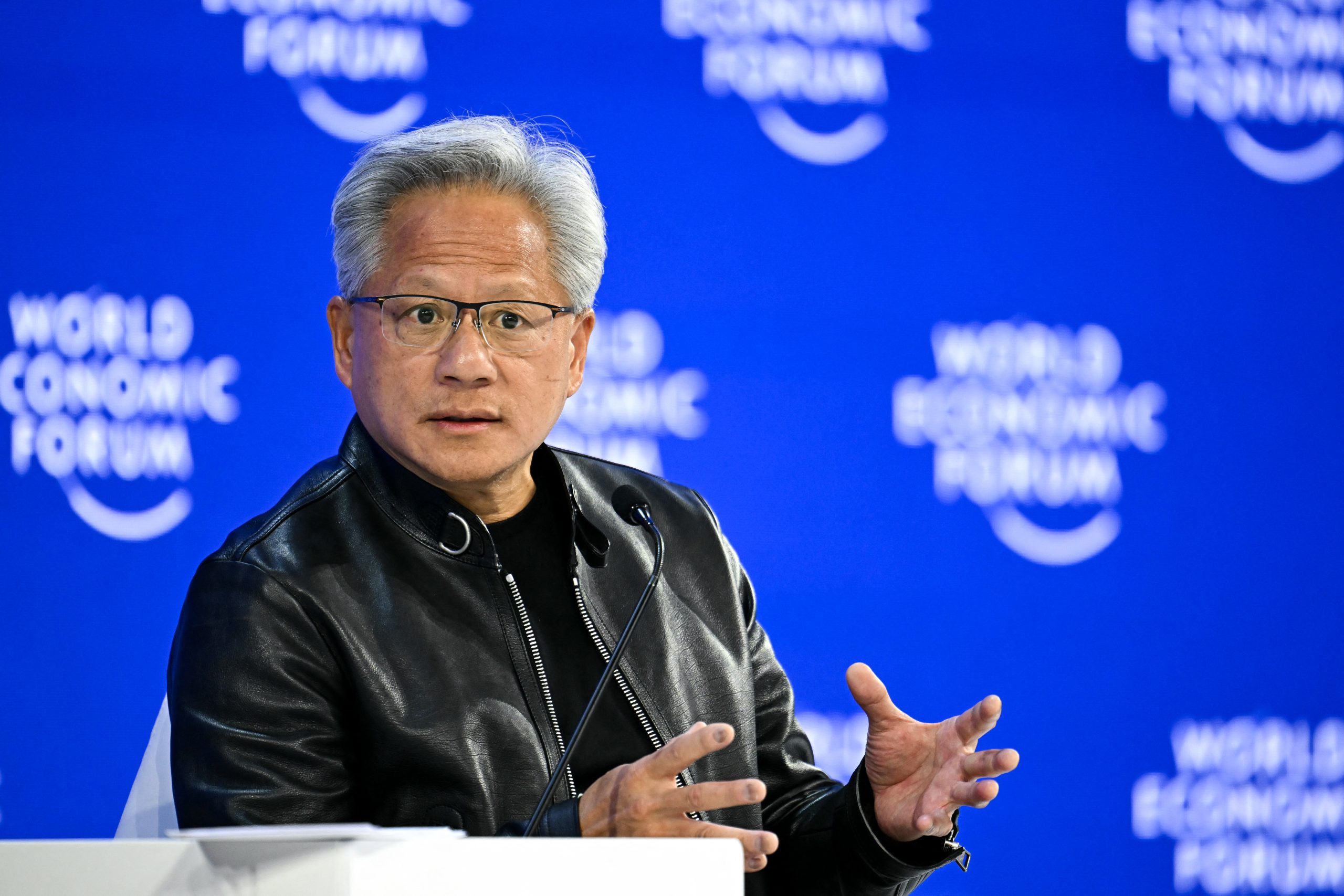
The annual gathering of the World Economic Forum in Davos, Switzerland, traditionally a nexus for global leaders to address pressing geopolitical and economic challenges, experienced a profound transformation this year. What once served as a broad forum for international diplomacy, climate change discussions, and poverty alleviation efforts, palpably shifted its focus, resembling less a traditional policy summit and more a high-stakes technology conference. Prominent figures from the artificial intelligence sector, including Tesla CEO Elon Musk, Nvidia CEO Jensen Huang, Anthropic CEO Dario Amodei, and Microsoft CEO Satya Nadella, commanded the spotlight, turning the serene Swiss Alps into a battleground for ideas, ambitions, and even veiled competitive jabs concerning the future of AI.
A New Davos Order: Tech Takes Center Stage
The World Economic Forum (WEF), founded in 1971 by Klaus Schwab, emerged as a non-profit foundation dedicated to improving the state of the world by engaging political, business, cultural, and other leaders of society to shape global, regional, and industry agendas. Its annual meeting in Davos has historically been a crucial platform for addressing a wide array of global issues, from conflict resolution and economic stability to public health and environmental sustainability. However, this year’s visual landscape and dominant discourse signaled a clear departure from tradition. Major tech conglomerates such as Meta and Salesforce conspicuously occupied prime real estate along Davos’s main promenade, their elaborate installations overshadowing venues typically dedicated to broader societal concerns. This physical manifestation of technological dominance mirrored the thematic shift within the conference halls, where discussions on climate change, global poverty, and geopolitical conflicts struggled to attract the same level of attention or attendance as panels dedicated to artificial intelligence.
This pivot underscores a growing recognition of technology, particularly AI, as not merely an industry vertical but a foundational force shaping every aspect of the global economy and society. The presence of tech titans, once tangential to the core WEF agenda, now felt central, signifying that the future of nations, economies, and human development is increasingly perceived as intertwined with technological advancement.
The AI Gold Rush: Hype, Hope, and a Hint of Bubble
The fervor surrounding artificial intelligence, particularly generative AI, has reached a fever pitch in recent years, fueled by breakthroughs like OpenAI’s ChatGPT, which burst onto the scene in late 2022. This innovation ignited a fresh wave of investment and public imagination, propelling AI to the forefront of global discourse. At Davos, the prevailing sentiment among tech leaders oscillated between enthusiastic prognostication of AI’s transformative potential and cautionary acknowledgments of a burgeoning "bubble." CEOs painted a vivid picture of a future reshaped by intelligent machines, promising unprecedented efficiencies, new frontiers of discovery, and solutions to complex problems. Yet, beneath this optimistic veneer, a palpable tension lingered, echoing historical cycles of technological over-exuberance followed by market corrections.
Analysts and economists have drawn parallels to the dot-com bubble of the late 1990s, where speculative investments in internet companies far outpaced their actual revenue generation. While AI’s underlying technological advancements are arguably more profound and widespread than many of the internet ventures of that era, the sheer scale of investment, often based on future promise rather than immediate profitability, raises valid questions about market sustainability. The challenge, as articulated by some leaders, lies in translating technological capability into widespread, tangible value for businesses and consumers alike, thereby justifying the colossal capital flowing into the sector.
Titans of Tech: Agendas and Animosity
The Davos stage, usually a venue for diplomatic decorum, became an arena for thinly veiled competitive remarks and strategic posturing among the tech industry’s most influential figures. This unusual display of direct rivalry highlighted the intense competition for market share, talent, and computational resources that defines the current AI landscape.
Microsoft CEO Satya Nadella, whose company has made a multi-billion dollar investment in OpenAI and integrated its technologies across its product suite, subtly underscored the need for broad adoption. His recurring description of data centers as "token factories" offered an abstract, yet revealing, perspective on the core output of AI infrastructure. More pointedly, Nadella cautioned that the AI boom could deflate into a "popped bubble" if the technology failed to achieve widespread usage and equitable global access. This statement, while framed as a concern for the industry’s health, could also be interpreted as a strategic call to action for potential customers and developers to embrace Microsoft’s AI offerings, essential for validating the immense investments made.
Jensen Huang, CEO of Nvidia, the undisputed king of AI chips, presented a slightly different narrative. He emphasized the necessity of continued, substantial investment in AI infrastructure, portraying it as a driver of job creation and economic growth. Huang’s position reflects Nvidia’s central role in enabling the AI revolution; without its powerful Graphics Processing Units (GPUs), the current advancements in large language models and complex AI systems would be severely hampered. His call for increased investment is a direct appeal to governments and corporations to continue funding the foundational hardware on which the entire AI ecosystem depends, implicitly advocating for the sustained demand for Nvidia’s products.
Elon Musk, whose presence at Davos was noteworthy given his past avoidance of the forum, offered remarks that some observers found to be light on specific details, yet reinforced his continued relevance in the tech sphere, particularly with his ventures in AI through Tesla and xAI. His engagement, however, signaled a strategic shift, perhaps acknowledging the WEF’s enduring influence as a global platform.
Geopolitical Undercurrents: The Chip Wars and National AI Ambitions
The discussions at Davos were not confined to technological advancements and market dynamics; they deeply intersected with complex geopolitical realities, particularly the intensifying tech rivalry between the United States and China. A pivotal moment arose during remarks by Dario Amodei, CEO of Anthropic, a leading AI safety and research company. Amodei directly criticized a US administration decision to allow Nvidia to continue exporting certain advanced chips to China, albeit under specific conditions. His dramatic analogy, describing an AI data center as "a country full of geniuses," served to illustrate the profound strategic value of these computational resources. By shipping such powerful chips, he argued, the US was effectively transferring a formidable intellectual asset to a geopolitical competitor.
This commentary highlights the critical role of semiconductors in national security and economic competitiveness. The US, recognizing the strategic importance of advanced chip technology, has implemented export controls aimed at slowing China’s progress in AI and advanced computing. These measures are designed to maintain a technological lead and prevent adversaries from leveraging cutting-edge AI for military or surveillance purposes. Amodei’s remarks brought this complex interplay of technology, trade, and national interest into sharp focus, revealing how seemingly commercial decisions have far-reaching implications on the global stage. The "chip wars" are not merely about trade balances; they are about control over the foundational infrastructure of future power.
Market Realities: The Scramble for Dominance and Demand
The competitive undercurrents observed at Davos extend beyond mere rhetoric, reflecting profound market pressures. The race to develop and deploy advanced AI models is incredibly capital-intensive, requiring massive investments in research, talent, and especially, computational infrastructure. This scramble for resources has led to an unprecedented demand for specialized hardware, particularly Nvidia’s GPUs, which have become the de facto standard for training and running large AI models.
The "sniping" among CEOs also reflects a fierce battle for top-tier AI talent. With a limited pool of highly skilled researchers and engineers, companies are engaging in aggressive recruitment and retention strategies, further driving up operational costs. This dynamic underscores the fragility of the current AI ecosystem, where success is heavily reliant on a few key suppliers and a concentrated pool of human expertise. The tension between being a major customer of Nvidia (like Anthropic) while also expressing strategic concerns about its market reach or geopolitical implications exemplifies the intricate web of dependencies and rivalries that characterize the industry.
Societal Implications: Jobs, Equity, and the "Country of Geniuses"
Beyond the corporate rivalries and geopolitical chess, discussions at Davos also touched upon the broader societal implications of AI. Jensen Huang’s emphasis on AI as a job creator, for instance, offers a counterpoint to widespread anxieties about automation-induced job displacement. While AI is expected to automate certain tasks and roles, proponents argue it will also create entirely new industries, jobs, and demands for human skills, particularly in areas of AI development, maintenance, and ethical oversight. However, the exact balance of job creation versus displacement remains a subject of intense debate and requires proactive policy measures to manage workforce transitions.
Nadella’s call for equitable global access to AI technology also highlights a crucial ethical dimension. If AI’s benefits are concentrated in a few wealthy nations or corporations, it risks exacerbating existing global inequalities and creating a new digital divide. Ensuring that AI development and deployment are inclusive, accessible, and beneficial to diverse communities worldwide is a formidable challenge that requires international cooperation and responsible governance frameworks. Amodei’s "country full of geniuses" metaphor, while initially applied to geopolitical strategy, also resonates with the idea of AI systems possessing immense, almost human-like, intellectual capabilities. This raises profound questions about the nature of intelligence, autonomy, and the long-term relationship between humans and advanced AI.
Beyond the Buzz: Davos as a Mirror of Global Priorities
Ultimately, the transformation of Davos into a tech-centric forum serves as a potent barometer of shifting global priorities. While traditional concerns like climate change, poverty, and geopolitical stability remain critical, the overwhelming focus on artificial intelligence signals a consensus among the global elite: AI is not merely another technological advancement, but a fundamental force that will redefine societies, economies, and power structures in the coming decades. The candid exchanges, competitive jabs, and strategic declarations heard in the Swiss Alps underscore that the race for AI supremacy is well underway, with profound implications for every nation and individual on the planet. As the world navigates this new technological frontier, the challenges of ensuring equitable access, managing geopolitical risks, and fostering responsible development will undoubtedly remain at the forefront of global dialogue for years to come.