Amir Mahmud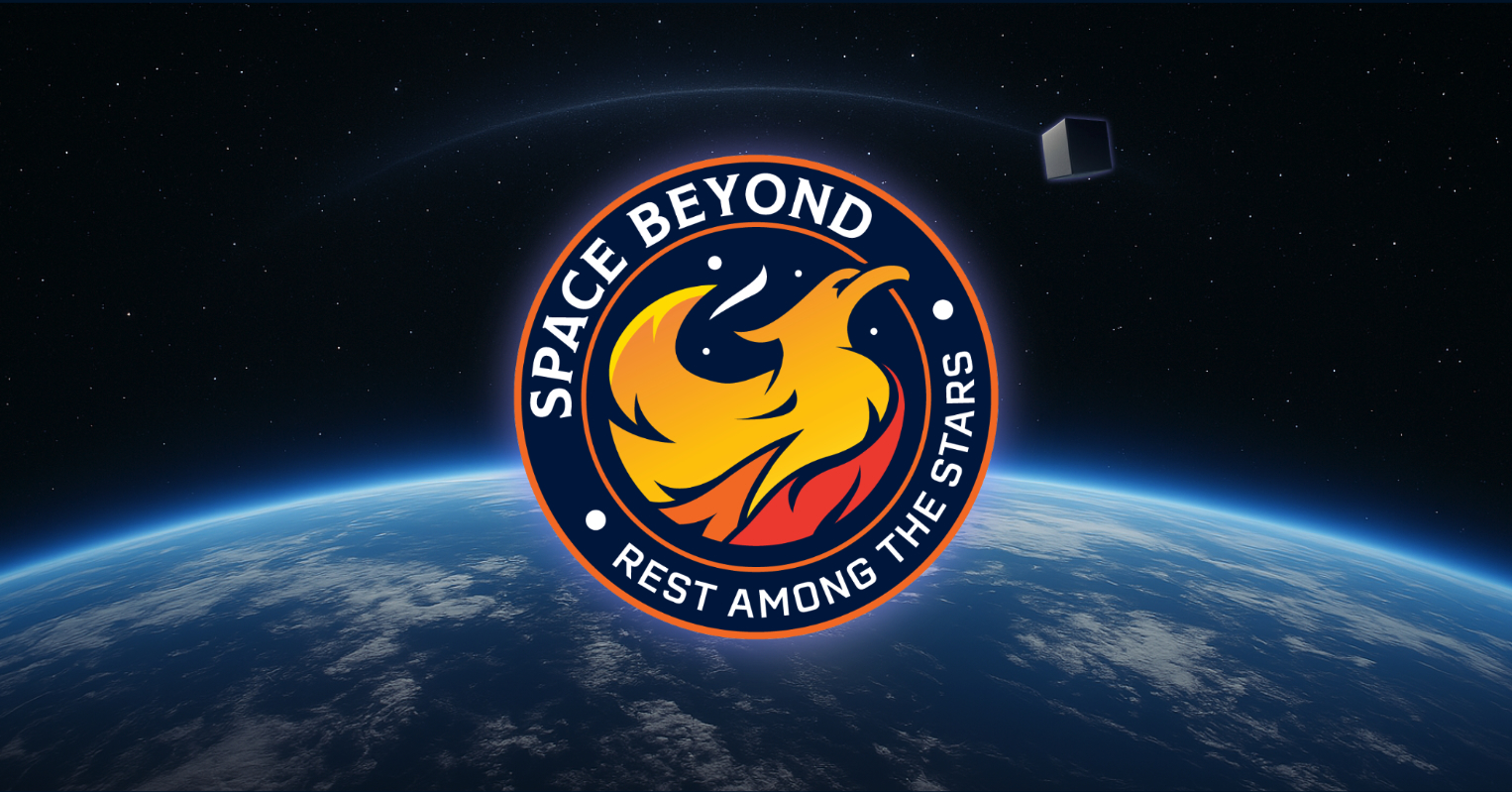
A new frontier in end-of-life services is emerging, with Space Beyond, a pioneering startup, announcing plans to launch the ashes of up to 1,000 individuals into Earth orbit by 2027. This ambitious venture aims to make celestial memorials significantly more accessible than ever before, with offerings starting at an unprecedented price point of $249. The company, founded by former NASA and Blue Origin engineer Ryan Mitchell, has signed a launch services agreement with Arrow Science & Technology to integrate its specialized CubeSat onto a SpaceX Falcon 9 rideshare mission slated for October 2027, marking a pivotal moment in the commercial space industry’s expansion into personal memorialization.
The Evolving Landscape of Space Memorials
The concept of sending human remains into space is not entirely novel. For decades, a select few companies have offered such services, primarily catering to a niche market willing to pay premium prices for this unique form of remembrance. Companies like Celestis, for instance, have been providing spaceflight memorials since the mid-1990s, offering various packages that include sending a symbolic portion of cremated remains into Earth orbit, lunar surface, or even deep space. These early ventures, while groundbreaking, were often characterized by their exclusivity and substantial cost, typically ranging from several thousand to tens of thousands of dollars. The allure, however, has always been potent: the idea of a loved one’s final resting place among the stars, a cosmic tribute visible from Earth, or journeying beyond. This deeply personal desire for a unique memorial has fostered a slow but steady demand, demonstrating a cultural shift towards more personalized and symbolically resonant end-of-life choices beyond traditional burials or scatterings.
From Exclusive Journeys to Accessible Orbits
The significant reduction in the cost of space access has been the primary catalyst for Space Beyond’s innovative approach. Historically, space travel was the exclusive domain of national governments and their elite astronaut corps, with launches costing hundreds of millions, if not billions, of dollars. The dawn of the commercial space era, spearheaded by companies like SpaceX and Blue Origin, dramatically reshaped this paradigm. Innovations such as reusable rocket technology, epitomized by SpaceX’s Falcon 9, have drastically lowered launch expenses. This has, in turn, fueled the proliferation of "rideshare" missions, where multiple payloads from various clients share a single rocket, distributing costs and making space far more attainable for smaller enterprises and research institutions.
Ryan Mitchell, Space Beyond’s founder, witnessed this transformation firsthand. His extensive background as a manufacturing engineer for NASA’s space shuttle program and his nearly a decade-long tenure at Jeff Bezos’s Blue Origin provided him with an intimate understanding of the intricacies and evolving economics of space travel. Observing the plummeting costs and increasing reliability of launches, Mitchell began to envision new applications for this democratized access. The inspiration for Space Beyond crystallized during a family member’s ash-spreading ceremony. He recounted feeling a sense of incompleteness, asking, "now what?" once the moment had passed. This reflection sparked the idea of a more enduring and accessible memorial, one that leveraged his expertise in aerospace engineering to offer a profound connection to the cosmos. He recognized the potential to bridge the gap between the aspirational nature of space memorials and the financial realities of most families, transforming a luxury service into a widely available option.
Space Beyond’s Disruptive Model
Space Beyond distinguishes itself by offering an unparalleled level of affordability. At just $249 for its most basic service, the company is poised to disrupt an industry segment traditionally defined by high costs. This aggressive pricing strategy is built upon several foundational principles. Foremost is the judicious utilization of the rideshare model, which allows Space Beyond to secure a fractional cost for its CubeSat’s journey into orbit. CubeSats are a class of miniature satellites, typically cube-shaped, that adhere to standardized dimensions (e.g., 10x10x10 cm for a 1U CubeSat). Their compact size and modular design make them ideal for hitching rides on larger launch vehicles, drastically reducing the per-kilogram cost of payload deployment. Space Beyond’s CubeSat will be engineered to house up to 1,000 individual ash samples, maximizing efficiency and further distributing the operational expenses across a large customer base.
Crucially, Space Beyond operates as a bootstrapped venture, a deliberate choice by Mitchell to avoid the pressures of generating exorbitant returns for investors. This lean operational model enables the company to pass significant cost savings directly to its customers, challenging the conventional wisdom of the funeral industry, which is often criticized for its high markups during times of vulnerability. Mitchell explicitly stated his motivation is not to "make a billion dollars" but rather to provide a meaningful service at a fair price, a philosophy that resonates deeply with the burgeoning demand for more transparent and compassionate end-of-life planning.
While offering unprecedented affordability, Space Beyond’s service does come with specific parameters. Each customer will be able to send approximately one gram of cremated remains into space. This limitation is a direct consequence of the physical constraints of a CubeSat and the ever-present consideration of weight in space launches, where every gram adds to the cost. Additionally, Space Beyond focuses solely on the orbital journey, requiring customers to arrange for the initial cremation independently.
The Symbolic Power of an Orbital Legacy
The Space Beyond mission offers a unique and deeply symbolic form of remembrance. The CubeSat will be placed into a sun-synchronous orbit at an altitude of approximately 550 kilometers (around 341 miles). This particular orbit allows the satellite to pass over virtually every point on Earth’s surface at roughly the same local solar time each day, ensuring consistent visibility opportunities. Leveraging modern satellite tracking applications and services, families will have the ability to pinpoint the CubeSat’s location, knowing precisely when their loved one’s memorial is passing overhead. This tangible connection, the ability to look up at the night sky and know a part of their loved one is orbiting above, offers a profound and enduring sense of presence.
The orbital lifespan of Space Beyond’s CubeSat is projected to be around five years. While not an eternal resting place, this finite duration is intentionally designed with a powerful symbolic conclusion. At the end of its operational life, the aluminum CubeSat, along with its precious cargo, will gradually descend through Earth’s atmosphere. This re-entry process will result in a fiery disintegration, a celestial farewell as the satellite burns up, returning its constituents to the cosmic dust from which they originated. Mitchell views this fiery re-entry as a poignant and poetic ending, a final, radiant tribute, even if families are not guaranteed to witness the event directly. This contrasts with traditional burials, offering a dynamic and transient memorial that echoes the cycles of life and the vastness of the universe.
Navigating the Cosmos: Technical and Ethical Considerations
The expansion of commercial space activities, including memorial services, necessitates careful consideration of technical and ethical implications. One critical aspect is the issue of space debris. Mitchell is unequivocal that Space Beyond will never physically scatter ashes in space. Releasing particulate matter, even small quantities, could contribute to the growing problem of orbital debris, posing a risk to operational spacecraft and future missions. The company’s approach of encapsulating ashes within a controlled CubeSat mitigates this concern, ensuring that the remains stay contained until the planned atmospheric re-entry, which is designed to be complete and free of lasting debris.
The broader implications of space debris are a significant concern for the global space community. Tens of thousands of pieces of space junk, ranging from defunct satellites to tiny flecks of paint, orbit Earth at extremely high velocities, threatening active satellites and future human spaceflight. Responsible mission planning, including controlled de-orbiting or re-entry strategies like Space Beyond’s, is crucial for maintaining the long-term sustainability of Earth’s orbital environment.
Furthermore, the very idea of commercializing space for personal memorials raises philosophical questions. While many find solace and inspiration in the concept, others might debate the appropriateness of using the cosmos for such purposes. However, the prevailing sentiment often leans towards recognizing the inherent human desire for meaningful remembrance and celebrating innovative ways to fulfill that need, particularly when executed responsibly and with environmental consciousness. The affordability offered by Space Beyond also opens up this unique form of memorialization to a broader demographic, moving it beyond a luxury item and into a more accessible option for diverse communities.
A Founder’s Personal Quest
Ryan Mitchell’s journey to founding Space Beyond is a testament to the power of personal vision and engineering rigor. After leaving Blue Origin, he meticulously explored numerous ideas, filling pages of a notebook with possibilities ranging from further involvement in launch operations to an entirely different career path. Yet, the concept of accessible space memorials persistently drew him back. Despite initial reservations about the complexity and cost, Mitchell found that "every time I put actual engineering rigor to it, figured out what the requirements are, and what the business case is," the idea made compelling sense. His wife even observed his unwavering obsession, noting he "can’t stop talking about this."
This blend of technical expertise, personal inspiration, and a clear ethical framework positions Space Beyond as a significant player in the evolving landscape of end-of-life services. By democratizing access to celestial tributes, Mitchell and his company are not merely offering a new product; they are offering a new perspective on remembrance, connecting personal grief with the universal wonder of space, and providing a final, affordable journey among the stars. The October 2027 mission promises to be more than just a launch; it will be a landmark event, ushering in an era where the dream of a cosmic farewell is within reach for many.