Amir Mahmud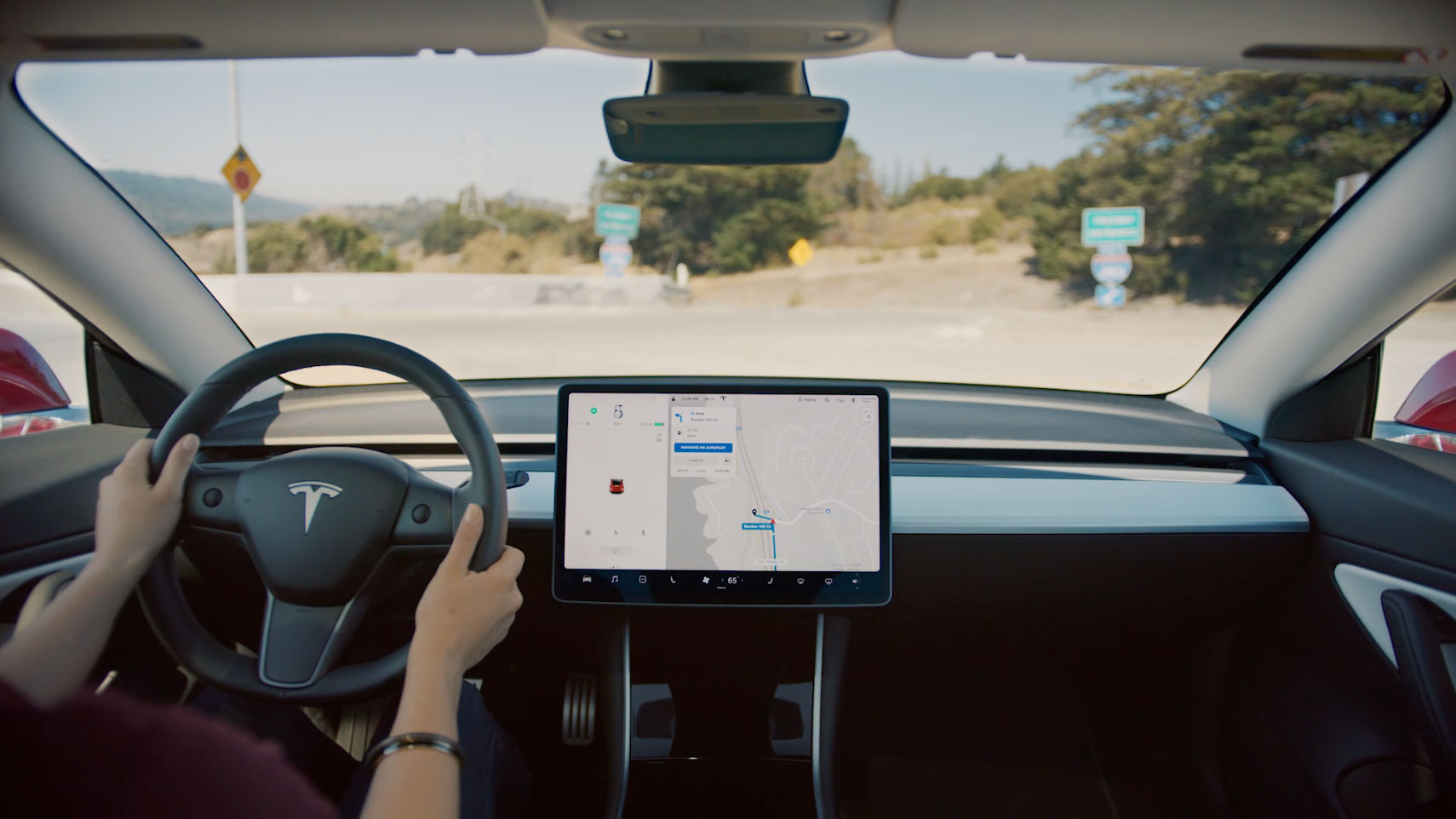
Tesla, the electric vehicle pioneer, has initiated a significant recalibration of its driver-assistance offerings, electing to discontinue its foundational Autopilot system. This strategic maneuver is designed to funnel customer attention and adoption toward its more advanced and ambitious Full Self-Driving (Supervised) software, a move that comes at a pivotal juncture marked by intensifying regulatory scrutiny and ambitious corporate objectives. The company’s decision signals a definitive shift in its approach to autonomous technology, emphasizing a premium, subscription-based model for its most sophisticated features.
The End of an Era: Autopilot’s Legacy and Limitations
Autopilot, introduced by Tesla in the early 2010s, represented the company’s initial foray into advanced driver-assistance systems (ADAS). For over a decade, it served as the standard-bearer for semi-autonomous capabilities in Tesla vehicles, becoming a widely recognized, albeit often misunderstood, feature. At its core, Autopilot combined two primary functions: Traffic Aware Cruise Control (TACC), which maintained a set speed while automatically adjusting to keep a safe distance from preceding vehicles, and Autosteer, a lane-centering technology capable of guiding the car within its lane and navigating gentle curves. These features, while groundbreaking for their time, consistently required active driver supervision, a nuance often blurred in public perception.
The genesis of Autopilot can be traced back to discussions between Tesla CEO Elon Musk and Google in the early 2010s, exploring a potential collaboration on autonomous driving technology. When these talks failed to materialize into a partnership, Tesla embarked on developing its own proprietary system. By April 2019, Autopilot had become a standard inclusion across Tesla’s entire vehicle lineup, democratizing access to these advanced features for a broad consumer base. However, throughout its existence, Tesla grappled with the challenge of accurately communicating Autopilot’s capabilities and limitations to the public. The company frequently presented the technology with an optimistic futurism that sometimes outpaced its real-world functionality. This messaging, coupled with the system’s evocative name, inadvertently fostered a dangerous overconfidence among some drivers, leading them to misuse the technology by disengaging from the driving task.
The consequences of this misunderstanding have been severe. Investigations by the National Highway Traffic Safety Administration (NHTSA) have linked Autopilot-related incidents to hundreds of crashes and at least 13 fatalities. These incidents underscore a critical safety dilemma: the gap between advertised potential and practical reality, and the profound implications for driver behavior. The regulatory hammer finally fell in December, when a California judge ruled that Tesla had engaged in "deceptive marketing" for both Autopilot and FSD, overstating their capabilities for an extended period. This ruling, brought forth by the California Department of Motor Vehicles (DMV), led to a provisional 30-day suspension of Tesla’s manufacturing and dealer licenses in its largest U.S. market. The DMV, however, stayed the ruling for 60 days, offering Tesla a window to comply, notably by ceasing the use of the "Autopilot" name. This backdrop illuminates the immediate pressures compelling Tesla’s current strategic pivot.
Full Self-Driving: Tesla’s Ambitious Future
With Autopilot now relegated to history, Tesla is placing its full weight behind Full Self-Driving (FSD) (Supervised), positioning it as the sole pathway to advanced autonomous capabilities for new vehicle purchasers. While the "Supervised" moniker indicates that human oversight remains mandatory, the system represents a significant leap in complexity and functionality compared to its predecessor. FSD aims to perform nearly all driving tasks, including navigating city streets, making turns, stopping at traffic lights and stop signs, and automatically changing lanes, all under the driver’s watchful eye.
Tesla CEO Elon Musk has consistently championed a highly ambitious vision for FSD, projecting a future where the software enables "unsupervised" driving. He has famously suggested that FSD advancements will eventually allow drivers to "be on your phone or sleeping for the entire ride," a claim that often draws criticism for its potential to encourage dangerous behavior, especially considering that texting while driving remains illegal in most states. Just last December, Musk claimed a new FSD version allowed for such driver inattention, despite the obvious legal and safety ramifications.
Further underscoring this aggressive push towards full autonomy, Tesla recently rolled out the first robotaxi versions of its Model Y SUVs in Austin, Texas. These vehicles operate without a human safety driver onboard, relying entirely on a highly advanced iteration of the company’s driving software. While these robotaxis are reportedly followed by other company vehicles for supervision, their deployment marks a tangible step towards Musk’s long-held aspiration of a vast, autonomous ride-hailing network. This bold move highlights Tesla’s determination to accelerate the development and deployment of its FSD technology, even as it navigates complex safety and regulatory challenges.
Strategic Maneuvers: Pricing and Adoption Challenges
The discontinuation of Autopilot is not an isolated event but part of a broader, integrated strategy to boost FSD adoption. Just a week prior to the Autopilot announcement, Tesla revealed another pivotal change: effective February 14, the company would cease offering FSD as a one-time purchase, which previously cost $8,000. Instead, customers will only be able to access FSD through a monthly subscription of $99. While this subscription price is subject to increase as the software’s capabilities evolve, as stated by Musk, it represents a significant shift in the economic model for Tesla’s most advanced software.
This transition to a subscription-only model is a calculated risk. On one hand, it significantly lowers the barrier to entry for many consumers. The upfront cost of $8,000 for FSD was prohibitive for a large segment of potential buyers, contributing to historically low adoption rates. Despite the beta version of FSD launching in late 2020, Tesla’s Chief Financial Officer Vaibhav Taneja noted in October 2025 that only 12% of all Tesla customers had paid for the software. By offering a monthly subscription, Tesla hopes to attract a wider pool of users, allowing them to experience FSD’s features without a hefty initial investment. This strategy could also unlock a lucrative stream of recurring revenue, a highly valued metric in the technology sector.
However, the subscription model also introduces new challenges. Customers accustomed to owning software outright may balk at a recurring fee, particularly for a feature that still requires active supervision and is not yet "full self-driving" in the common understanding of the term. For Tesla, achieving widespread FSD adoption is not just a commercial goal; it is deeply intertwined with Musk’s personal financial incentives. His staggering $1 trillion pay package is contingent on meeting several ambitious "product goals," one of which is reaching "10 million active FSD subscriptions" by 2035. This ambitious target places immense pressure on the company to enhance FSD’s appeal and accelerate its market penetration.
Navigating the Regulatory Landscape
Tesla’s recent strategic adjustments are undeniably influenced by the tightening regulatory environment surrounding autonomous driving technology. The California DMV’s "deceptive marketing" ruling serves as a stark reminder of the legal and ethical responsibilities that accompany the development and deployment of such advanced systems. The ruling highlighted a fundamental disconnect between Tesla’s marketing rhetoric and the practical limitations of its software, particularly concerning the term "Full Self-Driving" for a system that still demands driver intervention.
This case is not an isolated incident. Across the globe, regulatory bodies like NHTSA in the U.S. and similar agencies in Europe and Asia are grappling with how to classify, regulate, and ensure the safety of increasingly sophisticated ADAS technologies. The nomenclature itself – "Autopilot," "Full Self-Driving" – has been a consistent point of contention, often criticized for creating unrealistic expectations and potentially misleading consumers. This challenge extends beyond Tesla, affecting the entire autonomous vehicle industry as companies like General Motors with Super Cruise, Ford with BlueCruise, and various others introduce their own semi-autonomous features.
The broader implications of regulatory scrutiny extend to public trust. Each accident, each legal challenge, chips away at consumer confidence in autonomous technology. For Tesla, maintaining and rebuilding this trust is paramount, especially as it pushes for wider FSD adoption and moves towards fully unsupervised robotaxis. The company’s compliance with regulatory directives, including potentially rebranding its software to more accurately reflect its capabilities, will be crucial for its long-term success and for shaping the future of autonomous mobility.
Market Dynamics and Competitive Arena
Tesla’s bold move to discontinue Autopilot and double down on FSD occurs within a rapidly evolving and intensely competitive market. While Tesla has long been a frontrunner in electric vehicle sales and ADAS development, it faces increasing competition from both traditional automotive giants and dedicated autonomous technology companies.
Established automakers are significantly investing in their own ADAS solutions. General Motors’ Super Cruise, Ford’s BlueCruise, and Mercedes-Benz’s Drive Pilot are all vying for market share, offering varying levels of hands-free driving capabilities. These systems often employ different sensor suites, including radar, lidar, and high-definition mapping, contrasting with Tesla’s camera-centric "Tesla Vision" approach. Furthermore, dedicated autonomous driving companies like Waymo (spun out of Google) and Cruise (majority-owned by GM) are making strides in developing Level 4 and Level 5 autonomous vehicles, primarily in controlled urban environments, and are already deploying robotaxi services in several cities. Their approach typically involves extensive mapping and redundant sensor arrays, often seen as a more cautious path to full autonomy.
Tesla’s shift to a subscription-only FSD model could have significant financial implications. While it promises recurring revenue, it also places pressure on the company to continuously improve FSD’s value proposition to justify the ongoing cost. In a market where some competitors offer similar ADAS features as part of their vehicle’s base price or as a less expensive option, Tesla’s premium subscription model will need to deliver a consistently superior experience. The success of this strategy will impact not only Tesla’s revenue streams but also its brand perception, potentially polarizing consumers into those who embrace its cutting-edge, albeit costly, technology and those who opt for more integrated or affordable solutions elsewhere.
The Road Ahead: Uncertainties and Opportunities
The discontinuation of Autopilot and the singular focus on Full Self-Driving mark a significant turning point for Tesla and the broader automotive industry. For existing Tesla owners who purchased Autopilot, the immediate impact remains somewhat unclear, though the change primarily affects new vehicle configurations. The company will need to clearly communicate any implications for its current user base.
Looking ahead, the success of Tesla’s FSD strategy hinges on several critical factors. Continued rapid development of the software is paramount, ensuring it delivers on its promise of increasingly autonomous capabilities while maintaining an impeccable safety record. The ongoing regulatory dialogue will also shape FSD’s trajectory, potentially influencing how the technology is marketed, deployed, and ultimately, perceived by the public. Expert commentary often highlights the inherent tension between rapid technological innovation and the cautious, iterative process required for safe, widespread autonomous deployment. The ethical considerations of removing human drivers from the loop, even with robust monitoring, will also continue to be a subject of intense debate.
Ultimately, Tesla’s bold pivot is a high-stakes gamble. By retiring its foundational Autopilot system, the company is betting heavily on the future of Full Self-Driving as its primary differentiator and revenue driver in the advanced mobility space. This strategic shift, undertaken amidst a complex landscape of regulatory pressures and fierce competition, will undoubtedly redefine Tesla’s role in the evolving narrative of autonomous vehicles, shaping not only its own destiny but also influencing the pace and direction of the entire industry.