Amir Mahmud
Higgsfield, an emerging force in artificial intelligence-powered video generation, has dramatically escalated its market standing by securing an additional $80 million in an extension to its Series A funding round. This latest capital infusion elevates the company’s total Series A to $130 million and catapults its valuation to an impressive $1.3 billion, officially bestowing upon it the coveted "unicorn" status within the tech ecosystem. The achievement underscores a period of intense investor interest in advanced AI capabilities, particularly those transforming creative industries.
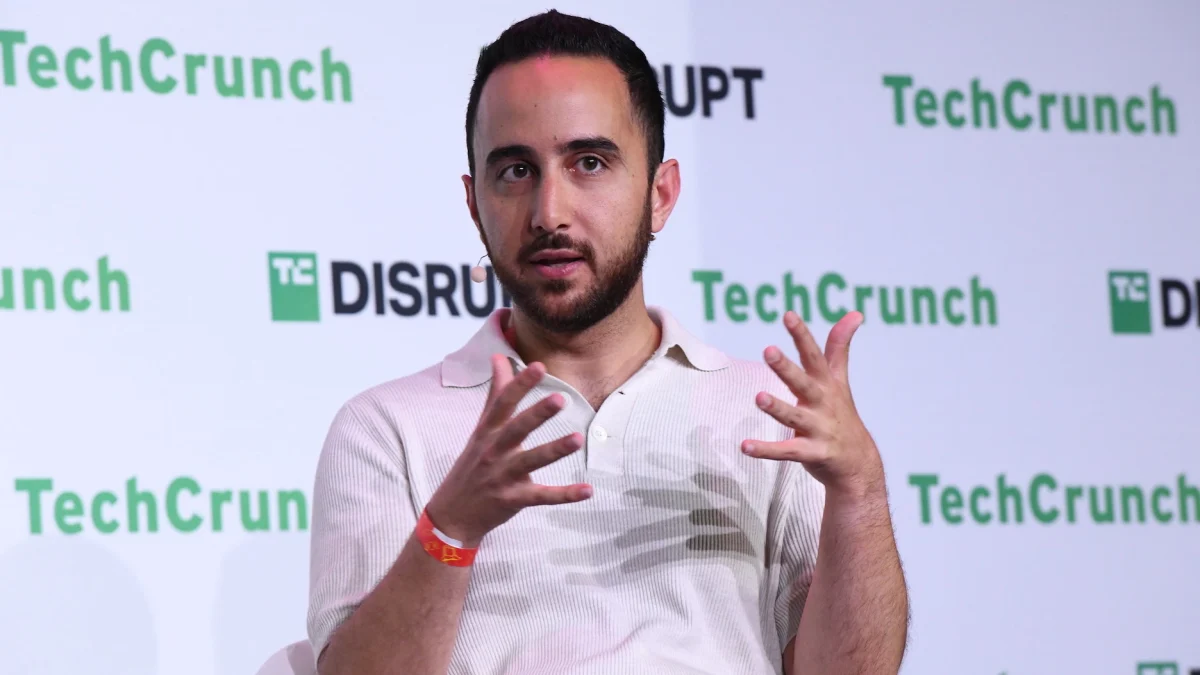
The company, specializing in tools that enable users to effortlessly produce and edit AI-generated videos, is the brainchild of Alex Mashrabov. Mashrabov, a prominent figure in the generative AI space, previously headed generative AI initiatives at Snap, a role he assumed after the social media giant acquired his earlier venture, AI Factory, for $166 million in 2020. His track record reflects a deep understanding of integrating sophisticated AI technologies into user-friendly platforms, especially those tailored for social media engagement.
The Genesis of Generative AI and Its Impact on Media
The ascent of Higgsfield is set against the backdrop of a revolutionary era in artificial intelligence, characterized by the rapid development of generative AI models. These sophisticated algorithms have moved beyond mere data analysis to actively create new content across various modalities, including text, images, audio, and, most recently, video. Tools like OpenAI’s DALL-E and Midjourney democratized image creation, allowing users to conjure intricate visuals from simple text prompts. Similarly, large language models such as ChatGPT transformed text generation, offering capabilities ranging from content drafting to complex coding.
Video, however, has long represented the pinnacle of generative AI challenges due to its inherent complexity, requiring not just static image generation but also coherent motion, temporal consistency, and narrative flow across multiple frames. The market for video content is colossal and ever-expanding, fueled by the proliferation of social media platforms, digital advertising, and the growing demand for personalized and immersive experiences. Businesses, content creators, and individuals constantly seek efficient and scalable ways to produce high-quality video, a need that traditional production methods often struggle to meet due to costs, time, and specialized skills required. This burgeoning demand created a fertile ground for companies like Higgsfield, promising to streamline and democratize video production through AI.
Higgsfield’s Technological Edge and Growth Trajectory
Higgsfield’s core offering is an intuitive platform designed to simplify the intricate process of video creation. By leveraging advanced AI models, it allows a diverse user base—from casual consumers and independent content creators to professional social media marketing teams—to transform concepts, text, or existing media into dynamic video content with remarkable ease. While the precise technical details of Higgsfield’s proprietary algorithms remain confidential, such systems typically rely on deep learning architectures like diffusion models and transformer networks, trained on vast datasets of video and imagery to understand and replicate complex visual patterns and motion dynamics. This "click-to-video" paradigm aims to lower the barrier to entry for video production significantly.
The company has reported an astonishing pace of user adoption and revenue growth since its tool’s launch. Within five months of introducing its platform, Higgsfield garnered 11 million users, a figure that surged to over 15 million within nine months. This rapid accumulation of users speaks to both the market’s hunger for such tools and the platform’s ability to resonate with its target audience. Simultaneously, the financial performance has mirrored this user expansion, with Higgsfield now operating at an annual revenue run rate of $200 million. This figure represents a doubling from a $100 million trajectory in approximately two months, indicating not just growth, but accelerating growth, a key metric for venture capitalists evaluating high-potential startups.
Higgsfield’s management has proudly asserted that these growth metrics place them in a rare echelon of rapidly scaling technology companies, claiming to outpace the early growth curves of notable firms such as Lovable, Cursor, OpenAI, Slack, and Zoom. While direct comparisons across different market segments and stages of development can be complex, the reported speed of user acquisition and revenue generation for a company in the generative AI video space is undeniably significant. The backing from prominent investors like Accel, AI Capital Partners, Menlo Ventures, and GFT Ventures in its Series A extension further validates the market’s confidence in Higgsfield’s technology and business model. These firms are renowned for identifying and nurturing disruptive technologies, and their investment signals a strong belief in Higgsfield’s potential to capture a substantial share of the evolving creative technology market.
Strategic Positioning and the "AI Slop" Conundrum
In a strategic move to refine its market perception and expand its appeal, Higgsfield has begun to emphasize its utility as a robust business tool, particularly for professional social media marketers. This shift represents an effort to transcend the perception of being merely a platform for "casual content creation" and position itself as an essential component of digital marketing and content strategy workflows. For businesses, the ability to rapidly produce diverse video assets for campaigns, product launches, and audience engagement offers a considerable competitive advantage, saving both time and resources compared to traditional video production. This pivot towards a professional user base often translates into higher customer lifetime value, more stable recurring revenue, and a stronger foundation for long-term growth.
However, the burgeoning field of generative AI is not without its controversies, particularly concerning the quality and ethical implications of AI-generated content—often colloquially termed "AI slop." This term generally refers to content that is generic, low-quality, unoriginal, or even problematic due to its automated creation process. Higgsfield, like many other generative AI platforms, has faced scrutiny regarding the potential misuse of its technology. A notable instance involved a video titled "Island Holiday," created using the platform, which controversially depicted individuals associated with the Epstein files alongside fictional characters on a "vacation" on Epstein’s infamous island. This incident, which gained viral traction on social media, highlighted the inherent risks associated with user-generated AI content, including the potential for generating offensive, misleading, or ethically dubious material.
Such incidents underscore a critical challenge for AI platform providers: balancing open access and creative freedom with the imperative for responsible use and content moderation. While AI-generated videos offer immense potential for creativity in areas like fashion, abstract art, and Hollywood-esque storytelling—examples of which Higgsfield users also widely share—they simultaneously open avenues for the creation and dissemination of misinformation, deepfakes, and harmful narratives. The broader societal impact of "AI slop" extends to concerns about copyright infringement, the erosion of trust in digital media, and the potential for AI to be weaponized for malicious purposes. Companies like Higgsfield are increasingly compelled to develop sophisticated content moderation policies, ethical AI guidelines, and transparency mechanisms to mitigate these risks, often walking a tightrope between enabling innovation and preventing abuse.
Future Outlook and Challenges in the AI Video Landscape
The trajectory for AI video generation remains steep, promising ever more sophisticated and accessible tools. As models improve, future iterations are expected to produce longer, more coherent, and emotionally nuanced videos, potentially capable of generating entire scenes or short films with minimal human input. Real-time video generation and highly personalized content streams are also on the horizon, opening new frontiers for entertainment, education, and communication.
However, the competitive landscape is intensifying rapidly. While Higgsfield has established an early lead in user adoption and valuation, it operates within a dynamic ecosystem populated by other innovative startups like RunwayML and Pika Labs, as well as tech behemoths such as Google, Meta, and OpenAI, all heavily investing in their own generative video capabilities. OpenAI’s Sora, unveiled earlier this year, demonstrated unprecedented capabilities in generating highly realistic and complex video scenes, signaling a new benchmark for the industry. This fierce competition necessitates continuous innovation and differentiation for Higgsfield to maintain its market position.
Beyond technological advancements and market competition, the ethical and regulatory dimensions pose significant challenges. Governments worldwide are beginning to grapple with the implications of advanced AI, contemplating regulations concerning deepfakes, content provenance, and the responsible deployment of AI. For companies like Higgsfield, navigating this evolving regulatory environment while fostering a vibrant creative community will be crucial. Establishing clear ethical guidelines, investing in robust content moderation technologies, and promoting transparency about AI-generated content will not only be a matter of corporate responsibility but also a key differentiator in building user trust and ensuring long-term sustainability in this transformative sector. The journey of Higgsfield, therefore, is not just a story of financial success but also a bellwether for the broader evolution of AI, creativity, and societal interaction in the digital age.