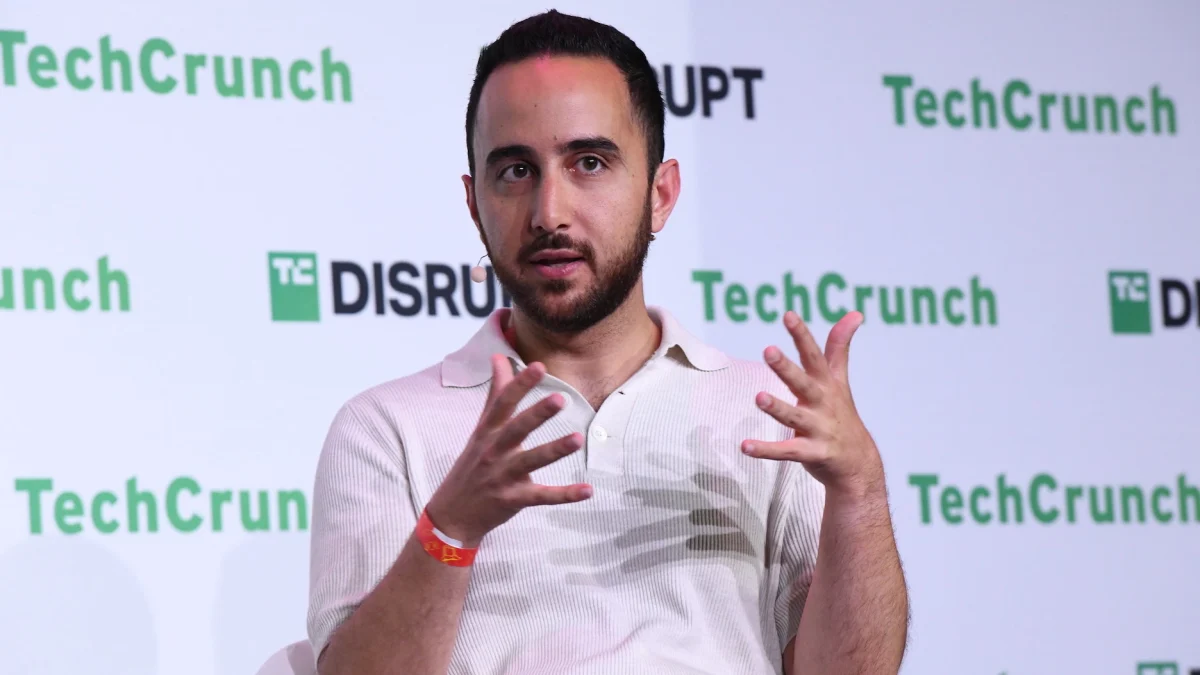
Amir Mahmud
The complex, often arduous journey of bringing a new pharmaceutical to market is being fundamentally reshaped by artificial intelligence. At the forefront of this transformative shift, Converge Bio, a burgeoning biotechnology startup, has successfully closed an oversubscribed $25 million Series A funding round. This substantial capital infusion, spearheaded by prominent venture capital firm Bessemer Venture Partners, signals strong investor confidence in the company’s generative AI platform, which promises to significantly reduce the timeline and enhance the success rates of drug development for pharmaceutical and biotech enterprises globally.
The Enduring Challenge of Drug Discovery
For decades, the pharmaceutical industry has grappled with an escalating crisis of cost and time in drug development. The traditional drug discovery process is notoriously slow, expensive, and prone to failure, with the average new drug taking over a decade and billions of dollars to move from initial research to patient availability. Estimates suggest that fewer than 10% of drug candidates entering clinical trials ever receive regulatory approval, a success rate that underscores the immense scientific and financial risks involved. This high attrition rate, coupled with the increasing complexity of diseases and regulatory hurdles, has created an urgent demand for innovative approaches that can streamline research and development (R&D) pipelines.
This backdrop has set the stage for artificial intelligence to emerge as a powerful, potentially revolutionary solution. By leveraging computational power to analyze vast datasets, predict molecular interactions, and even design novel compounds, AI offers the promise of dramatically accelerating various stages of drug development, from target identification to lead optimization and even preclinical testing. The allure of cutting years off R&D timelines and improving the probability of success has drawn immense interest, transforming the landscape of biotech investment.
A New Wave of Investment in AI Biotech
Converge Bio’s $25 million Series A round is a testament to the surging investment trend in AI-driven drug discovery. Beyond Bessemer Venture Partners, the funding round saw participation from TLV Partners and Vintage Investment Partners. Notably, the startup also garnered additional backing from unnamed executives associated with leading technology companies such as Meta, OpenAI, and Wiz. This blend of traditional venture capital and strategic investment from individuals deeply embedded in the frontier of AI technology underscores the cross-sector belief in Converge Bio’s potential.
The company, strategically operating from dual hubs in Boston and Tel Aviv, exemplifies a common model in high-tech startups seeking to tap into diverse talent pools and innovation ecosystems. Boston provides access to a rich biotech talent base and pharmaceutical industry connections, while Tel Aviv offers a vibrant hub for AI and cybersecurity expertise. This geographical duality potentially offers a competitive edge in attracting top-tier scientific and engineering talent necessary to advance its sophisticated AI platform.
Converge Bio’s Generative AI Approach
At its core, Converge Bio’s innovation lies in its application of generative AI models, specifically trained on intricate molecular data. This data encompasses DNA, RNA, and protein sequences, the fundamental building blocks of biological life. Unlike traditional machine learning models that primarily analyze existing data to make predictions, generative AI can create new, never-before-seen molecular structures or sequences with desired properties.
These advanced models are then seamlessly integrated into the existing workflows of pharmaceutical and biotech companies. The objective is to provide a computational layer that augments human scientists’ capabilities, allowing them to explore a much wider design space for potential drug candidates and optimize properties with unprecedented speed and precision. Dov Gertz, CEO and co-founder of Converge Bio, emphasized this integrated approach in an interview, stating, "The drug-development lifecycle has defined stages – from target identification and discovery to manufacturing, clinical trials, and beyond – and within each, there are experiments we can support. Our platform continues to expand across these stages, helping bring new drugs to market faster."
Specialized AI Systems for Key Development Stages
Converge Bio has already rolled out several customer-facing AI systems, each designed to tackle specific bottlenecks in drug development. These include:
- Antibody Design System: This system aims to create novel antibodies, which are a rapidly growing class of therapeutic drugs used to treat a wide range of diseases, including cancer and autoimmune disorders. The complexity of antibody design, involving the precise arrangement of amino acids to achieve high binding affinity and specificity, makes it an ideal target for AI optimization.
- Protein Yield Optimization System: Manufacturing therapeutic proteins at scale and cost-effectively is a significant challenge. This system helps optimize the production processes, ensuring higher yields of the desired proteins, which directly impacts the cost and accessibility of treatments.
- Biomarker and Target Discovery System: Identifying effective biomarkers and drug targets is the crucial first step in developing new therapies. This system utilizes AI to sift through vast biological data to pinpoint specific molecules or pathways that are implicated in disease and can be modulated by a drug.
Gertz further elaborated on the sophistication of their antibody design system, highlighting its multi-component architecture. "Take our antibody design system as an example. It’s not just a single model. It’s made up of three integrated components. First, a generative model creates novel antibodies. Next, predictive models filter those antibodies based on their molecular properties. Finally, a docking system, which uses physics-based models, simulates the three-dimensional interactions between the antibody and its target." He stressed that the true value proposition lies in the holistic, integrated system, rather than any individual model, providing "ready-to-use systems that plug directly into their workflows." This approach alleviates the burden on pharmaceutical companies to piece together disparate AI tools, offering a comprehensive solution.
Rapid Growth and Tangible Results
The new funding round arrives approximately a year and a half after Converge Bio secured a $5.5 million seed round, demonstrating remarkable acceleration in its development and market traction. In just two years since its inception, the startup has achieved significant milestones, including forging 40 partnerships with pharmaceutical and biotech companies and actively running about 40 programs on its platform. This rapid adoption extends globally, with customers across the U.S., Canada, Europe, and Israel, and plans underway for expansion into the Asian market.
The company’s headcount has also surged, growing from just nine employees in late 2024 to 34 currently, reflecting the intensive R&D and operational scaling required for such an ambitious undertaking. Beyond growth metrics, Converge Bio has begun publishing public case studies that showcase the tangible impact of its technology. In one instance, the platform helped a partner boost protein yield by an impressive 4 to 4.5 times in a single computational iteration. Another case demonstrated the generation of antibodies with extremely high binding affinity, reaching the single-nanomolar range, a critical metric for therapeutic efficacy. These results provide concrete evidence that AI is not merely a theoretical promise but a practical tool delivering measurable improvements in drug development.
The Broader AI Drug Discovery Landscape
Converge Bio’s ascent occurs within a vibrant and increasingly competitive landscape for AI in drug discovery. The broader industry is experiencing a surge of interest and investment, fueled by several high-profile successes and strategic collaborations. Last year, pharmaceutical giant Eli Lilly partnered with Nvidia, a leader in AI computing, to construct what they proclaimed would be the industry’s most powerful supercomputer dedicated to drug discovery. This collaboration underscores the commitment of established players to integrate cutting-edge AI infrastructure into their R&D operations.
Perhaps the most significant historical landmark in this field was in October 2024, when the developers behind Google DeepMind’s AlphaFold project were awarded a Nobel Prize in Chemistry. AlphaFold, an AI system capable of accurately predicting protein structures, revolutionized structural biology and demonstrated the profound potential of AI to solve long-standing scientific challenges. This recognition solidified AI’s credibility as a transformative force in life sciences and further ignited investment and research in the sector. The shift from "trial-and-error" methodologies to data-driven molecular design, as described by Gertz, represents a fundamental paradigm change in how new medicines are conceived and developed.
Navigating AI’s Challenges: Hallucinations and Validation
Despite the immense promise, the application of AI, particularly generative models, in sensitive fields like drug discovery is not without its challenges. One prominent concern, especially with large language models (LLMs), is the phenomenon of "hallucinations," where the AI generates plausible but factually incorrect or nonsensical outputs. While hallucinations in text might be relatively easy to spot and correct, their occurrence in molecular design carries a much higher cost. Generating a novel compound that looks promising on paper but is biologically inactive or toxic can lead to weeks of wasted laboratory resources for validation.
Converge Bio addresses this critical issue by strategically pairing its generative models with predictive models. This multi-layered approach allows the system to not only create novel molecules but also to rigorously filter and validate them based on predicted molecular properties. As Gertz explained, "In text, hallucinations are usually easy to spot. In molecules, validating a novel compound can take weeks, so the cost is much higher. This filtration isn’t perfect, but it significantly reduces risk and delivers better outcomes for our customers." This pragmatic approach acknowledges the limitations of current AI technology while offering a practical solution to enhance reliability.
Further addressing expert skepticism, such as that voiced by prominent AI researcher Yann LeCun regarding the direct application of text-based LLMs in scientific domains, Gertz clarified Converge Bio’s nuanced strategy. He stated, "I’m a huge fan of Yann LeCun, and I completely agree with him. We don’t rely on text-based models for core scientific understanding. To truly understand biology, models need to be trained on DNA, RNA, proteins, and small molecules." He emphasized that text-based LLMs are primarily utilized as support tools, for instance, to help customers navigate scientific literature related to generated molecules, rather than as core engines for molecular design. This multi-architectural philosophy, incorporating LLMs, diffusion models, traditional machine learning, and statistical methods where appropriate, underscores the company’s commitment to using the right AI tool for the right scientific problem.
The Future Vision: A Generative AI Lab for Life Sciences
Converge Bio’s ambitious vision is to establish itself as the indispensable "generative AI lab" for every life science organization. Gertz articulates a future where traditional "wet labs," where experimental biology is conducted, will always be essential, but they will be complemented and significantly enhanced by computational "generative labs." These digital counterparts will computationally create hypotheses and design molecules, streamlining the initial stages of drug discovery and allowing wet labs to focus on validating the most promising candidates.
This symbiotic relationship between computational and experimental science could usher in an era of unprecedented efficiency and innovation in medicine. By becoming the industry’s go-to generative lab, Converge Bio aims to play a pivotal role in accelerating the discovery of new drugs, ultimately leading to more effective and accessible treatments for patients worldwide. The significant capital injection and high-profile backing position the company to profoundly influence the future trajectory of pharmaceutical innovation.