Amir Mahmud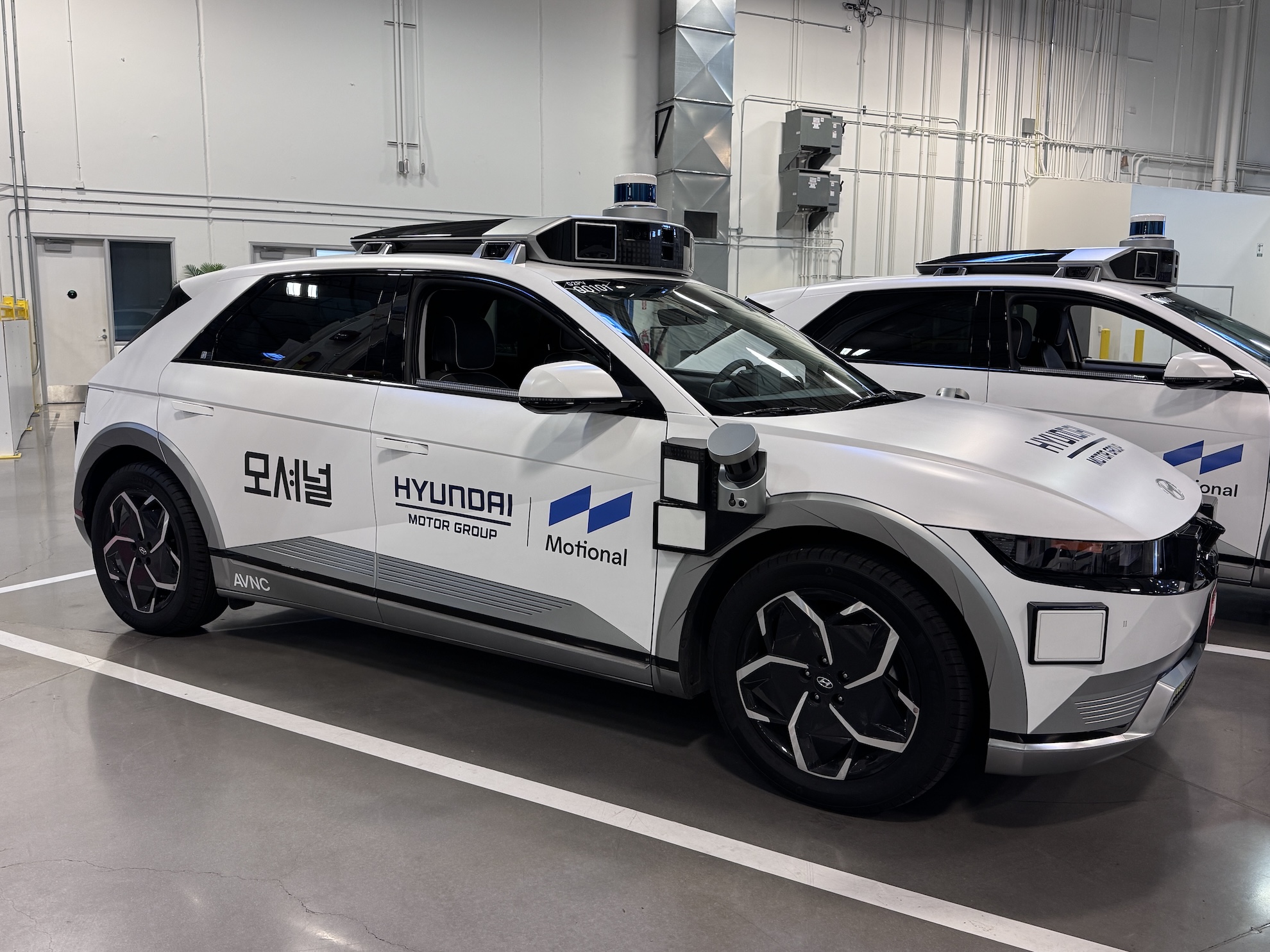
Motional, a prominent player in the autonomous vehicle landscape, has embarked on a significant strategic pivot, placing artificial intelligence at the core of its renewed ambition to launch a fully driverless robotaxi service. This fundamental reorientation follows a period of intense scrutiny and operational adjustments for the company, which originated as a high-profile, multi-billion-dollar joint venture between Hyundai Motor Group and Aptiv. Facing a critical juncture nearly two years ago, the enterprise has now articulated a clear pathway toward a commercial driverless rollout in Las Vegas by the conclusion of 2026, signaling a profound shift in its technological development methodology.
A Troubled Genesis and Pivotal Crossroads
The journey for Motional has been anything but smooth since its inception in March 2020. Formed through a substantial $4 billion partnership, the company was initially hailed as a formidable contender in the race to commercialize self-driving technology. Its vision involved integrating Aptiv’s leading autonomous driving platform with Hyundai’s manufacturing prowess and financial backing, aiming for a scalable global robotaxi service. However, the path to autonomy proved more complex and capital-intensive than many anticipated.
The company soon encountered significant headwinds. An initial deadline to deploy a driverless robotaxi service with ride-hailing partner Lyft was not met, reflecting the pervasive technical and regulatory challenges inherent in the sector. Further complicating matters, Aptiv, a key financial backer and technology partner, eventually divested its stake, leaving Hyundai Motor Group to inject nearly $1 billion in additional investment to sustain Motional’s operations. This substantial capital infusion underscored Hyundai’s unwavering commitment to the autonomous future, even as the immediate commercialization timeline stretched further into the distance.
The internal ramifications of these external pressures were substantial. Motional underwent several rounds of layoffs, culminating in a significant restructuring in May 2024 that saw approximately 40% of its workforce depart. This reduction dramatically scaled down the company from its peak of roughly 1,400 employees to fewer than 600. These difficult decisions, while painful, reflected a stark realization within the leadership: the traditional approach to autonomous vehicle development needed re-evaluation amidst rapid advancements in the broader field of artificial intelligence. It became evident that Motional faced a stark choice: adapt or risk obsolescence in a fiercely competitive and technologically evolving domain.
The AI Paradigm Shift
In response to this existential challenge, Motional made the strategic decision to "pause everything" and fundamentally re-engineer its approach. Laura Major, Motional’s president and CEO, articulated this critical juncture during a presentation at the company’s Las Vegas facilities. She emphasized the "tremendous potential with all the advancements that were happening within AI" and acknowledged a "gap to getting to an affordable solution that could generalize and scale globally" with their existing methodology. This led to the "very hard decision to pause our commercial activities, to slow down in the near term so that we could speed up" in the long run.
Historically, autonomous driving systems, including Motional’s previous iterations, relied on a "classic robotics" architecture. This involved a modular approach where specific tasks—such as perception (identifying objects), tracking (monitoring their movement), and semantic reasoning (understanding their context)—were handled by individual machine learning models. Other operational aspects within the software stack often depended on more rules-based programming. While effective in controlled environments, this complex web of distinct software components presented significant challenges for scalability, generalization to new environments, and cost-efficiency. Every new scenario or geographical location often required extensive re-engineering and recalibration of multiple interconnected systems.
The breakthrough came with the evolution of AI, particularly the development of transformer architectures and large foundation models. Initially pioneered for natural language processing, these powerful models demonstrated an unprecedented ability to process vast amounts of data and identify intricate patterns, leading to the emergence of technologies like ChatGPT. Motional recognized the transformative potential of applying this holistic, end-to-end AI approach to autonomous driving. Instead of a patchwork of specialized models, the goal became to integrate these smaller, discrete models into a singular, cohesive backbone. This unified architecture aims to create a more robust, adaptable, and efficient self-driving system.
This "AI-first" methodology, as Major explained, offers the best of both worlds. While striving for a unified backbone, Motional also maintains access to the individual component models for developers, allowing for targeted improvements and debugging. The core benefit of this integrated approach is twofold: enhanced generalization and improved cost-effectiveness. For instance, encountering different traffic light configurations in a new city no longer necessitates a complete re-development cycle. Instead, the system can adapt by collecting relevant data and retraining the foundational model, significantly accelerating deployment in diverse urban environments. This promises to unlock the scalability that has long eluded many in the autonomous driving sector.
On the Road to 2026: Testing the New Approach
Motional is already demonstrating the early fruits of this strategic shift. The company has initiated an employee-only robotaxi service in Las Vegas, operating with a human safety operator behind the wheel. The plan is to expand this service to the public later this year (2024) through an undisclosed ride-hailing partner, leveraging its existing relationships with platforms like Lyft and Uber. The ultimate objective, however, is to remove the human safety operator entirely by the end of 2026, ushering in a truly commercial driverless service.
Recent demonstrations provide a glimpse into the progress. During a 30-minute autonomous drive around Las Vegas, a Hyundai Ioniq 5 equipped with Motional’s new system showcased its capabilities. The vehicle successfully navigated the notoriously bustling pickup and drop-off area of the Aria Hotel, a complex environment previously deemed too challenging for fully autonomous operation and typically required human intervention. The robotaxi deftly maneuvered around double-parked taxis, unloading passengers, giant planters, and a constant flow of pedestrians and vehicles, changing lanes and merging with a measured confidence. This particular achievement highlights a significant advancement, as previous iterations of Motional’s service in Las Vegas with Lyft consistently required human operators to take over in such intricate hotel and parking lot scenarios.
While the demo ride did not involve any human disengagement—meaning the safety operator never had to intervene—it also revealed areas for further refinement. The in-vehicle graphics designed to inform riders about the vehicle’s perceptions and intentions are still under development, indicating ongoing work on the user experience. Additionally, the vehicle exhibited a cautious, albeit safe, hesitation when navigating around a double-parked Amazon delivery van, suggesting that while the system prioritizes safety, optimizing efficiency and human-like decisiveness in complex, ambiguous situations remains an active area of development. Despite these minor observations, CEO Laura Major remains confident in Motional’s trajectory, affirming that the company is on a viable path toward safe and cost-effective deployment, strongly backed by its majority owner, Hyundai.
Broader Implications and the Future of Mobility
Motional’s journey reflects the broader evolution and challenges within the autonomous vehicle industry. The initial euphoria surrounding self-driving cars in the mid-2010s gave way to a more sober reality, often dubbed the "AV winter," as technical hurdles, regulatory complexities, and the sheer cost of development proved more formidable than anticipated. Companies like Waymo and Cruise have made significant strides, particularly in geo-fenced urban environments, but widespread, scalable, and profitable robotaxi services remain elusive. Motional’s pivot to an AI-first approach underscores a growing industry consensus that next-generation AI models, particularly those leveraging deep learning and transformer architectures, are essential to unlock the promise of true Level 4 autonomy.
Level 4 autonomy, where the vehicle handles all driving tasks under specific operational conditions without any expectation of human intervention, is the holy grail for robotaxi services. Motional’s long-term vision extends beyond simply operating driverless taxis; Major envisions the integration of Level 4 capabilities into personal consumer vehicles. Robotaxis, in this grander scheme, serve as a crucial "stop number one," providing invaluable real-world data, refining the technology, and establishing public trust. Ultimately, the aspiration for any major automotive OEM, including Hyundai, is to embed this advanced self-driving capability directly into their mass-produced vehicles, transforming personal transportation.
The potential societal impacts of successful robotaxi deployment are profound. Enhanced safety through the elimination of human error, increased accessibility for individuals unable to drive, optimized traffic flow, reduced parking demands, and lower emissions are among the often-cited benefits. However, challenges persist, including public acceptance, potential job displacement for professional drivers, the ethical implications of autonomous decision-making, and the need for robust regulatory frameworks. Las Vegas, with its predictable grid system, generally favorable weather, and a tourism-driven economy ripe for convenient mobility solutions, presents an ideal proving ground for Motional’s renewed strategy. The city’s willingness to embrace technological innovation also makes it a strategic choice for a commercial launch.
As Motional navigates this revitalized course, its success will offer valuable insights into the efficacy of AI-centric development in autonomous driving. The journey from a costly, modular system to a more generalized, foundation model-based architecture represents not just a technological upgrade, but a strategic gamble on the future of AI. The industry, regulators, and a curious public will be watching closely to see if Motional’s "slow down to speed up" philosophy truly paves the way for a safe, scalable, and ultimately profitable driverless future by 2026.