Amir Mahmud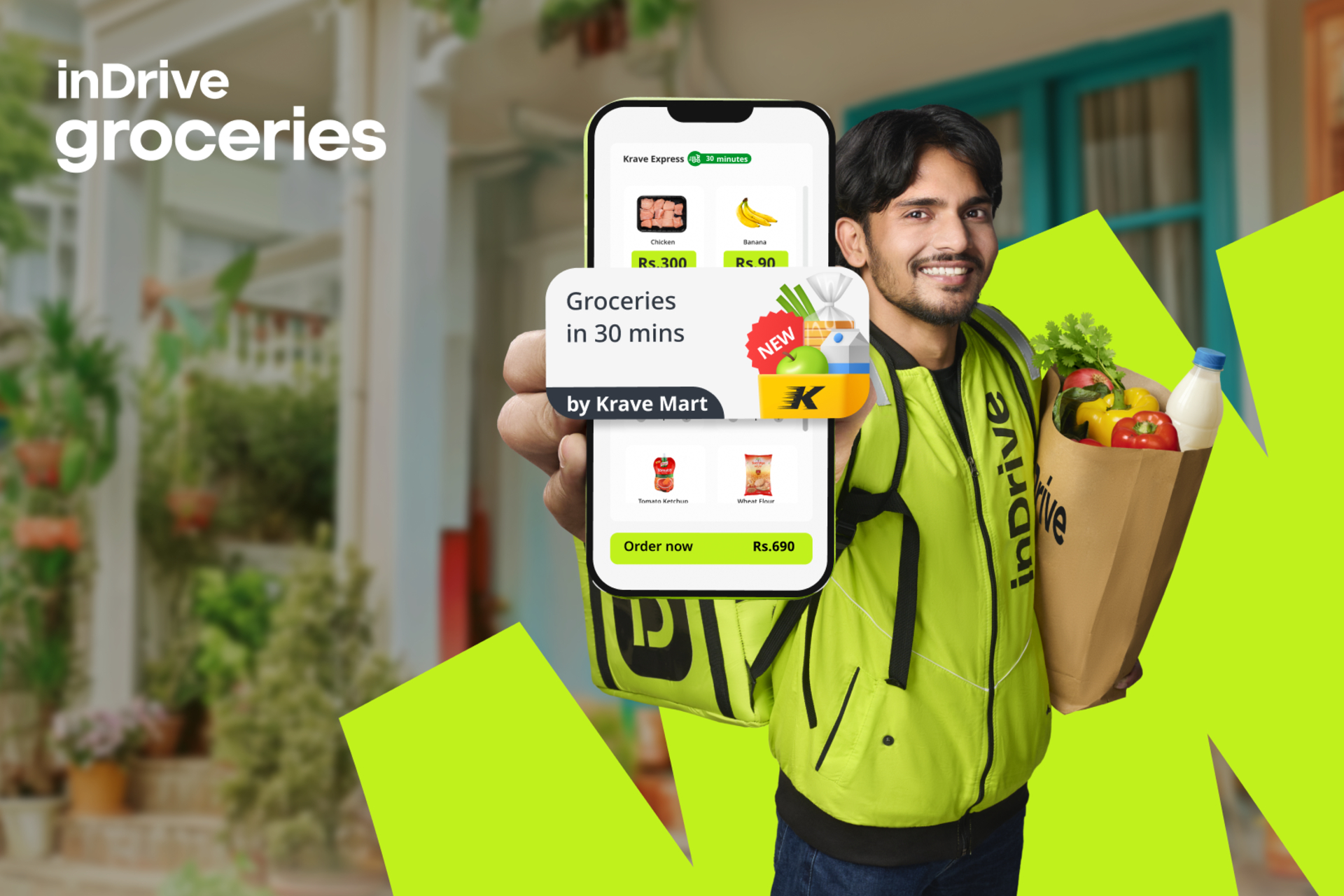
inDrive, the technology company renowned for its distinctive bidding-based approach to ride-hailing, is embarking on a significant strategic pivot to broaden its revenue streams and deepen user engagement. This ambitious expansion involves the simultaneous rollout of an advertising platform across its top 20 global markets and a substantial push into grocery delivery, beginning with Pakistan. These initiatives are core to the company’s previously articulated "super app" strategy, designed to cultivate new revenue channels and sustain growth in increasingly competitive, price-sensitive emerging markets.
The Evolving Landscape of On-Demand Services
The global on-demand mobility sector has matured rapidly over the last decade, transitioning from a novel concept to an essential component of urban infrastructure. Companies like Uber, Lyft, Grab, and Didi have established vast networks, but this widespread adoption has also intensified competition, particularly in burgeoning economies. In these markets, characterized by high population density, rapid urbanization, and often, significant price sensitivity, ride-hailing platforms face immense pressure. Fierce competition frequently leads to price wars, diminishing profit margins for service providers and often impacting driver earnings. This challenging environment compels companies to innovate beyond their core offerings, seeking new avenues for profitability and user retention.
The "super app" model, popularized by Asian tech giants like WeChat, Grab, and Gojek, offers a compelling solution to these pressures. By integrating multiple services—ranging from ride-hailing and food delivery to payments and e-commerce—within a single application, companies can leverage their existing, large user bases. This strategy significantly reduces customer acquisition costs for new services, enhances app stickiness by increasing the frequency of use, and creates a virtuous cycle of engagement that can generate diversified revenue streams. For inDrive, embracing this model is not just about growth; it’s about building resilience and long-term sustainability in a dynamic global marketplace.
A Deeper Dive into inDrive’s Unique Model and History
inDrive’s journey began in 2013, originating from a social media group in Yakutsk, Siberia, where users coordinated rides during a harsh winter. This grassroots origin story profoundly influenced its core offering: a peer-to-peer negotiation model that empowers both riders and drivers to propose and agree upon a fare in real-time. Unlike traditional ride-hailing services that rely on algorithmic fixed pricing, inDrive’s system introduces a layer of transparency and flexibility, allowing market dynamics to dictate pricing within a given range.
This distinctive approach quickly resonated in markets where consumers and service providers alike felt disempowered by opaque pricing structures or rigid fare systems. For riders, it often translated to more affordable fares, especially during off-peak hours or in areas with ample supply. For drivers, it offered greater autonomy over their earnings and the ability to account for specific conditions like traffic or passenger requests. This model positioned inDrive as an agile, user-centric alternative, enabling it to rapidly expand its footprint and challenge established players by offering a compelling value proposition. This focus on affordability and direct negotiation has been a cornerstone of its success, fostering a loyal user base across diverse geographical regions.
Monetizing Attention: The Global Advertising Initiative
Recognizing the immense value of its extensive user base and the significant time users spend within its application, inDrive is now strategically moving to monetize this attention through a global advertising platform. This initiative is being rolled out across 20 of its most active markets, including key regions such as Mexico, Colombia, Pakistan, Kazakhstan, Egypt, and Morocco. The decision to integrate advertising marks a calculated move to introduce a high-margin revenue stream that scales directly with user engagement and app usage, providing a powerful complement to its transaction-based mobility services.
The advertising strategy will initially concentrate on in-app placements, strategically positioned at moments of high user attention. This includes the waiting period after a ride has been booked and while passengers are actively en route. These intervals offer a captive audience, making them particularly attractive to advertisers seeking to maximize impressions and engagement. Andries Smit, inDrive’s chief growth business officer, highlighted the successful mid-2025 tests of this advertising model, which generated hundreds of millions of impressions and garnered significant interest from prominent global consumer brands and financial institutions. While in-car and on-vehicle advertising are part of the longer-term vision, inDrive plans to prioritize digital, in-app formats through 2026, citing stronger early returns and reduced operational complexities associated with physical advertising placements in diverse emerging markets. This digital-first approach allows for greater targeting precision, real-time analytics, and faster iteration, making it an efficient way to tap into new revenue sources.
From Rides to Rations: The Grocery Delivery Frontier
Alongside its advertising push, inDrive is making a substantial foray into the grocery delivery sector, identifying it as a high-frequency use case capable of significantly boosting app engagement and, consequently, advertising demand. Following an initial launch in Kazakhstan, Pakistan has been selected as the next major market for this expansion. This choice is rooted in a confluence of favorable market conditions and inDrive’s established operational strength within the country.
Pakistan presents a compelling landscape for quick commerce. The traditional grocery retail sector remains highly fragmented and informal, often lacking the convenience and efficiency demanded by modern urban consumers. Simultaneously, rapid urbanization, changing lifestyles, and an increasing number of households balancing work and family responsibilities have fueled a rising demand for app-based delivery services. Consumers are increasingly valuing convenience and time-saving solutions for daily essentials.
inDrive’s strategic advantage in this market is its already robust presence and large, engaged user base. Since its launch in Pakistan in 2021, the company has witnessed remarkable growth, with ride volumes increasing by nearly 40% year-over-year in 2025, and courier service deliveries surging by 67% in the first half of the same year. Operating ride-hailing services in over 20 Pakistani cities and intercity services across more than 200 locations, inDrive has cultivated a massive, active user community. This existing network significantly reduces the customer acquisition costs (CAC) for its new grocery delivery service—a formidable hurdle that has challenged many quick-commerce startups globally.
To execute its grocery expansion, inDrive has partnered with Krave Mart, a local dark-store operator, in which inDrive made a strategic investment in December 2024. The "dark store" model, which involves small, localized warehouses exclusively for online order fulfillment, is highly efficient for rapid delivery services. The rollout will commence in Karachi, Pakistan’s largest city and one of inDrive’s strongest markets, where users will be able to order daily essentials with projected delivery times of approximately 20 to 30 minutes. The service will subsequently expand to other major urban centers, including Lahore, Islamabad, and Rawalpindi, as inDrive and Krave Mart scale their supply chain and logistics infrastructure. The platform aims to offer an extensive catalog of over 7,500 products, encompassing fresh produce, meat and dairy, snacks, and household items, accompanied by free delivery on orders exceeding PKR 499 (approximately $2) and a complete absence of service fees. This aggressive pricing strategy is designed to rapidly capture market share and establish inDrive as a dominant player in the nascent quick commerce space.
Resilience in Volatile Markets: inDrive’s Investment Philosophy
Pakistan’s burgeoning digital economy has attracted interest, yet the broader investor community has often approached the market with caution due to geopolitical instability and macroeconomic risks. While equity funding in Pakistan showed signs of recovery in 2025, rising 63% year-over-year to $36.6 million across 10 rounds, this figure remains significantly below the peaks of $347 million in 2021 and $331 million in 2022. This disparity between investor sentiment and on-the-ground demand is precisely where inDrive identifies a unique opportunity.
inDrive’s extensive operational experience across dozens of emerging markets has imbued the company with a distinct risk appetite and a deep understanding of navigating volatile economic landscapes. Unlike many tech firms heavily reliant on shifting capital-market sentiment, inDrive has cultivated an internal resilience that allows it to invest strategically where others might hesitate. This self-reliance is further bolstered by its ability to foster strong local partnerships and leverage its substantial existing user base to scale new ventures without incurring prohibitive customer acquisition costs. This advantage becomes particularly crucial when external funding is scarce, enabling inDrive to support the growth of its partners and stimulate local digital ecosystems even during periods of broader financial constraint. A significant portion of inDrive’s multi-year $100 million investment program, announced in late 2023, has already been directed towards Pakistan, underscoring the company’s confidence in the market’s long-term potential. Andries Smit indicated that at least half of the overall commitment has been deployed, with a strong desire to "continue and double down on investments as we see performance."
The Super App Blueprint: A Glimpse into the Future
inDrive’s aggressive expansion into advertising and grocery delivery is underpinned by an impressive global scale. The company currently operates in 1,065 cities across 48 countries, boasting over 360 million app downloads. For the third consecutive year, inDrive has maintained its position as the world’s second most-downloaded mobility application, trailing only Uber. This extensive reach provides a robust foundation upon which to build its super app ecosystem.
The strategic diversification is already yielding results. Just a few years ago, ride-hailing accounted for approximately 95% of inDrive’s total revenue. Today, even as its core mobility business continues to grow, ride-hailing’s share has decreased to around 85%, reflecting the nascent but accelerating growth of its newer verticals. Looking ahead, inDrive anticipates advertising will become an increasingly significant contributor to its revenue portfolio, particularly as grocery and other delivery volumes expand, creating more contextual promotion opportunities.
The overarching vision is clear: groceries, delivery services, advertising, and eventually, financial services are poised to play an increasingly central role in inDrive’s business model over the next three to five years. By selectively expanding these offerings across priority markets, inDrive aims to create a more integrated, indispensable platform for its users. This comprehensive approach is designed not only to reduce reliance on a single revenue stream but also to build a more robust, diversified, and resilient business capable of sustained growth and deeper integration into the daily lives of its global user base.