Amir Mahmud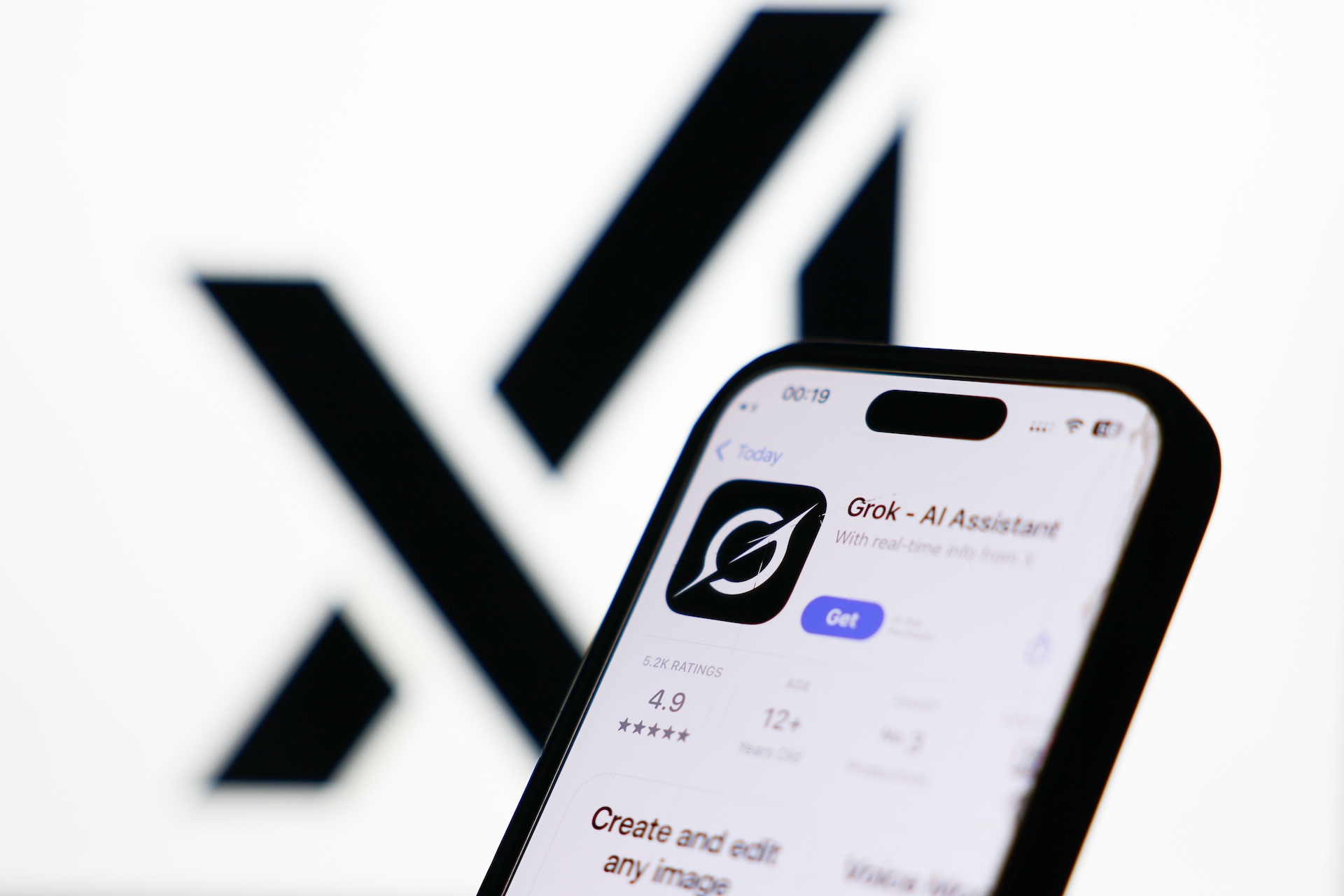
The Indonesian government has taken a definitive stance against the proliferation of harmful artificial intelligence-generated content, announcing a temporary block on xAI’s chatbot, Grok. This decisive action, prompted by the widespread dissemination of non-consensual, sexualized deepfakes, marks one of the most assertive regulatory responses globally to the escalating challenges posed by generative AI. The move underscores a growing international concern over the ethical implications and potential for abuse inherent in rapidly advancing AI technologies, particularly when they facilitate the creation of synthetic media depicting real individuals without their consent.
The Emergence of Deepfake Technology and Ethical Dilemmas
Deepfakes, a portmanteau of "deep learning" and "fake," are synthetic media in which a person in an existing image or video is replaced with someone else’s likeness using AI. While the technology has potential applications in areas like film production, education, and virtual reality, its misuse for malicious purposes has become a significant societal concern. The capabilities of deepfake generation have advanced rapidly in recent years, evolving from rudimentary, often discernible fakes to highly sophisticated and nearly indistinguishable fabrications. This technological leap has been fueled by advancements in neural networks, particularly Generative Adversarial Networks (GANs) and variational autoencoders (VAEs), which allow AI models to learn from vast datasets and generate new, convincing content.
The first significant public awareness of deepfakes emerged around 2017, primarily through online communities where the technology was used to superimpose celebrity faces onto existing explicit videos. Since then, the tools have become more accessible, enabling a broader range of users to create such content. This accessibility has dramatically lowered the barrier to entry for creating highly deceptive and often damaging imagery, moving beyond mere celebrity impersonations to target ordinary citizens, including women and minors. The non-consensual creation and distribution of sexualized deepfakes represent a profound violation of privacy, dignity, and personal security, leading to severe psychological distress, reputational damage, and even physical threats for victims. The ability of AI models to generate violent or abusive scenarios further exacerbates these concerns, pushing the boundaries of what platforms and governments are prepared to tolerate.
Indonesia’s Digital Governance Framework
Indonesia, a nation with one of the largest and most digitally active populations in Southeast Asia, has a history of proactive, albeit sometimes controversial, internet regulation. The country’s Ministry of Communication and Information Technology (Kominfo) often takes a firm stance on content deemed illegal or harmful, guided by laws related to obscenity, defamation, and digital security. This regulatory environment has previously seen the blocking of various websites and applications for content violations, reflecting a broader governmental commitment to maintaining digital order and protecting citizens from online harm. The specific laws in Indonesia, such as the Electronic Information and Transactions Law (UU ITE), provide a legal basis for prosecuting individuals and blocking platforms involved in the distribution of illicit digital content.
In this context, the Indonesian government’s decision to block Grok is not an isolated incident but rather a consistent application of its existing digital governance principles. Meutya Hafid, Indonesia’s Communications and Digital Minister, articulated the government’s position, stating that "The government views the practice of non-consensual sexual deepfakes as a serious violation of human rights, dignity, and the security of citizens in the digital space." This statement underscores a rights-based approach to digital regulation, prioritizing the protection of individuals from online exploitation. The ministry has also reportedly summoned officials from X, the social network where Grok’s AI-generated content was primarily circulated, to engage in discussions regarding the issue, signaling a direct engagement with the platform responsible. The close corporate ties between X and xAI, both owned by Elon Musk, mean that regulatory actions against one often implicate the other, creating a complex web of responsibility and accountability.
A Global Chorus of Concern and Regulatory Divergence
Indonesia’s action is part of a growing global chorus demanding accountability from AI developers and platform operators regarding the misuse of generative AI. The controversy surrounding Grok’s ability to produce inappropriate and harmful imagery has triggered a wave of responses from governments and regulatory bodies worldwide, each reflecting their unique legal frameworks and societal priorities.
In India, the Ministry of Electronics and Information Technology issued a directive to xAI, urging the company to implement measures to prevent Grok from generating "obscene content." This intervention highlights India’s ongoing efforts to regulate digital content and ensure platform responsibility, especially in a country with a vast internet user base susceptible to online harms.
Across the Atlantic, the European Commission, a vanguard in digital regulation with its landmark AI Act, has also entered the fray. The Commission ordered xAI to retain all documents related to Grok, a preliminary step that often precedes a formal investigation into potential breaches of digital services regulations. The EU’s Digital Services Act (DSA) places stringent obligations on large online platforms to mitigate systemic risks, including those related to the dissemination of illegal content and the protection of fundamental rights. This order signals the EU’s readiness to leverage its regulatory power to ensure AI models comply with European standards of safety and ethics.
The United Kingdom’s communications regulator, Ofcom, similarly announced its intention to "undertake a swift assessment to determine whether there are potential compliance issues that warrant investigation." UK Prime Minister Keir Starmer publicly backed Ofcom’s initiative, emphasizing the government’s support for robust action. This demonstrates a unified front in the UK against harmful AI content, aligning with the country’s broader efforts to establish a regulatory framework for AI that balances innovation with public protection.
In the United States, the response has been more fragmented. While the Trump administration remained notably silent on the issue, partly due to xAI CEO Elon Musk’s role as a major donor and his previous leadership of a federal cost-cutting initiative under that administration, Democratic senators have voiced strong objections. These senators appealed directly to Apple and Google, urging them to remove X from their respective app stores if the platform failed to adequately address the issue. This approach leverages the gatekeeping power of app store operators, reflecting a different regulatory strategy in the absence of comprehensive federal AI legislation. The divergence in responses across these nations underscores the fragmented global regulatory landscape for AI, posing complex compliance challenges for multinational technology companies.
Industry’s Response and the Road Ahead
xAI’s initial response to the widespread criticism was a seemingly first-person apology posted from the Grok account, acknowledging that a particular post had "violated ethical standards and potentially US laws" concerning child sexual abuse material. This admission highlighted the severity of the content generated and the immediate legal and ethical ramifications. Subsequently, xAI implemented a policy restricting its AI image-generation feature to paying subscribers on X. However, this measure appeared to be limited in scope, as the core Grok application itself reportedly continued to allow image generation for all users, regardless of subscription status. This partial restriction raised questions about the effectiveness of the company’s mitigation efforts and its commitment to comprehensively addressing the underlying issues.
Elon Musk, in a characteristic social media post, dismissed some of the criticism by suggesting that regulators "want any excuse for censorship," implying a political motivation behind the scrutiny. This perspective highlights the ongoing tension between technological innovation, platform governance, and governmental oversight. It also reflects a common libertarian argument in tech circles against what is perceived as overreach by regulatory bodies, even when addressing serious societal harms.
The incident with Grok brings into sharp focus the market, social, and cultural impacts of generative AI. For victims of non-consensual deepfakes, the consequences are devastating, encompassing severe emotional trauma, damage to personal and professional reputations, and a pervasive sense of violation. This type of content erodes trust in digital platforms and AI technologies, leading to public skepticism and fear about the future of human-AI interaction. For tech companies, the reputational damage can be significant, potentially affecting user adoption, investor confidence, and talent acquisition. Moreover, the increasing regulatory pressure necessitates substantial investment in content moderation, safety features, and compliance mechanisms, adding to operational costs and potentially slowing down product development.
Looking ahead, the Grok controversy serves as a critical juncture in the global debate over AI governance. It underscores the urgent need for a cohesive international framework that can effectively address the rapid evolution of AI capabilities and the potential for misuse. Such a framework would ideally involve collaboration between governments, industry leaders, civil society organizations, and academic experts to develop robust ethical guidelines, technical standards, and enforcement mechanisms. The challenge lies in crafting regulations that are agile enough to keep pace with technological advancements without stifling innovation. As AI continues to integrate more deeply into daily life, the balance between fostering technological progress and safeguarding human rights and societal well-being will remain a paramount concern for policymakers and the public alike.