Amir Mahmud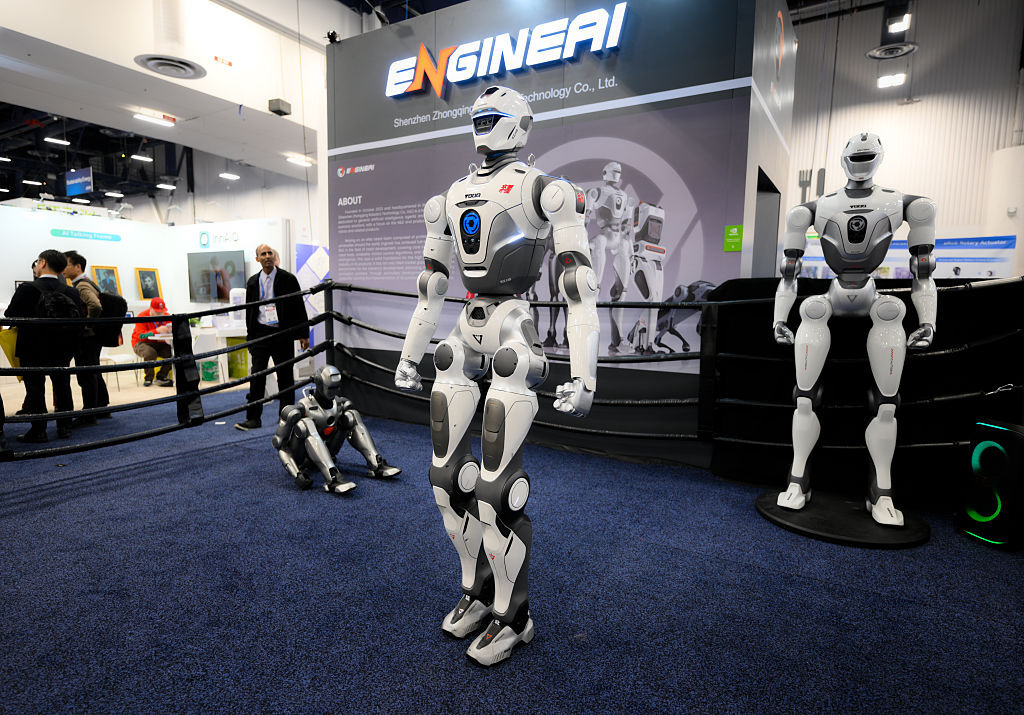
The annual Consumer Electronics Show (CES) consistently serves as a pivotal platform for showcasing groundbreaking technological advancements, with robotics frequently taking center stage. This year’s event in Las Vegas underscored a remarkable acceleration in the field, moving beyond mere conceptual prototypes to reveal sophisticated machines hinting at imminent commercial deployment. While some demonstrations offered playful glimpses into future possibilities, others highlighted serious strides in areas like dexterous manipulation, human-robot interaction, and autonomous service. The exhibition presented a diverse array of robotic creations, ranging from advanced humanoids poised for industrial roles to specialized service bots designed for everyday tasks, providing attendees with a tangible preview of where artificial intelligence and mechanical engineering are headed.
The Evolving Landscape of Robotics at CES
For decades, CES has been synonymous with the future, and robots have always been a cornerstone of that vision. Early robotic displays often leaned heavily on novelty, demonstrating rudimentary movements or simple, repetitive tasks. Over time, these exhibits have matured, reflecting the broader technological shifts in artificial intelligence, sensor technology, and mechanical design. This year’s showcase, however, marked a distinct turning point, characterized by a visible emphasis on practicality and the transition of advanced concepts into production-ready systems. The spotlight was not just on what robots could do in controlled lab environments, but what they are prepared to do in real-world scenarios, signaling a new era for automated solutions across various sectors.
One of the most significant announcements at the event was the official production-ready debut of Atlas, the renowned humanoid robot from Boston Dynamics. Atlas, historically known as a research platform, has captivated audiences with its astonishing agility and complex movements, often performing parkour or intricate dance routines. Its transition to a "production-ready" model indicates a shift from pure research and development to a focus on scalable manufacturing and potential commercial applications. This evolution underscores the growing confidence in humanoid robotics as a viable solution for tasks that are traditionally performed by humans, particularly in dynamic or unstructured environments where flexibility and adaptability are paramount. The journey of Atlas from a laboratory marvel to a commercial prospect symbolizes a major leap in the robotics timeline, pushing the boundaries of what is mechanically and algorithmically achievable.
Mastering Dexterity: The Ping-Pong Prodigy
Among the more engaging demonstrations was a full-bodied robot engineered by the Chinese robotics firm Sharpa, which challenged human participants to a game of table tennis. While the robot’s play might not have rivaled professional athletes, its ability to engage in a dynamic, real-time sport offered a compelling visual spectacle. The machine exhibited a methodical approach, tracking the ball and executing paddle swings with remarkable, albeit unhurried, precision. This particular exhibit served a dual purpose: entertaining the crowds and, more importantly, showcasing the advanced dexterity of Sharpa’s primary product—its robotic hand.
The challenge of robotics in sports like ping-pong lies not just in vision and motor control, but in the intricate coordination required for predicting ball trajectory, adjusting for spin, and executing precise, powerful, yet controlled movements. Historically, robots have excelled in repetitive, high-precision tasks, but dynamic interaction with unpredictable elements like a moving ball, especially in rapid succession, demands sophisticated real-time processing and fine motor control. The development of robotic hands capable of such nuanced manipulation has profound implications far beyond the gaming table. These advanced grippers and manipulators are crucial for a wide array of industrial applications, from intricate assembly lines to delicate medical procedures, where human-level dexterity is highly desirable. Sharpa’s demonstration subtly highlighted that the entertainment value of a robot playing ping-pong is merely a byproduct of underlying technological advancements with significant commercial potential.
Unpredictable Humanoids: The Boxing Bots
Another exhibit that drew substantial crowds featured humanoid robots, dubbed T800, from the Chinese company EngineAI. These machines were staged in a mock boxing ring, styled to evoke the imagery of fighting machines. However, instead of actual combat, the robots engaged in a form of shadowboxing, moving dynamically near each other without making contact. This choreographed non-engagement, coupled with occasional unpredictable behavior, created a unique form of entertainment. Observers noted instances where a bot would wander out of the ring or even stumble and fall, only to recover autonomously after a brief pause.
The T800’s design, clearly referencing the iconic "Terminator" franchise, plays into a broader cultural fascination with humanoid robots—a blend of awe and apprehension. While these bots were far from a "Mike Tyson situation," their human-like movements and occasional mishaps evoked a peculiar sense of sentience and vulnerability, resonating with common tropes found in science fiction. From an analytical perspective, such demonstrations, even with their imperfections, are vital for advancing the complex fields of bipedal locomotion, balance, and human-robot interaction in dynamic, less-controlled environments. The challenges of maintaining stability, navigating obstacles, and reacting to unforeseen circumstances in real-time are immense. The T800’s performance, while not flawless, underscored the ongoing progress in developing robots that can operate in complex, human-centric spaces, while also hinting at the significant hurdles that remain in achieving true robust autonomy. The crowd’s reaction, a mix of amusement and a touch of unease, highlighted the enduring social and cultural impact of seeing machines that mirror human form and behavior.
Rhythmic Agility: The Dancing Machines
Dancing robots have long been a beloved fixture at CES, serving as a vibrant illustration of robotic agility and programming sophistication. This year, the tradition continued with impressive displays from Unitree, a prominent Chinese robotics manufacturer. Unitree, known for its quadrupedal robots, has expanded its product line to include advanced humanoids, boasting capabilities such as running at speeds up to 11 miles per hour. The company’s booth was a lively showcase of these machines "feeling the groove," executing complex dance routines with fluid, coordinated movements.
The evolution of dancing robots from stiff, repetitive motions to highly dynamic and expressive choreography reflects immense progress in motor control, inverse kinematics, and real-time motion planning. Beyond the entertainment value, the ability of these robots to maintain balance, execute precise limb movements, and adapt to varying musical tempos demonstrates advanced capabilities crucial for a range of practical applications, including industrial inspection, search and rescue, and even assistive technologies. However, Unitree has also faced scrutiny regarding potential ties to the Chinese military, a concern that highlights the complex ethical dimensions surrounding advanced robotics. The dual-use nature of many technological innovations—their potential for both civilian benefit and military application—is a recurring theme in the discourse around robotics. This situation underscores the critical need for transparent governance and international dialogue as these powerful technologies continue to advance, ensuring their development aligns with ethical principles and contributes positively to global society.
Service Automation: The Robotic Retail Assistant
The exhibition also featured demonstrations of robots designed for service industries, such as the convenience store clerk developed by Galbot, another Chinese company focusing on multi-modal large language models and general-purpose robotics. Galbot’s booth was ingeniously configured as a miniature convenience store, where a robot, integrated with a menu application, would fetch selected items for customers. This interactive setup provided a clear illustration of the robot’s practical utility. Upon a customer’s selection, the robot efficiently navigated the shelves to retrieve the requested merchandise, demonstrating a seamless integration of AI comprehension and physical action.
This type of service robot represents a significant leap in automating tasks within retail and logistics. The combination of multi-modal large language models (which allow the robot to understand and process information from various inputs like text, speech, and vision) and general-purpose robotics (enabling it to perform a wide range of physical tasks) is transforming the potential for autonomous service. Such robots are not merely programmed for a single, repetitive action but can interpret complex commands and interact with their environment in a more flexible, intelligent manner. Galbot’s website indicates that its robots are already deployed in real-world settings, including as assistants in Chinese pharmacies, where they can help with inventory management, fetching items, and potentially assisting customers. This application highlights the market impact of such technologies in addressing labor shortages, improving operational efficiency, and enhancing customer service experiences in various commercial environments.
The Domestic Frontier: The Laundry-Folding Housekeeper
A perennial challenge in the realm of domestic robotics has been the automation of laundry folding, considered a benchmark for automated competence due to the variable nature of fabric, its deformability, and the intricate manipulation required. At CES, Dyna Robotics, a firm specializing in advanced manipulation models, showcased a compelling solution. Their display featured a pair of robotic arms meticulously folding laundry and stacking it into a neat pile. The precision and efficiency of the process were notably impressive, indicating significant progress in overcoming one of robotics’ "holy grail" problems.
The difficulty in teaching a robot to fold clothes stems from the complexity of soft material manipulation. Unlike rigid objects, fabric changes shape unpredictably, requiring advanced vision systems to identify garment type, orientation, and crumple patterns, coupled with delicate force sensing and precise grasping mechanisms to avoid damage. Dyna Robotics’ success in this area underscores breakthroughs in perception, manipulation, and machine learning algorithms. The company has already forged partnerships with commercial entities like hotels, gyms, and factories, where laundry is a high-volume, repetitive task. Notably, Monster Laundry in Sacramento, California, integrated Dyna’s shirt-folding robot into its operations, proudly proclaiming itself as the first laundry center in North America to adopt such a system. This commercial traction is further bolstered by Dyna Robotics’ substantial financial backing, including a $120 million Series A funding round with investments from major industry players like Nvidia’s NVentures, Amazon, LG, and Samsung. This level of investment from tech giants signals strong market confidence in the practical application and scalability of Dyna’s technology, pointing towards a future where household chores and commercial textile handling are increasingly automated.
Personalizing Automation: The Home Butler
LG’s presence at CES included the introduction of CLOid, its new home robot designed to act as a personal assistant or butler. While characterized by its appealing aesthetic, observers noted that CLOid was not designed for speed, prioritizing careful navigation and interaction within a home environment. The concept of a home robot butler has been a long-standing aspiration in consumer electronics, evolving from simple vacuum cleaners to more sophisticated devices capable of limited interaction and task execution.
The development of home robots like CLOid represents an ongoing effort to integrate automation seamlessly into daily life. The challenges here involve not just mechanical capabilities but also sophisticated AI for understanding natural language, recognizing household objects, navigating complex and often changing environments, and performing a variety of mundane tasks. While CLOid might not be the fastest, its very existence highlights the industry’s continued investment in the "last mile" problem of home automation—making robots genuinely useful and unobtrusive in a personal living space. The market for consumer robotics is growing, driven by desires for convenience, assistance for the elderly, and smart home integration. The analytical commentary around such devices often revolves around the balance between "cuteness" and practical utility, as well as the need for robust, reliable performance that justifies their cost and presence in a home. The journey from rudimentary machines to sophisticated, interactive home companions is a long one, but devices like CLOid mark incremental yet important steps toward that vision.
The Road Ahead: From Spectacle to Seamless Integration
The robots showcased at this year’s CES offered a compelling snapshot of the current state and future trajectory of robotics. From the refined dexterity of the ping-pong player and the dynamic, if unpredictable, movements of the boxing humanoids, to the practical utility of the retail clerk and the significant progress in domestic chores like laundry folding, the exhibition demonstrated a field rapidly maturing. The advancements in humanoid platforms, exemplified by Atlas’s production-ready status, suggest a future where robots increasingly perform complex tasks in diverse environments, interacting more naturally with humans.
While some exhibits still retained an element of spectacle, designed to capture imagination and serve as marketing tools, the underlying technological progress is undeniable. The integration of advanced AI, including multi-modal large language models, sophisticated sensors, and improved mechanical designs, is pushing robots beyond mere automation into realms of genuine intelligence and adaptability. The market impact of these innovations is profound, promising to reshape industries from manufacturing and logistics to healthcare and retail, while also addressing societal challenges like labor shortages and the demands of an aging population.
However, the rapid evolution of robotics also brings forth critical considerations regarding ethical implications, data privacy, job displacement, and the responsible development of dual-use technologies. The journey from "weird" and "memorable" prototypes to ubiquitous, seamlessly integrated tools will require not only continued technological breakthroughs but also thoughtful societal dialogue and robust regulatory frameworks. CES 2024 underscored that the future of robotics is not just arriving; it is actively being built, one sophisticated, purposeful, and sometimes still wonderfully eccentric, machine at a time.