Amir Mahmud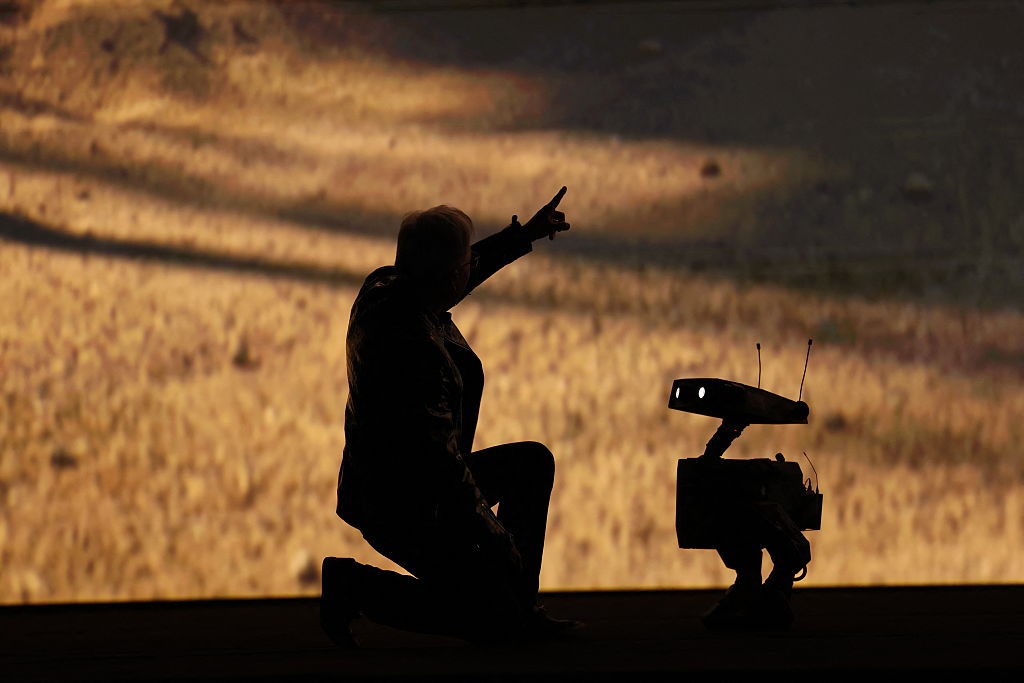
The Consumer Electronics Show (CES) 2026, held annually in the vibrant city of Las Vegas, has once again served as the premier global stage for groundbreaking technological innovation. With the exhibition halls bustling and press conferences concluding from industry giants like Nvidia, Sony, and AMD, a clear and undeniable theme has emerged: artificial intelligence. For the third consecutive year, AI has dominated company narratives, demonstrating its pervasive influence across every sector, from high-performance computing to everyday consumer gadgets. However, the event also proved that the spirit of innovation still thrives in unexpected hardware upgrades and intriguing, sometimes unconventional, product debuts.
CES: A Historical Lens on Innovation
CES boasts a rich history dating back to 1967, initially a spin-off from the Chicago Music Show. Over decades, it evolved from showcasing VCRs and camcorders to CD players, HDTVs, and eventually, the internet-connected devices that define modern life. The exhibition traditionally provided a glimpse into the future, predicting trends that would shape the coming years. In the late 2010s, smart home devices and autonomous vehicles began to take prominence. By the early 2020s, AI had already started its ascent, but CES 2026 signifies a maturation of this trend, moving beyond theoretical concepts to tangible, integrated solutions. The sheer volume of AI-centric announcements this year underscores a pivotal moment where artificial intelligence is no longer a nascent technology but a fundamental component woven into the fabric of consumer and industrial electronics. This shift reflects a broader societal movement towards intelligent automation and personalized digital experiences, driven by advancements in machine learning algorithms and computational power.
Nvidia’s AI Foundation: The Rubin Era Begins
Nvidia, a company synonymous with graphical processing units (GPUs) and increasingly with AI acceleration, delivered a characteristically impactful keynote. CEO Jensen Huang, known for his visionary presentations, celebrated the company’s significant contributions to the AI revolution while outlining an ambitious roadmap for 2026 and beyond. A notable highlight was the formal introduction of the Rubin computing architecture, slated to begin replacing the highly successful Blackwell architecture in the latter half of the year.
The Rubin architecture represents a substantial leap forward in computational capabilities, specifically designed to address the ever-growing demands of advanced AI models. It boasts significant enhancements in processing speed, memory bandwidth, and overall storage capacity, crucial for handling the immense datasets and complex algorithms that underpin modern artificial intelligence. This iterative development showcases Nvidia’s strategy of continuous innovation, ensuring its hardware remains at the cutting edge of AI development. For developers and researchers, Rubin promises to unlock new possibilities, enabling the training of larger, more sophisticated AI models and accelerating the pace of discovery in fields ranging from scientific research to industrial automation.
Beyond the data center, Nvidia reiterated its commitment to embedding AI into the physical world. The company unveiled its Alpamayo family of open-source AI models and development tools, specifically tailored for autonomous vehicles. These models are designed to empower self-driving cars with human-like reasoning and decision-making capabilities, promising a future where vehicles can navigate complex environments with unprecedented safety and efficiency. This initiative aligns with Nvidia’s broader strategic objective to establish its infrastructure as the "Android for generalist robots," aiming to provide a standardized, robust platform for AI-powered robotics across various applications. The social impact of such advancements could be profound, potentially transforming transportation logistics, enhancing road safety, and enabling new forms of mobility. However, it also raises critical discussions around regulatory frameworks, data privacy, and the ethical implications of autonomous systems.
AMD’s Push for Pervasive AI PCs
Not to be outdone, AMD, a key competitor in the semiconductor space, kicked off CES with its own powerful keynote delivered by Chair and CEO Lisa Su. Her presentation underscored AMD’s expanding influence in the AI ecosystem, featuring prominent partners such as OpenAI president Greg Brockman, AI pioneer Fei-Fei Li, and Luma AI CEO Amit Jain. These collaborations highlight AMD’s strategy to foster a robust ecosystem around its hardware, positioning itself as a crucial enabler for a diverse range of AI applications.
A central theme of AMD’s address was its commitment to democratizing AI by integrating powerful capabilities directly into personal computers. The company unveiled its Ryzen AI 400 Series processors, designed to bring advanced AI inferencing capabilities to mainstream laptops and desktops. This move signifies a broader industry trend towards "AI PCs," where tasks traditionally offloaded to cloud servers can be performed locally, offering benefits such as enhanced privacy, reduced latency, and improved energy efficiency. The market impact of AI PCs is anticipated to be significant, potentially revitalizing the personal computing market by offering users unprecedented capabilities for creative work, productivity, and entertainment, all powered by on-device AI. This local processing capability could also shift the competitive landscape, as software developers increasingly optimize their applications for these new hardware architectures.
AI’s Diverse Applications: From Industrial to Everyday
The pervasive nature of AI at CES extended far beyond the traditional computing powerhouses, demonstrating its integration into a wide array of products and industries.
- Automotive Intelligence: Ford unveiled its new AI assistant, set to debut in the company’s mobile application before a targeted in-vehicle release in 2027. Hosted on Google Cloud and leveraging off-the-shelf large language models (LLMs), this assistant aims to provide drivers with intuitive, voice-activated control and personalized experiences. While specific functionalities remain under wraps, the move underscores the automotive industry’s race to integrate intelligent conversational interfaces into vehicles, enhancing both convenience and safety.
- Industrial Automation: A significant partnership between Caterpillar and Nvidia highlighted AI’s potential in heavy industries. The "Cat AI Assistant" pilot program, demonstrated at CES, aims to bring intelligent automation to construction equipment, starting with an excavator. This system, alongside another project leveraging Nvidia’s Omniverse simulation platform for construction planning, promises to boost efficiency, enhance safety, and reduce operational costs in traditionally labor-intensive sectors. This collaboration signifies a critical step towards fully autonomous construction sites, an area with immense economic and social implications.
- Advanced Robotics: Hyundai’s press conference, focusing on its robotics division, revealed a compelling collaboration between Boston Dynamics and Google’s AI research lab. The partnership focuses on training and operating Boston Dynamics’ advanced Atlas humanoid robots, including a new iteration showcased at the event. This collaboration with Google’s DeepMind DNA suggests a concerted effort to imbue these highly agile robots with increasingly sophisticated cognitive abilities, moving closer to the vision of general-purpose humanoid robots capable of performing complex tasks in unstructured environments. The development of such advanced robotics raises both excitement and ethical questions about the future of work and human-robot interaction.
The Unconventional and the Nostalgic: CES’s Enduring Charm
Despite the dominant AI narrative, CES 2026 also delivered its usual share of intriguing, sometimes quirky, innovations that capture the public imagination. These "oddities" often reflect niche demands, experimental concepts, or a nostalgic yearning for past technologies.
- A Return to Tactile Typing: Clicks Technology introduced the Communicator, a smartphone featuring a physical keyboard reminiscent of classic BlackBerry devices. Priced at $499, this device taps into a market segment that values the tactile feedback and typing speed offered by physical keys. An accompanying $79 slide-out keyboard further extends this functionality to other devices. This product’s debut highlights the cyclical nature of technology trends and the ongoing debate between touch-centric interfaces and physical input methods. Early hands-on impressions praised the device’s ergonomic design and comfortable grip, suggesting a carefully considered return to a beloved form factor.
- Smart Family Management: The Skylight Calendar 2 stood out as a practical application of AI in the home. This family planning tool leverages AI to synchronize calendars from various sources, create to-do lists from messages or photos, and provide intelligent appointment reminders. It addresses a common household challenge – keeping multiple schedules organized – with a smart, intuitive solution. The cultural impact of such devices lies in their potential to reduce household stress and improve overall family coordination in an increasingly busy world.
- Razer’s Conceptual Innovations: Gaming peripheral giant Razer, known for its audacious and sometimes outlandish concept products at CES, continued this tradition. Project Motoko aims to deliver a wearable AI experience without requiring physical glasses, hinting at advanced spatial audio and augmented reality capabilities. Project AVA, an AI desk companion visualized as an avatar, explores new forms of human-AI interaction in personal workspaces. Razer’s history includes concept products like three-screen laptops and haptic gaming cushions, demonstrating a willingness to push technological boundaries, even if some concepts remain just that—concepts. These ventures, while perhaps not immediately commercialized, provide valuable insights into potential future directions for consumer interaction with AI.
- Lego’s Smart Play System: In a surprising first appearance at CES, Lego showcased its Smart Play System. This innovative concept incorporates interactive bricks, tiles, and Minifigures that can communicate with each other and play sounds. The debut sets, themed around Star Wars, introduce a new dimension to physical play, blending traditional building with digital interactivity without requiring a screen. This move signals Lego’s strategy to remain relevant in an increasingly digital world, offering a bridge between physical and digital experiences, and fostering educational play that integrates coding and interactive storytelling elements.
Broader Reflections and Future Outlook
The discussions held during CES breakout sessions offered additional insights into the evolving technological landscape. Palmer Luckey, known for Oculus VR, reportedly advocated for retro aesthetics, perhaps reflecting a desire for simplicity or a backlash against overly complex interfaces. The sentiment that the "learn once, work forever" era is definitively over, as expressed by executives from McKinsey and General Catalyst, highlights the critical need for continuous learning and adaptation in a rapidly changing technological environment. This underscores the profound social impact of AI, which is not only creating new jobs but also fundamentally reshaping existing ones, demanding new skill sets and a flexible approach to career development.
From the ambitious plans of chipmakers to the whimsical, yet innovative, gadgets, CES 2026 painted a comprehensive picture of a future deeply intertwined with artificial intelligence. The show demonstrated that AI is rapidly maturing, moving from theoretical discussions to practical, integrated solutions across a vast spectrum of consumer and industrial applications. While the industry grapples with the ethical implications and societal adjustments that accompany such rapid progress, the relentless pace of innovation unveiled in Las Vegas promises a transformative era defined by intelligent machines and enhanced human capabilities.