Amir Mahmud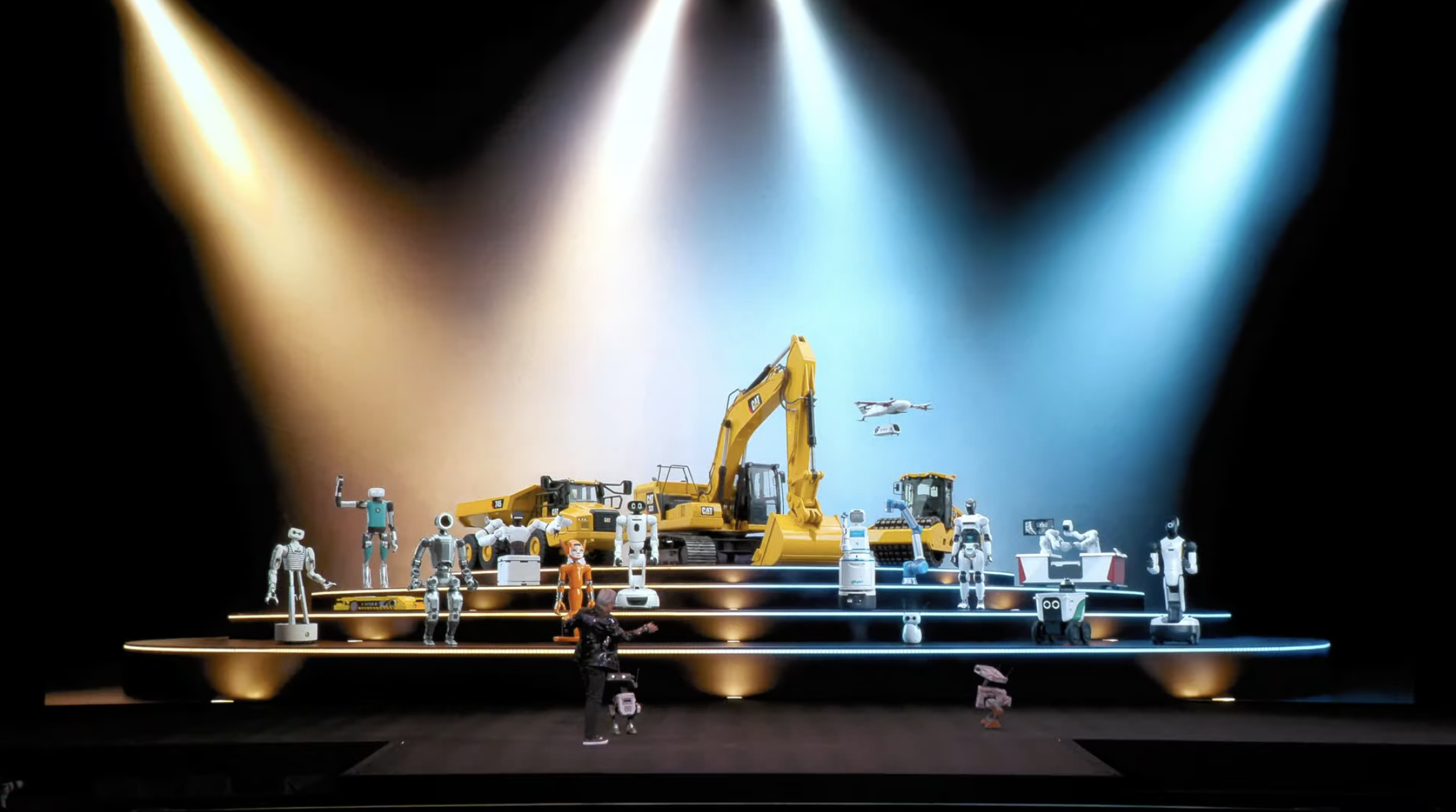
At the Consumer Electronics Show (CES) 2026, Nvidia publicly articulated its ambitious strategy to become the foundational platform for general-purpose robotics, a move reminiscent of how Android established itself as the dominant operating system for smartphones. This strategic pivot signals a profound industry shift, as artificial intelligence transcends its cloud-based origins to empower physical machines capable of learning, reasoning, and adapting within the real world. This evolution is being catalyzed by advancements in affordable sensor technology, sophisticated simulation environments, and increasingly versatile AI models designed to generalize across a multitude of tasks.
The Dawn of Physical AI: A Paradigm Shift in Robotics
The concept of "physical AI" represents a crucial inflection point, pushing artificial intelligence beyond digital realms into tangible interaction with the environment. For decades, robotics has largely been characterized by highly specialized machines programmed for narrow, repetitive tasks in controlled industrial settings. These traditional robots often lacked the adaptability to perform novel operations or navigate unpredictable environments, making them brittle and expensive to reconfigure. The vision of generalist robotics, however, is to create machines that can learn from experience, understand complex instructions, and perform a wide array of tasks in unstructured settings, much like humans do.
This transition is not merely an incremental improvement; it signifies a fundamental re-imagining of robotic capabilities. Historically, the challenges were immense: developing robust perception systems, designing dexterous manipulators, and creating intelligent control architectures that could handle the infinite variability of the real world. The confluence of cheaper, more powerful sensors (like lidar and advanced cameras), exponential increases in computational power, and breakthroughs in deep learning and large language models (LLMs) has finally made the dream of adaptable, intelligent robots a tangible reality. Nvidia’s latest announcements at CES 2026 aim to provide the integrated tools and infrastructure necessary to accelerate this transformation, positioning itself at the very heart of this emerging technological frontier.
Nvidia’s Full-Stack Ecosystem: Enabling Intelligent Action
Nvidia’s comprehensive suite of offerings, unveiled with significant fanfare, spans the entire spectrum of physical AI development, from foundational models to edge hardware and simulation tools. This integrated approach seeks to provide a unified framework where disparate components previously required complex integration.
Foundation Models for Intelligent Action
Central to Nvidia’s strategy are its new open foundation models, meticulously engineered to bestow robots with advanced capabilities in reasoning, planning, and adaptation across diverse tasks and environments. These models, departing from the constraints of narrow, task-specific bots, are now readily accessible on platforms like Hugging Face, fostering wider adoption and collaborative development.
The announced models include:
- Cosmos Transfer 2.5 and Cosmos Predict 2.5: These sophisticated "world models" are designed for synthetic data generation and robust robot policy evaluation within simulated environments. They allow developers to create vast, varied datasets and rigorously test robotic behaviors in a virtual space before deployment, significantly reducing development time and cost.
- Cosmos Reason 2: A powerful reasoning vision-language model (VLM), Cosmos Reason 2 empowers AI systems to perceive, comprehend, and intelligently act within the physical world. This model bridges the gap between visual input and semantic understanding, enabling robots to interpret their surroundings with human-like intuition.
- Isaac GR00T N1.6: Positioned as Nvidia’s next-generation vision-language-action (VLA) model, GR00T N1.6 is purpose-built for humanoid robots. It leverages Cosmos Reason as its cognitive core, unlocking sophisticated whole-body control capabilities. This allows humanoids to simultaneously execute complex movements and precisely manipulate objects, a critical step towards truly versatile human-like robotic interaction. The ability to coordinate multiple degrees of freedom across an entire robotic body, rather than just individual limbs, marks a significant leap in dexterous manipulation and agile locomotion for humanoid platforms.
Isaac Lab-Arena: The Simulation Crucible
Addressing one of the most persistent and costly challenges in robotics development, Nvidia also introduced Isaac Lab-Arena at CES. This open-source simulation framework, hosted on GitHub, serves as a cornerstone of the company’s physical AI platform, facilitating the safe, efficient, and scalable virtual testing of robotic capabilities.
The validation of increasingly complex robotic tasks – from intricate object handling to delicate cable installation – has traditionally been a slow, expensive, and often risky endeavor in physical environments. Isaac Lab-Arena mitigates these issues by consolidating essential resources, diverse task scenarios, advanced training tools, and established benchmarks such as Libero, RoboCasa, and RoboTwin. This creates a much-needed unified standard for evaluation, where the industry previously grappled with fragmentation. The history of simulation in engineering, from aerospace design to automotive safety, underscores its critical role in complex system development. For robotics, advanced physics engines combined with AI-driven learning in simulation offer an unparalleled opportunity to iterate rapidly, explore vast solution spaces, and refine robot behaviors without the wear-and-tear or safety risks associated with physical prototypes.
OSMO: The Orchestration Layer
Supporting the entire ecosystem is Nvidia OSMO, an open-source command center engineered to act as the connective infrastructure. OSMO seamlessly integrates the entire workflow, from synthetic data generation and real-world data ingestion through model training, across both desktop and cloud environments. This centralized orchestration layer is crucial for managing the immense data pipelines and computational resources required for modern AI and robotics development, ensuring efficiency and consistency throughout the development lifecycle. The ability to fluidly move between local and cloud processing for various stages of development offers unparalleled flexibility for developers.
Hardware Powering the Edge
To fuel this sophisticated ecosystem, Nvidia unveiled the Blackwell-powered Jetson T4000 graphics card, the newest addition to its Thor family of processors. This robust edge AI accelerator is positioned as a cost-effective on-device compute upgrade, delivering an impressive 1200 teraflops of AI compute performance and 64 gigabytes of memory. Crucially, it achieves this while operating efficiently within a power envelope of 40 to 70 watts.
The significance of such powerful, efficient edge hardware cannot be overstated for robotics. Edge AI, where processing occurs directly on the device rather than relying on constant cloud connectivity, is vital for applications requiring low latency, robust operation in areas with limited connectivity, and enhanced data privacy. The Blackwell architecture, known for its significant leaps in AI processing capabilities, miniaturized into a compact form factor like the Jetson T4000, provides the necessary horsepower for robots to execute complex AI models in real-time, enabling immediate perception, decision-making, and action without perceptible delay. This is particularly important for safety-critical applications and dynamic environments where milliseconds can make a difference.
Fostering an Open Developer Community
Nvidia is also strategically deepening its collaboration with Hugging Face, a leading platform for AI model sharing and development, to broaden access to robot training and experimentation. This partnership aims to democratize robotics development, making it more accessible to a wider audience without the prerequisite of expensive hardware or highly specialized knowledge.
The integration of Nvidia’s Isaac and GR00T technologies into Hugging Face’s LeRobot framework is a pivotal step. This move connects Nvidia’s existing community of 2 million robotics developers with Hugging Face’s vast network of 13 million AI builders, creating a powerful synergy for innovation. Furthermore, the developer platform’s open-source Reachy 2 humanoid robot now directly interfaces with Nvidia’s Jetson Thor chip, enabling developers to experiment with various AI models without being constrained by proprietary systems. This collaborative, open-source approach is designed to accelerate the pace of innovation, foster a vibrant ecosystem, and ensure that the future of robotics is shaped by a diverse community of creators. It mirrors the success seen in software development where open standards and collaborative platforms often lead to faster progress and broader adoption.
The "Android of Robotics" Vision: A Deeper Dive
Nvidia’s overarching goal is clear: to establish itself as the indispensable underlying hardware and software vendor for the robotics industry, much as Google’s Android became the default operating system for countless smartphone manufacturers. This ambition extends beyond merely selling chips; it encompasses creating a comprehensive, standardized ecosystem that simplifies development, fosters innovation, and accelerates deployment.
The "Android of robotics" analogy is potent because it speaks to the power of a unified platform. Before Android, the smartphone market was fragmented, with each manufacturer building its own operating system and app ecosystem. Android provided a common foundation, allowing developers to create applications that ran across many devices, fostering an explosion of innovation and consumer choice. Nvidia aims to replicate this success in robotics by offering a consistent set of tools, models, and hardware interfaces that abstract away much of the complexity, allowing robot developers to focus on application-specific challenges rather than reinventing foundational components. However, robotics presents unique challenges compared to smartphones, including extreme safety requirements, the vast diversity of robot form factors and application domains (from warehouse logistics to surgical assistance), and the complexities of real-world physical interaction. Successfully navigating these complexities while maintaining a truly generalist platform will be key to Nvidia’s long-term success.
Early Indicators of Success and Future Outlook
Early signs suggest that Nvidia’s strategy is gaining traction. Robotics is rapidly emerging as the fastest-growing category on Hugging Face, with Nvidia’s models consistently leading download charts. This indicates significant interest and adoption within the developer community. Furthermore, prominent robotics companies across various sectors are already leveraging Nvidia’s technology. Industrial powerhouses like Caterpillar, known for heavy machinery, and leading robotics firms such as Boston Dynamics, famous for its agile robots like Spot, alongside innovators like Franka Robots and NEURA Robotics, are integrating Nvidia’s solutions into their advanced platforms. This widespread adoption by industry leaders provides strong validation for Nvidia’s approach and the perceived value of its ecosystem.
The road ahead for generalist robotics is undoubtedly long and fraught with challenges, including ethical considerations, regulatory frameworks, and ensuring the absolute safety and reliability of autonomous systems in diverse human environments. However, by providing a robust, integrated, and open platform, Nvidia is not merely participating in the robotics revolution; it is actively working to define its trajectory. The company’s strategic investments in foundational AI, advanced simulation, and powerful edge hardware, coupled with its commitment to fostering an open developer community, position it as a formidable force poised to shape the future of intelligent machines and their transformative impact on industries and daily life.