Amir Mahmud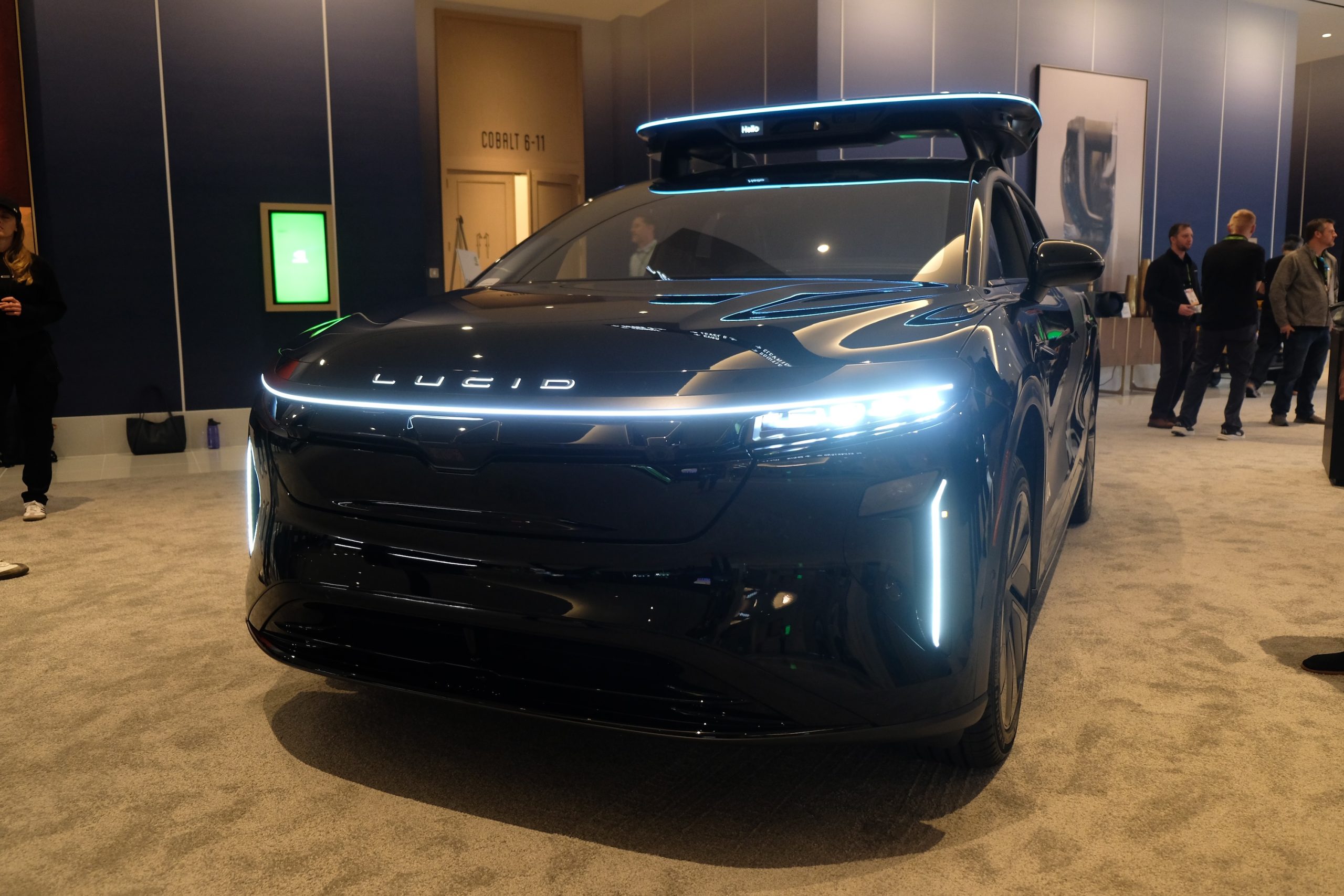
The future of personal transportation took a significant leap forward at the 2026 Consumer Electronics Show (CES) with the unveiling of a production-intent robotaxi, the result of an ambitious collaboration between ride-hailing giant Uber, luxury electric vehicle manufacturer Lucid Motors, and autonomous technology specialist Nuro. This partnership signifies a pivotal moment in the race to commercialize self-driving services, moving beyond mere concept vehicles to a tangible design poised for real-world deployment. The meticulously engineered autonomous vehicle, which TechCrunch previewed ahead of its public debut, represents a confluence of cutting-edge automotive design, advanced sensor technology, and sophisticated artificial intelligence, all aimed at reshaping urban transit.
A Strategic Alliance Forged in Autonomous Ambition
This joint venture has been a concerted effort for over half a year, underpinned by a substantial financial commitment from Uber. The ride-hailing company invested $300 million into Lucid Motors and pledged to acquire 20,000 of the automaker’s electric vehicles, signaling a profound belief in Lucid’s platform as the foundation for its autonomous aspirations. The revelation at CES confirmed that the collaborative robotaxi is not merely a theoretical project; it is already undergoing rigorous testing on public thoroughfares, with a commercial service launch slated for the San Francisco Bay Area later in the year. This aggressive timeline underscores the partners’ confidence and the rapid pace of development in the autonomous vehicle sector.
The journey toward widespread autonomous vehicles has been long and complex, marked by both exhilarating breakthroughs and significant setbacks. Early pioneers, often funded by government grants and academic research, laid the theoretical groundwork in the mid-20th century. The Defense Advanced Research Projects Agency (DARPA) Grand Challenges in the early 2000s catalyzed significant innovation, pushing the boundaries of what was thought possible for self-driving cars. Companies like Google (later Waymo), General Motors (Cruise), and Tesla began investing heavily in the technology, envisioning a future where vehicles navigate autonomously, promising enhanced safety, efficiency, and accessibility.
Uber’s own path in autonomous driving has been particularly tumultuous. Once a leader in developing its proprietary self-driving technology through its Advanced Technologies Group (ATG) unit, the company faced considerable challenges, including a fatal accident involving one of its test vehicles in 2018. This incident, along with the immense capital requirements and technical hurdles of developing full-stack autonomy in-house, prompted a strategic shift. Uber ultimately sold its ATG unit to Aurora Innovation in 2020, opting instead for a partnership-centric approach to integrate autonomous vehicles into its network. This pivot allows Uber to leverage the expertise of specialized autonomous technology developers and established automakers, thereby accelerating its deployment timeline while mitigating the substantial research and development costs. The alliance with Lucid and Nuro is a direct outcome of this revised strategy, aligning Uber with partners who bring distinct strengths to the table: Lucid’s luxury EV platform and manufacturing prowess, and Nuro’s deep understanding of autonomous systems, often demonstrated in logistical applications.
Engineering a Premium Autonomous Experience
At its core, the new robotaxi is built upon the robust architecture of the Lucid Gravity SUV, a vehicle renowned for its premium design, spacious interior, and advanced electric powertrain. This choice of a luxury SUV as the base platform speaks volumes about Uber’s intent to position its autonomous service as a high-end, comfortable, and sophisticated offering. The vehicle seamlessly integrates a comprehensive suite of high-resolution cameras, solid-state lidar sensors, and advanced radars, all strategically embedded within the vehicle’s body and a distinctive roof-mounted "halo" structure. This holistic sensor array provides a 360-degree view of the environment, crucial for robust perception and navigation in complex urban settings.
The computational backbone powering this sophisticated autonomy package is Nvidia’s Drive AGX Thor platform, a purpose-built system designed to handle the massive data processing requirements of autonomous driving. The "halo" feature on the roof serves multiple functions beyond housing sensors. It incorporates integrated LED lights, a design element that will assist riders in easily identifying their assigned vehicle, mirroring similar intuitive features found in other autonomous fleets like Waymo’s Jaguar I-Pace SUVs.
A critical competitive advantage for this collaborative effort lies in its manufacturing process. Unlike some existing autonomous vehicle operations that retrofit self-driving hardware onto conventionally manufactured vehicles, the Uber-Lucid-Nuro robotaxi integrates all the necessary autonomous technology directly onto the Gravity’s chassis during its assembly at Lucid Motors’ state-of-the-art factory in Casa Grande, Arizona. This "built-in" approach is expected to yield significant efficiencies in both time and cost. By comparison, competitors like Waymo have historically had to disassemble conventional vehicles, install their autonomous stacks, and then reassemble them, a process that adds complexity and expense. Lucid’s integrated production method promises a more streamlined, scalable, and potentially more reliable manufacturing pathway for autonomous fleets.
The Human-Machine Interface: A Focus on Rider Experience
The CES unveiling also offered a more refined glimpse into how passengers will interact with the Uber-Lucid-Nuro robotaxi. The test versions showcased over the preceding seven months hinted at the technological capabilities, but the latest iteration emphasizes the user experience. A small screen integrated into the exterior halo is designed to greet riders, providing clear identification and confirmation. Inside the cabin, a sophisticated rider interface is central to the experience.
For anyone familiar with existing autonomous ride services, the intuitive nature of this UI will feel familiar. The rear passenger screen presents an isometric graphical view, displaying the robotaxi’s real-time movement through city streets, complete with representations of nearby vehicles and pedestrians. This visual feedback is crucial for building passenger trust and understanding of the vehicle’s actions. While an interactive version of the Uber-developed software was not yet available for hands-on testing at the event, its capabilities were detailed. It will provide essential ride information such as estimated drop-off times and remaining journey duration, alongside controls for in-cabin climate and music. Critically, dedicated buttons for immediate rider support and an option to instruct the robotaxi to pull over underscore a commitment to passenger safety and control.
The front passenger area features a larger central touchscreen display, mirroring much of the information available to rear passengers. In the demonstration vehicle displayed at the Fontainebleau hotel, many of these interactive elements were also presented on the Lucid Gravity’s sweeping 34-inch curved OLED display, which stretches across the dashboard behind the steering wheel. This multi-display approach ensures information is accessible and engaging, enhancing the overall "premium" feel of the service.
Market Dynamics and Societal Implications
The decision by Uber to base its forthcoming "premium" robotaxi service on the Lucid Gravity is a strategically sound one. The Gravity, particularly in its two-row configuration showcased at the hotel, offers immense interior spaciousness, with a three-row version also planned. This focus on comfort and luxury sets the service apart, potentially appealing to a discerning clientele and justifying a premium fare structure.
However, Lucid’s journey with the Gravity SUV has not been without its challenges. The vehicle’s initial full year of production was marked by struggles with software issues, which prompted interim CEO Marc Winterhoff to issue an apology to owners in December for the "frustrations" experienced. The smooth operation of the robotaxi’s complex autonomous stack will be paramount, and overcoming any lingering software vulnerabilities will be critical to its success. Encouragingly, Lucid announced simultaneously with the robotaxi reveal that it had doubled its 2024 EV production figures and achieved new sales records, signaling a potential recovery and improved manufacturing stability. The reliability of the robotaxi version’s software will undoubtedly be a key area of public and industry scrutiny.
The introduction of such advanced robotaxis carries profound implications for the ride-hailing market and broader society. The potential for significantly reduced operational costs, 24/7 availability, and enhanced safety compared to human-driven vehicles could revolutionize urban mobility. It intensifies competition with established players like Waymo (Alphabet’s self-driving unit), Cruise (General Motors’ AV subsidiary), and Zoox (Amazon’s autonomous division), all vying for dominance in this nascent but rapidly expanding market.
Beyond competition, the widespread adoption of robotaxis could reshape urban planning, potentially reducing traffic congestion, optimizing parking needs, and complementing public transportation networks. Economically, while it may lead to a shift in employment for human drivers, it simultaneously fosters the creation of new jobs in areas such as autonomous software development, vehicle maintenance, and fleet management. Socially, the promise of increased accessibility for those unable to drive and a potential reduction in accident rates due to human error represents a transformative societal benefit. However, regulatory hurdles, public perception regarding safety, and the patchwork of state-level autonomous vehicle laws remain significant challenges that will require careful navigation.
The Road Ahead: Validation and Deployment
Uber, Lucid, and Nuro have indicated that once the final validation processes for the robotaxi are completed later this year, true production versions will commence rolling off Lucid’s assembly lines in Arizona. While a concrete timeline for this mass production was not specified, the ongoing public road testing in the San Francisco Bay Area suggests that the partners are aggressively working towards their commercial launch target.
The strategic rationale behind this partnership is clear: Uber seeks to regain a leadership position in autonomous ride-hailing without the prohibitive costs of in-house development. Lucid gains a significant commercial partner, diversifying its revenue streams beyond direct consumer sales and showcasing its advanced EV platform as a versatile foundation for future mobility solutions. Nuro, known for its autonomous delivery vehicles, expands its expertise into the passenger transport sector, validating its core autonomous technology in a new, high-stakes environment.
The success of this collaboration hinges on several factors: the flawless performance of the integrated autonomous stack, the ability to scale production efficiently, and perhaps most importantly, building public trust in a new paradigm of driverless transportation. As these sophisticated vehicles begin to navigate urban landscapes, they will not only transport passengers but also carry the hopes of an industry striving to redefine the very essence of mobility. The road to widespread autonomous adoption is still being paved, but the alliance between Uber, Lucid, and Nuro represents a compelling vision for its future.