Amir Mahmud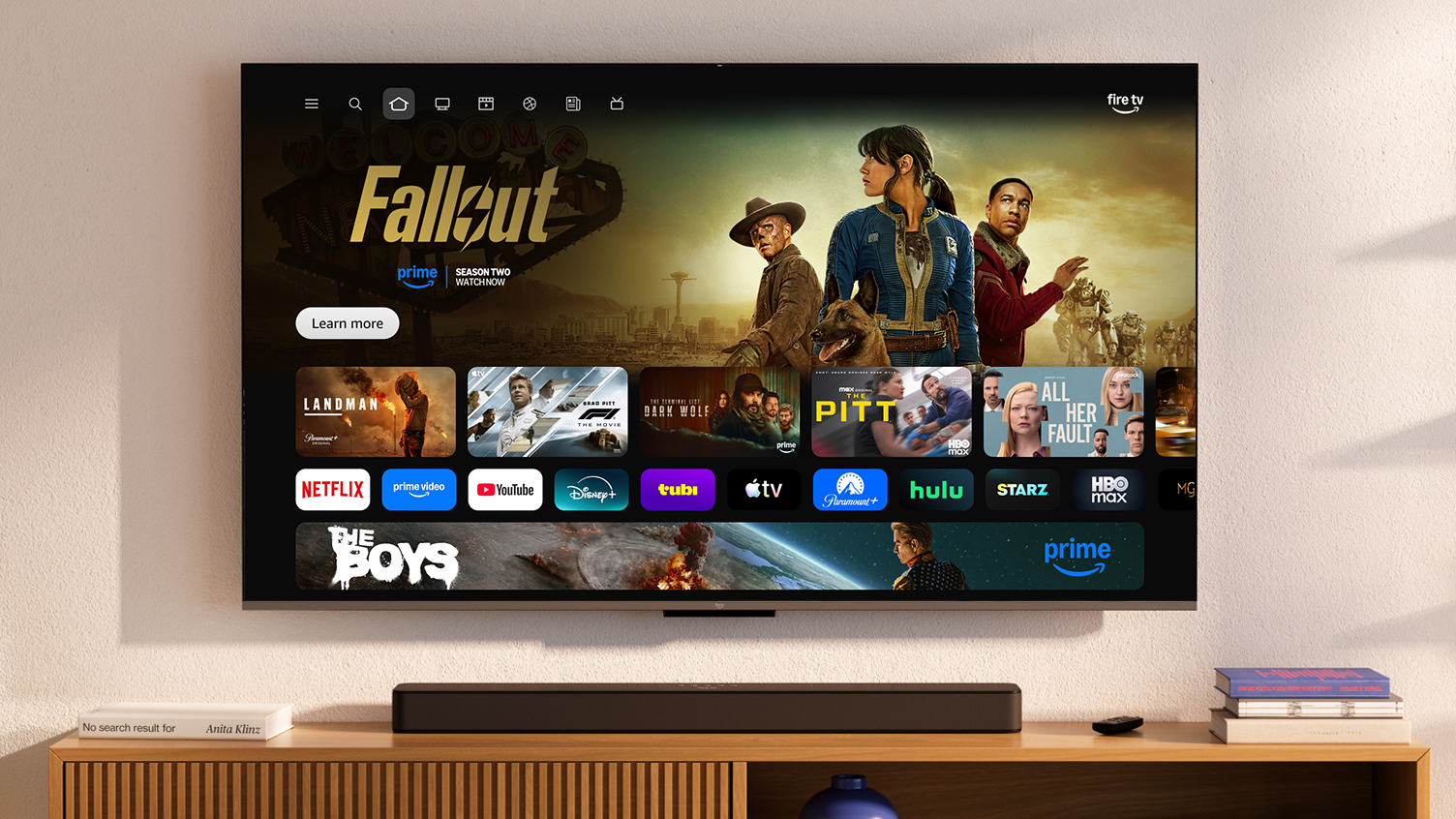
At the Consumer Electronics Show (CES), a global stage for technological innovation, Amazon unveiled a significant overhaul of its Fire TV platform alongside the introduction of its own premium television line, branded "Ember Artline." These developments signal a strategic double-down on the living room experience, aiming to simplify content discovery in an increasingly fragmented streaming landscape while also embedding smart displays more seamlessly into modern home aesthetics. The sweeping updates to the Fire TV operating system represent the most substantial user experience transformation in years, complemented by a revitalized mobile application and a new series of art-inspired televisions featuring customizable frames.
The Evolving Landscape of Digital Entertainment
The current era of home entertainment is defined by an explosion of streaming options, a stark contrast to the days of limited cable channels. Consumers today navigate a complex web of subscription services, transactional video-on-demand, live television streams, short-form content platforms, podcasts, music services, and even interactive games, all vying for attention. This proliferation, while offering unprecedented choice, has paradoxically led to what many users describe as "streaming fatigue" – an overwhelming challenge to simply find something compelling to watch.
Amazon, a pioneering force in digital retail and cloud services, recognized this shifting paradigm early on. Its Fire TV ecosystem, first introduced in 2014 with a dedicated set-top box, rapidly expanded to include compact streaming sticks and eventually integrated directly into televisions from various manufacturing partners. This strategy allowed Amazon to bring its content delivery platform and Alexa voice assistant into millions of homes, establishing a significant footprint in the competitive smart TV market. However, as the volume of available content swelled, the Fire TV interface, much like many of its competitors, began to show signs of strain, with a user experience that some found cluttered and cumbersome.
Aidan Marcuss, Vice President of Fire TV, acknowledged this challenge, noting in a recent interview that the previous interface had become "a lot of stuff and a lot of rows," leading to excessive time spent searching rather than watching. This insight underscores a critical market need: intelligent design that prioritizes user convenience and intuitive navigation above all else.
A Revitalized User Experience: Fire TV’s Interface Overhaul
The core of Amazon’s latest announcement lies in a comprehensive redesign of the Fire TV user interface. The aim is to make content the undeniable focal point, stripping away visual noise to present a more streamlined and aesthetically pleasing environment. Key design principles guiding this transformation include the adoption of softer rounded corners, varied gradient effects, a unified typography scheme, and increased spacing between content elements to foster a sense of openness and reduce visual clutter.
A notable enhancement addresses a long-standing user complaint regarding application access. Previously, users were limited to pinning only six applications to their home screen, a restriction that felt archaic given the multitude of streaming services available. The updated interface now features smaller app icons arranged in an expanded horizontal row, providing access to up to 20 customizable application slots that users can easily scroll through. This change significantly improves the immediacy of launching preferred services, enhancing overall user satisfaction.
Navigation has also undergone a strategic simplification. The top of the screen now features clearly defined categories such as Movies, TV, Live TV, Sports, and News, making it easier for users to jump directly to their desired content genre. A prominent search button is positioned conveniently to the left of the Home tab, ensuring that content discovery is never more than a click away.
Beyond mere aesthetics, the new tabs are engineered to centralize content access. They intelligently aggregate content you are actively watching, highlight available programming across your subscribed services, and offer personalized recommendations under sections like "For You." Furthermore, the interface promotes content discovery through curated lists of free movies, trending titles, and other subscription-based content. While these discovery pages offer a deep well of options, they are designed with finite scrolling to prevent endless, aimless browsing.
The Live TV tab has been refined to organize live content from integrated streaming services, and for those who still utilize them, broadcast or cable television feeds. Similarly, the dedicated Sports section provides immediate access to ongoing live games and a schedule of upcoming sporting events. For less frequently accessed features, a three-line "hamburger" menu icon discreetly houses options like Games, Art & Photos, the Appstore, Music Video & Audio, a universal watchlist dubbed "My Stuff," and various Settings.
In a move to enhance usability and reduce friction, Amazon has introduced a quick settings panel, accessible by a long-press of the Home button. This innovation allows users to swiftly adjust display and audio settings, set a sleep timer, manage accessibility features, or interact with smart home devices. For instance, users can now effortlessly tweak TV brightness, boost dialogue clarity, or even display a feed from their Ring camera directly on screen without interrupting their viewing experience. Underpinning these interface enhancements is a complete rewrite of the underlying code, which Amazon claims delivers a 20% to 30% speed improvement for common functions on its most popular devices. This performance boost is critical in a competitive market where responsiveness is key to a positive user experience.
Intelligent Interaction: The Rise of Alexa+ and AI-Powered Discovery
Integral to the refreshed Fire TV experience is the deeper integration of Alexa+, Amazon’s advanced artificial intelligence assistant. Moving beyond simple voice commands, Alexa+ offers a more conversational and context-aware interaction model. Users can engage in natural language queries, refine their searches in real-time, ask follow-up questions, and leverage visual context from the screen. For example, selecting a movie tile on screen could prompt a voice command like, "Tell me more about that one," or a more nuanced request such as, "Find me more movies that have the same look." This intelligent assistant can also aid in finding personal photos or displaying curated art collections.
The introduction of Alexa+ as an add-on subscription, eventually to be included with a Prime membership after an early access phase, highlights Amazon’s commitment to infusing advanced AI throughout its ecosystem. This strategic move aligns with a broader industry trend of conversational AI becoming a central interface for interacting with technology, promising to make content discovery less of a chore and more of an intuitive conversation.
Complementing the on-screen experience, the Fire TV mobile application has also received a significant update. While retaining its classic remote control functionality, the app now incorporates new content discovery features. This acknowledges the modern consumer habit of browsing for entertainment on a smartphone or tablet, offering an alternative or supplementary method for families and groups to collaboratively explore viewing options without solely relying on a single remote controller.
The rollout of these updates will commence in February for specific Fire TV devices in the U.S., including the Fire TV Stick 4K Plus, Fire TV Stick 4K Max (2nd Gen), and Fire TV Omni Mini-LED Series. A broader expansion to more countries and a wider range of devices, such as the Fire TV Cube (3rd Gen), Fire TV 2-Series, Fire TV 4-Series, Fire TV Omni QLED Series, and televisions from partner brands like Hisense, Panasonic, and TCL, is slated for later in the spring. Notably, the new interface will be pre-installed on the freshly launched Ember Artline TVs.
Beyond Entertainment: The Ember Artline Televisions
Perhaps the most visually striking announcement from Amazon at CES was the debut of its "Ember Artline" televisions. These new premium displays mark Amazon’s direct entry into the design-focused TV market, challenging the notion that a television must be a dominant black rectangle when not in use. Available in 55-inch and 65-inch configurations, with starting prices around $899, the Ember Artline TVs aim to blend advanced technology with sophisticated home decor.
Technically, the Ember Artline series boasts 4K QLED screens with an impressive 800 nits of brightness, ensuring vibrant colors and deep contrast. The displays are remarkably thin, measuring just one-and-a-half inches, and feature a matte screen finish designed to minimize glare and reflections, enhancing their aesthetic appeal as a static art piece. They also support modern visual and audio standards, including Dolby Vision, HDR10+, and Wi-Fi 6 connectivity.
The paramount selling point, however, is the array of 10 distinct frame options available. These frames, offered in various colors, textures, and geometries – including Walnut, Ash, Teak, Black Oak, Matte White, Midnight Blue, Fig, Pale Gold, Graphite, and Silver – allow customers to customize their television to match their room’s interior design. This personalization is central to the Ember Artline’s "Ambient features," which enable the display of high-quality art when the television is inactive, effectively transforming it into a dynamic piece of wall art.
This concept is not entirely novel, with Samsung’s "The Frame" televisions having popularized the idea of a TV that doubles as an art display. Amazon’s entry into this niche suggests a growing consumer demand for technology that integrates more harmoniously into living spaces rather than standing out as a purely functional gadget. Fire TV’s integration with Amazon Photos allows users to display their own cherished memories, using Alexa+ commands like, "Alexa, create a slideshow of our family trip to Colorado," or "Alexa, show photos from our wedding." Additionally, the Artline TVs come pre-loaded with access to over 2,000 pieces of free digital art, providing an instant gallery for any home.
Market Implications and Future Outlook
Amazon’s dual announcements at CES reflect a clear strategic imperative: to deepen its entanglement with the consumer’s digital life, particularly within the central hub of the living room. By overhauling the Fire TV interface, Amazon addresses a critical pain point in the streaming era, aiming to make its platform the most intuitive and enjoyable gateway to digital entertainment. This improved user experience is vital for retaining existing Fire TV users and attracting new ones in a fiercely competitive market dominated by rivals like Roku, Google TV, and Apple TV.
The introduction of the Ember Artline televisions represents Amazon’s ambition to move beyond being a mere platform provider or a manufacturer of affordable streaming devices. It signifies a direct challenge to established television brands, particularly in the premium, design-conscious segment. This move allows Amazon greater control over the end-to-end user experience, from the hardware design to the software interface and content delivery. It also creates new opportunities for advertising revenue and further entrenches the Prime ecosystem by offering exclusive benefits like bundled Alexa+ access.
From a broader perspective, Amazon’s latest innovations align with the emerging trend of "ambient computing," where technology is designed to be subtly present and contextually aware, blending into the environment rather than demanding constant interaction. The Ember Artline TVs exemplify this by transitioning from an entertainment device to a decorative element, while the advanced Alexa+ capabilities aim to make interactions with the TV more natural and less intrusive.
As these updates and new products roll out, the market will keenly observe their reception. The success of the Fire TV redesign will hinge on its ability to truly simplify content discovery and enhance user satisfaction. For the Ember Artline TVs, the challenge will be to differentiate themselves sufficiently in a premium market segment, offering compelling aesthetics and smart home integration that justifies their price point against well-established competitors. Ultimately, these moves underscore Amazon’s relentless pursuit of dominance in the connected home, leveraging its vast ecosystem and technological prowess to shape the future of entertainment and living space integration.