Amir Mahmud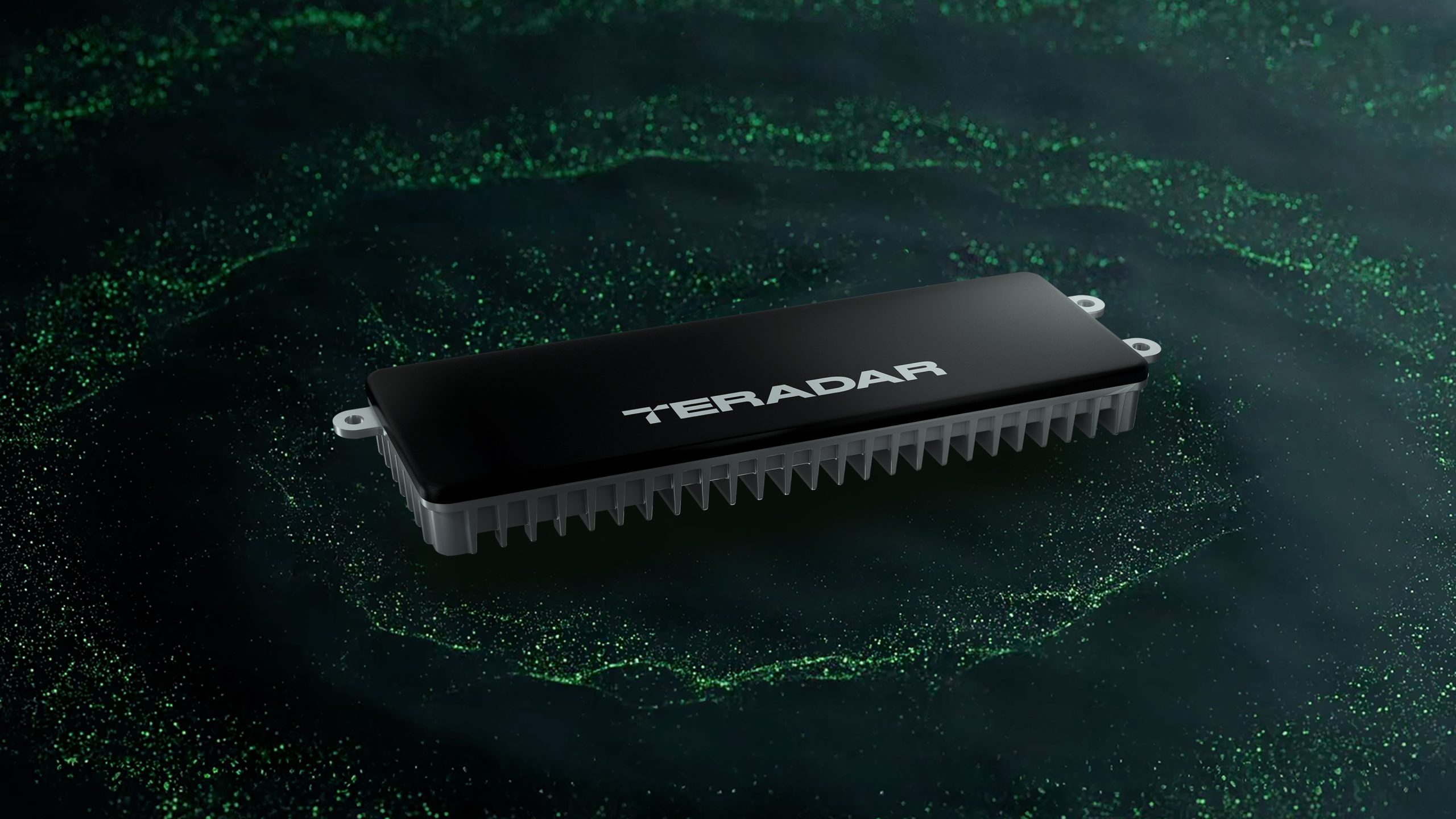
Boston-based Teradar, a technology firm that recently emerged from its stealth phase with a substantial $150 million funding round, is set to make a significant impact at the 2026 Consumer Electronics Show. The company is introducing its inaugural flagship terahertz sensor, dubbed Summit, which it positions as a groundbreaking, long-range, high-resolution device engineered for unparalleled performance across all weather conditions. This innovation aims to address a critical void in current automotive sensor technology, particularly concerning the inherent limitations of conventional radar and lidar systems. The introduction of Summit comes at a pivotal moment, as the automotive industry grapples with the complexities and challenges of achieving truly autonomous driving capabilities.
The Quest for Unfailing Automotive Vision
The evolution of automotive sensing has been a protracted journey, beginning with rudimentary parking sensors and evolving into sophisticated Advanced Driver-Assistance Systems (ADAS) that underpin semi-autonomous functionalities today. For decades, automakers have relied on a combination of sensor modalities to perceive the environment around a vehicle. Cameras provide high-resolution visual data, essential for lane keeping and traffic sign recognition, but are severely hampered by poor lighting, fog, heavy rain, or snow. Radar, which operates using radio waves, excels at detecting object distance and speed regardless of weather, yet it often lacks the fine resolution needed to precisely classify objects or distinguish between closely spaced items. Lidar, employing pulsed laser light, offers highly accurate 3D mapping of the environment, crucial for navigating complex scenarios, but its performance degrades significantly in adverse weather conditions like heavy precipitation or fog, where laser beams can be scattered or absorbed.
The ambition for fully autonomous vehicles (Level 4 and Level 5) necessitates a perception system that is not only highly accurate but also unequivocally reliable in every conceivable driving scenario, a capability often referred to as "all-weather autonomy." This elusive goal has driven intense research and development into new sensing technologies and advanced sensor fusion techniques. The inability of any single sensor type to provide comprehensive, uninterrupted environmental awareness under all conditions has been a major impediment to widespread autonomous vehicle deployment. The industry has been actively seeking a solution that can combine the best attributes of existing sensors while mitigating their individual weaknesses.
The Terahertz Advantage: Bridging Sensor Gaps
Teradar’s novel approach centers on harnessing the terahertz band of the electromagnetic spectrum, a frequency range situated between microwaves and infrared light. This segment of the spectrum has historically been underutilized for automotive applications but possesses unique properties that make it highly attractive for advanced sensing. Terahertz waves can penetrate non-metallic materials, including fog, dust, and light precipitation, far more effectively than visible light or infrared, offering a clearer "vision" through adverse conditions that blind cameras and impair lidar. Simultaneously, terahertz waves offer higher resolution than traditional radar, allowing for more detailed object detection and classification.
A key differentiator for Teradar’s Summit sensor is its solid-state design. Unlike many early lidar systems that incorporated moving parts, which are susceptible to wear and tear, vibration, and environmental contamination, a solid-state sensor has no mechanical components. This design choice inherently promises greater durability, reliability, and potentially lower manufacturing costs once scaled. By combining the strengths of both lidar (high resolution and 3D imaging potential) and radar (all-weather penetration) within a single, robust, solid-state unit operating in the terahertz band, Teradar aims to deliver a sensor that offers unprecedented performance. The company asserts that Summit is designed to deliver both long-range detection and high-resolution imaging, critical for enabling advanced autonomous features, from partial assistance to full self-driving capabilities.
The promise of the terahertz band extends beyond mere detection. Its ability to penetrate materials also opens possibilities for identifying material composition or even detecting concealed objects, which could have implications for security and cargo screening in other applications. For the automotive sector, this means a potential for enhanced safety by detecting road hazards, pedestrians, and other vehicles with greater certainty, irrespective of environmental challenges.
A Shifting Automotive Sensor Landscape
Teradar’s market entry occurs at a particularly turbulent and transformative period for automotive sensor suppliers. The autonomous vehicle industry, once characterized by boundless optimism and massive investment, has recently faced a sobering reality check. Many startups that promised revolutionary sensor technologies have struggled with the immense technical hurdles, regulatory complexities, and the sheer cost of commercialization.
A prominent example of this volatility is Luminar Technologies, a leading U.S. lidar company, which filed for bankruptcy protection in December. This development followed the termination of significant contracts with major automakers like Volvo and Mercedes-Benz, indicating a shift in strategic priorities by these manufacturers, who reportedly scaled back their reliance on lidar technology for various reasons, including cost and integration challenges. Luminar’s struggles were exacerbated by intense competition, particularly from China, where lidar adoption in the automotive market has surged. Chinese lidar manufacturers, such as Hesai, have achieved impressive production volumes, with Hesai announcing the manufacturing of over 1 million lidar sensors in 2025 alone, underscoring the rapid scaling and cost efficiencies achieved by players in that region.
This competitive pressure and the evolving technological landscape have prompted other U.S. sensor companies to diversify their portfolios. Ouster, for instance, which merged with rival Velodyne after a wave of consolidation in the lidar sector, has broadened its focus beyond automotive applications to explore markets like robotics, industrial automation, and smart infrastructure. This diversification strategy reflects a recognition that while automotive remains a significant opportunity, relying solely on it can be precarious given the long development cycles, stringent validation requirements, and fluctuating demand.
Despite these setbacks, the appetite for advanced sensor technology in the auto industry has not vanished entirely. Rivian’s recent announcement in December to integrate a roof-mounted lidar sensor (from an undisclosed supplier) into its forthcoming R2 SUV signals that some automakers continue to see value in sophisticated perception systems for enhancing vehicle autonomy, especially if the technology can be delivered at an accessible price point. This indicates that the market is not rejecting advanced sensors wholesale, but rather demanding more robust, reliable, and cost-effective solutions.
Challenges and Opportunities in Autonomous Driving
The path to widespread adoption for Teradar’s Summit sensor, while promising, will undoubtedly present its own set of challenges. Securing contracts with major automakers is paramount, and Teradar has indicated it is already engaged in development with five top automakers from the U.S. and Europe, alongside three Tier 1 suppliers. These early engagements are crucial, as they provide opportunities for real-world testing, integration feedback, and validation of the technology’s performance and reliability. If these partnerships solidify, Teradar anticipates shipping its sensors by 2028, paving the way for partial or full autonomy features in consumer vehicles.
The high bar for automotive-grade reliability, safety, and cost-effectiveness means that any new technology must undergo rigorous testing and meet stringent industry standards. Automakers are inherently cautious, especially after past experiences with sensor technologies that failed to live up to initial expectations or proved too expensive for mass-market deployment. The success of terahertz technology will hinge on its ability to consistently outperform existing solutions, not just in laboratory settings but also across diverse geographical locations and environmental conditions.
From a societal perspective, the widespread integration of more reliable, all-weather sensing could significantly enhance road safety, reducing accidents attributed to human error or poor visibility. This could lead to fewer fatalities and injuries, lower insurance costs, and more efficient traffic flow. However, public trust in autonomous technology remains a critical factor, and consistent, safe operation facilitated by advanced sensors like Summit would be instrumental in building that confidence.
Beyond Automotive: Defense and Diversification
Interestingly, Teradar’s strategic vision extends beyond the automotive sector, a move mirrored by other sensor companies seeking to de-risk their business models. The $150 million Series B funding round included investments from Lockheed Martin’s venture arm and VXI Capital, a new defense-focused fund led by the former CTO of the U.S. military’s Defense Innovation Unit. This strong defense industry backing suggests a recognition of terahertz technology’s "dual-use" potential – applications not only in commercial markets like automotive but also in defense, security, and aerospace.
Terahertz technology could find applications in various military contexts, such as advanced surveillance, target acquisition, drone navigation in challenging environments, and even non-destructive testing of materials. This diversification provides Teradar with multiple revenue streams and reduces its sole reliance on the notoriously demanding and slow-moving automotive development cycles. It also allows the company to leverage potential synergies between defense and commercial research, accelerating innovation across both domains.
Teradar CEO Matt Carey expressed confidence in his company’s ability to meet the industry’s evolving demands. In a November interview, Carey articulated a clear ambition: "Our main job is to make sure our sensor gets on all automobiles, and whatever the best way to do that is, that’s what we’re going to pursue." This statement underscores a flexible and market-driven approach, suggesting Teradar is prepared to adapt its strategy to ensure its terahertz sensor becomes a ubiquitous component in the next generation of intelligent vehicles.
The Road Ahead for Teradar
As the automotive industry continues its relentless pursuit of full autonomy, the role of advanced perception systems will only grow in importance. Teradar’s Summit sensor, with its promise of all-weather, high-resolution, solid-state terahertz imaging, represents a bold leap forward. It seeks to resolve fundamental challenges that have long plagued autonomous vehicle development, offering a potential pathway to safer, more reliable self-driving cars.
The success of this technology will ultimately depend on its ability to move beyond theoretical advantages and deliver consistent, cost-effective performance at scale. The company’s early engagement with leading automakers and Tier 1 suppliers, coupled with its strategic diversification into defense applications, positions it uniquely in a highly competitive market. As the 2026 Consumer Electronics Show spotlights this innovation, the industry will be watching closely to see if Teradar’s terahertz vision can indeed illuminate the path to a truly autonomous future.