Amir Mahmud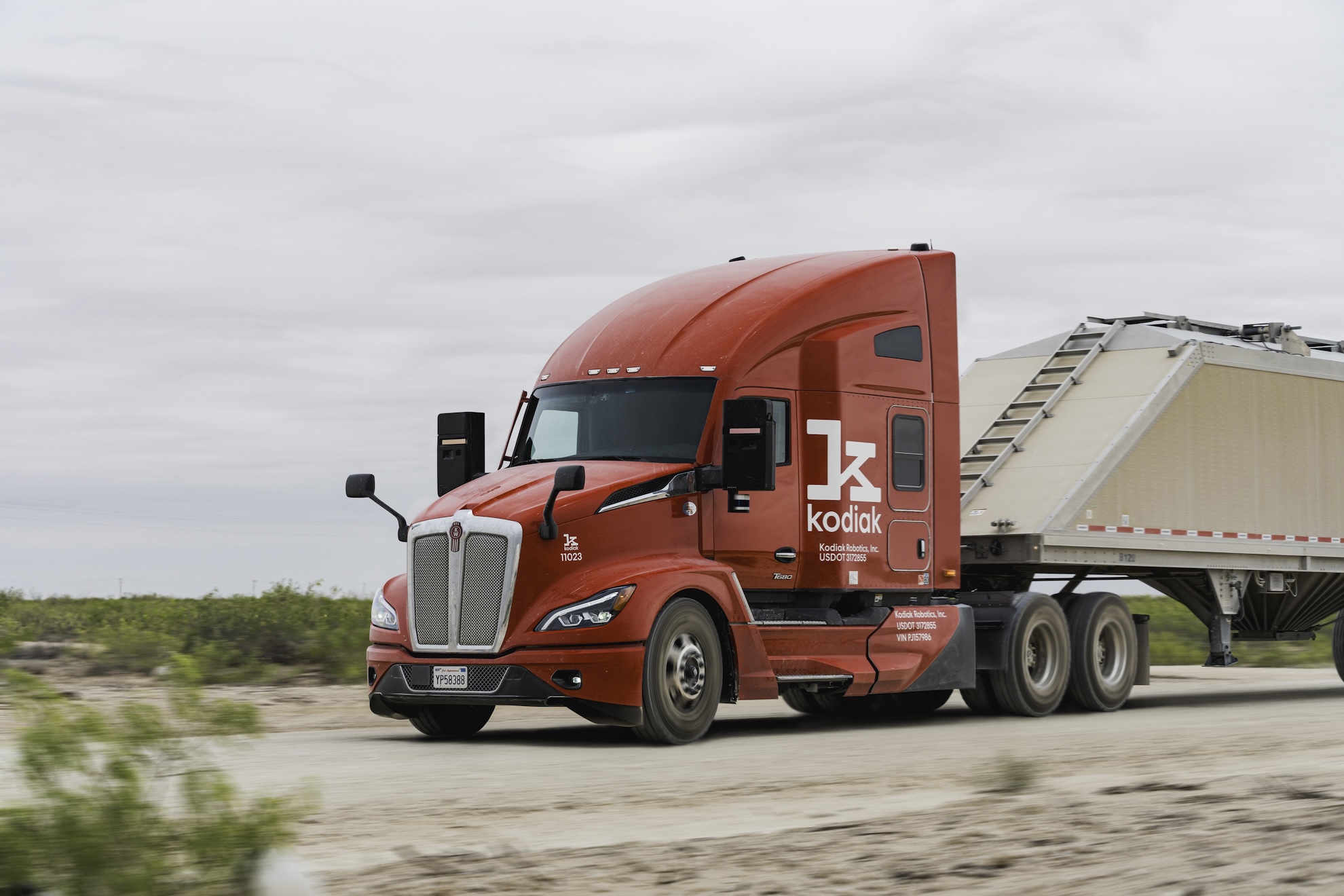
A significant alliance poised to reshape the commercial transportation sector was announced recently, as Kodiak AI, a prominent developer of self-driving truck technology, revealed its collaboration with Bosch, a global titan in automotive components and engineering. This strategic partnership, unveiled at the 2026 Consumer Electronics Show (CES) in Las Vegas, aims to create a comprehensive hardware and software ecosystem capable of endowing conventional heavy-duty trucks with advanced autonomous driving capabilities. The initiative marks a pivotal step toward accelerating the deployment of Kodiak’s innovative self-driving technology across a broader spectrum of commercial vehicles, potentially expediting the industry’s transition to autonomous logistics.
The Strategic Alliance: Unlocking Scalability
At the heart of this collaboration lies a shared vision to standardize and democratize autonomous trucking. Bosch will leverage its extensive expertise in automotive engineering to supply Kodiak with a suite of production-grade hardware components crucial for autonomous operation. This includes an array of advanced sensors, such as sophisticated radar, lidar, and camera systems, alongside critical vehicle actuation components like high-precision steering technologies and robust braking systems. The combined objective is to develop a modular, adaptable platform that can transform semi-trucks from any manufacturer into driverless units.
This modularity represents a key differentiator, offering flexibility for integration either directly within the vehicle production line or through a third-party upfitter post-manufacturing. Don Burnette, founder and CEO of Kodiak, articulated the strategic imperative behind this collaboration, stating his belief that working with Bosch will enable the company to scale its autonomous driving hardware with the necessary modularity, serviceability, and system-level integration essential for commercial viability. This approach caters to both new vehicle manufacturing and the retrofitting of existing fleets, broadening the potential market reach considerably.
Paul Thomas, President of Bosch in North America and head of the Bosch Mobility Americas division, echoed this sentiment, emphasizing the growth potential within the autonomous sector. He highlighted Bosch’s role in providing foundational, production-ready hardware, thereby empowering the next generation of autonomous trucking alongside Kodiak. Thomas underscored the valuable insights gained from Kodiak’s existing driverless operations, which will further refine Bosch’s offerings for the evolving autonomous mobility ecosystem. The partnership signals a mutual understanding of the complexities and opportunities presented by the burgeoning field of autonomous commercial transport.
Kodiak’s Journey: Pioneering Driverless Deliveries
Kodiak AI has consistently positioned itself at the forefront of autonomous trucking, dedicating its efforts to developing self-driving solutions for diverse applications, including long-haul highway operations, industrial sites, and defense logistics. The company has already engineered a sophisticated self-driving system, distinguished by its inherent redundancy across critical functions such as braking, steering, sensing, and computational processing. This multi-layered redundancy is a cornerstone of safety, designed to ensure continuous operation even in the event of component failure.
A significant milestone in Kodiak’s operational history occurred in January 2025, when its self-driving trucks commenced making driverless deliveries for Atlas Energy Solutions. These pioneering operations took place within the challenging and oil-rich Permian Basin, spanning parts of West Texas and eastern New Mexico. This initial deployment demonstrated the practical viability and commercial readiness of Kodiak’s technology in real-world, demanding environments. Following this successful launch, Kodiak has delivered at least eight self-driving trucks to Atlas Energy, forming part of an ambitious initial order for 100 units. To facilitate these deliveries, Kodiak has collaborated with Roush Industries, which served as the upfitter for these specialized driverless vehicles.
The company’s trajectory also includes a significant financial development: going public in September 2025 through a merger with the special-purpose acquisition company (SPAC) Ares Acquisition Corporation II. This move provided Kodiak with substantial capital to further its research, development, and expansion initiatives, underscoring its commitment to bringing its advanced technology to a broader market. The "Kodiak Driver" system, built upon a foundation of artificial intelligence, machine learning algorithms, advanced perception systems, and intricate planning capabilities, represents years of dedicated innovation aimed at achieving Level 4 autonomy on highways.
The Broader Landscape of Autonomous Trucking: A Transformative Shift
The push for autonomous trucking is not merely a technological pursuit but a response to pressing challenges within the logistics and supply chain sectors. The industry grapples with a persistent and growing shortage of qualified truck drivers, exacerbated by an aging workforce and difficulties in driver retention. Autonomous vehicles offer a potential solution to this labor deficit, enabling 24/7 operations and mitigating the impact of stringent hours-of-service regulations. Beyond labor, autonomous trucks promise enhanced safety by significantly reducing accidents caused by human error, fatigue, or distraction. The National Highway Traffic Safety Administration (NHTSA) continually reports a substantial percentage of accidents involving human factors, which autonomous systems aim to eliminate.
Moreover, the economic incentives are compelling. Self-driving trucks can optimize routes, maintain consistent speeds, and potentially engage in platooning – where trucks travel in close formation to reduce aerodynamic drag – leading to significant fuel savings. These efficiencies translate into lower operational costs for logistics companies, potentially reducing the price of goods for consumers and bolstering supply chain resilience against disruptions.
The autonomous trucking sector is a dynamic field, populated by various players, each adopting distinct strategies. Companies like Waymo Via, Aurora, and others have been actively developing and testing their own autonomous solutions, primarily focusing on the "middle mile" segment – the long-haul highway stretches between distribution hubs. This segment is often seen as the most immediate and viable application for autonomous technology due to its relatively predictable driving conditions compared to complex urban environments. However, challenges persist, including the patchwork of state-level regulations, the need for robust validation and safety standards, and the crucial aspect of public acceptance. The industry’s evolution traces back to early robotic vehicle competitions like the DARPA Grand Challenge, gradually shifting from passenger car autonomy to the more immediate commercial applications in logistics.
Bosch’s Strategic Position in the Mobility Ecosystem
Bosch, a company with a rich history spanning over 130 years, has long been a foundational force in the automotive industry. Known for its pioneering contributions to anti-lock braking systems (ABS), electronic stability programs (ESP), and fuel injection technologies, Bosch has consistently adapted to new technological paradigms. In the realm of autonomous vehicles, Bosch has strategically chosen not to develop full Level 4 or Level 5 autonomous driving systems independently, but rather to establish itself as a critical supplier of the underlying "building blocks" that enable such systems.
This approach allows Bosch to diversify its automotive business, moving beyond traditional internal combustion engine components into the rapidly expanding market for electric and autonomous vehicle technologies. By providing production-grade sensors, computing platforms, vehicle control units, and actuation systems, Bosch positions itself as an indispensable partner for numerous autonomous vehicle developers, including passenger car OEMs and commercial vehicle innovators like Kodiak. This strategy minimizes Bosch’s direct exposure to the immense R&D costs and regulatory hurdles associated with developing a complete autonomous driving stack, while maximizing its market share as a vital technology enabler. The collaboration with Kodiak exemplifies this strategy, reinforcing Bosch’s role as a trusted provider of high-quality, reliable components essential for the safe and effective deployment of autonomous trucks.
Technical Considerations and Future Challenges
The technical undertaking of deploying autonomous heavy-duty trucks is immense. The paramount concern is safety, which necessitates meticulously designed redundant systems. This means critical functions like braking and steering must have multiple, independent backup systems to prevent single points of failure. The sensor suite – comprising high-resolution cameras, long-range radar, and precise lidar – must seamlessly fuse data to create a comprehensive and accurate real-time understanding of the vehicle’s surroundings, irrespective of weather conditions or time of day.
Precision in vehicle actuation is also critical. Controlling a multi-ton commercial truck requires exceptionally accurate steering, braking, and acceleration responses, far exceeding the demands of passenger vehicles. Furthermore, the integration of Kodiak’s sophisticated artificial intelligence and machine learning algorithms with Bosch’s robust hardware presents a complex engineering challenge, requiring extensive testing and validation to ensure seamless functionality and reliability.
Beyond the technical aspects, the regulatory environment remains a significant hurdle. Each U.S. state currently holds jurisdiction over how autonomous vehicles operate on its roads, leading to a patchwork of differing laws and requirements. Harmonizing these regulations at a federal level is crucial for enabling interstate autonomous truck operations. Rigorous safety standards, transparent testing protocols, and clear liability frameworks are all essential components for widespread public and governmental acceptance.
Societal and Economic Implications
The advent of autonomous trucking is poised to unleash profound societal and economic changes. Economically, the reduction in operational costs could significantly impact the logistics industry, fostering new business models centered around efficiency and speed. For instance, smaller businesses might gain access to more affordable shipping options, while larger enterprises could optimize their supply chains to an unprecedented degree.
However, the discussion inevitably turns to job displacement. While autonomous trucks may reduce the demand for human drivers, they are also expected to create new roles in areas such as remote monitoring and supervision, vehicle maintenance, logistics management, and data analysis. The societal challenge lies in managing this transition, ensuring that displaced workers have opportunities for retraining and re-employment in these emerging fields.
From a supply chain perspective, autonomous trucks promise faster, more predictable delivery times, which could have a transformative effect on retail, manufacturing, and e-commerce. Goods could move around the clock, reducing lead times and enhancing just-in-time inventory systems. Public perception and trust will also be vital. Overcoming skepticism about driverless vehicles, particularly large trucks sharing the roads, will require a strong track record of safety and effective public education campaigns. Environmentally, optimized routing and platooning could lead to improved fuel efficiency and reduced emissions, contributing to sustainability goals.
Outlook and Future Prospects
While the partnership between Kodiak and Bosch represents a monumental leap forward, the exact timeline for widespread production and availability of these new autonomous systems remains undisclosed. This absence of a firm schedule is common in a rapidly evolving technological domain where rigorous testing, regulatory approvals, and market readiness dictate deployment.
Nevertheless, the modular approach championed by this collaboration—allowing for both factory-line integration and aftermarket upfitting—is a strategic advantage. It provides a flexible pathway for adoption, potentially accelerating the transition from pilot programs to large-scale commercial deployment. The scaling challenge for autonomous trucking involves moving beyond experimental routes to integrating thousands of driverless vehicles into daily logistics operations across diverse geographies and conditions.
The future of autonomous trucking hinges on continued innovation, the establishment of clear and harmonized regulatory frameworks, and unwavering commitment to safety. As technology matures and public confidence grows, the partnership between Kodiak and Bosch is set to play a pivotal role in shaping an autonomous logistics future, promising a more efficient, safer, and potentially more sustainable transportation ecosystem. This collaboration underscores a crucial inflection point, signaling that driverless big rigs are not a distant dream, but an impending reality on the nation’s highways.