Amir Mahmud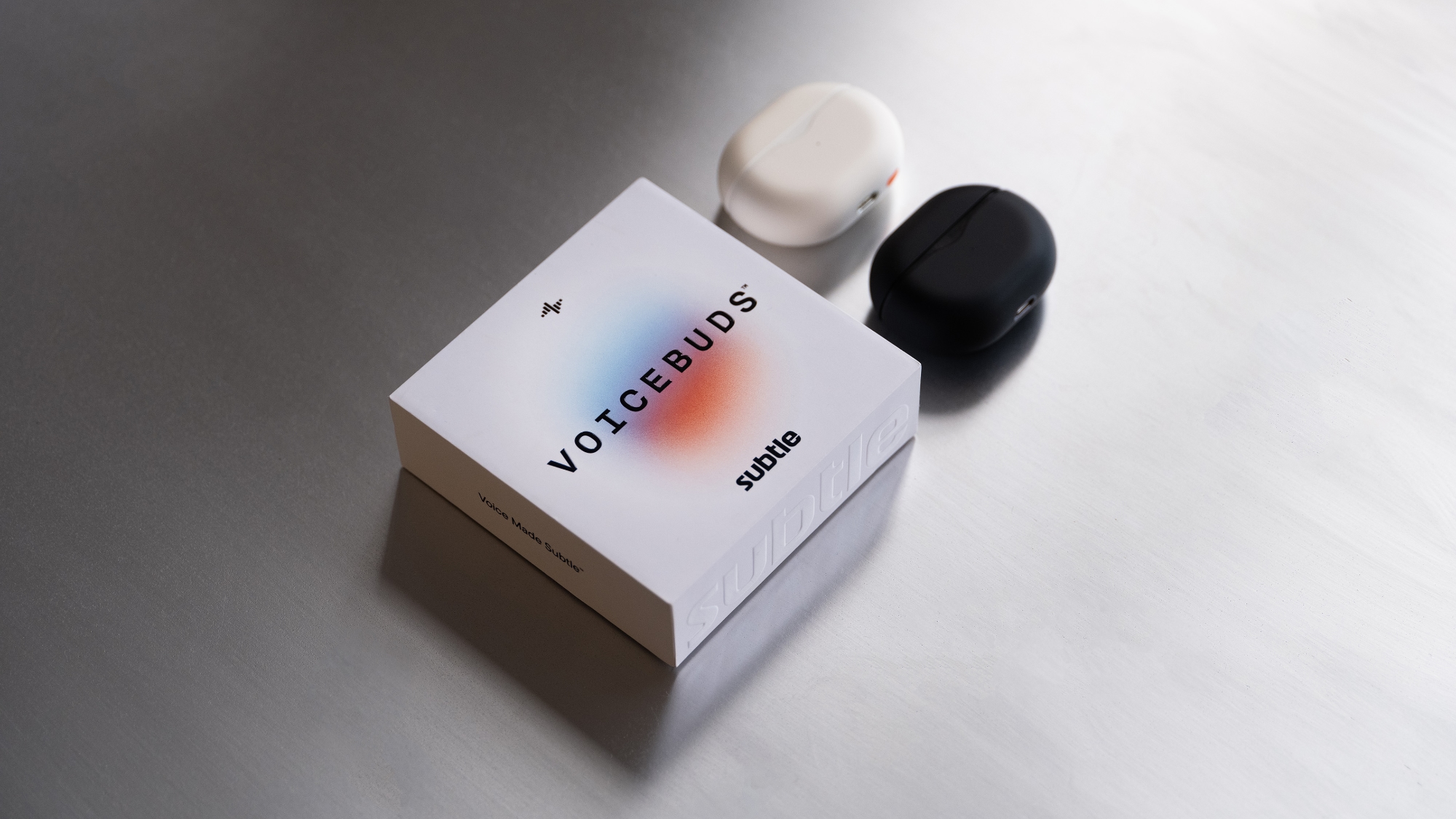
In a significant stride for the burgeoning voice artificial intelligence sector, Subtle, a startup specializing in sophisticated voice isolation models, has officially unveiled its latest innovation: a new line of wireless earbuds engineered to enhance vocal clarity in communication and revolutionize transcription services. Introduced just ahead of the Consumer Electronics Show (CES) in Las Vegas, these Voicebuds represent a strategic move to integrate advanced AI directly into personal audio hardware, promising a more natural and efficient interface for users in an increasingly noisy world. The devices are slated for a U.S. market release within the coming months, priced at $199, a figure that includes a year-long subscription to their accompanying iOS and Mac application.
A New Paradigm for Voice Interaction
Subtle’s Voicebuds are not merely another pair of noise-canceling earbuds; their core innovation lies in their ability to isolate and clarify the user’s voice, even amidst cacophonous backgrounds. This is powered by Subtle’s proprietary voice isolation models, which leverage advanced machine learning algorithms to intelligently filter out ambient noise, ensuring that the user’s speech is delivered with unparalleled clarity. This technological leap addresses a fundamental challenge in modern communication: the struggle to be understood in less-than-ideal acoustic environments, from bustling coffee shops to crowded commutes.
The accompanying application extends the utility of the Voicebuds beyond mere communication. It allows users to effortlessly capture voice notes or engage in AI conversations without the need for manual input, thanks to a specially designed chip that can wake a locked iPhone. This feature hints at a future where interactions with digital assistants and AI tools become as seamless and intuitive as human conversation. Subtle claims its Voicebuds, when paired with their technology, can achieve transcription accuracy five times greater than that of AirPods Pro 3 combined with OpenAI’s transcription model, a bold assertion that, if proven in real-world scenarios, could significantly disrupt the market for voice dictation and AI-powered note-taking. During a live demonstration, the Voicebuds effectively captured audio in a noisy setting and accurately transcribed whispered speech, showcasing their impressive capability to adapt to varying vocal nuances and environmental challenges.
The Evolution of Personal Audio and Voice AI
The launch of Subtle’s Voicebuds arrives at a pivotal moment in the evolution of personal audio technology and artificial intelligence. The journey of personal audio devices has seen a dramatic transformation, from bulky wired headphones of the past to the compact, wire-free true wireless earbuds prevalent today. Early iterations focused on sound quality and basic connectivity, but consumer demand quickly pushed manufacturers towards features like active noise cancellation (ANC), pioneered by companies like Bose, initially for aviation and later adapted for the mass market. ANC has become a standard expectation, allowing users to immerse themselves in audio by blocking out external distractions. Subtle’s innovation builds upon this foundation by focusing not just on what the user hears, but crucially, on how clearly the user is heard.
Concurrently, the landscape of voice AI has been undergoing a rapid metamorphosis. From the rudimentary command-and-response systems of early voice assistants like Apple’s Siri, Amazon’s Alexa, and Google Assistant, the technology has progressed towards more sophisticated, context-aware, and natural language processing capabilities. However, a persistent hurdle for widespread adoption of voice as a primary interface has been its reliability in non-ideal acoustic environments. The "voice isolation" aspect of Subtle’s technology directly tackles this, pushing the boundaries of what is possible with voice-controlled computing.
This convergence of advanced audio hardware with intelligent AI represents a new frontier. Companies have been exploring various form factors for voice interaction, from smart speakers to smart rings (like those previously launched by Sandbar and Pebble for note-taking). Subtle’s approach, integrating these capabilities into the familiar and widely adopted earbud form, positions it uniquely. It leverages existing user habits while introducing a powerful new layer of functionality, aiming to consolidate dictation, AI chat, and voice notes into a single, integrated experience.
Voicebuds: A Closer Look at Core Innovations
At the heart of the Voicebuds’ performance lies Subtle’s proprietary voice isolation technology. Unlike traditional noise cancellation, which primarily focuses on blocking external sounds from reaching the listener’s ear, Subtle’s models are specifically designed to analyze the user’s speech patterns and differentiate them from surrounding noise. This allows for a clean, isolated vocal signal to be transmitted, whether for a phone call, a virtual meeting, or transcription. This capability is particularly impactful for professionals who frequently participate in remote meetings or record interviews in diverse locations.
The claim of five times fewer errors in transcription compared to leading competitors is a bold statement that underscores the potential for these earbuds to revolutionize productivity workflows. High-accuracy transcription can significantly reduce the time spent on manual note-taking, content creation, and documentation. For journalists, researchers, students, and business executives, the ability to reliably convert spoken words into text, even in challenging environments, offers a substantial efficiency gain. The "wake iPhone while locked" feature, facilitated by an on-device chip, further streamlines this process, allowing for instant voice recording or AI interaction without the friction of unlocking a device or opening an app. This seamless integration moves voice interaction closer to the ideal of an "invisible interface," where technology recedes into the background, enabling more natural human-computer interaction.
Navigating a Crowded Market
The true wireless earbud market is fiercely competitive, dominated by established tech giants like Apple, Sony, Samsung, and Bose, alongside numerous smaller players. Subtle, a relatively newer entrant in the hardware space, faces the challenge of carving out a distinct identity. Its strategy appears to hinge on a differentiated value proposition: superior voice clarity and AI integration, rather than solely focusing on audio fidelity or generic noise cancellation.
Tyler Chen, Subtle’s co-founder and CEO, articulated the company’s vision, stating, "We are seeing that there is a huge move towards voice as a new interface that a lot of folks are adopting. You can do much more with voice in a natural way than with a keyboard. However, we saw that voice is rarely an interface people use when others are around. So that using our noise isolation model, we will give consumers a way to experience a voice interface in the form of our earbuds." This perspective highlights a critical gap in the market that Subtle aims to fill: enabling natural voice interaction in public or semi-public spaces without compromising clarity or privacy.
Subtle’s partnerships with industry leaders like Qualcomm, a major chipmaker, and Nothing, an emerging consumer electronics brand known for its design-forward approach, lend credibility to its technological prowess and market potential. These collaborations suggest that Subtle’s voice isolation models are robust enough for broader deployment, potentially beyond its own hardware.
Redefining Productivity and Communication
The social and cultural implications of such advanced voice technology are profound. In an era where remote work and hybrid models are becoming standard, clear communication is paramount. The Voicebuds could significantly improve the quality of virtual meetings, making them less fatiguing and more productive. Beyond professional settings, they could enhance personal communication, allowing for clearer calls in busy households or public transport.
For individuals with certain communication challenges, such as those with speech impediments or those operating in loud industrial environments, the voice isolation technology could be transformative, improving accessibility and ensuring their voices are heard accurately. The ability to dictate notes or interact with AI hands-free could also foster greater efficiency in multi-tasking scenarios, such as driving or exercising.
The shift towards voice as a primary interface also brings considerations of data privacy and security. While the article mentions an on-device chip for waking the iPhone, the extent to which voice data is processed locally versus in the cloud will be a key factor for consumers concerned about their personal information. Subtle’s transparency on these aspects will be crucial for building trust in a market increasingly aware of digital privacy.
Challenges and the Road Ahead
Despite the promising technology, Subtle faces several challenges. Market saturation is a major hurdle; consumers are already inundated with choices in the earbud category. Building brand recognition against established players will require substantial marketing efforts and consistent delivery on its performance claims. The $199 price point, coupled with an annual subscription for the app, positions the Voicebuds in the premium segment, where consumers have high expectations for both hardware quality and software functionality. Justifying the subscription model in a market where many core app features are often free or come with a one-time purchase will be another test.
The performance claims, particularly the "five times fewer errors" in transcription, will be subject to intense scrutiny from reviewers and early adopters. Real-world performance in diverse environments will ultimately determine the product’s success. Furthermore, while the initial focus is on iOS and Mac, expansion to Android and Windows platforms will be essential for broader market penetration.
Looking ahead, Subtle’s Voicebuds could pave the way for even more advanced conversational AI experiences. Imagine real-time, highly accurate language translation directly through earbuds, or complex AI commands executed flawlessly even in chaotic environments. The $6 million in funding Subtle has secured to date suggests investor confidence in its vision and the underlying technology.
The Future of Conversational AI
Subtle’s entry into the earbud market with its Voicebuds signals a significant inflection point for personal audio and artificial intelligence. By prioritizing clarity of speech output and seamless AI integration, the company is attempting to move beyond passive listening devices towards active, intelligent communication tools. As the digital world increasingly intertwines with our physical spaces, the ability to communicate and interact naturally, regardless of ambient conditions, becomes not just a convenience but a necessity. The Voicebuds, if they live up to their ambitious claims, could be a key enabler of this future, making voice the truly universal and intuitive interface it has always promised to be.