Amir Mahmud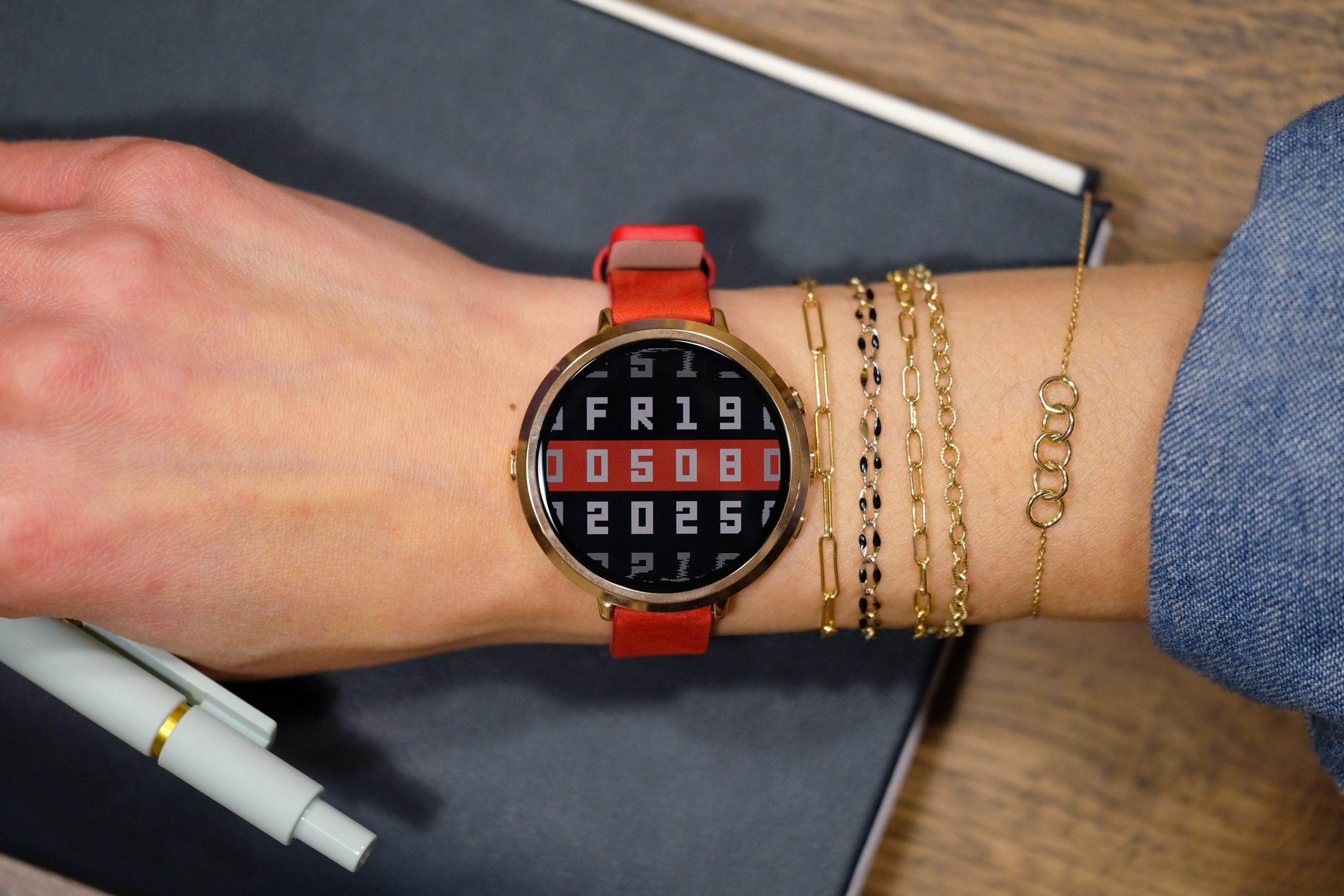
The announcement of the Pebble Round 2 follows closely on the heels of the company’s recent reintroduction of its flagship smartwatch, the Pebble Time 2, and the debut of a compact, artificial intelligence-powered smart ring. This new device marks another significant step in the resurgence of the Pebble brand, focusing on a distinct aesthetic and user experience. Distinguished by its circular display, the Pebble Round 2 offers a refined appearance, diverging from the more utilitarian designs often seen in the wearable technology sector. Consistent with the brand’s established philosophy, the timepiece is positioned as an accessible option in the competitive wearables market, carrying a retail price of $199.
The strategic decision to maintain an attractive price point is facilitated by a streamlined feature set, deliberately omitting some of the more advanced, power-intensive functionalities found in premium smartwatches. While the Round 2 incorporates fundamental health and wellness monitoring, such as step counting and sleep analysis, it notably excludes advanced biometric sensors like a heart rate monitor, positioning it outside the dedicated fitness tracker category. This focused approach yields a significant advantage in terms of power autonomy, with the device boasting an impressive battery life estimated to span between 10 and 14 days on a single charge.
A Legacy Reimagined: Pebble’s Journey
To fully appreciate the significance of the Pebble Round 2, it is essential to revisit the brand’s remarkable trajectory within the burgeoning smartwatch industry. Pebble burst onto the scene in 2012, captivating tech enthusiasts and consumers alike through a groundbreaking Kickstarter campaign that shattered crowdfunding records. Its initial smartwatches, characterized by their e-paper displays, extended battery life, and straightforward functionality, carved out a significant niche, proving the viability of smart wearables long before industry giants like Apple entered the fray. Pebble was lauded for its pioneering spirit, fostering a vibrant developer community and cultivating a loyal user base that valued practical utility over flashy, power-hungry features.
However, the rapid acceleration of the smartwatch market, particularly with the arrival of the Apple Watch in 2015 and increased competition from Google’s Wear OS (then Android Wear) and Samsung’s Tizen-based devices, presented formidable challenges. These new entrants brought sophisticated color screens, robust app ecosystems, and comprehensive health monitoring, often backed by vast marketing budgets and established retail networks. Despite introducing increasingly capable devices, including the original Pebble Time Round in late 2015, the company struggled to compete with the financial and technological might of its larger rivals. The original Pebble Time Round itself was notable for its slim profile, marketed at the time as the thinnest smartwatch available, a design choice that resonated with users seeking a less bulky wearable.
The narrative took a somber turn in 2016 when Pebble faced significant financial difficulties, ultimately leading to its acquisition by Fitbit. The acquisition effectively marked the end of official support for existing Pebble devices, a move that deeply disappointed its dedicated community. However, the story did not conclude there. The enduring affection for the brand, coupled with the open-source nature of its operating system and software development kit (SDK), inspired a community-driven revival. Over time, new entities and dedicated enthusiasts worked to keep the Pebble ecosystem alive, culminating in the recent re-establishment of the brand under new stewardship. This rebirth, symbolized by the repebble.com domain, signals a strategic pivot to reintroduce beloved designs while integrating contemporary technological advancements. The Pebble Round 2 is a direct product of this revitalized vision, aiming to recapture the essence of what made Pebble unique while addressing past limitations.
Design and Aesthetics: A Nod to Tradition
The Pebble Round 2 is a direct successor to the 2015 Pebble Time Round, inheriting its distinctive circular form factor. While the original was celebrated for its slender profile, measuring a mere 7.5mm, the new iteration maintains a remarkably slim physique at 8.1mm. This slight increase in thickness is a deliberate design choice, allowing for crucial internal enhancements, particularly a larger display and improved battery capacity, while still preserving the elegant, unobtrusive feel on the wrist that users valued.
A key improvement, highlighted by Pebble founder Eric Migicovsky, addresses one of the original model’s most significant aesthetic drawbacks: the substantial bezel. The initial Pebble Time Round utilized an octagonal glass piece to achieve its rounded display, necessitating a prominent border that diminished the perceived screen size. Advancements in display technology have enabled the Pebble Round 2 to significantly reduce this bezel, resulting in a more expansive and visually appealing screen-to-body ratio. The updated design not only enhances the device’s contemporary appeal but also improves practical usability by providing more screen real estate for notifications and app interactions.
The timepiece features a 1.3-inch color e-paper display, boasting a resolution of 260 x 260 pixels at 283 DPI. This represents a substantial upgrade, offering twice the pixel density of its predecessor, leading to sharper text and more vibrant graphics. A built-in backlight ensures readability in low-light conditions, complementing the e-paper’s inherent excellent visibility in direct sunlight. The inclusion of a robust stainless steel frame underscores the device’s premium aspirations, while various color options—matte black (20mm quick-release band), silver (14mm or 20mm band), and polished rose gold (14mm band)—cater to diverse style preferences. Standard silicon bands are included, with leather options available for separate purchase, allowing for further personalization.
Core Functionality and Differentiators
Underpinning the Pebble Round 2’s operation is the open-source Pebble OS, a platform celebrated for its efficiency and simplicity. This operating system contributes significantly to the device’s exceptional battery life and allows for a lightweight, responsive user experience. The core functionality revolves around smart notifications, basic activity tracking, and discreet control over smartphone features. Users can monitor steps taken and sleep patterns, providing essential insights into daily health without the complexity or data overload of more advanced fitness wearables.
A defining characteristic of Pebble devices, and one prominently featured in the Round 2, is the reliance on physical side buttons for navigation and control. In an era dominated by touchscreens, Pebble champions the tactile feedback and "eyes-free" operation offered by buttons. As Migicovsky notes, this design choice enables intuitive interactions, such as silencing an incoming call during a meeting or pausing music without needing to glance at the watch face. This approach prioritizes convenience and safety, particularly in situations where visual engagement with a screen might be impractical or distracting.
Further enhancing user interaction, the Round 2 incorporates dual microphones, enabling speech input and direct message replies. Initially, this feature is optimized for Android users due to specific platform restrictions, with expanded support for iOS in the European Union slated for future implementation. The inclusion of an accelerometer and magnetometer broadens the device’s utility, supporting various applications and watch faces that leverage motion and directional data.
The Power of E-Paper and Enduring Battery Life
The choice of a color e-paper display is a foundational element of Pebble’s product philosophy and a significant differentiator in the modern smartwatch landscape. Unlike conventional LCD or OLED screens that constantly refresh and emit light, e-paper displays consume minimal power, primarily when the content on the screen changes. This characteristic is the primary driver behind the Pebble Round 2’s remarkable 10-to-14-day battery life, a figure that dwarfs the typical one-to-two-day endurance of many full-featured smartwatches.
Beyond power efficiency, e-paper offers several practical advantages. Its reflective nature ensures excellent visibility in bright sunlight, mimicking the readability of ink on paper, a stark contrast to the glare issues often encountered with emissive displays outdoors. Furthermore, e-paper screens are inherently always-on, displaying information continuously without requiring a wrist raise or button press, offering a more traditional watch-like experience. This blend of prolonged battery life, outdoor readability, and an always-on display caters to a segment of the market that values practicality and longevity over vibrant, high-resolution graphics.
Smart Features and AI Integration
Despite its focus on simplicity, the Pebble Round 2 is not devoid of modern smart capabilities. It leverages the extensive ecosystem of apps and watch faces available on the Pebble Appstore. While developers will need to update their applications to fully optimize for the new rounded screen, the platform already supports a diverse range of functionalities, from productivity tools to various aesthetic watch faces. Notably, the Appstore includes integration with popular AI assistants, such as Claude and other widely recognized intelligent agents, allowing users to access AI-driven insights and commands directly from their wrist.
This push towards AI integration is consistent with Pebble’s broader strategy. The company recently introduced a dedicated AI smart ring, designed for discreet audio recording and transcription. The insights and functionalities developed for this smart ring are expected to progressively migrate to Pebble’s smartwatch line, including the Round 2. This move positions Pebble at the intersection of traditional wearable utility and the rapidly expanding field of artificial intelligence, promising future enhancements that could bring more sophisticated voice commands, contextual assistance, and ambient intelligence to its devices. The open-source nature of Pebble OS also means that the community itself can contribute to and innovate on these AI capabilities, fostering a collaborative development environment.
Market Position and Competitive Landscape
The Pebble Round 2 enters a smartwatch market that is both mature and highly competitive. Dominated by tech giants like Apple, Samsung, and Google (with Fitbit), the premium segment offers devices packed with advanced health sensors, rich app ecosystems, and cellular connectivity. However, Pebble’s strategy is not to directly challenge these incumbents on their terms. Instead, the Round 2 is meticulously positioned to cater to a specific niche: consumers who prioritize elegant design, exceptional battery life, essential smart notifications, and affordability over a comprehensive suite of advanced fitness or communication features.
This strategic differentiation is a calculated risk and an opportunity. In a market often criticized for its "feature bloat" and short battery life, Pebble offers a compelling alternative for those seeking a more focused and enduring wearable experience. Its sub-$200 price point makes it an attractive option for first-time smartwatch buyers or those looking for a secondary device that complements their existing tech ecosystem without duplicating functionality or breaking the bank. The revival of the Pebble brand also taps into a sense of nostalgia among early tech adopters, potentially drawing back loyal users who missed the brand’s unique approach.
The pre-order period for the new Pebble Round 2 commences on January 2 via the official Pebble website, with shipments anticipated to begin in May. In a goodwill gesture, customers who previously ordered the Pebble Time 2 will be offered the option to switch their order to the Pebble Round 2, reflecting the brand’s commitment to its customer base during this period of re-establishment and product rollout. This latest offering underscores Pebble’s determination to carve out a sustainable future by building upon its cherished heritage while strategically adapting to the demands and opportunities of the contemporary technology landscape.