Amir Mahmud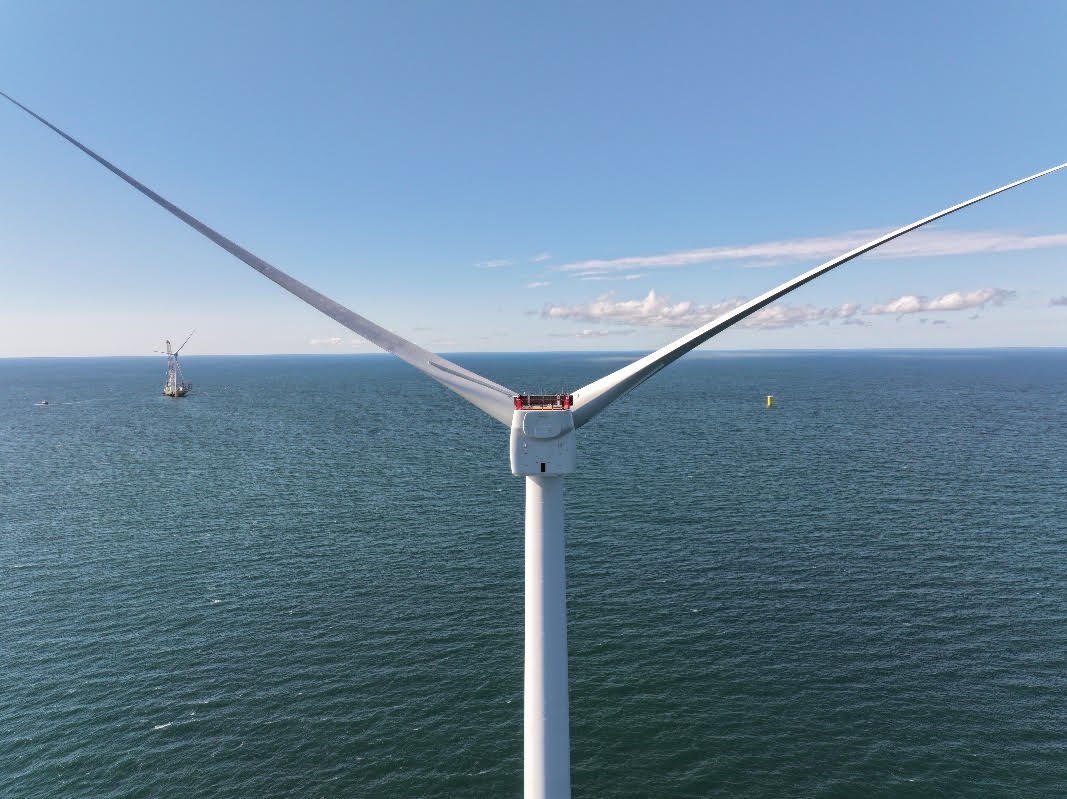
In a significant development for the nation’s energy landscape, the Trump administration has once again moved to pause the leasing process for five major offshore wind projects, collectively representing a substantial 6 gigawatts of generating capacity. This latest federal intervention, coming just two weeks after a judge invalidated a prior executive order that sought to impede offshore wind development, cites concerns regarding radar interference and broader national security risks. The decision introduces renewed uncertainty into a burgeoning sector critical for the United States’ clean energy ambitions.
A History of Federal Interventions and Ambitions
The recent federal action marks a new chapter in the complex interplay between national energy policy, environmental goals, and defense imperatives. The United States, despite possessing one of the world’s most robust offshore wind resources, has lagged behind European nations in harnessing this renewable energy source. For decades, ambitious projects faced regulatory hurdles, high costs, and local opposition. However, in recent years, a concerted push from both federal and state governments, coupled with advancements in turbine technology and declining costs, has begun to accelerate development. The Biden administration, for instance, set an ambitious target of deploying 30 gigawatts of offshore wind by 2030, a goal seen as crucial for combating climate change, creating jobs, and bolstering energy independence.
This momentum, however, has often been met with resistance or skepticism from certain political factions. During his previous term, President Donald Trump frequently expressed reservations about wind energy, often citing aesthetic concerns, potential impacts on wildlife, and unsubstantiated claims about grid reliability. These sentiments culminated in a 2020 executive order that aimed to block offshore wind development off the coasts of Florida, Georgia, and South Carolina. That order was recently challenged in federal court and subsequently struck down, with the judge ruling that it exceeded the President’s executive authority. This recent pause, therefore, appears to be a recalibration of strategy, employing a different legal and national security rationale to achieve a similar outcome of delaying projects.
The Nexus of National Security and Energy Development
The Department of the Interior, through Secretary Doug Bergum, articulated the administration’s rationale for the current pause in a public statement. "Today’s action addresses emerging national security risks, including the rapid evolution of the relevant adversary technologies, and the vulnerabilities created by large-scale offshore wind projects with proximity near our east coast population centers," Bergum stated. This framing positions the delay as a necessary measure to protect vital national interests, linking the physical presence of wind farms to potential security vulnerabilities in a changing geopolitical landscape.
The East Coast of the United States is a critical region for both civilian and military operations. It hosts numerous military bases, key shipping lanes, and dense population centers, alongside extensive air and maritime traffic. The integration of large-scale industrial infrastructure like offshore wind farms into this sensitive environment inevitably raises questions about compatibility with existing defense systems, particularly radar. The Interior Department’s justification for the pause reportedly relies on unclassified government reports – whose origins and specific findings were not detailed – as well as "recently completed classified reports" from the Pentagon. The stated purpose of the pause is to allow the government adequate time to collaborate with stakeholders and mitigate these newly emphasized national security concerns.
However, this justification immediately drew scrutiny from industry observers and environmental advocates. Critics pointed out that the statement omitted any acknowledgment of the extensive, multi-year collaborative efforts already underway between federal agencies and wind developers specifically aimed at addressing radar interference and other national security considerations. This omission suggested a potential disconnect between the administration’s public stance and the ongoing technical work designed to resolve such issues.
Unpacking the Radar Interference Challenge
The phenomenon of radar interference caused by wind turbines is not a novel concern. Researchers, defense analysts, and engineers have been studying this complex issue for well over a decade, both domestically and internationally. The fundamental challenge arises from the physical characteristics and dynamic operation of large wind turbines.
The Doppler Effect and Turbine Signatures
Radar systems function by emitting radio waves and analyzing the reflections that bounce back from objects. This allows them to determine an object’s range, bearing, and, crucially, its velocity through the Doppler effect – the change in frequency of a wave caused by a moving source or reflector. Wind turbines, particularly their massive rotating blades, present a unique and complex challenge to radar operators. As Nicholas O’Donoughue, a senior engineer at the Rand Corporation, explained, "The motion of a wind turbine gives it a complex Doppler signature."
The blades of a turbine are constantly in motion, alternately moving towards and away from a radar station as they sweep through their arc. The tips of these blades can reach speeds exceeding 200 miles per hour. This rapid, cyclical movement creates a highly variable and strong radar reflection, often referred to as "clutter." This clutter can overwhelm or obscure the faint signals from other objects, such as aircraft, ships, or even drones, that radar systems are designed to detect. The angle of the blades relative to the radar, their material composition, and the sheer scale of modern offshore turbines all contribute to this intricate interference pattern, making it difficult to differentiate legitimate targets from the wind farm’s "noise." This issue affects various types of radar, including those used for air traffic control, weather forecasting, and critical military surveillance and defense systems.
Decades of Research and Mitigation Efforts
Despite the administration’s recent assertion of "emerging" risks, the Department of Energy (DOE) issued a report in February 2024 that explicitly detailed ongoing projects and collaborative efforts to mitigate radar interference. This report, building on years of prior studies and inter-agency working groups, acknowledged that "to date, no mitigation technology has been able to fully restore the technical performance of impacted radars." However, it also emphasized that "the development and use of radar interference mitigation techniques, and collaboration both among federal agencies and between the federal government and the wind industry have enabled federal radar agencies to continue to perform their missions without significant impacts, and have also enabled significant wind energy deployments throughout the United States."
This indicates a nuanced reality: while complete restoration of radar performance in all scenarios remains an aspiration, significant progress has been made to allow both radar operations and wind farm development to coexist.
Technological Solutions and Siting Strategies
The industry and government have explored and implemented a range of strategies to address radar interference. One primary approach involves advanced signal processing. As O’Donoughue noted, "The primary approach is to use adaptive processing algorithms, such as Space-Time Adaptive Processing, to learn the structure of a wind farm’s interference." These sophisticated algorithms analyze the patterns of reflections from wind farms over time, identifying their unique "signature." Once these patterns are recognized, the radar system can then effectively filter them out, much like modern noise-canceling headphones filter out ambient sounds. While effective, O’Donoughue cautioned that "objects with low radar cross section can still slip through," highlighting the ongoing need for refinement.
Beyond digital signal processing, physical siting and layout adjustments of wind farms are crucial. The 2024 Energy Department report highlighted that "The most basic and widely-employed mitigation method is wind farm siting, such as modifying the layout a proposed wind farm to keep the wind turbines out of the line-of-sight of the radar." This can involve adjusting the distance of the wind farm from critical radar installations, orienting turbine rows to minimize collective interference, or even selecting sites that naturally offer less obstruction to radar beams. Furthermore, research continues into developing "radar-friendly" turbine designs, utilizing alternative materials or coatings that minimize radar reflectivity, or exploring passive radar systems that do not emit their own signals.
Impact on the Eastern Seaboard’s Green Energy Transition
The newly imposed pause directly impacts five cornerstone projects along the Eastern Seaboard: Revolution Wind (Connecticut and Rhode Island), Coastal Virginia Offshore Wind, Vineyard Wind (Massachusetts), and Empire Wind and Sunrise Wind (both in New York). These projects are not merely proposals; they represent years of planning, billions of dollars in committed investment, and are integral to the renewable energy strategies of multiple states.
Key Projects in Limbo
- Vineyard Wind 1: The nation’s first utility-scale offshore wind farm, already under construction, faces uncertainty regarding its further expansion or adjacent projects.
- Revolution Wind: Crucial for Rhode Island and Connecticut’s clean energy mandates.
- Coastal Virginia Offshore Wind: A pivotal project for Dominion Energy and the state of Virginia, demonstrating a significant utility investment.
- Empire Wind & Sunrise Wind: Essential for New York’s aggressive renewable energy targets, poised to power millions of homes.
These projects collectively represent a significant portion of the planned offshore wind capacity, and their delay sends ripples through the entire supply chain, from component manufacturers and port operators to specialized maritime service providers.
Economic and Environmental Repercussions
The economic implications of this federal hold are substantial. Delays translate into increased costs for developers, who face ongoing expenses without corresponding revenue. This uncertainty can deter future investment, potentially slowing the growth of a nascent domestic offshore wind industry that promises thousands of high-paying jobs in manufacturing, construction, and operations. States that have committed to significant renewable energy procurement targets, often tied to these very projects, will find their climate goals jeopardized, potentially leading to penalties or a continued reliance on fossil fuels.
Culturally, the pause could reignite debates about the balance between energy independence, environmental stewardship, and national defense. For communities that have invested in port infrastructure and workforce development in anticipation of these projects, the delay creates frustration and economic insecurity. Socially, the promise of cleaner air and a stable climate, often a key driver of public support for renewable energy, is pushed further into the future.
Balancing Transparency and Security Concerns
The administration’s reliance on unspecified "unclassified" and "classified" reports without detailing their contents or findings raises questions about transparency. While legitimate national security concerns often necessitate classified information, the lack of specific details or a clear pathway for stakeholders to understand and address these concerns can foster distrust and fuel speculation that the security justification might be a convenient pretext for broader policy objectives.
Neutral analytical commentary suggests that a robust and transparent process is essential. This would involve clearly communicating the specific nature of the radar vulnerabilities, outlining the required mitigation steps, and establishing a collaborative timeline for their resolution. Such an approach would allow both defense agencies to ensure security and the energy industry to proceed with informed development, rather than operating under an opaque federal directive.
The Road Ahead for Offshore Wind
The path forward for these critical offshore wind projects remains uncertain. The federal government has indicated it will take time to "work with stakeholders," implying a period of negotiation and technical assessment. For developers and states, the immediate challenge will be to navigate this new regulatory landscape, advocating for expedited solutions and transparent engagement.
Ultimately, this latest federal intervention underscores a recurring tension in modern infrastructure development: how to integrate new, large-scale energy systems with existing, critical national defense capabilities. Resolving the radar interference challenge, and doing so in a way that respects both national security imperatives and urgent climate and energy goals, will require unprecedented levels of collaboration, technological innovation, and clear, consistent policy direction from Washington. The future of a significant portion of America’s green energy transition now hinges on how effectively these complex and competing priorities can be reconciled.