Amir Mahmud
In a move underscoring the intense competition and rapid consolidation within the artificial intelligence-powered software development tools market, Cursor, a prominent AI coding assistant, has officially announced its acquisition of Graphite, a startup specializing in AI-driven code review and debugging. This strategic integration is poised to significantly reshape the workflow for software engineers, promising an acceleration of the entire development cycle from initial code drafting to final deployment. While specific financial terms of the transaction were not publicly disclosed, reports indicate that Cursor’s offer substantially exceeded Graphite’s most recent valuation of $290 million, established earlier this year during its Series B funding round, highlighting the perceived premium value of Graphite’s specialized technology and talent.
The Evolving Landscape of Software Development
The journey of software development has been one of continuous evolution, from rudimentary text editors to sophisticated Integrated Development Environments (IDEs) equipped with powerful debugging and version control systems. In recent years, the advent of artificial intelligence has introduced a paradigm shift, promising to augment human capabilities in coding. AI coding assistants, like Cursor, aim to streamline the process of writing code, automating repetitive tasks, suggesting completions, and even generating entire blocks of functionality. This innovation has been driven by the perpetual demand for increased developer productivity and faster time-to-market for software products.
However, the rapid generation of code by AI tools has presented a new set of challenges. While AI can significantly boost initial output, the resulting code often contains subtle bugs, inefficiencies, or security vulnerabilities that require extensive human review and correction. This necessity has paradoxically led to senior developers spending considerable time acting as "AI babysitters," meticulously scrutinizing and refining machine-generated code. This bottleneck has created a pressing need for equally advanced AI-powered tools capable of robustly reviewing, debugging, and optimizing the code produced by their AI counterparts. It is precisely this gap that companies like Graphite have sought to address, making their technology a critical component in the nascent end-to-end AI-driven development pipeline.
A Strategic Synergy: Integrating Code Generation and Review
The acquisition of Graphite by Cursor represents a potent strategic alignment, marrying AI-powered code generation with advanced AI-powered code review. Cursor’s core offering focuses on helping developers write code more efficiently, leveraging large language models to assist with everything from boilerplate code to complex algorithm generation. Graphite, on the other hand, carved out a niche by applying AI to the often tedious and error-prone process of code review and debugging. By bringing these two capabilities under one roof, Cursor aims to offer a more seamless and comprehensive developer experience.
At the heart of Graphite’s distinct value proposition is its "stacked pull request" capability. Traditionally, developers work on changes sequentially. If one change depends on another, the dependent change cannot be fully reviewed or merged until its predecessor is approved and integrated. This creates a linear, often slow, workflow. Graphite’s innovation allows developers to logically "stack" these dependent changes, enabling them to work on multiple, interconnected tasks simultaneously without waiting for prior approvals. This parallel processing significantly reduces idle time and context switching, two major impediments to developer productivity. Integrating this advanced workflow management with Cursor’s generative AI promises to accelerate the entire development lifecycle, from initial concept to deployment, by orders of magnitude. The vision is clear: to minimize the friction points that currently exist between writing code and shipping it, transforming a multi-stage process into a more fluid, integrated continuum.
Graphite’s Innovation: Streamlining Development Workflows
Graphite’s technology addresses a fundamental pain point in modern software engineering: the management of complex codebases and the collaborative nature of development. The "stacked pull request" system is not merely a technical feature but a methodological shift, enabling a more agile and efficient approach to handling intricate dependencies within projects. Imagine a scenario where a developer needs to implement feature A, which requires a new utility function B, which in turn depends on an update to a core library C. In a traditional workflow, the developer would implement C, submit it for review, wait for approval, then implement B, submit it, wait, and finally implement A. Graphite allows the developer to create separate, linked pull requests for C, B, and A, and work on them in parallel. If C is reviewed and merged, B and A automatically rebase, minimizing conflicts and speeding up the overall delivery.
This capability is particularly valuable in large organizations or complex projects where multiple teams might be working on interconnected components. By reducing the reliance on sequential approvals, Graphite’s system fosters greater independence and velocity among engineering teams. When combined with AI that can assist in identifying potential issues across these stacked changes, the potential for error reduction and accelerated delivery becomes substantial. This integration suggests a future where AI not only helps write the code but also intelligently orchestrates its review and integration, learning from patterns of successful and problematic changes to continually refine the development process.
A Consolidating Market: The Race for AI Dominance
The acquisition of Graphite by Cursor is not an isolated incident but rather indicative of a broader trend of consolidation in the burgeoning AI developer tools market. As venture capital continues to pour into this sector, companies are aggressively pursuing market share, talent, and technological advantage. The ability to offer a comprehensive, integrated solution is becoming a critical differentiator, prompting larger players or well-funded startups like Cursor to acquire smaller, specialized innovators. This "build vs. buy" decision often leans towards acquisition when a company like Graphite offers a mature, highly specialized technology that would take significant time and resources to develop in-house, coupled with a proven team.
The competitive landscape in AI-powered code review is vibrant, with other notable players vying for market position. CodeRabbit, for instance, secured a valuation of $550 million just months prior to this acquisition, signaling strong investor confidence in the sector. Another competitor, Greptile, announced a $25 million Series A funding round this fall, demonstrating the ongoing influx of capital into this niche. These valuations underscore the perceived necessity and potential impact of AI in streamlining the software development pipeline. The Cursor-Graphite deal intensifies this race, as it creates a more formidable, integrated competitor, potentially forcing other players to either specialize further or seek their own strategic partnerships and acquisitions to remain competitive. The market seems to be moving towards a future where developers will expect a unified, AI-enhanced experience across all stages of the coding process, from ideation to deployment.
Cursor’s Ambitious Expansion Trajectory
Cursor’s acquisition of Graphite is the latest in a series of strategic moves that paint a clear picture of an ambitious expansion strategy aimed at building a holistic ecosystem around its core AI coding assistant. Valued at an impressive $29 billion in November, Cursor has been actively leveraging its substantial capital to acquire complementary capabilities and top-tier talent. Just last month, the company brought Growth by Design, a tech recruiting strategy firm, into its fold. This acquisition, though seemingly tangential to coding, highlights Cursor’s understanding that human capital is as critical as technological innovation in scaling a high-growth tech enterprise. Securing and retaining skilled engineers and product managers is paramount in a competitive market, and a specialized recruiting firm can provide a significant edge.
Prior to that, in July, Cursor acquired the talent from Koala, an AI-powered CRM startup, for a post-money valuation of $129 million. While Koala’s primary product was in customer relationship management, the acquisition was likely driven by the opportunity to onboard a team with deep expertise in applying AI to complex data sets and user interfaces. This suggests a pattern of acquiring not just products, but also the underlying AI research, engineering talent, and operational know-how that can be repurposed and integrated into Cursor’s broader vision for developer tools. These acquisitions collectively indicate Cursor’s intent to move beyond being just a code generator, aiming instead to become a comprehensive platform that supports various facets of the software development lifecycle and the organizational infrastructure surrounding it.
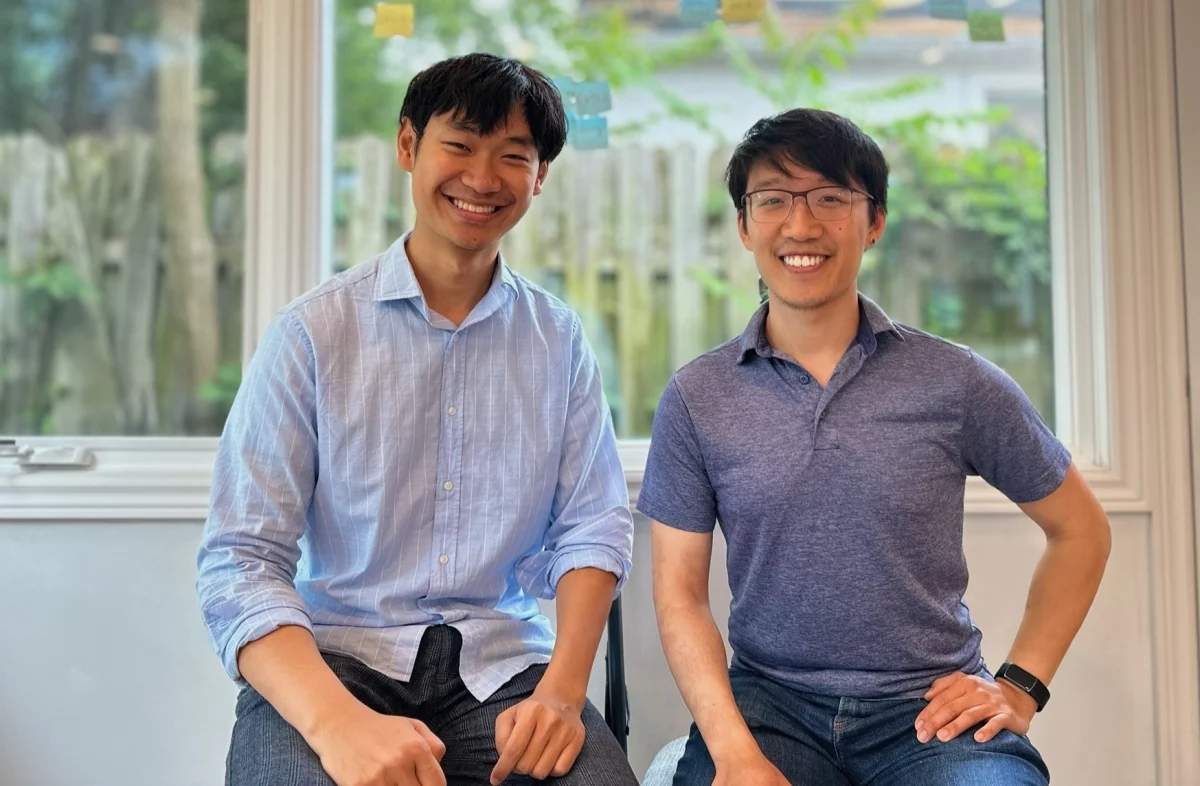
The intertwined histories of the founders and common investors also illuminate the strategic nature of this deal. Michael Truell, co-founder and CEO of Cursor, first encountered Graphite’s co-founders—Merrill Lutsky, Greg Foster, and Tomas Reimers—through the Neo Scholar program, a prestigious initiative for college students backed by Ali Partovi’s early-stage venture firm, Neo. Neo itself was an early investor in Graphite. Furthermore, both Cursor and Graphite share significant institutional backing from prominent venture capital firms like Accel and Andreessen Horowitz. This network of shared relationships and investor confidence likely facilitated the acquisition, signaling a concerted effort by key stakeholders to consolidate powerful AI capabilities under a single, rapidly ascending entity. Such shared backing also suggests a unified long-term vision for the future of developer tools, where integrated AI solutions are expected to dominate.
The Future of Developer Productivity Tools
The implications of Cursor’s aggressive expansion and strategic acquisitions extend far beyond the immediate financial terms. This trend points towards a future where developer productivity tools are increasingly AI-native, deeply integrated, and designed to minimize friction across the entire software development lifecycle. For developers, this could mean an era of unprecedented efficiency, where mundane tasks are fully automated, and creative problem-solving takes center stage. However, it also raises questions about the evolving role of human engineers, the potential for over-reliance on AI, and the importance of maintaining critical human oversight in complex systems.
As companies like Cursor continue to build out more comprehensive platforms, the competitive landscape will likely consolidate further, with fewer, larger players offering end-to-end solutions. This could lead to greater standardization and interoperability, but also potentially to vendor lock-in if alternatives become scarce. The rapid pace of innovation and valuation in this sector also warrants careful observation, as the industry grapples with balancing hyper-growth with sustainable business models and robust, ethical AI development practices. Ultimately, the integration of generative AI with sophisticated review and debugging capabilities, as exemplified by the Cursor-Graphite deal, marks a significant milestone in the journey towards truly intelligent and autonomous software development.