Amir Mahmud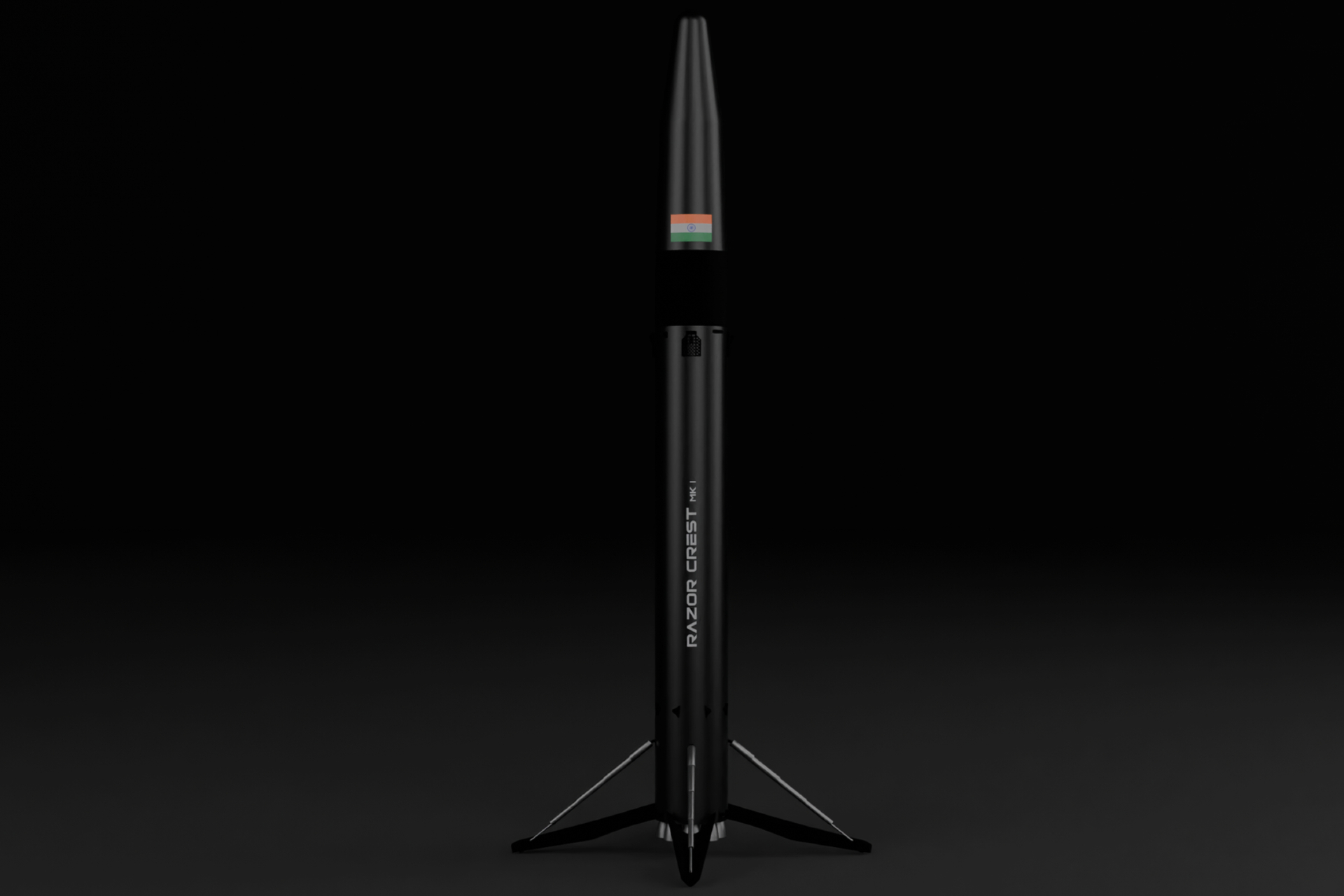
Ethereal Exploration Guild, an emerging Indian spacetech innovator widely recognized as EtherealX, is reportedly on the cusp of finalizing a significant funding round, poised to inject approximately $21 million into its groundbreaking efforts to develop a fully reusable medium-lift launch vehicle. This crucial financial backing is understood to be co-led by prominent venture capital firms, TDK Ventures and Vietnam-based BIG Capital, with the renowned Accel also participating, signaling robust international confidence in India’s burgeoning private space sector.
The funding round, which initially targeted a $15 million Series A, witnessed overwhelming investor interest, pushing the final figure beyond expectations to an anticipated $20.5 million. This surge in capital arrives just over a year after the Bengaluru-based startup successfully closed a $5 million seed round in August 2024, demonstrating a rapid escalation of investor belief in EtherealX’s ambitious vision and technological roadmap. This continuous financial endorsement underscores the increasing global appetite for innovative solutions in space access, particularly those championing reusability.
The Rise of EtherealX: Founders and Vision
EtherealX was established in 2022 by a formidable team comprising Manu J. Nair, who leads the company, Shubhayu Sardar, a former scientist with the Indian Space Research Organisation (ISRO) now serving as Chief Operating Officer, and aerospace engineer Prashant Sharma, the Chief Technology Officer. The startup’s primary objective is to revolutionize space access with its flagship product, the Razor Crest Mk-1, a medium-lift launch vehicle designed to be fully reusable. This ambitious endeavor positions EtherealX as a potential challenger to established giants in the reusable rocket domain, most notably SpaceX.
The Razor Crest Mk-1 is engineered to deliver substantial payloads, with a projected capacity of up to eight metric tonnes into low Earth orbit (LEO). Beyond LEO, the rocket will also possess the capability to deploy payloads into geostationary transfer orbits (GTO) and execute trans-lunar injection (TLI) maneuvers, broadening its utility for a diverse range of space missions. The company anticipates its inaugural launch by early 2027, a timeline that reflects the rapid pace of development characteristic of the private space industry. A key strategic advantage EtherealX aims to leverage is its projected cost-efficiency. Manu Nair previously indicated that the company’s rocket could offer launch prices ranging from approximately $350 to $2,000 per kilogram. This range stands in stark contrast to the typical pricing of SpaceX’s Falcon 9, which generally charges between $1,600 and $2,000 per kilogram. This significant price differential could dramatically alter market dynamics, making space access more affordable and frequent. Nair confidently projected that at its anticipated price point, EtherealX could capture a substantial 30% to 40% of the market, underscoring the disruptive potential of its offering.
To achieve its technological goals, EtherealX has been actively developing critical components. A recent LinkedIn update from Nair highlighted progress on a liquid oxygen (LOX) turbopump assembly for its upper-stage engine, designated Pegasus 2.0. Such in-house development of complex propulsion systems is a strong indicator of the company’s engineering capabilities and its commitment to vertical integration, crucial for controlling costs and accelerating development cycles.
India’s Evolving Space Sector: A Global Contender
India’s journey into space began modestly in the 1960s, evolving from early sounding rocket experiments to becoming a powerhouse in satellite development and launch services, primarily through its venerable space agency, ISRO. For decades, ISRO has been the backbone of India’s space ambitions, achieving remarkable feats such as the Mars Orbiter Mission (Mangalyaan) and the Chandrayaan lunar missions, all while providing cost-effective launch solutions through its Polar Satellite Launch Vehicle (PSLV) and Geosynchronous Satellite Launch Vehicle (GSLV). However, the global space landscape is rapidly shifting, driven by privatization and the pursuit of commercial opportunities.
Recognizing this transformation, India has strategically pivoted its space policy to foster private sector participation. Recent reforms, including the establishment of the Indian National Space Promotion and Authorization Centre (IN-SPACe) and the NewSpace India Limited (NSIL), ISRO’s commercial arm, are designed to create a more liberalized and enabling environment for private companies. These initiatives aim to transition India’s space economy from a government-centric model to one where private enterprises play a leading role in innovation, manufacturing, and launch services. This policy shift is critical, as it provides the regulatory clarity and support necessary for startups like EtherealX to thrive.
Economically, the Indian government harbors ambitious targets for its space sector. It aims to dramatically expand its footprint in the global commercial space industry, targeting an 8% to 10% market share over the next decade, a significant leap from its current less than 2%. This growth is overwhelmingly expected to be driven by private startups. Indian Space Minister Jitendra Singh recently articulated the country’s vision for a $40 billion to $45 billion space economy within the next eight to ten years. This projected growth reflects not only the potential for revenue generation but also the creation of high-tech jobs, fostering a skilled workforce, and driving technological advancements across various industries.
Moreover, India possesses unique geographical and regulatory advantages for space launches. Its strategic location offers access to multiple orbital inclinations from a single launch site, particularly beneficial for equatorial launches which require less fuel. This, coupled with a robust engineering talent pool and a comparatively lower cost of operations, makes India an attractive destination for space investments and a competitive player in the global launch market. The country’s growing spacetech ecosystem is increasingly drawing attention from international investors seeking diverse markets that can complement space development in the United States, Europe, and other established regions.
Strategic Investments Validate India’s Private Space Prowess
The participation of global venture capital firms like TDK Ventures and Accel in EtherealX’s funding round is a powerful testament to the growing maturity and potential of India’s private space sector. TDK Ventures, the corporate venture arm of the electronics giant TDK Corporation, typically invests in deep tech and sustainable innovation, making EtherealX’s reusable launch vehicle technology a natural fit for its portfolio. Accel, a well-established global VC firm with a long history of successful investments in technology startups, brings significant credibility and strategic guidance to the table. Their involvement suggests a thorough due diligence process and a strong conviction in EtherealX’s technical capabilities and market strategy.
For these international investors, backing an Indian spacetech startup is not merely about tapping into a new geographical market; it’s about diversifying their portfolios in a high-growth sector and participating in the next wave of global innovation. The investment serves as a validation of India’s engineering prowess, its supportive policy environment for space startups, and the fundamental market demand for more affordable and frequent access to space. Neutral analytical commentary suggests that such investments are indicative of a broader trend where venture capital is increasingly flowing into "deep tech" companies that are tackling complex engineering challenges with long-term, transformative potential. These firms are betting on the ability of companies like EtherealX to not only build advanced technology but also to scale operations and capture a significant portion of a rapidly expanding global market.
Building the Infrastructure for Future Launches
Beyond the financial backing, EtherealX is also making tangible progress on the ground. The company has successfully secured 16 acres of land in the southern Indian state of Tamil Nadu. This acquisition is a critical step towards establishing its operational infrastructure, including launch pads, assembly facilities, and test sites. Tamil Nadu, with its long coastline and strategic location, offers ideal conditions for space launches, particularly those requiring eastward trajectories over the Bay of Bengal, minimizing risks to populated areas. The startup plans to make this site operational early next year, marking a significant milestone in its journey from design to actual launch capabilities.
Crucially, EtherealX has already secured $130 million worth of contracts from six distinct customers. This early commercial demand for its launch services is a powerful indicator of market confidence, even before its first rocket has taken flight. Such pre-launch contracts are vital for a startup, providing not only revenue projections but also valuable feedback and validation for its service offerings. It suggests that there is a genuine need for additional, cost-effective launch capacity in the global market, which EtherealX aims to fulfill with its reusable vehicle. The ability to secure such substantial commitments at an early stage underscores the perceived value proposition of the Razor Crest Mk-1.
Navigating the Competitive Cosmos and Future Outlook
The global race for reusable launch vehicles is intensely competitive, with formidable players like SpaceX having already demonstrated the economic and operational benefits of such technology. EtherealX enters a market where reliability, frequency, and cost are paramount. While its projected price points are highly attractive, the challenge lies in consistently achieving reusability, minimizing turnaround times, and maintaining operational safety and reliability. The company will need to scale its manufacturing capabilities, navigate complex regulatory frameworks, and attract top-tier talent to meet its ambitious launch schedule and capture market share.
The broader implications of EtherealX’s success extend beyond its commercial viability. A thriving private space sector in India would not only contribute significantly to the national economy but also enhance India’s strategic autonomy in space, reducing its reliance on foreign launch providers. It would also foster a vibrant ecosystem of ancillary industries, from satellite manufacturing to ground station operations, creating a multiplier effect across the technology sector.
As EtherealX gears up for its first launch in early 2027, the substantial investment from global venture capital firms like TDK Ventures and Accel places it firmly on the trajectory to become a significant player in the reusable space launch market. The company’s innovative approach, coupled with India’s supportive policy environment and burgeoning talent pool, positions it to contribute meaningfully to the democratization of space access, potentially reshaping the future of satellite deployment and space exploration. While the path ahead is challenging, the current wave of investment and commercial interest suggests a promising future for India’s EtherealX in the competitive cosmos.