Amir Mahmud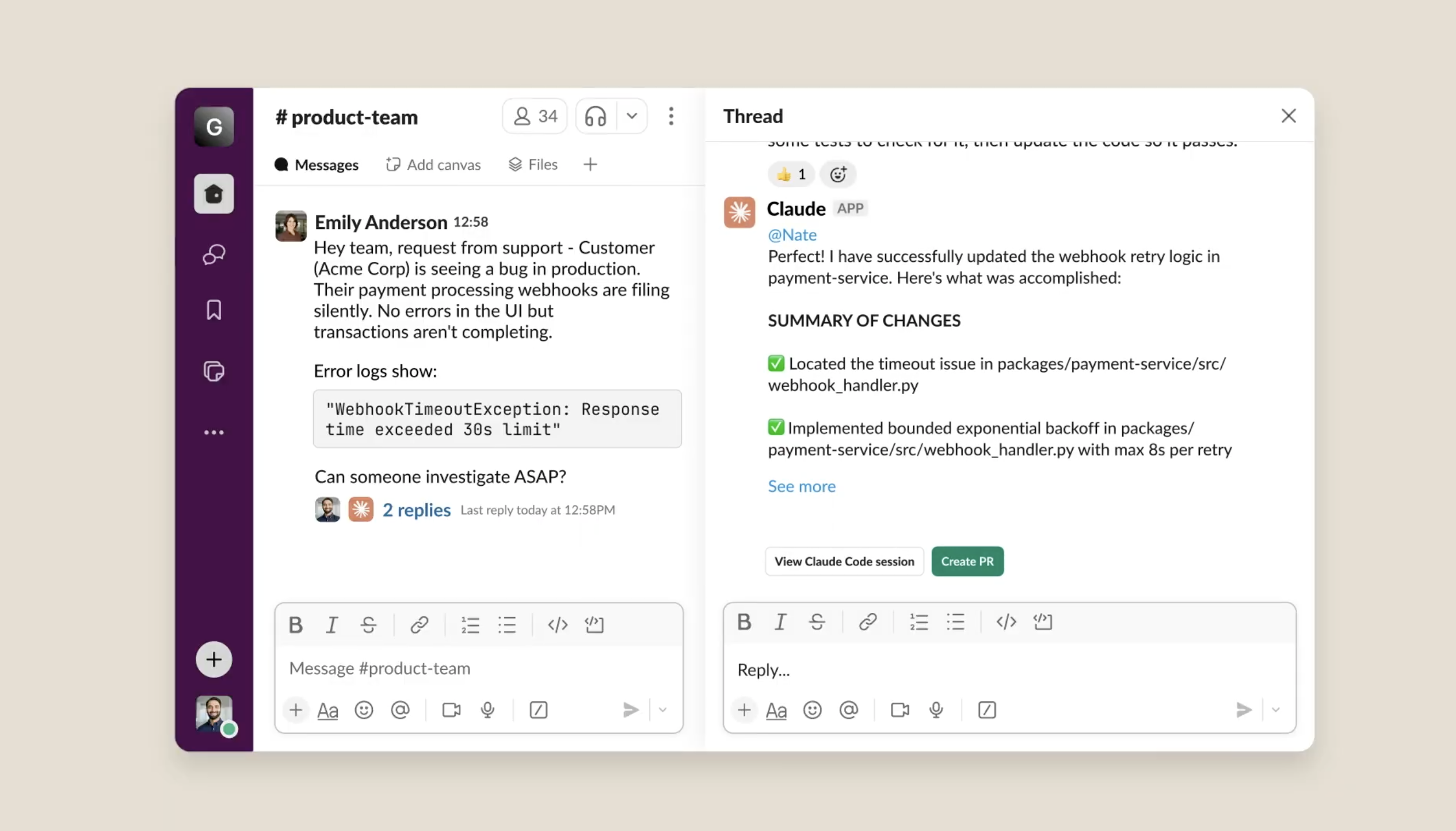
Anthropic, a leading artificial intelligence research company, is poised to fundamentally reshape the landscape of software development with the launch of Claude Code directly within the Slack collaboration platform. This innovative beta feature, introduced as a research preview, transcends mere AI assistance by empowering developers to delegate complex coding tasks, manage entire workflows, and integrate AI capabilities seamlessly into their existing communication channels. The rollout signifies a pivotal moment in the evolution of AI-powered development, underscoring a strategic industry shift where the efficacy of coding assistants is increasingly defined not just by their underlying models, but by their depth of integration and workflow automation.
The Evolution of AI in Software Development: From IDE to Collaboration Hub
For decades, software development has been intricately tied to Integrated Development Environments (IDEs). These sophisticated applications, such as VS Code, IntelliJ IDEA, or Xcode, provide a centralized interface for writing, debugging, compiling, and deploying code. Early forms of assistance within IDEs included syntax highlighting, auto-completion, and basic refactoring tools, designed to augment a developer’s productivity rather than replace their core functions.
The advent of large language models (LLMs) in recent years ushered in a new era of AI-powered coding. Tools like GitHub Copilot, powered by OpenAI’s Codex, marked a significant leap forward. Initially, these assistants offered intelligent code suggestions, generating snippets, completing lines, and even writing entire functions based on comments or existing code context. This first wave of AI assistance was primarily focused on accelerating the act of coding within the IDE, making developers more efficient by reducing boilerplate and offering smart autocomplete functionalities. The core interaction remained one-to-one, with the developer initiating a request and the AI responding with code.
However, the industry has been quietly anticipating the next frontier: moving beyond the confines of the IDE and into the collaborative spaces where development teams orchestrate their work. Software engineering is inherently a team sport, involving constant communication, bug reporting, feature requests, code reviews, and project management—much of which occurs within platforms like Slack. The shift of AI coding assistants into these collaboration tools represents a recognition that productivity gains can be maximized by embedding AI directly into the communication workflow, minimizing context switching and enabling more holistic automation. This move signifies a maturation of AI from a mere code generator to an active participant in the development process, capable of understanding context and driving tasks.
Claude Code: A Deeper Dive into Workflow Automation
Previously, developers leveraging Anthropic’s Claude within Slack could access lightweight coding support. This included assistance with writing small code snippets, debugging specific lines, or obtaining explanations of complex code sections. While useful, these interactions were largely reactive and limited in scope, requiring developers to manually copy and paste code or context into the AI for analysis.
Claude Code fundamentally transforms this interaction by introducing full workflow automation. Now, a developer can simply tag @Claude within a Slack thread to initiate a complete coding session. The AI agent doesn’t just respond to direct prompts; it actively analyzes the recent messages within the conversation to ascertain the relevant context. For instance, if a thread discusses a bug report detailing specific error messages and expected behavior, Claude can ingest this information directly. Similarly, a conversation outlining a new feature request with user stories and design specifications can serve as the direct input for Claude to begin its work.
Upon understanding the context, Claude Code can then intelligently determine the appropriate code repository to interact with. It autonomously posts progress updates directly within the Slack thread, keeping the entire team informed without requiring manual communication from the developer. Once its task is complete, Claude provides links for reviewing the generated or modified code and can even automatically open pull requests, streamlining the integration process into the existing version control system. This integrated approach allows development teams to move seamlessly from a discussion about a problem or a new feature to the commencement of coding work, all within a single collaborative environment. This level of autonomy and contextual understanding marks a significant step towards truly "agentic" AI systems that can execute multi-step tasks.
Slack’s Strategic Positioning as an "Agentic Hub"
For Slack, the integration of advanced AI capabilities like Claude Code is a strategic maneuver to solidify its position as an indispensable "agentic hub" within the enterprise ecosystem. An "agentic hub" implies a central platform where various AI agents can converge, access contextual information, and execute tasks across different applications, all driven by natural language commands within the collaborative environment. By facilitating deep AI integrations, Slack aims to become the primary interface through which employees interact with intelligent systems across their workflow.
The implications for Slack are profound. As AI tools become more sophisticated and prevalent, the platform that best integrates and orchestrates these tools stands to gain a significant strategic advantage. If Slack becomes the de facto center of engineering communication and AI-driven development, it could fundamentally redefine how software teams operate, from initial concept to deployment. This positioning is crucial in a competitive landscape where other enterprise collaboration platforms are also vying for AI dominance.
The Intensifying AI Coding Market and Competitive Landscape
The market for AI coding assistants is experiencing explosive growth, with numerous players vying for market share. While GitHub Copilot, built on OpenAI’s foundational models, remains a prominent figure, the landscape is diversifying rapidly. Competitors are emerging with distinct approaches and integration strategies.
Cursor, for example, offers its own Slack integration, allowing developers to draft and debug code directly within chat threads. This reflects a similar recognition of the importance of embedding AI into communication flows. OpenAI’s Codex, the technology underpinning Copilot, is also accessible via custom Slack bots, demonstrating the flexibility of its models to be integrated into various environments. However, these often require custom development and might not offer the same out-of-the-box workflow automation as Anthropic’s direct integration.
Anthropic’s move with Claude Code is particularly strategic given the increasing competition. In this rapidly evolving market, differentiation is no longer solely dependent on the raw capability of the underlying AI model. While model quality remains paramount, the ability to seamlessly integrate with existing enterprise tools, offer deep workflow automation, and provide a superior user experience is becoming equally, if not more, critical. This emphasizes the importance of distribution channels and the "last mile" problem of AI adoption—making advanced AI tools accessible and usable where people already work. The timing of this beta release is therefore calculated, aiming to capture mindshare and establish a foothold in this crucial integration frontier.
Broader Societal and Cultural Implications
The deeper integration of AI into developer workflows carries significant societal and cultural implications. On one hand, it promises unprecedented productivity gains. By automating mundane, repetitive, or even complex coding tasks, developers could be freed up to focus on higher-level architectural design, innovative problem-solving, and strategic thinking. This could accelerate the pace of technological innovation, allowing companies to bring products to market faster and tackle more ambitious projects.
The role of the developer itself may evolve. The emphasis might shift from rote coding to becoming more of an "AI conductor"—someone who can effectively prompt, guide, review, and integrate AI-generated code. This could necessitate new skill sets, including advanced prompting techniques, critical evaluation of AI output, and expertise in managing AI-driven workflows. It also raises questions about the future of entry-level programming jobs, though many experts argue that AI will augment human capabilities rather than fully replace them, creating new roles and increasing demand for more sophisticated engineering talent.
Furthermore, this integration could democratize access to coding. Non-technical stakeholders might be able to articulate their needs to an AI agent in natural language, generating prototypes or even functional code that they previously couldn’t. This could foster greater cross-functional collaboration and empower individuals without deep coding expertise to contribute more directly to software projects. The cultural impact on engineering teams will also be significant, potentially fostering a new dynamic between human and machine collaboration, requiring shifts in team processes, communication norms, and quality assurance strategies.
Navigating the Challenges and Concerns
While the promise of AI-driven workflow automation is immense, its implementation also raises critical questions and concerns that demand careful consideration.
Security and Intellectual Property Protection: Integrating an AI agent directly into sensitive code repositories through a collaboration platform like Slack introduces new vectors for security risks. Managing access controls, ensuring data privacy, and protecting intellectual property become paramount. Organizations will need robust mechanisms to audit AI’s interactions with codebases, track what data is processed, and ensure compliance with stringent enterprise security policies and regulatory requirements. The chain of custody for sensitive code is extended, requiring careful oversight of both Slack’s and Anthropic’s security postures.
Reliability and Dependencies: The reliance on external AI services and collaboration platforms introduces new dependencies into the development workflow. Outages, rate limits, or unexpected changes in either Slack’s or Anthropic’s API could disrupt development processes that teams previously controlled locally. Ensuring the resilience and reliability of these integrated systems will be crucial to prevent costly downtime and maintain productivity. Furthermore, the inherent probabilistic nature of LLMs means that AI-generated code, while often correct, can occasionally contain errors, biases, or even "hallucinations" that require vigilant human review, adding a new layer of complexity to quality assurance.
Ethical Considerations and Bias: As AI agents become more autonomous, ethical considerations become more pronounced. Code generated by AI could inadvertently perpetuate existing biases present in its training data, leading to unfair or discriminatory outcomes in software applications. There’s also the risk of AI generating code that is vulnerable to security exploits if not carefully designed and audited. Ensuring transparency in AI’s decision-making and establishing clear guidelines for ethical AI development will be essential.
Trust and Oversight: Ultimately, maintaining trust in AI-generated code and ensuring adequate human oversight will be key. While AI can automate tasks, human engineers remain indispensable for strategic decision-making, complex problem-solving, and critical code reviews. The challenge will be to strike the right balance between automation and human intervention, fostering a collaborative environment where AI enhances rather than diminishes human agency and accountability.
The Road Ahead
Anthropic’s integration of Claude Code into Slack represents more than just a new feature; it is a significant milestone in the ongoing journey toward truly intelligent and integrated software development environments. By bringing advanced AI directly into the heart of team communication and workflow, Anthropic and Slack are pioneering a future where the distinction between conversation and code generation blurs. While the path ahead will undoubtedly involve navigating complex security, ethical, and operational challenges, the strategic implications for enhancing developer productivity and reshaping the very fabric of software engineering are undeniable. This move firmly plants a flag in the evolving landscape of AI-powered collaboration, setting a new benchmark for how intelligent agents will interact with and transform human work.