Amir Mahmud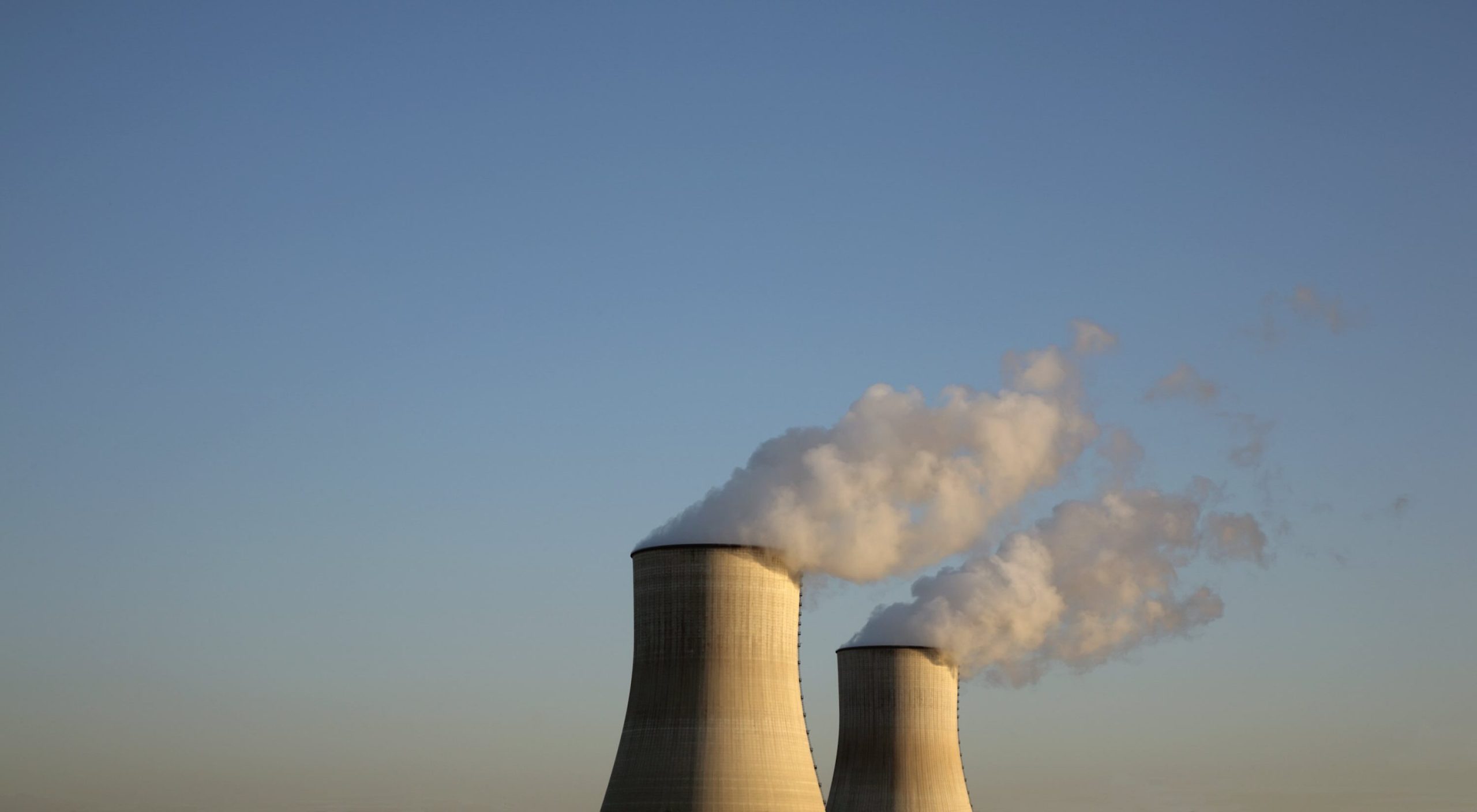
The U.S. Department of Energy (DOE) has announced a significant financial commitment, allocating $800 million in grants to two prominent nuclear energy companies, the Tennessee Valley Authority (TVA) and Holtec International. This substantial federal backing aims to accelerate the deployment of advanced small modular reactors (SMRs), signaling a pivotal moment in the nation’s energy strategy and a renewed push for carbon-free power generation. Each company is set to receive $400 million, a sum intended to catalyze the construction and operationalization of these innovative nuclear technologies, which are seen as crucial for meeting escalating electricity demands and decarbonization targets.
A Bold Federal Commitment to Next-Generation Nuclear
This grant allocation underscores a strategic vision by the U.S. government to re-establish American leadership in nuclear energy and to foster a robust domestic nuclear industry. The funding, originating from the Trump administration, targets the development of Generation III+ SMR designs, which represent an evolutionary step from existing nuclear fission technology. These designs incorporate enhanced safety features, greater efficiency, and a smaller footprint compared to conventional large-scale reactors. The hope is that by shrinking reactor size and embracing modular construction, the historically prohibitive costs and lengthy timelines associated with nuclear power plant construction can be significantly reduced through factory mass production and streamlined deployment processes.
The Tennessee Valley Authority plans to construct a single 300-megawatt (MW) reactor based on GE-Hitachi’s BWRX-300 design at its Clinch River site in Tennessee. This project is poised to become a benchmark for future SMR deployments, leveraging TVA’s extensive experience as one of the largest public power providers in the United States, with a long history of operating large nuclear facilities. Simultaneously, Holtec International has been tasked with deploying two of its advanced reactor units, each potentially of a 300 MW class, in Michigan. While specific locations within Michigan are yet to be finalized, the move could potentially revitalize brownfield industrial sites and support the state’s diverse energy needs.
The Resurgence of Nuclear Power: A Shifting Energy Paradigm
The current enthusiasm for SMRs and nuclear power, more broadly, is set against a backdrop of complex global energy challenges. For decades, large-scale nuclear power development in the U.S. and many parts of the world faced headwinds, including soaring construction costs, lengthy regulatory processes, public apprehension following incidents like Three Mile Island, Chernobyl, and Fukushima, and competition from cheaper fossil fuels and, more recently, renewable energy sources. However, the pressing urgency of climate change, coupled with growing energy demands from rapid electrification and emerging technologies like artificial intelligence (AI) and expansive data centers, has reignited interest in nuclear as a reliable, dispatchable, and carbon-free baseload power source.
Historically, nuclear energy has been a cornerstone of the U.S. power grid, providing nearly 20% of the nation’s electricity and over half of its carbon-free power. The U.S. pioneered commercial nuclear power in the 1950s under the "Atoms for Peace" program, leading to the construction of numerous large pressurized water reactors (PWRs) and boiling water reactors (BWRs). While many of these facilities continue to operate safely and efficiently, the existing fleet is aging, with many reactors approaching or having received license extensions. The need for new, clean baseload generation to replace retiring plants and meet future demand has become increasingly apparent. This context provides a fertile ground for the re-evaluation and adoption of advanced nuclear technologies like SMRs.
Unpacking Small Modular Reactor Technology
Small Modular Reactors represent a paradigm shift in nuclear power generation. Unlike their gigawatt-scale predecessors, SMRs are defined by their smaller physical size, typically generating up to 300 MW of electricity, and their modular design, which allows components to be fabricated in factories and transported to sites for assembly. This "modular" approach promises several key advantages:
- Cost Reduction: Factory-built components can benefit from economies of series production, significantly lowering manufacturing costs compared to bespoke, on-site construction of large reactors. Standardized designs also reduce engineering and construction complexity.
- Shorter Construction Timelines: Modularity allows for parallel construction activities, both at the factory and on site, potentially cutting project schedules from decades to years.
- Enhanced Safety Features: Generation III+ SMRs often incorporate passive safety systems that rely on natural forces like gravity and convection for cooling in emergency situations, rather than active pumps or human intervention. This inherent safety design can simplify operations and reduce the risk of severe accidents.
- Flexible Siting and Applications: Their smaller footprint makes SMRs suitable for a wider range of sites, including brownfield locations or areas with less extensive infrastructure. They can be integrated into existing grids, provide power to remote communities, support industrial processes with high-temperature heat, or even be used for hydrogen production and desalination.
- Scalability: Utilities can incrementally add SMR units as demand grows, providing a more flexible investment pathway than building a single, very large reactor.
However, the SMR concept, while promising, is not without its challenges. As the World Nuclear Association notes, only a handful of SMRs are operational globally, primarily in Russia and China. The "first-of-a-kind" (FOAK) costs for initial SMR deployments can still be substantial, as developers navigate new regulatory frameworks, establish supply chains, and optimize construction techniques. Public acceptance, waste management, and the development of a skilled workforce also remain critical considerations for widespread adoption.
Pioneering Projects: TVA and Holtec’s Role
The projects led by TVA and Holtec are critical test cases for validating the SMR promise in the U.S.
TVA’s selection of the GE-Hitachi BWRX-300 for its Clinch River site is significant. The BWRX-300 is a 300 MWe water-cooled, natural circulation SMR that leverages the proven technology of GE-Hitachi’s existing boiling water reactors but with a simplified design. The Clinch River site in Roane County, Tennessee, has a long history with advanced nuclear research, having been the proposed location for a fast breeder reactor in the 1970s. TVA’s existing nuclear fleet, including the Watts Bar, Browns Ferry, and Sequoyah nuclear plants, provides a strong operational foundation and regulatory experience, positioning them well to navigate the complexities of SMR deployment. This project could serve as a blueprint for other utilities looking to decarbonize their grids in the Southeast and beyond.
Holtec International, headquartered in Jupiter, Florida, is known for its expertise in nuclear fuel storage and transportation. Its venture into SMR deployment with its advanced reactor units, potentially in Michigan, marks a strategic expansion. While the original article specifies "two of its 300-megawatt reactors," Holtec’s flagship SMR design, the SMR-160, is a 160 MWe pressurized light water reactor. The specific design and power output for the Michigan project will be crucial details as the initiative progresses. Michigan, with its significant industrial base and commitment to clean energy, represents a strategic location for SMR deployment. The potential to revitalize former industrial or power generation sites (e.g., the decommissioned Palisades plant) with advanced nuclear technology could bring economic benefits and stable power to the region.
Overcoming Hurdles and Seizing Opportunities
The federal grants are designed to help these pioneering projects overcome the "valley of death" – the critical period where innovative technologies transition from research and development to commercial deployment. Government funding de-risks initial projects, making them more attractive to private investors and fostering the necessary supply chain development. This support is crucial for establishing the regulatory precedents, construction methodologies, and operational experience needed for future SMR rollouts.
Beyond the technical and financial aspects, successful SMR deployment will depend on public engagement and community support. Building trust through transparent communication about safety, waste management, and economic benefits will be paramount. The long-term success of these projects will also hinge on the ability to develop a skilled workforce capable of manufacturing, constructing, operating, and maintaining these advanced reactors. This includes engineers, technicians, and specialized tradespeople, highlighting the need for robust educational and training programs.
Economic, Environmental, and Social Ripples
The deployment of SMRs holds the potential for significant economic, environmental, and social impacts. Economically, these projects are expected to generate thousands of high-paying jobs in manufacturing, construction, and operations. The development of a domestic SMR industry can also strengthen the U.S. position in global energy markets and foster technological innovation. For communities hosting these reactors, there’s the promise of stable tax revenues and local economic revitalization.
Environmentally, SMRs offer a powerful tool for combating climate change by providing reliable, carbon-free electricity that can complement intermittent renewable sources like solar and wind. By reducing reliance on fossil fuels, SMRs contribute to improved air quality and reduced greenhouse gas emissions, aligning with national and international decarbonization goals.
Socially, the availability of stable, affordable electricity can enhance energy security and resilience, particularly in regions prone to extreme weather events or grid instability. The ability to locate smaller reactors closer to demand centers or critical industrial users can also improve grid efficiency and reduce transmission losses.
The Future Horizon of Nuclear Energy
The $800 million in federal grants marks a decisive step in the journey towards a diversified and decarbonized energy future for the United States. While only two SMRs are currently operational globally, these U.S. projects, backed by substantial government investment, aim to move the technology firmly into the deployment phase. The growing demand for electricity from the tech sector, driven by AI and data centers, further underscores the urgent need for reliable, carbon-free power sources that SMRs are uniquely positioned to provide.
The success of the TVA and Holtec projects will be closely watched, not just domestically but internationally, as nations around the world grapple with similar energy challenges. These grants represent more than just financial aid; they are an investment in innovation, energy independence, and a cleaner, more sustainable future powered by advanced nuclear technology. The coming years will be crucial in demonstrating the full potential of small modular reactors to reshape the global energy landscape.