Amir Mahmud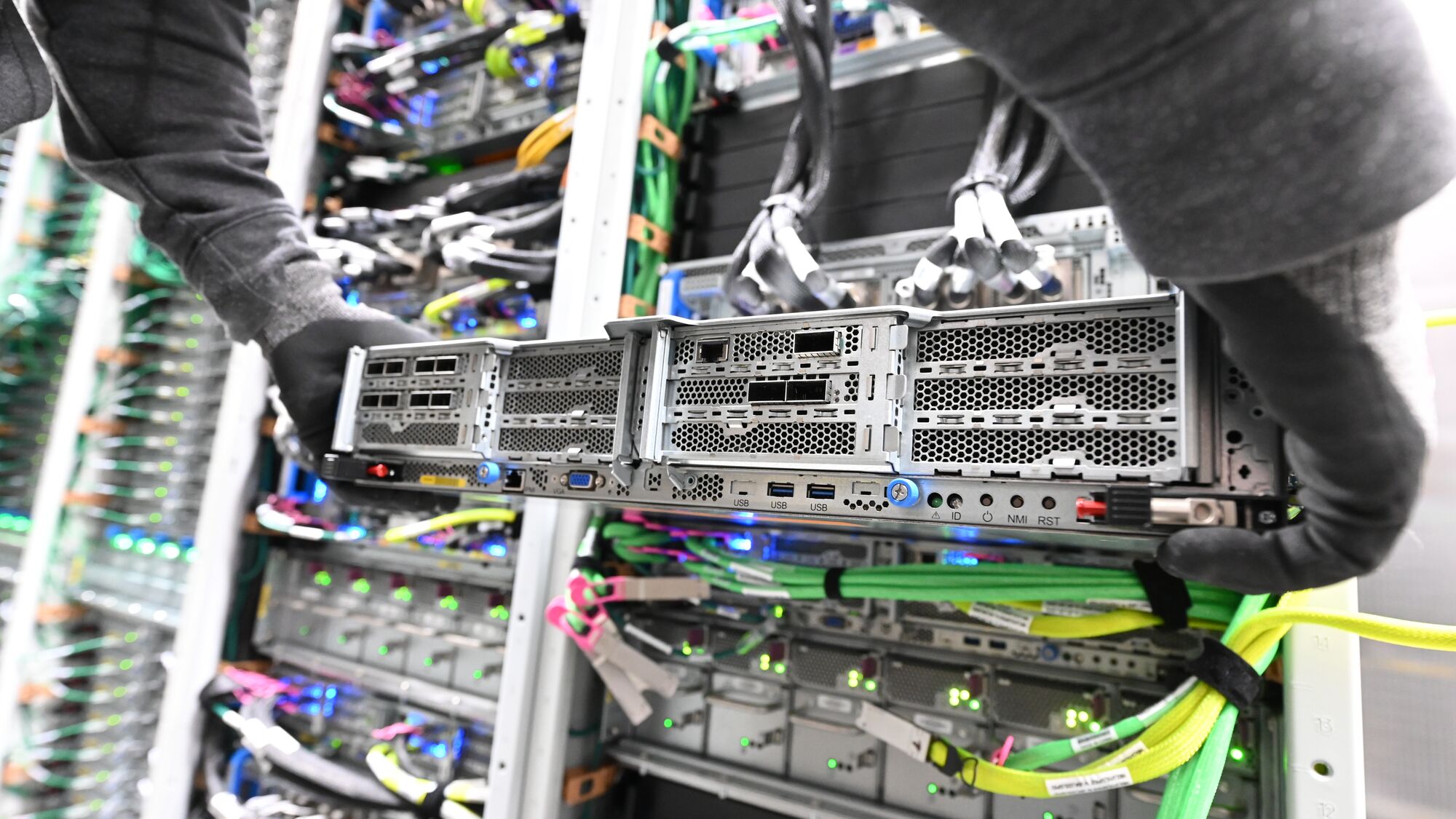
Amazon Web Services (AWS), a dominant force in the global cloud computing landscape, recently unveiled an innovative offering dubbed "AI Factories," designed to empower large corporations and governmental entities to host sophisticated artificial intelligence systems within their own localized data centers. This strategic move allows organizations to maintain absolute control over their sensitive data, a critical consideration in an era increasingly defined by data sovereignty concerns and geopolitical sensitivities. Under this new model, customers provide the necessary infrastructure – power and the physical data center – while AWS furnishes and manages the specialized AI system, seamlessly integrating it with broader AWS cloud services.
A New Paradigm for Enterprise AI
The introduction of AWS AI Factories marks a significant evolution in how enterprise-grade AI infrastructure is deployed and managed. In essence, it offers a "cloud-in-a-box" solution, bringing the power and capabilities of AWS’s vast AI ecosystem directly to the customer’s premises. This approach stands in contrast to the traditional public cloud model, where data and processing typically reside in shared, remote data centers. The core proposition of these AI Factories is to bridge the gap between the scalability and advanced services of the cloud and the stringent security, compliance, and control requirements of highly regulated industries and public sector organizations.
The burgeoning demand for artificial intelligence, particularly generative AI, has driven an unprecedented surge in computational requirements. Enterprises across sectors are eager to leverage AI for everything from automating complex business processes to developing groundbreaking new products and services. However, for many, the journey to AI adoption has been complicated by regulatory hurdles, internal data governance policies, and a general apprehension about relinquishing control over proprietary or sensitive information to third-party cloud providers. AWS’s AI Factories aim to directly address these hesitations by providing a secure, managed environment that keeps data localized while still benefiting from AWS’s advanced AI toolchain.
Addressing the Sovereignty Imperative
Data sovereignty, the legal concept that data is subject to the laws and governance structures of the country in which it is stored, has become a paramount concern for governments and multinational corporations alike. This issue is magnified by international data transfer regulations like the General Data Protection Regulation (GDPR) in Europe, various national data residency laws, and heightened concerns over national security and intellectual property protection. The ability to run AI workloads on-premises means that data never leaves the customer’s physical control or chosen geographic location, thereby circumventing potential legal and compliance challenges associated with cross-border data flows or storing data in a competitor’s or foreign adversary’s jurisdiction.
Historically, organizations grappling with data sovereignty often resorted to building and managing their entire IT infrastructure from the ground up, a capital-intensive and operationally complex undertaking. While public cloud providers have offered dedicated regions and sovereign cloud options in various countries, these solutions still involve storing data within the provider’s infrastructure. The on-premises AI Factory model represents a distinct alternative, allowing organizations to maintain physical custody of their hardware and data while outsourcing the specialized expertise required to deploy and operate cutting-edge AI systems. This blend of local control and managed services provides a compelling solution for entities like defense contractors, financial institutions, healthcare providers, and government agencies that operate under the strictest data governance mandates.
The Nvidia Partnership: A Strategic Nexus
The nomenclature "AI Factory" itself holds significant weight, as it is a term popularized by Nvidia, the undisputed leader in graphics processing units (GPUs) and the foundational hardware for modern AI. This is no mere coincidence; AWS’s AI Factory initiative is, in fact, a deeply integrated collaboration with Nvidia. This partnership underscores the symbiotic relationship between cloud hyperscalers and specialized hardware manufacturers in the AI ecosystem. Nvidia’s advanced GPU architectures are the computational backbone for training and inference in large language models and other complex AI applications, making them indispensable for any serious AI endeavor.
The AWS AI Factory leverages a hybrid technological stack, combining the best of both worlds. Customers can opt for Nvidia’s latest generation Blackwell GPUs, renowned for their unparalleled processing power and efficiency in AI workloads, or choose Amazon’s homegrown Trainium3 chips, which are optimized for AI model training. This flexibility allows organizations to select the hardware best suited for their specific performance requirements, cost considerations, and existing technological alignments. Beyond the core processors, these on-premises factories integrate AWS’s robust suite of networking solutions, high-performance storage, resilient databases, and industry-leading security protocols. Crucially, they also provide direct access to Amazon Bedrock, AWS’s service for selecting and managing foundation models, and AWS SageMaker, its comprehensive platform for building, training, and deploying machine learning models. This integration ensures that even with localized hardware, customers can leverage the full breadth of AWS’s AI development and deployment tools, creating a seamless and powerful AI operational environment.
Hybrid Cloud’s Resurgence in the AI Era
The emergence of these on-premises AI Factories signals a fascinating shift in the broader cloud computing narrative, hinting at a resurgence of hybrid cloud strategies. For years, the industry trend largely pointed towards a full migration to the public cloud, driven by promises of scalability, cost efficiency, and reduced operational overhead. However, the unique demands of AI, particularly concerning data gravity, latency, and sovereignty, are catalyzing a re-evaluation. The "irony," as some industry observers note, lies in cloud giants like AWS now heavily investing in solutions that bring compute power back to corporate private data centers, echoing the distributed IT architectures prevalent over a decade ago.
This development reflects a maturing understanding of cloud adoption. Not all workloads are ideally suited for the public cloud, and a "one-size-fits-all" approach often falls short for enterprises with diverse needs. Hybrid cloud, which involves a combination of public cloud, private cloud, and on-premises infrastructure, offers the flexibility to place workloads where they make the most sense from a performance, cost, and compliance perspective. For AI, especially when dealing with massive, sensitive datasets or real-time inference at the edge, an on-premises or near-edge deployment can offer significant advantages in terms of reduced latency and enhanced data control. This strategic pivot by AWS is not a retreat from the cloud but rather an expansion of its reach, aiming to capture AI workloads that would otherwise remain siloed or be managed entirely independently.
The Competitive Arena: Hyperscalers Vie for AI Dominance
AWS is not alone in recognizing the strategic importance of on-premises and hybrid AI solutions. The competitive landscape among hyperscale cloud providers is intensely focused on AI, and rivals are making similar moves. Microsoft, for instance, a formidable competitor to AWS, has also been aggressively deploying Nvidia AI Factories within its global data centers to power workloads for OpenAI, its key AI partner. While initially focused on its own cloud infrastructure, Microsoft has also highlighted its commitment to building "AI Superfactories" – new, state-of-the-art data centers in locations like Wisconsin and Georgia – leveraging Nvidia’s advanced data center technology.
Furthermore, Microsoft has proactively addressed data sovereignty concerns through initiatives like "Azure Local," which offers managed hardware installations directly on customer sites, and a comprehensive suite of "sovereign solutions" tailored for European organizations. These offerings demonstrate a parallel understanding among leading cloud providers: to fully capture the enterprise AI market, they must provide flexible deployment models that accommodate stringent regulatory, security, and operational requirements. The race is on to offer not just the most powerful AI models and services, but also the most adaptable and compliant infrastructure for deploying them, whether in the cloud, on-premises, or at the edge. This competitive dynamic is driving innovation in infrastructure design, management tools, and service offerings, ultimately benefiting enterprises seeking to harness AI responsibly.
Market Implications and Future Outlook
The introduction of AWS AI Factories carries substantial market implications. It solidifies Nvidia’s pivotal role as the foundational technology provider for advanced AI infrastructure across all major cloud platforms. For enterprises, it offers a compelling pathway to adopt cutting-edge AI without compromising on data governance or incurring the full burden of building and managing complex AI hardware stacks themselves. This could accelerate AI adoption in highly regulated sectors that have traditionally been slower to embrace public cloud services.
However, the shift also presents new challenges. While AWS manages the AI system, integrating these on-premises units with existing enterprise IT infrastructure will still require skilled personnel and careful planning. The operational complexity of managing a hybrid environment, even with managed services, remains a consideration. Furthermore, the significant energy consumption associated with powerful AI hardware raises questions about sustainability and the carbon footprint of these distributed AI factories.
Looking ahead, the lines between public cloud, private cloud, and edge computing are likely to become increasingly blurred. The "AI Factory" concept, whether from AWS or its competitors, represents a strategic evolution, not a regression, in the cloud computing journey. It acknowledges that the optimal deployment strategy for AI is often a nuanced one, balancing performance, control, cost, and compliance. As AI continues its rapid advancement, the ability of cloud providers to offer flexible, secure, and performant infrastructure across diverse deployment models will be a key differentiator in the ongoing battle for enterprise dominance.