Amir Mahmud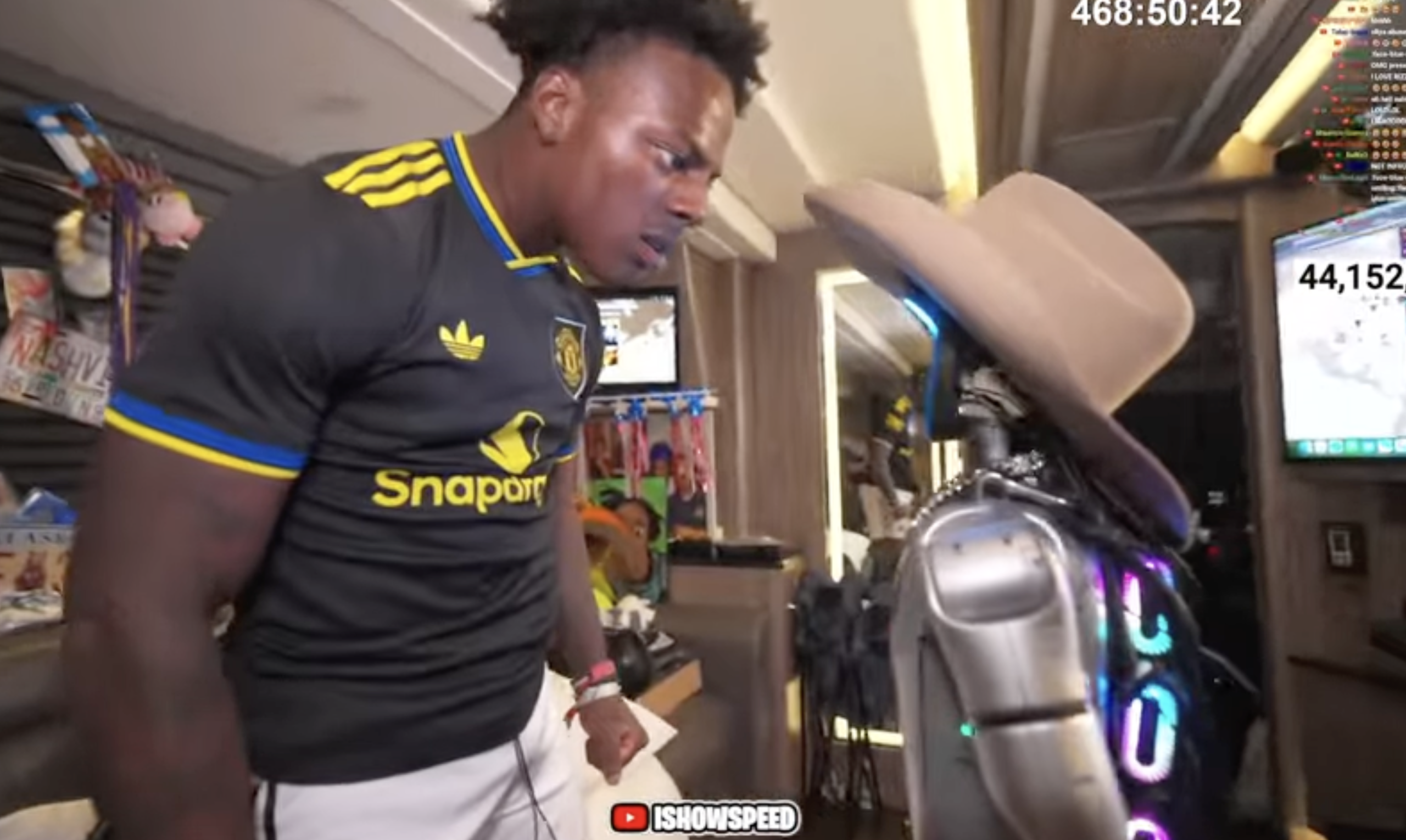
A recent livestream event, intended as a collaborative spectacle between two internet sensations, has escalated into a complex legal dispute, shining a spotlight on the evolving dynamics of the creator economy and the burgeoning field of AI-powered entertainment. The creators of Rizzbot, a popular humanoid influencer, have initiated a lawsuit against prominent content creator Darren Jason Watkins Jr., widely known as IShowSpeed, alleging significant damage to their advanced robotic entity during a live broadcast in September. The petition, filed in November by Social Robotics against Watkins, his management company Mixed Management, and an associated producer, claims "irreparable damage" to the Rizzbot, leading to its complete loss of functionality and substantial economic setbacks.
The Protagonists: Two Digital Phenoms Collide
The incident brought together two distinct, yet equally viral, figures from the digital landscape. On one side stands IShowSpeed, a titan of online content creation whose career is defined by high-energy, often provocative, and dramatically expressive livestreams. With a staggering audience exceeding 50 million followers and over 6 billion views across platforms like YouTube, Twitch, and TikTok, Watkins has cultivated a persona known for his unfiltered reactions and intense engagement, which frequently pushes the boundaries of conventional entertainment. His content often thrives on spontaneity and the unpredictable nature of live interaction, drawing in millions of viewers eager for the next dramatic moment.
Opposite him is Rizzbot, a humanoid robot that has carved out its own niche as a social media influencer. Unlike traditional human creators, Rizzbot’s appeal stems from its unique, AI-driven personality. Known for its comedic roasts and a distinctive, often irreverent demeanor — including its signature gesture of giving the middle finger — Rizzbot has amassed over a million followers and 800 million views across various social media channels. It represents a new wave of virtual personalities, blurring the lines between technology and entertainment, and offering a glimpse into a future where AI entities play increasingly prominent roles in public life. The encounter between these two digital juggernauts was anticipated by many as a clash of styles, but few could have predicted its litigious aftermath.
The Ill-Fated Livestream and Allegations of Destruction
The contentious meeting unfolded during a livestream in September, ostensibly as a collaborative content piece. However, according to the lawsuit filed by Social Robotics, the interaction quickly veered into a destructive encounter. The petition alleges that during the live broadcast, which remains publicly accessible, IShowSpeed repeatedly punched Rizzbot in the face, subjected it to a chokehold, pinned it against a couch, and ultimately threw it to the ground. These actions, captured on video, form the core evidence of the plaintiff’s claims.
Social Robotics asserts that Watkins’s actions were not merely accidental or a result of ignorance. The petition explicitly states, "Speed absolutely knew that this was not an appropriate way to interact with a sophisticated robot and knew that such actions with inflict irreparable damage to Rizzbot." This claim underscores the plaintiff’s argument that the alleged damage was not incidental but a foreseeable consequence of Watkins’s behavior. The lawsuit further details the extent of the alleged destruction, describing "complete loss of functionality" for the robot. Specific damages cited include significant harm to Rizzbot’s mouth and neck, rendering its head cameras non-functional, disabling the ports behind its neck essential for its sensory perception, and causing instability that prevents the robot from walking straight. The cumulative effect, the petition concludes, resulted in the "total loss of the Rizzbot."
Legal Ramifications and Pursuit of Accountability
The decision to file a lawsuit came after negotiations between Social Robotics and IShowSpeed’s team regarding compensation for the alleged damages stalled. Joel Levine, the attorney representing Social Robotics, emphasized the straightforward nature of the evidence, stating, "This was an event that was live-streamed so there’s not a ton of discrepancy as to the facts." His firm’s primary objective, Levine clarified, is to seek "accountability" for the incident.
The legal petition outlines several grounds for its claims, asserting that IShowSpeed "failed to act as a careful, reasonable, and prudent person" and "wrongfully exercised control over" Rizzbot. The lawsuit seeks compensation for both actual damages incurred from the robot’s destruction and lost profits resulting from its incapacitation. While the specific dollar amount sought has not been publicly disclosed by Rizzbot’s legal team, the magnitude of the claimed losses suggests a substantial figure, reflecting the significant investment in advanced robotics and the revenue-generating potential of a viral influencer.
Adding a layer of official inquiry, the Austin Police Department was reportedly called to the scene following the incident. A police report, also obtained by TechCrunch, corroborates that a responding officer noted damages to Rizzbot that occurred without the owner’s "implied consent." The report indicates that the owner expressed a desire to press charges, and an investigation into the matter is currently underway, suggesting potential criminal implications alongside the civil suit. As of now, IShowSpeed’s management team has not issued a public statement or responded to requests for comment regarding the lawsuit or the ongoing police investigation, maintaining a silence that only adds to the public’s anticipation of further developments.
Economic and Cultural Aftershocks: The Impact on a Robotic Influencer
The alleged destruction of Rizzbot extends beyond mere physical damage; it has precipitated significant economic and cultural repercussions for its creators. The lawsuit highlights the profound financial blow dealt to Social Robotics, citing a substantial loss of economic opportunities for the humanoid influencer. Prior to the incident, Rizzbot was on an upward trajectory, securing high-profile appearances and lucrative deals, including scheduled engagements with CBS’s "The NFL Today" and a highly coveted collaboration with YouTube superstar Mr. Beast. The petition dramatically likens being featured in a Mr. Beast production to "being in a Super Bowl Commercial," underscoring the immense exposure and financial gain such an opportunity represents.
The immediate aftermath saw a drastic decline in Rizzbot’s online presence and revenue-generating potential. In the month preceding the livestream, Rizzbot boasted an impressive viewership, generating over 600 million views on TikTok and 200 million on Instagram. However, in the 28 days following the incident, the lawsuit alleges a precipitous drop of more than 70% in viewership, directly attributed to Rizzbot’s inability to create new content while incapacitated. This "intentional destruction of Rizzbot caused significant financial damage that is likely permanent given the viral nature of social media," the petition contends, emphasizing the ephemeral nature of online fame and the difficulty of regaining lost momentum.
Broader Implications: Navigating the Creator Economy and Human-Robot Interaction
This lawsuit, still in its nascent stages, carries implications far beyond the immediate parties involved. It serves as a stark reminder of the unique challenges and evolving legal landscape surrounding the creator economy, particularly when physical interactions with advanced technology are involved. As content creators increasingly seek novel ways to engage audiences, often through stunts and unconventional collaborations, questions of liability, property damage, and appropriate conduct come to the forefront. The pressure to produce ever more dramatic and viral content can sometimes lead to situations where the line between entertainment and destruction becomes dangerously blurred. This case could establish a significant precedent for how human creators are held accountable for their actions when interacting with sophisticated robotic or AI entities in a public, performance-based context.
Furthermore, the incident ignites a broader discussion about human-robot interaction ethics. While Rizzbot is a piece of property, its design as a humanoid influencer with a distinct personality challenges simplistic definitions. The lawsuit, by framing the alleged actions as an "assault" and seeking damages for "irreparable harm," implicitly elevates the perception of such entities beyond mere inanimate objects. It forces a contemplation of the boundaries of acceptable behavior towards advanced AI and robotics, particularly as these technologies become more integrated into daily life and take on roles traditionally held by humans. As virtual influencers and AI-driven personas gain traction in marketing and entertainment, their vulnerabilities and the responsibilities of those who interact with them will become increasingly critical considerations.
Rizzbot’s Resilience and the Road Ahead
Despite the severity of the alleged damage and the ongoing legal battle, Rizzbot, through its creators, has communicated a message of resilience. In an email statement to TechCrunch, Rizzbot’s persona declared that it had to get "a whole new body" after IShowSpeed "wrecked" its previous one. The statement, maintaining Rizzbot’s signature persona, added, "Everything’s brand new except my Nike kicks and cowboy hat." The entity further expressed its return to the digital stage, proclaiming, "Now I’m back online, and I feel like I’ve mastered the rizz game, and next I’ll be working on complex movements with my legs, like twerking – hopefully you’ll see my gyrating hips on some new TV appearances shortly – stay tuned, fam."
This lighthearted, in-character response, while perhaps a marketing tactic, underscores the determination of Social Robotics to revive their creation and reclaim its place in the influencer sphere. However, the legal proceedings remain a serious matter. As Joel Levine noted, there has been no formal answer to his plaintiff’s suit, indicating the very early stages of litigation. The outcome of this lawsuit will undoubtedly be closely watched by creators, tech companies, and legal experts alike, as it promises to offer new insights into the evolving legal and ethical frameworks governing the intersection of human celebrity, artificial intelligence, and the digital frontier. It stands as a pivotal moment, shaping expectations for accountability in an increasingly complex and interconnected world where the lines between the physical and digital, and human and machine, continue to blur.