Amir Mahmud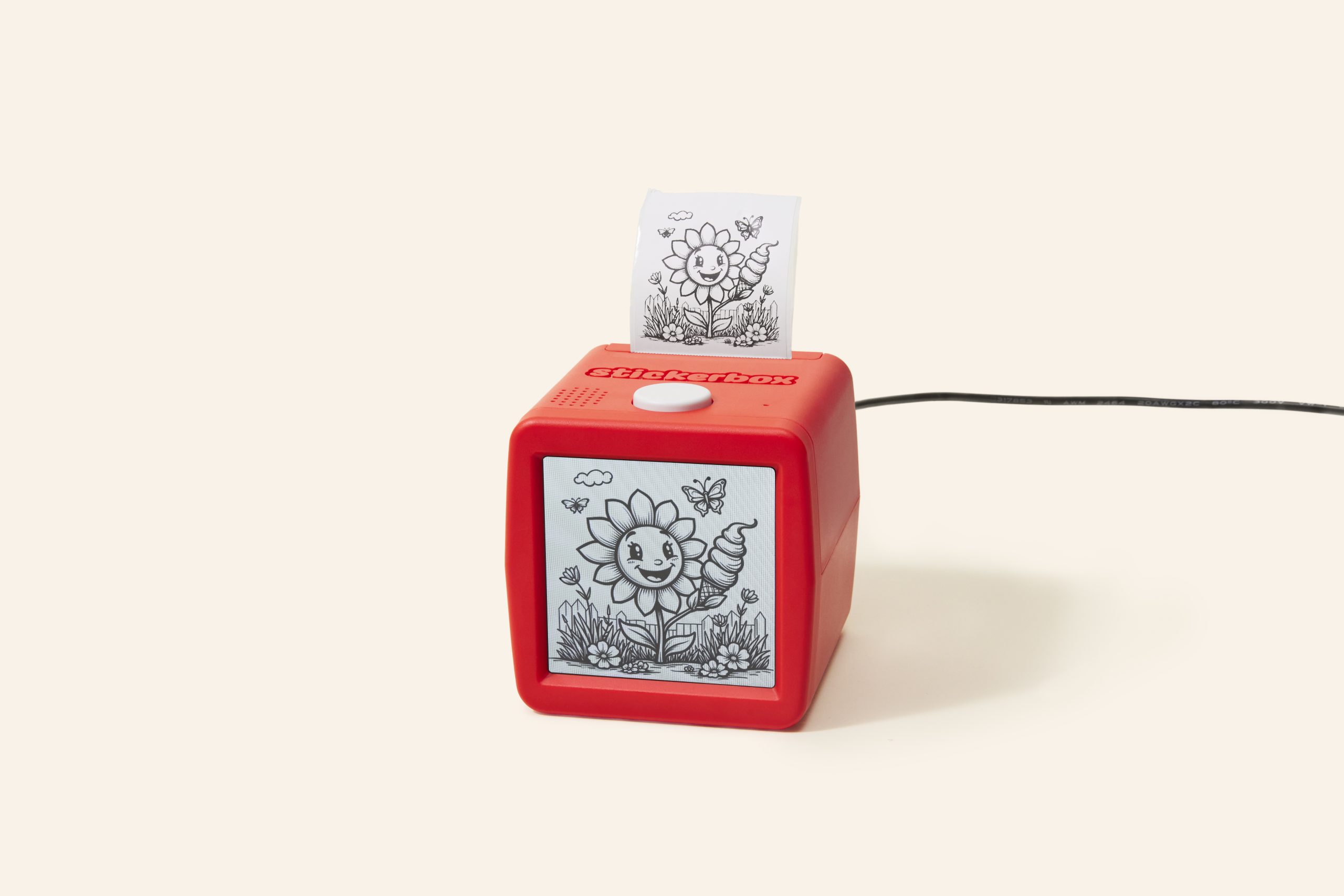
A novel toy is emerging from the Brooklyn-based startup Hapiko, poised to transform the landscape of children’s creative play. This device, known as Stickerbox, integrates artificial intelligence into a voice-activated sticker printer, allowing children to articulate their imaginative concepts and watch them materialize into tangible, customizable stickers. While initial skepticism often accompanies the introduction of AI into children’s products, early hands-on experiences with Stickerbox reveal a surprisingly engaging and creatively stimulating experience that has captivated both young users and their adult companions.
From Concept to Creation: The Stickerbox Experience
The Stickerbox unit itself is a compact, vibrant red box, reminiscent of classic creative toys, featuring a monochrome screen and a prominent "push-to-talk" button on its top surface. Priced at $99.99, each package includes the device, three rolls of special paper sufficient for printing approximately 180 stickers, a power cord, and a set of colored pencils. The design ethos evokes a modern interpretation of enduring classics like the Etch A Sketch, where users manipulate controls to bring internal visions to life. In Stickerbox’s case, the "controls" are verbal commands, subtly introducing children to the nascent art of prompt engineering without them even realizing it. This intuitive interface enables youngsters to freely explore their creativity, with any improvement in their ability to formulate effective prompts becoming an organic byproduct of their play.
Setting up the Stickerbox requires minimal parental assistance, primarily for connecting the device to a home Wi-Fi network, a process familiar to anyone who has configured a smart speaker. This quick, seamless setup ensures that the focus remains on immediate creative engagement. Once connected, operation is straightforward: press the button, verbally describe the desired image, release the button, and observe the spoken words appear on screen before the AI-generated image is rapidly printed. This near-instantaneous manifestation of an idea into a physical object fosters a unique sense of wonder and accomplishment, creating a serendipitous link between thought and tangible reality.
The device employs an ink-free thermal printer, which not only eliminates the mess and recurring cost associated with ink cartridges but also uses BPS and BPA-free paper, prioritizing child safety and environmental consciousness. The resulting black-and-white stickers are designed for easy tearing and subsequent coloring using the provided pencils or any standard crayons and markers. This hybrid play model intelligently merges the instant gratification of digital creation with the calming, meditative activity of physical coloring, akin to the timeless appeal of a coloring book. This balance helps to mitigate concerns about excessive screen engagement by grounding the digital experience in a real-world, hands-on activity, offering a healthy antidote to potential digital overstimulation. The more children interact with Stickerbox, the more they discover the depth of its AI’s comprehension. Rather than limiting users to simple, basic requests, the device can interpret complex, "train-of-thought" commands, a particularly valuable feature given the often meandering and expansive nature of a child’s narrative.
The Genesis of Hapiko: A Father’s Inspiration Meets Tech Expertise
Hapiko, the innovative company behind Stickerbox, was co-founded this year by CEO Arun Gupta and CTO Robert (Bob) Whitney. Their professional paths initially converged at Grailed, an e-commerce marketplace, where Gupta served as CEO and Whitney as Director of Engineering, culminating in the company’s acquisition by GOAT Group in 2022. Both founders bring a wealth of experience from previous ventures that uniquely positioned them to develop a product like Stickerbox.
Arun Gupta’s entrepreneurial journey includes founding WakeMate, a Y Combinator-backed hardware sleep tracker, which provided him with crucial insights into bringing consumer hardware products to market. Robert Whitney’s background is equally diverse and impactful. Before Grailed, he was instrumental as Director of Engineering for The New York Times’ Games division, a period that saw the publisher expand its digital offerings from traditional crosswords to a full-fledged gaming platform, notably acquiring the popular puzzle game Wordle and launching other successful titles like Connections. This experience honed his understanding of what makes a compelling consumer-facing product. Following his tenure at the Times, Whitney gained firsthand exposure to the cutting-edge advancements in artificial intelligence during his time at Anthropic, a leading AI research company.
However, the true catalyst for Stickerbox emerged from Whitney’s personal life as a father. The inspiration struck when his son, seeking a coloring page he didn’t possess, prompted Whitney to use a large language model like ChatGPT to generate a custom image—a tiger eating ice cream. The sheer joy and wonder on his son’s face upon seeing his unique request materialize from a dusty home printer sparked an immediate realization. When his son returned moments later with another imaginative request—a lizard riding a skateboard—Whitney witnessed the profound "magic" of instant creation. This moment illuminated a clear gap in the market: while AI technology offered myriad novel experiences, very few were specifically tailored for children. This insight became the driving force behind Hapiko’s mission to build "AI for Kids," focusing on appropriate guardrails and product designs that nurture young minds.
Navigating the Digital Playground: AI Safety and Ethics for Young Users
The integration of artificial intelligence into products for children raises critical questions about safety, privacy, and ethical design. Hapiko has proactively addressed these concerns by embedding a combination of AI models, including proprietary technology, specifically engineered to ensure the Stickerbox environment remains kid-safe. This robust filtering system actively prevents the generation of harmful content, such as violent or sexually explicit imagery, and automatically screens out profanity. Should a child attempt a seemingly innocuous yet potentially problematic command, like "boobs," the device is programmed to respond with a generic, unrelated sticker, perhaps a cartoon girl without any suggestive characteristics. This intelligent redirection guides children away from inappropriate inquiries and back towards imaginative, playful interactions, fostering a secure creative space that parents can trust.
Gupta emphasizes Hapiko’s commitment to being a "trusted brand for parents," alleviating the need for constant parental oversight and fostering a worry-free environment where children can explore independently. This focus on ethical AI development for minors positions Stickerbox at the forefront of a growing movement within the tech industry to create responsible and beneficial digital experiences for younger generations. The broader societal impact of introducing AI at an early age is a subject of ongoing discussion, but Stickerbox’s approach suggests a pathway where technology can augment traditional play rather than replace it, by offering controlled, creative interfaces.
Beyond the Initial Print: Enhancing Creativity and Community
Hapiko’s business model currently relies on the sale of the Stickerbox device itself, complemented by an affordable consumables strategy. Refill rolls of paper are priced accessibly at $5.99 for three rolls (180 stickers), ensuring that the creative flow is not hampered by prohibitive ongoing costs. This approach encourages sustained engagement and repeated use, vital for a children’s product. Looking ahead, the company plans to introduce premium features to further enrich the user experience and diversify revenue streams. These potential enhancements include the ability for users to upload their own images, allowing children to envision themselves within fantastical scenarios, and the integration of collaborative tools that could foster shared creative projects.
As a Wi-Fi-connected device, Stickerbox is designed for continuous evolution. Regular firmware updates introduce new features and refine existing functionalities. For instance, early testing might have allowed for the printing of recognizable copyrighted characters, but subsequent updates have implemented new guardrails, subtly encouraging children to create more original designs and foster unique imaginative expressions rather than merely replicating existing media. A forthcoming companion mobile application is also in development, which will allow users to review their past creations, save their favorite stickers, and potentially serve as the platform for future premium features and community engagement.
The potential for Stickerbox to foster creativity is significant. By bridging verbal ideation with tangible output, it encourages children to refine their descriptive language and visualization skills. Each iteration, from initial thought to printed sticker, offers a learning opportunity, enabling children to understand how specific words translate into visual forms. This iterative process of creation and refinement is a cornerstone of artistic and problem-solving development, disguised as playful interaction.
The Broader Impact: Reshaping Children’s Interaction with Technology
Stickerbox’s entry into the market is backed by substantial investment, with $7 million in funding secured from prominent entities such as Maveron, Serena Williams’ Serena Ventures, the Allen Institute’s AI2 incubator, and various angel investors, including Matt Brezina and product leaders from leading consumer applications. This robust financial backing underscores confidence in Hapiko’s vision and the potential of AI-powered creative tools for children.
The toy market has long sought to integrate technology in meaningful ways, moving beyond simple electronic gadgets to more interactive and educational experiences. Stickerbox aligns perfectly with the growing demand for STEAM (Science, Technology, Engineering, Arts, and Mathematics) toys that promote critical thinking and creative problem-solving. By offering a direct, intuitive interface to an advanced AI image model, Stickerbox demystifies artificial intelligence for a younger audience, allowing them to engage with cutting-edge technology in a safe and constructive manner. This exposure could subtly cultivate an understanding of AI’s capabilities and limitations, preparing children for a future increasingly shaped by such technologies.
Culturally, Stickerbox taps into the enduring appeal of stickers—items that represent personalization, expression, and collecting. The ability to create an unlimited array of unique stickers tailored to one’s current interests, whether it’s a unicorn riding a skateboard or a dinosaur playing a guitar, resonates deeply with children’s desire for self-expression and ownership. This personalization fosters a stronger emotional connection to their creations, elevating the simple act of sticking to an act of personal storytelling.
A Vision for Tomorrow: The Future of AI in Play
Stickerbox represents more than just a toy; it is a pioneering example of how artificial intelligence can be thoughtfully integrated into children’s lives to enhance, rather than diminish, creativity and hands-on engagement. By making sophisticated AI accessible and playful, Hapiko is not only providing a fun new product but also setting a precedent for responsible AI development in children’s technology. The journey from a father’s simple act of printing a coloring page to the creation of an AI-powered sticker maker underscores a powerful shift: technology is increasingly becoming a tool for amplifying human imagination, even in its youngest forms. As Stickerbox continues to evolve with updates and new features, it holds the potential to redefine how children interact with digital intelligence, fostering a generation that is not just consuming technology, but actively co-creating with it. The future of play, it seems, is sticking to innovation.