Azin Asro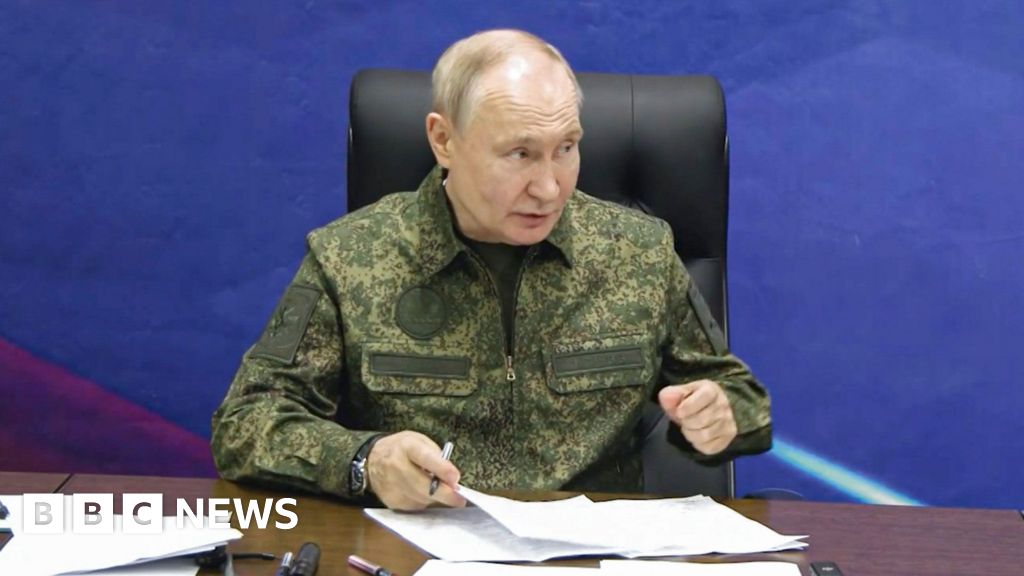
A high-stakes diplomatic mission is unfolding in Moscow, where Russian President Vladimir Putin is scheduled to meet with Steve Witkoff, a special envoy closely associated with former and potentially future U.S. President Donald Trump. This anticipated Tuesday summit follows a period of intense, yet often opaque, discussions aimed at forging a path toward ending the protracted conflict in Ukraine. The White House has expressed a guarded optimism regarding the potential for a breakthrough, suggesting that a U.S.-backed peace framework has been significantly refined.
A Critical Diplomatic Overture
The meeting between President Putin and Mr. Witkoff represents a unique and somewhat unconventional approach to international peacemaking. Unlike traditional diplomatic engagements led by official State Department representatives, Mr. Witkoff operates in a capacity linked to a prominent political figure outside the current U.S. administration. Adding another layer of complexity to this initiative, Jared Kushner, Mr. Trump’s son-in-law and a frequent informal adviser on foreign policy matters, is also expected to participate in the Moscow discussions.
These crucial talks on Russian soil are the culmination of several days of preparatory negotiations. Earlier, Ukrainian and U.S. officials, including Mr. Witkoff and Mr. Kushner, convened in Florida to discuss and refine a proposed peace plan. Initially, elements of this plan were perceived by some as leaning favorably towards Moscow’s demands, sparking concern among Kyiv’s allies. However, subsequent revisions have reportedly addressed some of these initial misgivings. Ukrainian President Volodymyr Zelensky characterized the earlier discussions as "constructive," yet acknowledged that "some tough issues" still require resolution before any definitive agreement can be reached.
Kremlin spokesman Dmitry Peskov confirmed that Mr. Witkoff’s engagement with President Putin would occur during the latter half of Tuesday, underscoring the significance Moscow places on this direct dialogue. The world watches closely, recognizing that these discussions could potentially alter the trajectory of a conflict that has reshaped geopolitical landscapes and caused immense human suffering.
The Backdrop of Conflict: A Two-Year War
To fully grasp the magnitude of the current diplomatic push, it is essential to recall the origins and devastating trajectory of the Ukraine conflict. The seeds of the current crisis were sown in 2014 with Russia’s illegal annexation of Crimea and its support for separatists in eastern Ukraine’s Donbas region, leading to a localized conflict. However, the full-scale invasion launched by Russia in February 2022 dramatically escalated the hostilities, drawing international condemnation and triggering a robust Western response.
The invasion fundamentally challenged the post-Cold War security order in Europe, violating Ukraine’s sovereignty and territorial integrity. It prompted a massive humanitarian crisis, with millions of Ukrainians displaced internally and across borders, seeking refuge from the relentless fighting. Cities have been reduced to rubble, infrastructure destroyed, and countless lives lost. Economically, the war has had global repercussions, disrupting supply chains, particularly for energy and food, and contributing to inflationary pressures worldwide. Geopolitically, it has revitalized NATO, pushed neutral nations like Sweden and Finland to seek alliance membership, and solidified a broad Western consensus against Russian aggression. Previous attempts at de-escalation, such as the Minsk agreements, ultimately failed to prevent the larger conflict, highlighting the deep-seated mistrust and irreconcilable differences that persist between Kyiv and Moscow.
An Unconventional Diplomatic Channel
The involvement of Mr. Witkoff and Mr. Kushner represents a highly unusual form of "track two" or informal diplomacy, operating parallel to, and potentially distinct from, the official foreign policy channels of the sitting U.S. administration. While such informal avenues can offer flexibility and direct communication unburdened by bureaucratic protocols, they also carry inherent risks. Critics often point to the potential for undermining established diplomatic frameworks, creating confusion among allies, or even sending mixed signals to adversaries.
The rationale behind such a move, particularly in the context of a potential future Trump presidency, could be multi-faceted. It might signal a desire for a rapid resolution to the conflict, bypass traditional diplomatic inertia, or lay groundwork for a shift in U.S. foreign policy. However, this approach also raises questions about accountability, the consistency of messaging, and the extent to which any agreements reached through this channel would be binding or recognized by the broader international community, including Ukraine’s European allies. The mere existence of such a parallel diplomatic effort underscores the extraordinary circumstances surrounding the Ukraine conflict and the deep desire, at least in some circles, to explore every possible avenue for peace, however unconventional.
Core Obstacles to Lasting Peace
Despite the renewed diplomatic activity and expressions of optimism, significant obstacles stand in the way of a comprehensive peace agreement. Ukrainian President Zelensky, speaking after a meeting with French President Emmanuel Macron in Paris, reiterated Kyiv’s core priorities: the absolute maintenance of Ukraine’s sovereignty and the securing of robust, verifiable security guarantees against future aggression.
The "territorial issue" remains the most formidable hurdle. Russia continues to insist on Ukraine ceding control over territories it currently occupies in the east and south, including Crimea, which it annexed in 2014, and parts of the Donetsk, Luhansk, Zaporizhzhia, and Kherson regions, which it illegally claimed in 2022. Kyiv, however, has consistently and unequivocally stated its refusal to surrender any sovereign territory, viewing such concessions as a betrayal of its national integrity and the sacrifices made by its people. This fundamental disagreement on the geographical scope of the Ukrainian state makes any territorial compromise extraordinarily difficult, if not impossible, for either side to accept politically.
Beyond territory, the question of security guarantees is equally contentious. Ukraine and its European partners are advocating for robust commitments, ideally including NATO membership, to deter future Russian aggression. Russia vehemently opposes any further expansion of NATO, viewing it as a direct threat to its security interests. Complicating matters, Mr. Trump has previously expressed skepticism about NATO’s utility and has reportedly ruled out Ukraine’s accession to the military alliance, creating a potential divergence from the current U.S. and European positions.
Furthermore, the disposition of billions in frozen Russian assets held in European financial institutions has become a complex point of discussion. The initial U.S.-Russia draft peace plan circulated in November reportedly dictated terms for the investment of these assets and Ukrainian market access in Europe, sparking consternation among European capitals. President Macron emphasized that such issues, along with Ukraine’s potential accession to the European Union, necessitate direct input and involvement from European nations, not just the U.S. and Russia.
The Battlefield’s Shadow: Contested Gains
The diplomatic maneuvering in Moscow unfolds against a backdrop of intense fighting on the ground, where military gains and losses significantly influence negotiating positions. Hours before the Moscow talks, Russian officials claimed to have captured the strategically important town of Pokrovsk, known in Russian as Krasnoarmeysk, in eastern Ukraine, as well as the northeastern border town of Vovchansk.
These claims, however, were met with skepticism and denial from Ukrainian officials. Ukraine’s center for countering disinformation, led by Andriy Kovalenko, suggested that such announcements might be aimed at pressuring Ukraine at the negotiating table. Open-source intelligence projects, which meticulously monitor front-line movements, indicated that neither Vovchansk nor Pokrovsk had been fully secured by Russian forces. Pokrovsk, a key logistics hub, has been a long-standing objective for Russian forces, who have reportedly spent over 18 months attempting to capture it. The timing of President Putin’s televised visit to a command post over the weekend, where he spoke of "important" progress in "an important area," appeared calculated to project an image of military momentum ahead of the diplomatic meeting. The constant ebb and flow of control over key territories underscores how military realities directly shape the leverage and demands of each party in any peace discussions.
International Perspectives and Skepticism
The complex diplomatic initiative has elicited a range of reactions from key international players. White House Press Secretary Karoline Leavitt affirmed the U.S. administration’s "very optimistic" outlook on the refined draft peace deal, expressing hope that "this war can finally come to an end." However, she refrained from disclosing specific details, deferring to the negotiators. This cautious optimism from Washington contrasts with the initial skepticism that greeted an earlier draft peace plan in November, which was perceived as heavily favoring Moscow and dictating terms on issues like frozen assets and market access without sufficient European or Ukrainian input.
President Putin himself had previously indicated that he viewed a U.S. draft peace plan as a potential "basis" for a future agreement. However, Kremlin officials subsequently cast doubt on its acceptability after Kyiv and European allies successfully lobbied for changes. This shifting stance from Moscow highlights the fluidity of their negotiating position and their responsiveness to external pressures.
European leaders, particularly President Macron, have been vocal about the necessity of their involvement. Macron stressed that there is "no finalized peace plan to speak of" and insisted that any proposal must be collaboratively developed with input from Ukraine and Europe. He explicitly stated that decisions on territorial concessions could "only be finalized by President Zelensky" and that matters concerning frozen Russian assets, security guarantees, and Ukraine’s EU accession required the active participation of European nations. Estonia’s foreign policy chief, Kaja Kallas, voiced a more cynical view, suggesting that Moscow’s willingness to negotiate is often contingent on receiving further concessions. She warned against putting undue pressure on Ukraine to surrender, arguing that such an outcome would not serve anyone’s long-term interests. Prior to his Moscow trip, Mr. Witkoff also engaged with UK Prime Minister Sir Keir Starmer, President Zelensky, and Ukraine’s new chief negotiator Rustem Umerov, while several European leaders virtually joined the Zelensky-Macron meeting, demonstrating the widespread diplomatic engagement surrounding this critical moment.
Broader Ramifications of the Conflict
Beyond the immediate diplomatic and military considerations, the Ukraine conflict has had profound and far-reaching impacts across global markets, societies, and cultures. The war has fundamentally altered global energy dynamics, with Europe significantly reducing its reliance on Russian oil and gas, leading to shifts in supply chains and price volatility. Ukraine, a major global grain producer, has seen its agricultural exports severely disrupted, contributing to global food insecurity and impacting vulnerable populations worldwide.
Socially, the conflict has fueled one of Europe’s largest refugee crises since World War II, placing immense strain on host countries and challenging international humanitarian aid structures. Culturally, it has spurred a global re-evaluation of national sovereignty, the role of international law, and the efficacy of multilateral institutions. It has also catalyzed a resurgence of national identity within Ukraine and prompted widespread public solidarity with its people across the democratic world. The conflict has solidified geopolitical alignments, bolstering NATO’s collective defense posture and accelerating discussions about European strategic autonomy. The long-term implications for international relations, global security architecture, and the future of great power competition are still unfolding.
The Path Forward: Navigating a Complex Peace
The current diplomatic push, spearheaded by Mr. Witkoff, represents a critical juncture in the Ukraine conflict. The challenge lies in reconciling fundamentally divergent objectives: Russia’s demands for security guarantees and territorial recognition of its illegal annexations versus Ukraine’s unwavering commitment to its sovereignty, territorial integrity, and future integration with Euro-Atlantic institutions. Analytical commentary suggests that achieving a comprehensive, lasting peace will require extraordinary diplomatic skill and a willingness from all parties to make difficult compromises.
The very nature of this informal diplomacy, involving an envoy tied to a former U.S. president, adds an element of uncertainty. While it could offer a degree of flexibility, it also raises questions about the continuity of U.S. foreign policy and the buy-in from the broader international community. Some experts warn that without genuine commitment from Moscow to withdraw from occupied territories and respect Ukraine’s sovereignty, any "peace deal" risks becoming a mere ceasefire, creating a "frozen conflict" that could reignite at any time. The coming days will reveal whether this unconventional diplomatic initiative can bridge the chasm of mistrust and competing interests, or if it will simply add another chapter to the long and arduous history of failed peace attempts.
Conclusion: High Stakes in Moscow
As Steve Witkoff prepares for his meeting with Vladimir Putin in Moscow, the weight of the Ukraine conflict, with its immense human cost and geopolitical ramifications, hangs heavy in the air. Despite expressions of optimism from Washington and constructive dialogue from Kyiv, the fundamental disagreements over territory and security guarantees remain formidable barriers to a lasting resolution. The unconventional nature of this diplomatic engagement, coupled with the ongoing military struggle and the diverse perspectives of international actors, underscores the immense complexity of finding a pathway to peace. The world watches, hopeful yet realistic, as these high-stakes discussions unfold, aware that the future of Ukraine, and indeed, European security, may well depend on their outcome.


 Amir Mahmud