Amir Mahmud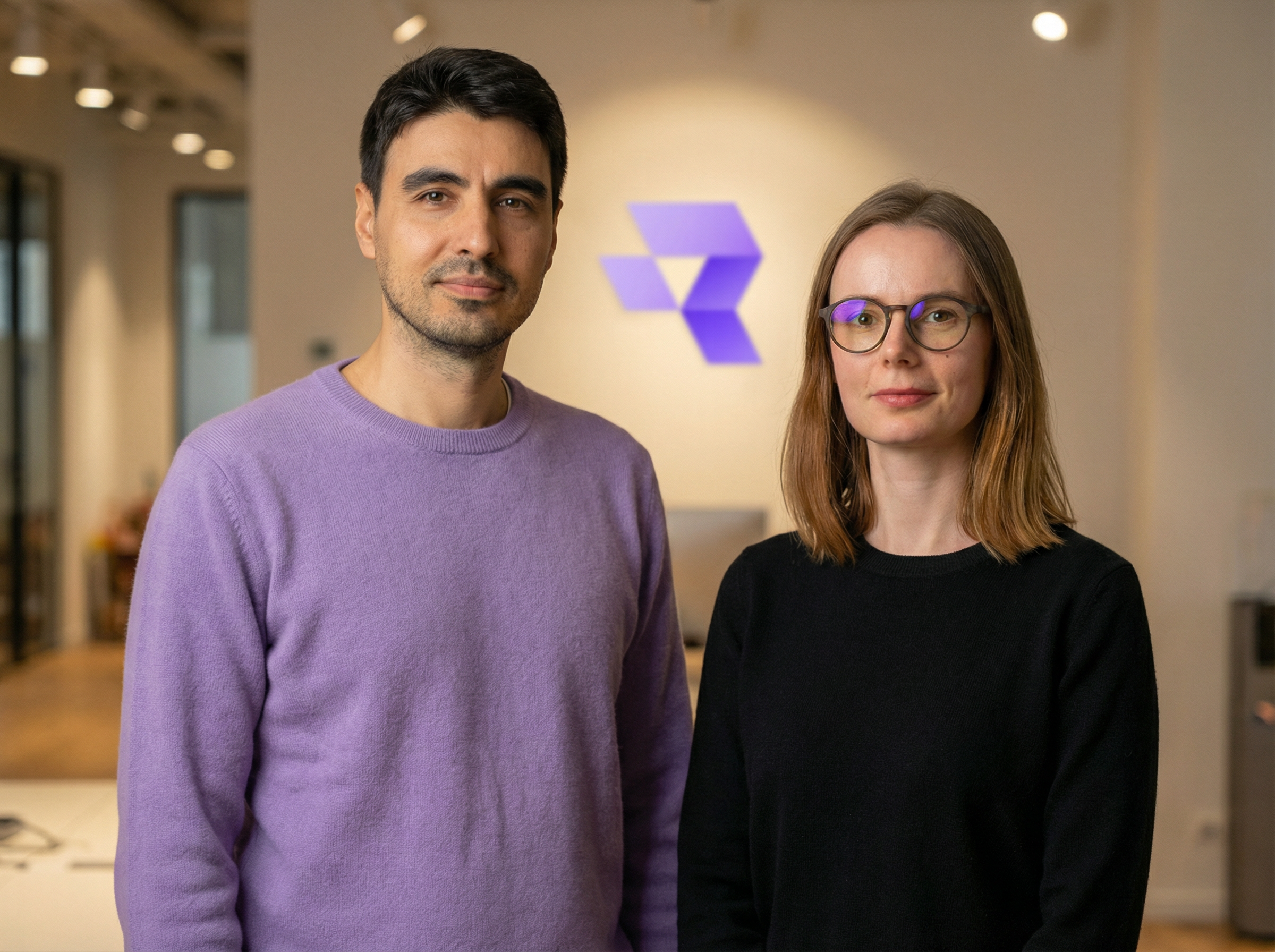
In a significant stride for the burgeoning field of artificial intelligence infrastructure, Runware, a platform dedicated to streamlining the generation of images, videos, and audio for developers, has announced a successful $50 million Series A funding round. This substantial capital injection, led by Dawn Capital with participation from Insight Partners and a16z Speedrun, underscores the increasing investor confidence in companies that are building the foundational tools necessary to scale generative AI applications across industries. The funding brings Runware’s total capital raised to $66 million, signaling a strong market validation for its specialized approach to making powerful AI accessible and efficient.
The Genesis of Real-Time Generative AI
The story of Runware began in 2023, amidst a period of explosive growth and innovation in generative artificial intelligence. Flaviu Radulesc, a seasoned technologist, embarked on a venture to test a text-to-image company, a domain that was rapidly captivating the public imagination with its ability to transform descriptive prompts into vivid visual outputs. While the inherent power of generative AI technology was undeniable, Radulesc quickly identified a critical bottleneck: the generation process, particularly for complex media, was often characterized by considerable latency. This slowness posed a significant barrier to the widespread adoption and integration of these transformative capabilities into real-world applications where speed and responsiveness are paramount.
Recognizing this fundamental challenge, Radulesc partnered with Ioana Hreninciuc to co-found Runware. Their vision was clear: to create a developer-centric platform that would not only harness the formidable power of generative AI but also optimize its performance for real-time operations. The goal was to remove the friction points that developers encountered, allowing them to seamlessly integrate advanced media generation capabilities into their products without being hampered by computational delays or complex infrastructure requirements.
Addressing Developer Bottlenecks in AI Content Creation
The rise of generative AI has been one of the most compelling technological narratives of the past decade. From its theoretical underpinnings in the mid-20th century to the groundbreaking advancements in deep learning and neural networks in the early 21st century, AI has consistently pushed the boundaries of what machines can achieve. The advent of Generative Adversarial Networks (GANs) and later, diffusion models, marked a turning point, enabling AI to create novel content rather than merely analyze existing data. This evolution culminated in the widespread availability of tools capable of generating stunning images, lifelike videos, and synthesized audio from simple text prompts.
However, beneath the surface of these awe-inspiring demonstrations lay a complex technical reality. Developers aiming to embed these capabilities into their applications often faced a multitude of hurdles. These included the immense computational resources required to run sophisticated AI models, the intricate process of setting up and maintaining specialized inference infrastructure, the challenge of staying current with a rapidly evolving landscape of open-source models, and the prohibitive costs associated with high-performance graphics processing units (GPUs).
Runware’s platform directly addresses these pain points. By providing a unified API, developers can integrate Runware’s services into their existing applications and generate diverse media assets through a single interface. This eliminates the need for developers to provision new infrastructure, manage complex dependencies, or maintain separate integrations for different AI models. The company’s focus on a streamlined developer experience has clearly resonated, as evidenced by its rapid growth: since its inception, Runware has powered over 5 billion creations for more than 100,000 developers, a testament to the acute market need it fulfills.
A Strategic Infusion of Capital for Expansion
The recent $50 million Series A round is a powerful endorsement of Runware’s strategic vision and technological prowess. Dawn Capital, a prominent venture capital firm known for its investments in enterprise software, led the round, with Partner Shamillah Bankiya joining Runware’s board of directors. The involvement of other high-profile investors like Insight Partners and a16z Speedrun further validates the company’s potential to become a cornerstone of the generative AI ecosystem.
This infusion of capital is earmarked for ambitious expansion plans. Ioana Hreninciuc articulated the company’s intention to significantly scale its infrastructure. A primary objective is to leverage Runware’s proprietary Sonic Inference Engine to power over 2 million models, a substantial leap from its current capabilities. The overarching goal is to establish Runware as the ubiquitous API for all AI, ensuring that any generative AI model, regardless of its origin or complexity, can seamlessly run on its platform. This involves not only expanding its existing capabilities but also venturing into new modalities beyond its current image, video, and audio offerings. To facilitate this ambitious growth, Runware also plans to significantly expand its team, which currently stands at approximately 25 employees.
Runware’s Technological Edge and Market Positioning
Runware differentiates itself through a unique combination of technological innovation and a developer-centric business model. At the heart of its competitive advantage is the Sonic Inference Engine, which operates on custom AI hardware. This specialized hardware, combined with sophisticated software optimizations, allows Runware to achieve unparalleled speed and cost-effectiveness in generative AI inference.
Hreninciuc elaborated on the company’s strategy, highlighting its ability to provide "day-zero access" to open-source models. This means that as soon as a new model is released, it can be run on the Runware platform, providing developers with immediate access to the latest advancements without delay. Furthermore, the software-side optimizations are crucial; Runware heavily optimizes model loading and offloading processes, enabling it to support an impressive library of over 400,000 models, all available for real-time inference. To ensure robust performance and scalability, the platform also partners with third-party AI cloud providers, allowing it to automatically reroute workloads and allocate additional memory as needed.
Perhaps one of Runware’s most distinctive features is its pricing model. While many competitors charge based on GPU compute time, a metric that can be unpredictable and inefficient for developers with fluctuating needs, Runware opts for a cost-per-image generated model, similar to approaches seen with platforms like Stable Diffusion and Flux. This transparent and granular pricing structure allows developers to pay precisely for what they consume, optimizing their margins and making powerful AI more economically viable for a wider range of applications and businesses. This "pay-for-what-you-need" model can significantly reduce financial barriers, especially for startups and independent developers.
Navigating a Dynamic Competitive Landscape
The market for developer tools in generative AI, particularly for image and video generation, is experiencing intense venture capital interest, indicative of its high growth potential. The competitive landscape is vibrant and diverse, with several well-funded players. For instance, Fal.ai recently secured $140 million at a $4.5 billion valuation, focusing on the breadth of model offerings rather than prioritizing speed above all else.
Hreninciuc identifies Runware’s primary competitors as general open-source model makers and hosts, including established names like Hugging Face, as well as startups such as Replicate and Together AI. Hugging Face, for example, is renowned as a central hub for open-source AI models and datasets, fostering a vast community of developers. Replicate simplifies the process of running open-source models in applications with minimal code, while Together AI positions itself as a cloud platform for training and deploying generative AI models.
Runware’s strategic differentiation lies in its dual focus on unparalleled speed and cost-efficiency, achieved through custom hardware and sophisticated orchestration, coupled with its unique consumption-based pricing. While competitors may offer a broader array of models or simplified deployment, Runware aims to be the fastest and most cost-effective solution for real-time, high-volume media generation, thereby carving out a distinct niche in a crowded market. This strategy allows it to appeal to developers whose primary concern is performance and budget predictability for large-scale deployments.
The Broader Impact of Democratizing AI Tools
The proliferation of advanced, yet accessible, generative AI tools like Runware has profound market, social, and cultural implications. Economically, it is driving a new wave of productivity and innovation across numerous sectors. Content creation, marketing, gaming, architectural design, product prototyping, and education are just a few industries being transformed. Small businesses and individual creators, who previously lacked the resources for professional-grade media production, can now leverage AI to generate high-quality assets at a fraction of the traditional cost and time. This "democratization" of AI is lowering the barrier to entry for creative endeavors and fostering a more diverse and dynamic digital economy.
From a social perspective, making powerful AI more affordable and easier to use means that a broader demographic of app builders and end-users can harness its capabilities. This translates into more innovative applications being developed, addressing a wider range of needs and preferences. For example, AI-generated educational content can be customized rapidly, marketing campaigns can create hyper-personalized visuals, and indie game developers can populate virtual worlds with unique assets with unprecedented speed.
Culturally, the ability to generate images, videos, and audio in real-time opens up new avenues for artistic expression and storytelling. It challenges traditional notions of authorship and creativity, pushing the boundaries of what is possible. While ethical considerations surrounding AI-generated content remain important, the underlying technological advancements promise a future where imagination can be materialized with greater fluidity and accessibility.
Future Trajectory and Vision
Looking ahead, Runware’s ambition extends beyond merely being a fast and affordable generative AI service. Ioana Hreninciuc articulated a vision where Runware empowers applications to scale to millions of users while simultaneously preserving their profit margins. This commitment to economic viability for developers is central to the company’s mission. By making the market more affordable and accessible, Runware aims to put powerful AI capabilities into the hands of more people globally, fostering a more inclusive and innovative technological landscape.
The journey from a nascent idea to a $66 million-funded company in just over a year highlights the critical role that infrastructure plays in the current AI revolution. As generative AI models become increasingly sophisticated and pervasive, the demand for efficient, scalable, and cost-effective ways to deploy them will only intensify. Runware’s strategic focus on speed, developer experience, and a unique pricing model positions it as a key enabler in this exciting and rapidly evolving technological frontier. Its success will not only be measured by its financial growth but also by its contribution to unlocking the full potential of generative AI for a global community of innovators.