Amir Mahmud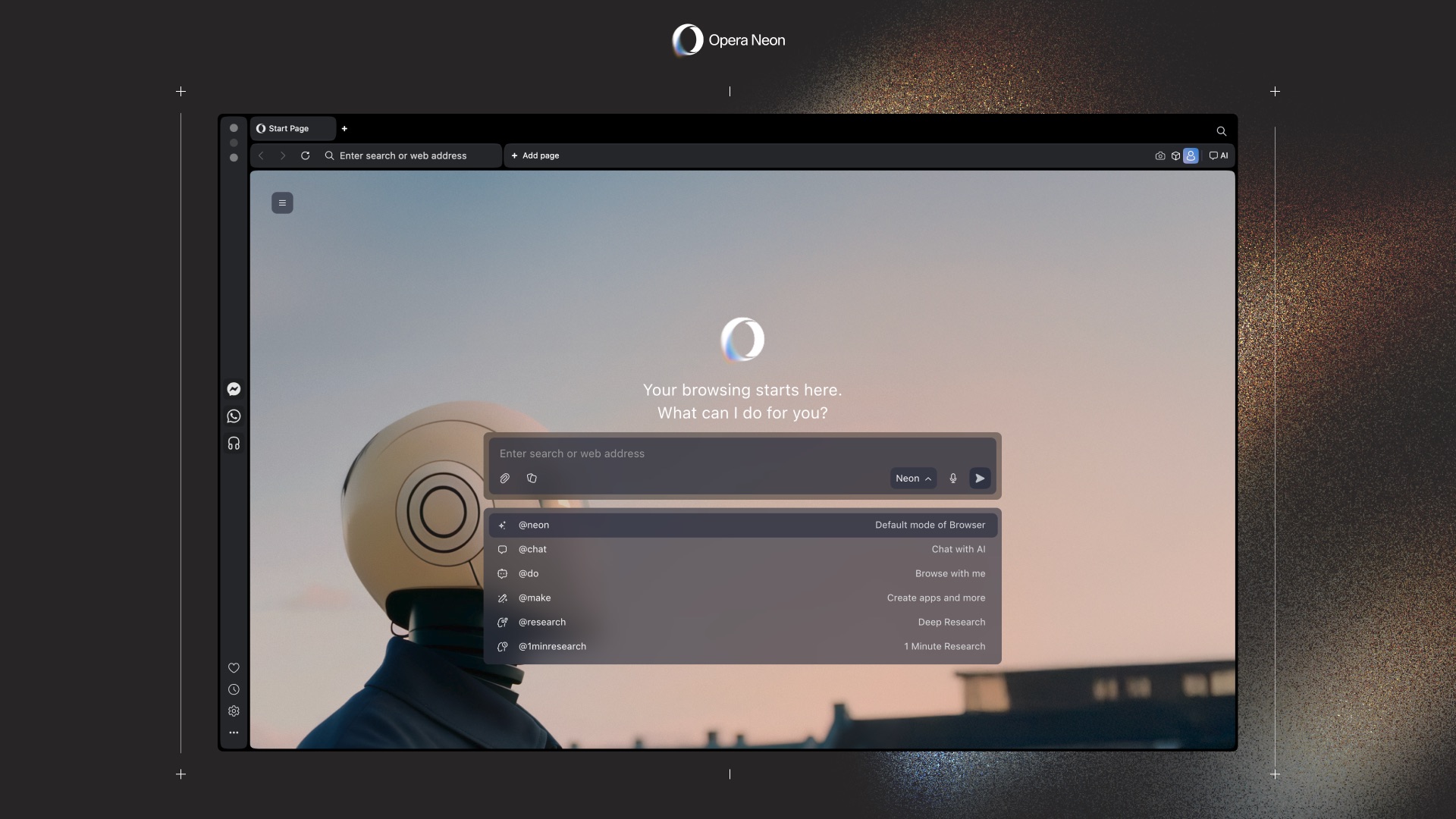
Norway-based browser developer Opera has officially launched its advanced, artificial intelligence-powered browser, Neon, making it available to the general public after several months of intensive testing. This innovative offering, however, comes with a premium price tag, requiring users to commit to a monthly subscription of $19.90 to access its full suite of AI-driven functionalities. The move signals a bold strategic shift for Opera, positioning itself at the forefront of a burgeoning market for AI-centric web experiences, while simultaneously challenging traditional expectations of free browser utility.
A New Paradigm in Web Browsing
The debut of Neon is not merely an incremental update but represents a significant leap in how users interact with the internet. Unlike conventional browsers that primarily serve as conduits for information, Neon integrates an AI chatbot directly into its interface, transforming the browsing experience into a more interactive and intelligent endeavor. This embedded AI is designed to act as a personal assistant, capable of answering questions about web pages, facilitating the creation of mini-applications and videos, and executing various user-defined tasks. A key differentiator lies in its ability to leverage a user’s browsing history as contextual memory, allowing it to recall information from previously viewed content, such as details from a YouTube video watched last week or a news article read yesterday, thereby offering a deeply personalized and continuous interaction.
Further enhancing productivity, Neon introduces "Cards" for automating repeatable tasks through intuitive prompts, alongside a sophisticated "deep research agent" capable of compiling comprehensive information on virtually any subject. The browser also redefines tab management with its "Tasks" feature, which creates contained workspaces where AI chats and relevant tabs are grouped, each with its own AI context. This innovative approach to organization echoes features seen in other next-generation browsers, such as Arc Browser’s "Spaces," but integrates AI as a fundamental component of the workflow.
The Evolution of Browser Technology and Opera’s Niche
Opera has a long-standing history of innovation in the highly competitive web browser market. Since its inception in 1995, the company has often been a pioneer, introducing features like tabbed browsing, speed dial, built-in VPNs, and even cryptocurrency wallets, many of which were later adopted by competitors. In a market largely dominated by giants like Google Chrome, Mozilla Firefox, and Microsoft Edge, Opera has consistently carved out a niche by focusing on performance, user experience, and forward-thinking features.
The current push into AI-powered browsing can be seen as a natural progression of this innovative spirit, particularly in the wake of the generative AI boom ignited by models like OpenAI’s ChatGPT. The broader technology landscape has witnessed a rapid integration of AI across various software categories, from productivity suites to creative tools, making it almost imperative for web browsers—the primary gateway to the internet—to adapt. Opera’s early entry with Neon, building on an initial unveiling in May and an early access period for select users in October, positions it as an agile player eager to define the next generation of web interaction. This strategic timing aligns with the growing user demand for more intelligent, personalized, and efficient digital tools.
Unpacking Neon’s Advanced AI Capabilities
The premium subscription for Opera Neon is not just for the interface but also grants users access to a powerful backend of cutting-edge AI models. Subscribers will benefit from the capabilities of advanced large language models such as Gemini 3 Pro, GPT-5.1, Veo 3.1, and Nano Banana Pro. This access to a diverse array of state-of-the-art AI technologies underscores the significant investment Opera is making in the underlying infrastructure of Neon. By integrating multiple top-tier models, Opera aims to provide users with a robust and versatile AI assistant capable of handling a wide spectrum of tasks, from complex research queries to creative content generation.
Beyond the core AI functionalities, the subscription also includes exclusive benefits designed to foster a community around this rapidly evolving product. Members gain entry to Opera’s dedicated Discord community, offering a platform for discussion, feedback, and collaboration with fellow early adopters. Moreover, subscribers are granted direct access to Opera’s development team, a privilege that allows for immediate engagement with the creators, potentially influencing future updates and features. Krystian Kolondra, Executive Vice President of browsers at Opera, highlighted this focus on the early adopter community, stating, "Opera Neon is a product for people who like to be the first to the newest AI tech. It’s a rapidly evolving project with significant updates released every week. We’ve been shaping it with our Founders community for a while and are now excited to share the early access to it with a larger audience." This statement reinforces the idea that Neon is a dynamic platform, continually refined based on user feedback and technological advancements.
It is important to note that while Neon represents Opera’s premium AI offering, the company has also integrated free AI features into its other browser products, including Opera One, Opera GX, and Opera Air. These free offerings typically include a chat-based assistant, providing a baseline AI experience for a broader user base and serving as an entry point into Opera’s AI ecosystem. This tiered approach suggests a strategy to cater to different user segments, from casual users seeking basic AI assistance to power users willing to pay for the most advanced and integrated AI tools.
The Premium Subscription Model: A Strategic Bet
Opera’s decision to launch Neon with a subscription model in a market traditionally dominated by free browsers is a significant strategic gamble. The digital landscape has seen an increasing shift towards subscription-based services across various sectors, from streaming entertainment to productivity software. However, applying this model to a core internet utility like a web browser is relatively novel, particularly for a general-purpose offering. This move raises questions about user willingness to pay for a browser, especially when numerous high-quality alternatives are available at no cost.
One analytical perspective suggests that Opera is targeting a niche of "prosumers" and early adopters who prioritize cutting-edge technology and enhanced productivity features over cost. For these users, the value proposition of deeply integrated AI, access to advanced models, and direct developer interaction might justify the monthly fee. The subscription revenue could also provide Opera with a stable and predictable funding source, allowing for accelerated development, continuous integration of the latest AI advancements, and freedom from reliance on advertising models that often raise privacy concerns. This could enable Opera to push the boundaries of browser innovation without the constraints typically faced by free-to-use software.
Conversely, the high price point of nearly $20 per month could limit Neon’s market penetration, potentially alienating a large segment of users accustomed to free browsing. The challenge for Opera will be to clearly articulate the unique value and indispensable utility that Neon provides, distinguishing it from both free AI-enabled browsers and the growing number of AI features being integrated into mainstream, free browsers. The success of this model will depend heavily on the perceived return on investment for users in terms of time saved, enhanced capabilities, and overall efficiency.
Navigating the Competitive AI Browser Landscape
Opera Neon enters a rapidly evolving and increasingly competitive landscape, marked by both dedicated AI-first browsers and established incumbents slowly integrating AI features. Startups like Perplexity’s Comet, OpenAI’s Atlas, and The Browser Company’s Dia have already staked claims in the AI-centric browser space, each offering unique interpretations of how artificial intelligence can redefine web navigation. These challengers are often built from the ground up with AI at their core, aiming to offer seamless, intelligent experiences.
Meanwhile, industry giants are adopting a more cautious, measured approach. Google, for instance, has detailed extensive security measures it is implementing to protect users against potential vulnerabilities associated with "agentic features" in Chrome, highlighting the complex challenges of integrating powerful AI responsibly. Similarly, Brave, known for its privacy-focused browser, is previewing its own agentic features within a "nightly build" and offering an isolated browsing profile to separate AI usage from regular browsing, underscoring concerns around data privacy and user control. These incumbents, with their massive user bases, face the dual challenge of innovation and maintaining trust, leading to a slower, more deliberate rollout of AI capabilities.
Opera’s strategy with Neon appears to be a hybrid approach: building a dedicated AI-first experience while leveraging its existing browser expertise. The direct access to advanced AI models and the deep contextual memory are key areas where Neon aims to differentiate itself. The question remains whether its premium model can attract a sufficient user base to compete effectively against both agile AI startups and the slow-moving, but immensely powerful, market leaders.
Implications for Users and the Future of Browsing
The emergence of premium AI browsers like Neon carries significant implications for users and the future trajectory of web browsing. For users, the promise is a vastly more intelligent and efficient online experience, where tasks that once required multiple steps or manual searching can be automated or simplified by an omnipresent AI assistant. This could lead to substantial productivity gains for professionals, researchers, and anyone who spends a considerable amount of time gathering information or performing repetitive online actions.
However, this enhanced convenience also brings forth crucial considerations, particularly regarding data privacy. An AI browser that leverages a user’s browsing history for context, while offering powerful personalization, also implies a deeper level of data collection and processing. Users will need to weigh the benefits of personalized AI assistance against potential privacy concerns and understand how their data is being utilized and protected. Opera’s emphasis on direct developer access and community engagement might aim to build trust and transparency around these issues.
Culturally, the shift towards AI-driven browsers could redefine our relationship with information and digital tools. As browsers become more proactive and intelligent, the line between passive consumption and active interaction may blur. This evolution could accelerate the adoption of AI in everyday life, making sophisticated AI capabilities more accessible and integrated into our daily workflows. Ultimately, Opera Neon represents an intriguing experiment in the commercialization of advanced AI within a core digital utility, potentially charting a new course for how we access, process, and interact with the vast expanse of the internet.