Amir Mahmud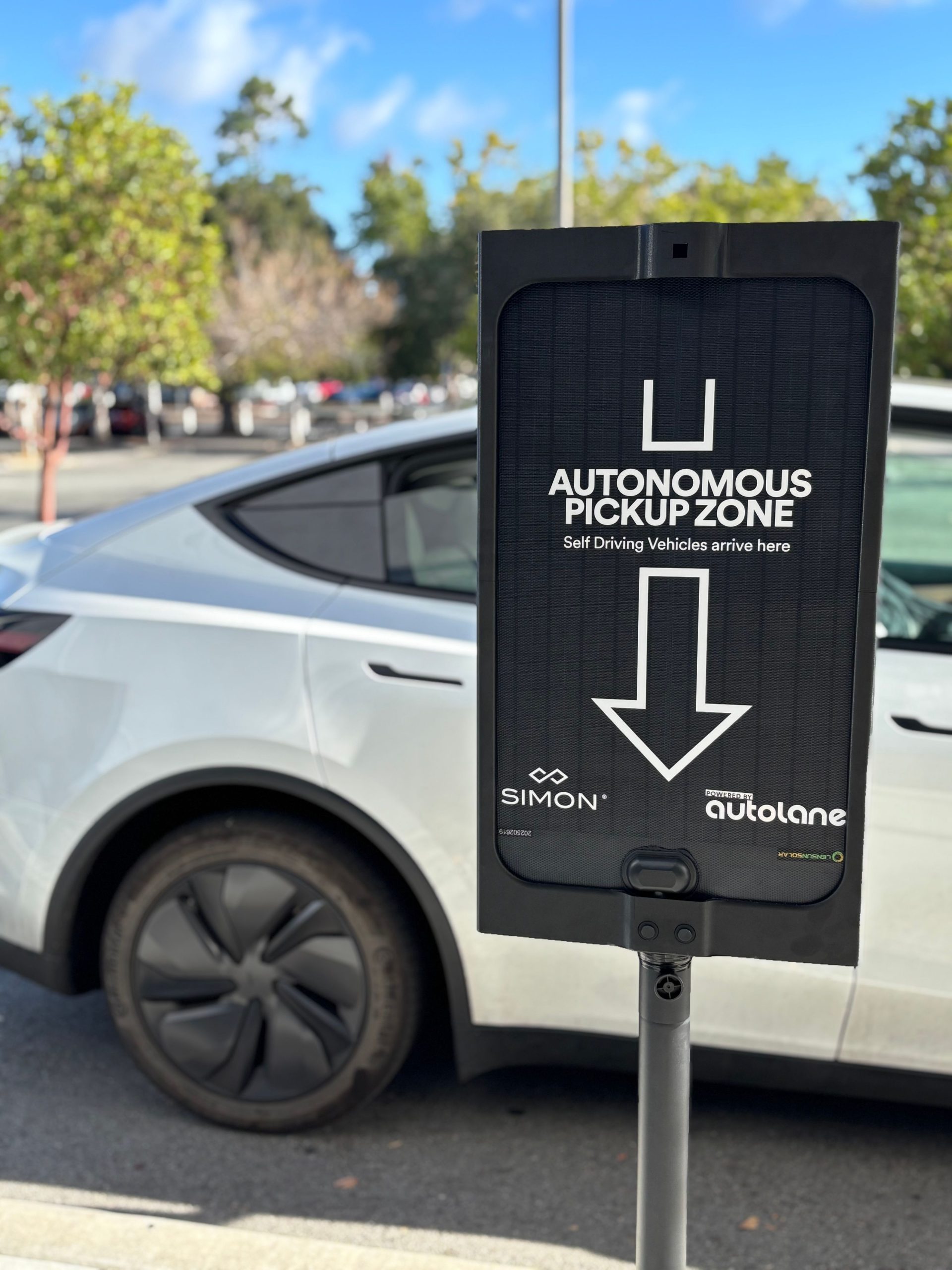
The nascent era of autonomous vehicles, characterized by the increasingly visible presence of robotaxis from innovators like Waymo and Zoox, is rapidly reshaping public imagination about future daily life. Beyond the convenience of driverless taxi rides, this technological leap promises to unlock a host of new possibilities, from automated grocery fetching to autonomous dry cleaning pickups, fundamentally altering how goods and services move within our communities. However, realizing this ambitious vision hinges on resolving a critical challenge: coordinating the precise "handoff moments" where these sophisticated machines interact with the physical world, especially on private property.
Palo Alto-based startup Autolane is stepping into this crucial infrastructural gap, aiming to develop the foundational layer for managing autonomous vehicle interactions at designated points. The company recently announced it has secured $7.4 million in fresh funding, backed by prominent venture capital firms including Draper Associates and Hyperplane, to accelerate its mission of creating an "air traffic control" system for driverless operations.
The Unfolding Autonomous Landscape
The journey toward fully autonomous vehicles has been a decades-long endeavor, evolving from theoretical concepts and academic research to tangible, real-world deployments. Early pioneers in artificial intelligence and robotics laid the groundwork, with significant milestones achieved through initiatives like the DARPA Grand Challenge in the early 2000s, which spurred rapid advancements in perception, planning, and control systems for self-driving cars. In recent years, companies like Waymo (spun out of Google’s self-driving car project) and General Motors’ Cruise have transitioned from experimental prototypes to commercial robotaxi services in select cities, offering glimpses into a future where personal mobility and logistics are profoundly transformed.
These early deployments, while impressive, operate within tightly defined operational design domains (ODDs) – specific geographical areas and environmental conditions where the autonomous systems are validated to perform safely. Yet, even within these controlled environments, the broader ecosystem necessary to seamlessly integrate autonomous vehicles into everyday life remains largely underdeveloped. The current phase of autonomous vehicle evolution is not just about refining the vehicle’s internal intelligence but also about building the external infrastructure and communication protocols that enable smooth, efficient, and safe interactions with the human-centric world. This includes everything from standardized charging stations to, crucially, a clear system for pickups and drop-offs.
Bridging the Physical-Digital Divide
Autolane’s initial strategy focuses on addressing the immediate need for coordinating driverless vehicle arrivals and departures on private property. The startup has already forged a significant partnership with Simon Property Group, one of the largest retail real estate investment trusts globally. This collaboration will see Autolane implementing its coordination system at shopping centers owned by Simon Property Group in key markets like Austin, Texas, and San Francisco, California.
The solution being deployed is a hybrid approach, combining tangible physical infrastructure with advanced software. On the physical side, this involves the strategic placement of clear signage, reminiscent of the designated pickup and drop-off zones that have become ubiquitous at modern hotels and airports for ridesharing services like Uber and Lyft. These signs, however, are not merely informational for human drivers; they are part of a larger, integrated system designed to provide precise instructions and geolocation data to autonomous vehicles.
The software component is where Autolane truly differentiates itself. Rather than relying on generic signage, the company aims to integrate sophisticated digital protocols. Ben Seidl, co-founder and CEO of Autolane, articulated his company’s position as a crucial "application layer" in the burgeoning autonomy industry. "We aren’t the fundamental models. We’re not building the cars," Seidl explained in a recent interview. "We are simply saying, as this industry balloons rapidly and has exponential growth… someone is going to have to sit in the middle and orchestrate, coordinate, and kind of evaluate what’s going on." This middleware approach is designed to bridge the gap between autonomous vehicle operating systems and the specific requirements of physical locations, ensuring interoperability and efficiency across different fleets and properties.
Strategic Partnerships and Initial Deployments
The choice to partner with Simon Property Group highlights Autolane’s strategic focus on high-traffic commercial environments. Shopping centers, with their complex parking lots, multiple entrances, and constant flow of vehicles and pedestrians, present a microcosm of the challenges autonomous vehicles will face at scale. By establishing standardized protocols for these properties, Autolane aims to create a template that can be replicated across various commercial and logistical hubs.
This initial deployment will involve creating "physical APIs" for these locations, allowing autonomous vehicle companies to receive precise, machine-readable instructions for where to stop, wait, and navigate. This level of granular control and communication is vital for autonomous systems, which thrive on structured data and predictable environments. For large property owners like Simon, a unified system promises to enhance operational efficiency, reduce congestion, and prepare their properties for a future dominated by autonomous logistics and mobility services. The implications extend beyond just robotaxis, paving the way for automated delivery vehicles to seamlessly integrate into retail operations, improving everything from customer pickup experiences to supply chain efficiency.
The Vision Beyond Robotaxis
While robotaxis are the immediate focus, Autolane’s vision extends far beyond. Seidl foresees a future where his company’s technology orchestrates all manner of autonomous vehicle tasks. He anticipates a dramatic transformation across logistics, retail, real estate, and even urban planning, influencing where people work, live, and play. The underlying belief is that the exponential growth of autonomous capabilities, spurred by advancements in AI and sensor technology, will fundamentally alter the economics of movement for goods, services, and people.
Seidl’s personal conviction was solidified after experiencing Tesla’s Full Self-Driving (Supervised) software, which demonstrated the tangible capabilities of current autonomous systems. This firsthand experience underscored the immense potential for disruption and the urgent need for a coordinating layer to manage the impending complexity. He recognizes that while the core autonomous driving technology is advancing rapidly, the ecosystem for its seamless integration into society is lagging. This gap represents Autolane’s perceived competitive advantage, as Seidl notes the current lack of direct competition in this specific "application layer" space, though he fully expects that to change as the market matures.
Addressing the "Last Meter" Challenge
The necessity of Autolane’s solution is vividly illustrated by incidents where autonomous vehicles encounter unforeseen real-world complexities. A viral incident earlier this year, involving a Waymo robotaxi struggling to navigate the intricate drive-through lanes of a Chick-fil-A in Santa Monica, California, serves as a prime example. After dropping off passengers, the robotaxi became trapped, unable to efficiently negotiate the specific spatial and operational dynamics of the fast-food establishment’s queue.
This scenario highlights the "last meter" problem, a well-known challenge in robotics where systems that perform flawlessly in open, structured environments falter in cluttered, unpredictable, or human-designed spaces. Autonomous vehicles, despite their advanced mapping and perception capabilities, require clear, unambiguous instructions for these specific interaction points. As Seidl explains, "Someone has got to bring some order to this chaos, and the chaos is already starting." By designating precise pick-up and drop-off locations and communicating these digitally, Autolane aims to prevent such operational hiccups, ensuring smooth and predictable interactions.
While property owners could individually attempt to create physical signage, Seidl emphasizes that simple signs are insufficient for the sophisticated demands of autonomous robotics. "You can’t just put up a white sign with some black letters and hope for the best with 10 different types of robotics coming in," he stated. Autonomous systems require precise geolocation data and technological communication protocols that a generic sign cannot provide. Autolane’s value proposition lies in its ability to integrate with both real estate owners’ existing systems and the diverse range of autonomous vehicle providers, creating a universal language for these crucial interaction points. This interoperability, facilitated through APIs, allows businesses to set "rules" that various robotic companies can understand and follow.
A B2B Approach to Scalability
Crucially, Autolane is adopting a deliberate business-to-business (B2B) approach, explicitly choosing not to engage with city or municipal governments or public street infrastructure. This strategic decision allows the company to bypass the often-complex and slow-moving regulatory frameworks associated with public spaces. Instead, Autolane focuses on private property owners – entities like Costco, McDonald’s, Home Depot, and its initial partner, Simon Property Group.
By positioning itself as a "hardware-enabled SaaS solution," Autolane offers a scalable service that can be rapidly deployed and adapted across various private commercial environments. This focus enables property owners to manage autonomous vehicle traffic on their premises effectively, knowing which vehicles are incoming and outgoing, and guiding them precisely. This private-sector-centric model allows for faster innovation and deployment, directly addressing immediate commercial needs without getting bogged down in public policy debates or fragmented municipal regulations.
The Future of Coordinated Autonomy
The implications of Autolane’s work extend beyond mere operational efficiency; they touch upon the very architecture of future cities and commercial hubs. As autonomous vehicles become more prevalent, the need for intelligent infrastructure to manage their movements will only intensify. Autolane’s "air traffic control" for ground vehicles represents a forward-thinking approach to this challenge, recognizing that the success of the autonomous revolution depends not just on the vehicles themselves, but on the seamless integration into a coordinated, intelligent environment.
The market for such solutions is poised for significant growth. As more robotaxi services expand and autonomous delivery fleets become commonplace, the demand for standardized, interoperable coordination platforms will skyrocket. Companies like Autolane are laying the groundwork for this future, ensuring that the promise of autonomous technology translates into a smooth, safe, and efficient reality for businesses and consumers alike, transforming chaos into order one precise waypoint at a time. The funding secured by Autolane underscores investor confidence in this critical, yet often overlooked, layer of the autonomous vehicle ecosystem.